The global cryptocurrency landscape has been rocked by the revelation of the largest digital asset theft in history, a meticulously planned operation targeting the world’s largest exchange, Binance. Investigative findings from blockchain analytics firm Chainalysis and security reports from Binance indicate that North Korean state-sponsored hacking groups successfully exfiltrated approximately $6.4 billion. The breach was not the result of a direct brute-force attack on the exchange’s core ledger, but rather a sophisticated multi-stage social engineering campaign that exploited the very human element of the tech industry: the recruitment process. By leveraging a tactic known as employment fraud, or "contagious interviews," the Democratic People’s Republic of Korea (DPRK) has demonstrated a terrifying evolution in its ability to infiltrate high-security financial environments.
The Anatomy of the Binance Breach: A Masterclass in Social Engineering
The unprecedented theft from Binance was the culmination of months, if not years, of preparation. According to investigators, the attack sequence began in September, when a senior engineer at Binance was contacted via a legitimate professional networking platform. The attackers, posing as recruiters for a prestigious but fictitious technology firm, spent several weeks building a rapport with the employee. This "grooming" phase is a hallmark of modern DPRK operations, designed to lower the target’s defenses through professional courtesy and the promise of career advancement.
The operation moved into its critical phase when the employee was invited to participate in a formal interview process. After successfully navigating two rounds of technical discussions with individuals posing as hiring managers, the engineer was asked to complete a "coding assignment." This assignment required the download and execution of a specific software package. Hidden within the legitimate-looking development environment was a sophisticated malware payload. Once executed on the engineer’s workstation, the malware established a persistent foothold, allowing the attackers to bypass traditional perimeter defenses.
From this initial point of entry, the hackers demonstrated remarkable lateral movement capabilities. The investigation revealed that the attackers specifically targeted and exploited an internal artificial intelligence tool used by Binance staff. By subverting the permissions of this AI infrastructure, the actors were able to escalate their privileges and move deeper into the exchange’s sensitive internal systems, eventually gaining the access necessary to authorize massive transfers of digital assets.

Chronology of an Evolving Threat
The Binance heist did not occur in a vacuum. It represents the peak of a strategic trajectory that Chainalysis has tracked for nearly two years. The following timeline illustrates the progression of DPRK tactics:
- Early 2024 – Mid 2025: Chainalysis attributed over $14.3 million in losses to a series of "pilot" operations. These smaller-scale attacks targeted individual cryptocurrency holders, private wallets, and decentralized autonomous organizations (DAOs). These incidents served as a testing ground for the "contagious interview" methodology.
- Early 2025: Investigators identified the emergence of "Etherhiding" and Blockchain Dead Drops (BDDs). These techniques allowed malware to receive instructions directly from public blockchains, making the command-and-control (C2) infrastructure nearly impossible for law enforcement to shut down.
- September 2025: The initial contact with the Binance engineer began, marking the start of the primary operation.
- October – November 2025: The trust-building phase and fake interview rounds were conducted.
- Late 2025: The execution of the malicious coding assignment and subsequent system-wide infiltration.
- Early 2026: The final exfiltration of $6.4 billion in assets and the commencement of large-scale laundering operations.
Tom McLouth, a senior intelligence analyst at Chainalysis, noted that the significance of the earlier, smaller thefts was not the monetary gain, but the pedagogical value for the attackers. Each successful compromise allowed the DPRK to refine its methodology, perfecting the social engineering scripts and technical payloads required to strike a target as massive as Binance.
Technological Sophistication: Blockchain Dead Drops and Redundancy
A key factor in the success of the Binance attack was the resilience of the attackers’ technical infrastructure. Traditionally, malware communicates with a Command-and-Control (C2) server hosted on centralized web infrastructure, which can be seized or blocked by internet service providers. The DPRK has circumvented this vulnerability through the use of Blockchain Dead Drops (BDDs).
In this scheme, malware instructions are embedded directly into the transaction data of public blockchains. Because these blockchains are decentralized, there is no central authority that can "delete" the instructions. Chainalysis research indicates a fivefold surge in these blockchain-assisted cyberattacks over the past year.
Furthermore, the attackers implemented a sophisticated redundancy system across multiple networks. The malware was programmed to query the TRON and Aptos blockchains for pointers. These pointers directed the infected machine to a specific transaction on the BNB Smart Chain (BSC), where the final malicious payload or instruction was stored. If one network was unavailable or the specific address was flagged, the malware would automatically pivot to the backup blockchain. This cross-chain redundancy ensured that the attackers maintained control over the infected systems regardless of localized defensive measures.

The Shadow Workforce: DPRK’s Illicit IT Ecosystem
The Binance heist is only one facet of a broader, state-sanctioned economic strategy. Beyond direct hacking, the DPRK maintains a massive "shadow workforce" of IT professionals who fraudulently embed themselves in global companies. The United Nations estimates that this illicit employment ecosystem generates upwards of $600 million annually for the North Korean regime.
These operatives use stolen identities, forged documentation, and Virtual Private Networks (VPNs) to pose as remote workers from third-party countries. Once hired, they fulfill two primary roles:
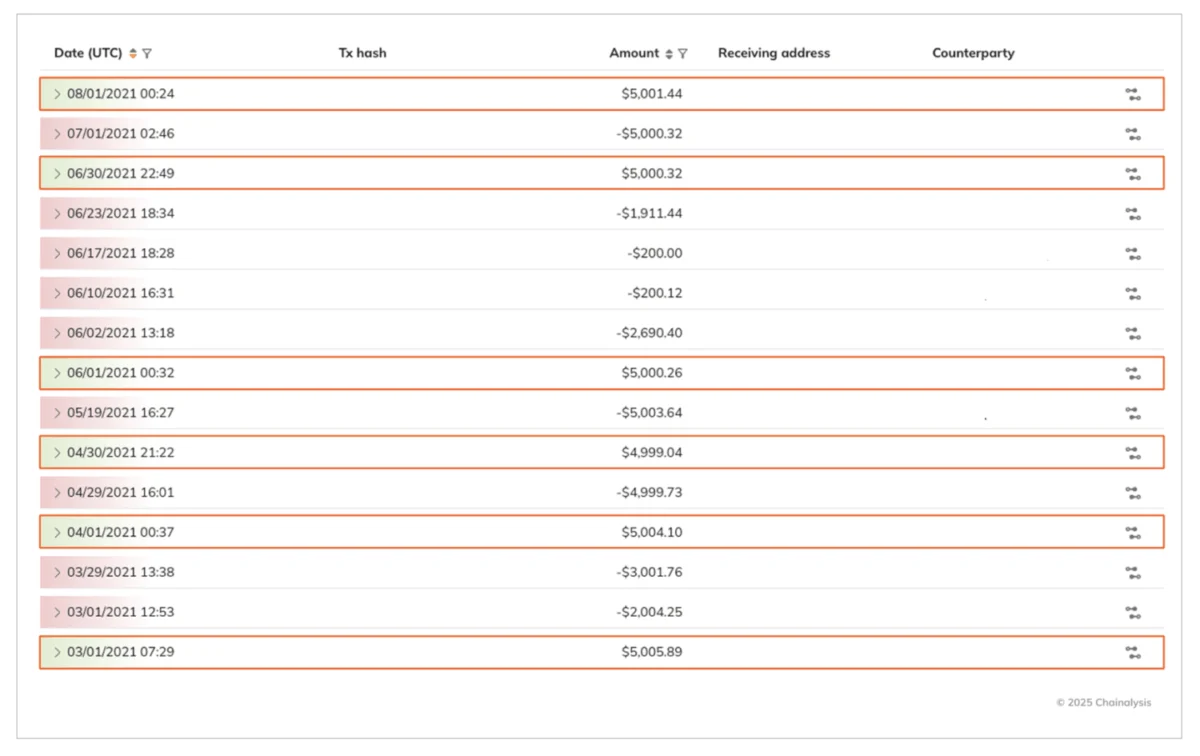
- Revenue Generation: They earn high salaries, often requested in stablecoins like USDT or USDC, which are then laundered through intermediaries in Russia and other jurisdictions to fund the regime’s programs.
- System Infiltration: In many cases, these workers act as "sleepers," maintaining legitimate employment while searching for vulnerabilities or waiting for orders to deploy malware from within the corporate network.
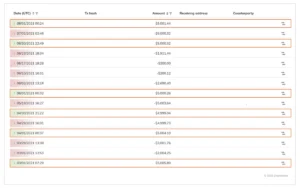
Chainalysis has successfully identified on-chain activity consistent with these salary payments, tracking regular transfers from unsuspecting employers to wallets linked to sanctioned North Korean entities. The intersection of these IT worker schemes and high-profile heists like the Binance case suggests a unified, multi-pronged approach to cyber warfare.
Official Reactions and Industry Implications
The scale of the Binance breach has prompted immediate reactions from global security and regulatory bodies. Binance, in its initial findings, emphasized the complexity of the social engineering involved, noting that the attackers demonstrated an intimate understanding of the tech industry’s hiring culture. "The attackers spent weeks building trust," the exchange stated, highlighting that traditional cybersecurity tools are often insufficient against such prolonged human-centric deception.
Microsoft’s security division has also issued warnings regarding "contagious interview" malware, noting that the scripts are specifically designed to search infected systems for cryptocurrency seed phrases, password manager databases, and browser cookies. This allows the attackers to move beyond the local device and compromise cloud-based storage and synchronized accounts.

The implications for the industry are profound. Security experts are now calling for a fundamental shift in how technology firms handle the recruitment of privileged employees. This includes:
- Isolation of Recruitment Tasks: Ensuring that coding tests and external software evaluations are conducted in strictly "sandboxed" environments that have no connection to internal corporate networks.
- Enhanced Identity Verification: Implementing more rigorous, multi-factor identity verification for remote job applicants to combat the DPRK’s IT worker fraud.
- Financial Infrastructure Monitoring: Moving beyond code-based security to monitor the financial pathways that enable these operations, such as identifying the stablecoin flows used by illicit workers.
Conclusion: A New Era of Cyber-Financial Conflict
The $6.4 billion Binance heist serves as a stark reminder that the digital asset space remains a primary battlefield for nation-state actors. The DPRK’s ability to combine psychological manipulation with cutting-edge blockchain technology has created a threat profile that challenges existing security paradigms.
As the investigation continues, the focus has shifted to the recovery of funds and the disruption of laundering networks. However, the true lesson of the Binance case is the necessity of constant vigilance. When the "biggest heist in history" begins with a simple job invitation, the line between professional networking and national security threat becomes dangerously thin. The global financial community must now adapt to a reality where every interaction, no matter how routine, could be the first step in a multi-billion dollar operation.