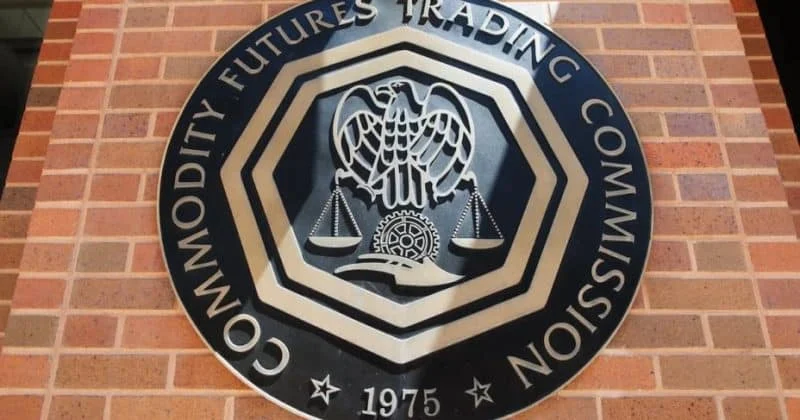
The Commodity Futures Trading Commission (CFTC) has officially unveiled a significant regulatory proposal aimed at tightening the oversight of event contracts, marking a pivotal moment for the rapidly expanding sector of prediction markets. On Wednesday, the federal regulator issued a Notice of Proposed Rulemaking (NPRM) designed to refine the process by which event-based derivatives are reviewed and approved under federal derivatives law. The proposal represents a proactive effort by the agency to address the complexities of a market that allows participants to trade on the outcomes of real-world events, ranging from economic indicators to geopolitical shifts and political elections.
Under the newly proposed framework, the CFTC would implement a rigorous assessment process to determine whether specific event contracts implicate activities that are explicitly restricted or prohibited under the Commodity Exchange Act (CEA). These activities include, but are not limited to, terrorism, assassination, war, gaming, or conduct that is otherwise unlawful under state or federal law. A critical component of the proposal is the agency’s mandate to evaluate whether such instruments are "contrary to the public interest," a determination that would effectively bar them from being listed for trading or cleared through regulated entities.
The proposal also seeks to replace the current, often fragmented, review process with a standardized 90-day formal review window. This period is intended to provide the Commission with sufficient time to conduct deep-dive evaluations of novel contracts while offering market participants a predictable timeline for regulatory decisions. By laying out standardized factors for evaluating contracts on a case-by-case basis, the CFTC aims to eliminate ambiguity and ensure that all registered platforms—including designated contract markets (DCMs) and swap execution facilities (SEFs)—are held to the same stringent standards.
The Evolution of the Prediction Market Landscape
The rise of prediction markets has been one of the most notable trends in the financial technology sector over the last decade. These platforms allow users to buy and sell "shares" in the outcome of future events. If the event occurs, the share pays out a predetermined amount; if it does not, the share becomes worthless. While these markets have existed in various forms for years, the advent of blockchain technology and the proliferation of high-speed digital trading platforms have significantly increased their accessibility and liquidity.
Historically, the CFTC has maintained a cautious stance toward these instruments. The agency’s primary concern has always been the potential for prediction markets to devolve into unregulated gambling or to provide incentives for illicit activities. For example, a contract based on the occurrence of a terrorist attack or the assassination of a political figure could theoretically create a financial incentive for such an event to take place, posing a direct threat to public safety and national security.
The current proposal is the culmination of years of internal deliberation and external legal challenges. As trading activity in event-based derivatives expands across CFTC-registered platforms, the Commission has recognized that its existing toolkit may be insufficient to handle the volume and variety of contracts being proposed by innovative fintech firms. The changes are intended to improve procedural clarity and ensure the consistent application of the agency’s authority across the entire spectrum of event-based trading.
Chronology of Regulatory Oversight and Key Milestones
The path to this Notice of Proposed Rulemaking has been defined by several key enforcement actions and legal battles that have shaped the CFTC’s current perspective.
- The Rise and Fall of Intrade (2012): One of the earliest major prediction markets, Intrade, faced significant legal action from the CFTC for offering off-exchange options to U.S. customers without proper registration. This served as the first major signal that the agency intended to exert jurisdiction over event contracts.
- The Launch of Kalshi (2020): Kalshi became the first regulated "designated contract market" dedicated exclusively to event contracts. Its approval marked a shift toward institutionalizing prediction markets within the federal regulatory framework.
- The Polymarket Settlement (2022): Polymarket, a decentralized prediction market, reached a $1.4 million settlement with the CFTC for operating an unregistered facility. As part of the settlement, Polymarket was forced to wind down its U.S. operations, highlighting the agency’s commitment to enforcing registration requirements.
- The Kalshi Election Contract Dispute (2023-2024): Kalshi’s attempt to list contracts on which party would control the U.S. Congress led to a protracted legal battle. The CFTC initially blocked the contracts, arguing they constituted "gaming" and were contrary to the public interest. A federal court later challenged the CFTC’s reasoning, prompting the agency to seek a more formal and durable rulemaking process—leading directly to the current proposal.
Supporting Data and Market Growth
The necessity for this new framework is underscored by the explosive growth in the volume of event contracts. Data from regulated and unregulated platforms suggest that billions of dollars are now at stake in prediction markets globally. During the 2020 U.S. presidential election, turnover on prediction platforms reached record highs, with hundreds of millions of dollars traded on the outcome of the race between Donald Trump and Joe Biden.
In the first quarter of 2024 alone, trading volume on major prediction platforms saw a 150% year-over-year increase. This surge is driven not only by retail speculators but also by institutional investors who view event contracts as a unique asset class for hedging against "black swan" events—unforeseeable occurrences that can cause massive market volatility. The CFTC’s data indicates that the number of registered platforms seeking to list event contracts has tripled since 2021, creating an urgent need for a standardized review process that can keep pace with market demand without compromising safety.
Strategic Objectives of the New Rule
CFTC Chairman Michael Selig emphasized that the proposed framework is designed to strike a delicate balance between fostering financial innovation and maintaining rigorous enforcement standards. "The CFTC will protect the integrity of our regulated markets without standing in the way of responsible innovation," Selig stated during the announcement. "This proposal gives the Commission a durable, transparent framework to identify the contracts Congress directed us to scrutinize while letting legitimate markets move forward."
The proposal focuses on three primary strategic objectives:
1. Defining "Public Interest" and Prohibited Activities
The Commodity Exchange Act grants the CFTC the power to prohibit contracts that involve "gaming" or are "contrary to the public interest." However, these terms have historically lacked precise definitions in the context of modern event contracts. The new rule aims to provide a clearer rubric for what constitutes gaming, specifically addressing whether political contests, awards ceremonies, or sporting events fall under this category.
2. Standardizing the Review Process
Currently, some contracts are listed via "self-certification," where an exchange notifies the CFTC of a new product and can begin trading it almost immediately unless the CFTC intervenes. The new proposal would move toward a more formal prior-approval model for certain high-risk categories, ensuring that the 90-day review window is utilized to prevent problematic contracts from ever reaching the public.
3. Enhancing Market Integrity and Preventing Manipulation
Prediction markets are susceptible to manipulation, particularly if the underlying event is subject to influence by the traders themselves. The proposed rules would require exchanges to implement more robust surveillance mechanisms to detect and prevent insider trading or market manipulation related to the outcomes of the events being traded.
Official Responses and Industry Reactions
The proposal has drawn a range of responses from across the financial and political spectrum. Within the Commission itself, the vote to move forward with the NPRM was not unanimous, reflecting the deep ideological divisions regarding the role of government in regulating speculative markets.
Commissioner Summer Mersinger, often a proponent of market-led innovation, expressed concerns that the 90-day review window might become a "black hole" for new products, potentially stifling the growth of U.S.-based exchanges and driving volume to offshore, unregulated platforms. "While I support the need for clarity, we must ensure that ‘clarity’ does not become a synonym for ‘prohibition,’" Mersinger noted in a separate statement.
Conversely, consumer advocacy groups have praised the move. Organizations such as Better Markets have long argued that prediction markets on elections or social outcomes are little more than "gambling dens" that could undermine the sanctity of democratic processes. "The CFTC is correctly asserting its authority to ensure that our financial markets are not used as a playground for betting on the downfall of civic institutions," a spokesperson for the group stated.
Industry leaders from platforms like Kalshi and various blockchain-based prediction protocols have signaled their intent to participate heavily in the public comment period. Their primary goal will be to ensure that the definition of "gaming" is not so broad that it captures legitimate economic hedging tools.
Analysis of Broader Implications and Future Outlook
The implementation of this rule could have far-reaching consequences for the future of decentralized finance (DeFi) and traditional derivatives markets. If the CFTC adopts a narrow definition of what is permissible, it could effectively end the era of "election betting" on regulated U.S. exchanges. This would likely solidify the dominance of offshore platforms, creating a regulatory arbitrage situation where U.S. citizens continue to trade on these events through VPNs and decentralized protocols, outside the reach of federal oversight.
Furthermore, the "public interest" test introduces a subjective element into financial regulation. Determining what is "contrary to the public interest" often depends on the prevailing political climate. By codifying this process, the CFTC is attempting to move away from ad-hoc decisions toward a more predictable, albeit still complex, legal standard.
For the broader economy, the CFTC’s move signals that event contracts are being taken seriously as a financial instrument. If a transparent and efficient review process is established, it could pave the way for a new generation of "insurance-like" derivatives. For instance, businesses could use event contracts to hedge against the risk of specific legislative changes, international trade disputes, or climate-related milestones.
As the 60-day public comment period begins, all eyes will be on the CFTC to see how it incorporates feedback from tech innovators, legal scholars, and traditional financial institutions. The final version of this rule will likely define the boundaries of the American prediction market for the next decade, determining whether the U.S. remains a hub for this specific type of financial innovation or if the market will be forced to migrate to more permissive jurisdictions abroad.
The Commission’s proposal is a clear admission that the "wait and see" approach to prediction markets is no longer viable. With the 2024 election cycle already generating massive interest in event-based trading, the CFTC is racing to install a "durable and transparent framework" that can withstand both legal challenges and the rapid pace of technological change. Whether this framework facilitates growth or acts as a barrier remains the central question for the industry.