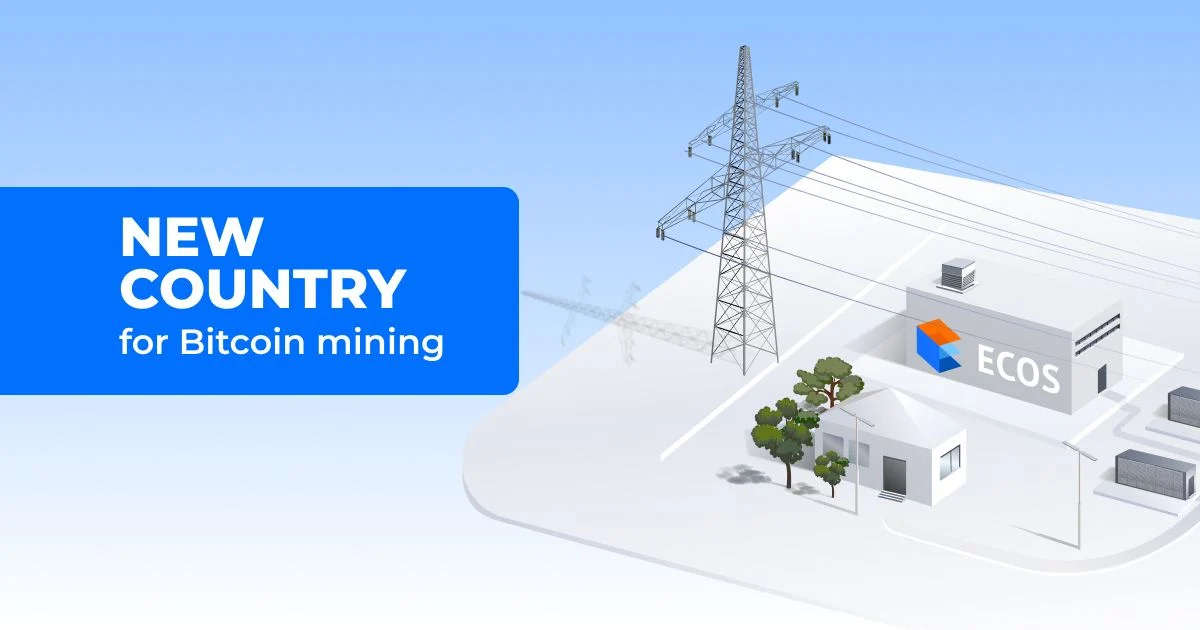
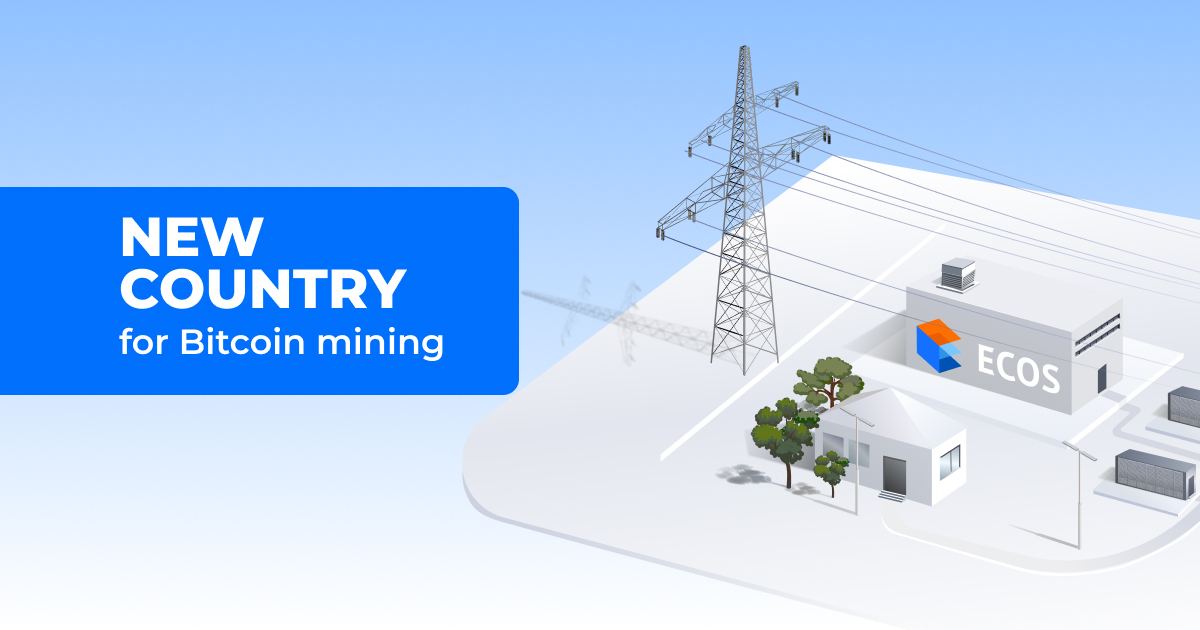
The landscape of international cryptocurrency mining has undergone a significant transformation with the official inauguration of a new 60-megawatt (MW) data center by ECOS, located within the strategically vital Free Economic Zone (FEZ) of Armenia. This development marks a pivotal milestone in the company’s expansion strategy, leveraging a unique public-private partnership that dates back to 2018 when the Armenian government formally entrusted ECOS with the management and development of a dedicated economic zone for high-tech and blockchain industries. The new facility, situated in the industrial hub of Hrazdan, is designed to accommodate the growing global demand for institutional-grade mining infrastructure while providing retail investors with accessible, end-to-end managed services.
A Strategic Hub for Global Blockchain Infrastructure
The launch of the 60 MW facility represents more than just an increase in hashing power; it signifies the maturation of Armenia as a primary destination for the global blockchain industry. In 2018, the Armenian government issued a landmark decree to establish a Free Economic Zone specifically tailored to foster innovation in distributed ledger technology (DLT) and cryptocurrency mining. By appointing ECOS as the designated organizer and operator of this zone, the state created a secure legal framework that shields participants from the regulatory volatility often seen in other jurisdictions.
The newly commissioned data center occupies a sprawling 2.2-hectare plot in Hrazdan, a location chosen for its robust industrial heritage and proximity to critical energy infrastructure. The facility is currently equipped to house over 20,000 high-performance mining devices, such as the latest generations of Bitmain’s Antminer series. However, the site’s potential far exceeds its current capacity. According to technical specifications released by ECOS, the infrastructure has been engineered with scalability in mind, possessing the necessary groundwork to expand to a staggering 200 MW in the coming years. This potential for growth positions the Hrazdan site among the largest and most sophisticated mining operations in the Transcaucasian region.
The Economic Advantages of the Free Economic Zone
One of the primary drivers behind the rapid adoption of ECOS’s services is the unprecedented tax regime offered within the Free Economic Zone. For many mining operations globally, profitability is often eroded by a combination of high corporate taxes, value-added tax (VAT) on equipment, and unpredictable import duties. The Armenian FEZ addresses these challenges through a comprehensive 25-year incentive program.
Under the current legal framework, companies operating within the ECOS FEZ are entitled to:
- 0% Income Tax: Ensuring that the revenue generated from mining activities remains with the operator or investor.
- 0% Value Added Tax (VAT): Significantly reducing the cost of services and internal transactions.
- 0% Import and Export Duties: A critical factor for an industry that relies on the frequent procurement of expensive, specialized hardware from international manufacturers like Bitmain.
- 0% Property and Real Estate Taxes: Lowering the overhead costs associated with maintaining large-scale physical data centers.
These fiscal incentives are guaranteed for a quarter-century, providing a level of long-term predictability that is rare in the cryptocurrency sector. For institutional investors, this stability allows for more accurate financial modeling and a faster return on investment (ROI) compared to jurisdictions where tax laws are subject to annual legislative shifts.
Technical Superiority and Climatic Efficiency
Beyond the legal and fiscal benefits, the ECOS data center in Hrazdan leverages natural geographic advantages to optimize operational efficiency. Cryptocurrency mining is an energy-intensive process that generates substantial heat; managing this thermal output is typically one of the highest operational expenses for data centers.
The city of Hrazdan offers an ideal solution to this problem. With an average annual temperature of approximately 4.8°C (40.6°F), the region allows for the use of "free cooling" techniques. By circulating the naturally cool ambient air through the facility, ECOS can maintain optimal operating temperatures for the mining hardware without the need for energy-hungry industrial refrigeration systems. This reduction in cooling costs directly translates to a lower Power Usage Effectiveness (PUE) ratio, making the operation both more profitable and more environmentally sustainable.
Furthermore, the facility is connected to high-voltage power networks that ensure a stable and "clean" electricity supply. In an industry where even a few minutes of downtime can result in significant financial loss, ECOS boasts an uptime of nearly 100%. This reliability is bolstered by the presence of on-site service centers, warehouses stocked with essential spare parts, and a dedicated team of technicians who monitor the hardware 24/7.
End-to-End Managed Services for Global Clients
ECOS has positioned itself as a bridge between complex industrial mining and the end-user. The company’s ecosystem is designed to remove the barriers to entry that typically prevent retail investors from participating in Bitcoin mining. The "end-to-end" service model means that ECOS handles the entire lifecycle of the mining process.
This process begins with the procurement of hardware. ECOS maintains a direct relationship with Bitmain, ensuring that clients receive the latest, most efficient hardware at competitive prices. Once purchased, the equipment is installed in the Hrazdan data center, where ECOS employees take full responsibility for its maintenance, security, and optimization.
For the user, the experience is distilled into a user-friendly mobile application. Through this digital interface, investors can purchase hash power (cloud mining) or host their own physical machines (hosting services), monitor their real-time earnings, and manage their assets with a few clicks. This democratization of mining is a core tenet of ECOS’s philosophy, as highlighted by Ilya Goldberg, Managing Partner at ECOS. Goldberg noted that the company has transitioned from the initial stage of legalizing mining in Armenia to launching a massive, scalable energy infrastructure that serves both institutional and retail clients globally.
Security and Infrastructure Integrity
Given the high value of the assets housed within the data center, ECOS has implemented rigorous security protocols. The facility is protected by armed guards and features comprehensive surveillance systems that operate around the clock. Access to the server rooms is strictly controlled, and the entire 2.2-hectare perimeter is monitored to prevent unauthorized entry.
The infrastructure also includes a robust logistics network. Because the data center is located within a Free Economic Zone, the movement of equipment is streamlined. The on-site warehouse and service center mean that if a mining unit fails, it can be repaired or replaced almost immediately, minimizing the impact on the client’s hash rate. This localized support system is a significant advantage over "remote" hosting providers who may require weeks to ship faulty equipment back to manufacturers for repair.
Global Context and the Future of Mining
The expansion of ECOS comes at a critical juncture for the global cryptocurrency market. Following a period of market consolidation—often referred to as "crypto winter"—there is a renewed interest in securing Bitcoin through mining as the industry moves toward the next halving cycle. Historically, periods of lower asset prices have proven to be the most opportunistic times for infrastructure investment, as the difficulty of the network and the cost of hardware often adjust to more favorable levels.
While other regions face challenges—such as the high energy costs in Europe, the regulatory uncertainty in the United States, and the complete ban on mining in China—Armenia has emerged as a stable alternative. By providing a government-backed sanctuary for blockchain enterprises, Armenia is positioning itself as a leader in the global digital economy.
The 60 MW launch is merely the beginning of ECOS’s next phase of growth. With the capability to scale to 200 MW, the company is preparing for a future where Bitcoin mining is increasingly dominated by professionalized, large-scale operations that prioritize energy efficiency and legal compliance. The integration of "clean" electricity from the Armenian grid also aligns with the global trend toward more sustainable mining practices, addressing one of the most common criticisms of the industry.
Implications for the Armenian Economy
The partnership between ECOS and the Armenian government serves as a blueprint for how nations can integrate blockchain technology into their national economic strategies. The Free Economic Zone attracts foreign direct investment (FDI), creates high-tech jobs for local engineers and technicians, and stimulates the local construction and service sectors.
By fostering an environment where 250,000 users worldwide can participate in the Armenian tech ecosystem, ECOS is helping to diversify the country’s economy. The success of the Hrazdan data center is expected to attract further innovation, potentially leading to the development of software hubs, research and development centers, and educational initiatives focused on cryptography and decentralized finance (DeFi).
In summary, the launch of the 60 MW ECOS data center in Armenia is a significant development for the global crypto-mining industry. It combines state-backed legal security, massive tax incentives, and ideal climatic conditions to create a world-class hosting and cloud mining environment. As the industry continues to professionalize, facilities like the one in Hrazdan will likely become the standard for secure, efficient, and profitable cryptocurrency production. For investors, the message from ECOS is clear: the infrastructure is ready, the legal framework is stable, and the technological barrier to entry has been removed.