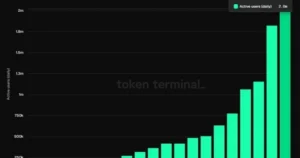
The cryptocurrency market, characterized by its inherent volatility and cyclical nature, has recently witnessed a significant shift in network activity between the two leading digital assets, Bitcoin (BTC) and Ethereum (ETH). For the first time in approximately three years, Bitcoin has surpassed Ethereum in terms of daily transaction fees. This notable development, occurring amidst heightened anticipation surrounding the potential approval of spot Bitcoin Exchange-Traded Funds (ETFs) in the United States, underscores a dynamic interplay between market sentiment, investor behavior, and underlying network economics.
Currently, Bitcoin is trading around the $63,792 mark, while Ethereum hovers near $1,725. This price disparity, while significant, does not solely dictate the network activity. The recent surge in Bitcoin’s transaction fees suggests a heightened demand for block space on its network, a phenomenon often driven by increased trading activity, speculative investments, and potentially, the anticipation of institutional capital inflows linked to the ETF discussions.
The ETF Catalyst: A Driving Force Behind Increased Bitcoin Network Activity
The primary driver behind this shift appears to be the fervent optimism surrounding the potential approval of spot Bitcoin ETFs by the U.S. Securities and Exchange Commission (SEC). Financial institutions, including industry giants like BlackRock, Fidelity, and Grayscale, have submitted applications for these investment vehicles. The approval of a spot Bitcoin ETF would represent a monumental step for the cryptocurrency industry, offering traditional investors a regulated and accessible way to gain exposure to Bitcoin without the complexities of direct digital asset ownership.
This anticipation has fueled a surge in trading volume and, consequently, an increase in the number of transactions being processed on the Bitcoin network. As more investors seek to acquire Bitcoin in anticipation of potential ETF inflows or to capitalize on the perceived bullish momentum, the competition for block space intensifies. This increased demand directly translates into higher transaction fees, as users are willing to pay a premium to ensure their transactions are confirmed promptly.
Historical Context: A Rare Reversal in Network Dominance
Historically, Ethereum has often commanded higher transaction fees due to its more complex ecosystem, which supports a vast array of decentralized applications (dApps), including DeFi protocols, NFTs, and other smart contract-based functionalities. These applications generate a continuous stream of transactions, often leading to network congestion and elevated fees.
However, the current situation marks a significant departure from this established pattern. The surge in Bitcoin’s transaction fees suggests that, at this particular moment, the economic activity and speculative fervor surrounding Bitcoin have temporarily eclipsed that of Ethereum. This reversal highlights the fluid nature of the cryptocurrency market and the ability of specific events, such as the ETF narrative, to dramatically influence network demand and associated costs.
Analyzing the Data: A Deeper Dive into Transaction Fee Dynamics
While specific real-time data fluctuates, reports from various blockchain analytics firms have indicated that Bitcoin’s daily transaction fees have, in recent periods, exceeded those of Ethereum. This metric is crucial as it reflects the actual cost paid by users to conduct transactions on each respective blockchain. A sustained period of higher fees on Bitcoin suggests a robust demand for its network services, potentially driven by larger transaction values or a higher frequency of high-value trades being executed.
For instance, during periods of intense market activity, such as significant price rallies or major news events, the Bitcoin network can experience congestion. This congestion forces users to bid higher for block inclusion, leading to a temporary spike in average transaction fees. The current ETF-related excitement appears to be creating such a scenario.
Far-Reaching Price Predictions: A Glimpse into Potential Futures
Beyond the immediate network activity, the long-term price potential of both Bitcoin and Ethereum continues to be a subject of intense speculation and analysis. While current price action might be subdued, several influential figures and institutions have put forth exceptionally bullish forecasts, suggesting that these digital assets could reach unprecedented highs in the coming years.
For Bitcoin, the late cryptographer Hal Finney, an early adopter and recipient of the first Bitcoin transaction, once projected a future where Bitcoin becomes the world’s primary payment system, with prices potentially reaching between $10 million and $22 million per coin by 2045. While this is an extremely aggressive long-term outlook, it reflects an early belief in Bitcoin’s transformative potential.
On the institutional front, Fidelity, a leading financial services company, has previously suggested a long-term scenario where Bitcoin’s inherent scarcity and its role as a global store of value could propel its price to an astonishing $1 billion by 2038. This prediction is anchored in the concept of Bitcoin as "digital gold," a finite asset that gains value as its adoption and utility increase.
ARK Invest, led by Cathie Wood, has also maintained a high-conviction "bull case" for Bitcoin, projecting a price of $1.5 million by 2030. This forecast is predicated on the assumption that Bitcoin will solidify its position as a major global asset class, rivaling traditional assets in terms of market capitalization and investment allocation.
Ethereum’s bullish cases tend to focus more on its utility as a foundational financial layer rather than solely on scarcity. Analyst Brian Schuster has proposed a scenario where Ethereum captures a substantial market share as a global utility layer, potentially driving its price to $100,000. This prediction is rooted in Ethereum’s role as the backbone for a decentralized internet and a new financial system.
VanEck, a prominent investment management firm, has also offered price targets for Ethereum. Their research has initially projected an $11,800 price target for ETH by 2030. However, more optimistic scenarios from the firm and other industry voices, including those at Fundstrat, have entertained horizons as high as $62,000. These higher projections often hinge on the successful implementation and adoption of Layer 2 scaling solutions, which aim to enhance Ethereum’s transaction throughput and reduce fees, thereby attracting more users and applications.
The Chasm Between Speculation and Reality
It is crucial to acknowledge the significant gap between these ambitious price predictions and the current market reality. For Bitcoin to reach Hal Finney’s $10 million target, it would require an extraordinary increase of over 15,600% from its current trading price. Similarly, for Ethereum to reach a $100,000 valuation, it would necessitate a roughly 5,900% surge.
Given the current velocity of adoption and the existing market infrastructure, these targets remain highly speculative and are not realistic near-term expectations. These models represent theoretical "what-if" scenarios for a future-proofed financial system, rather than immediate investment horizons. The path to achieving such valuations would involve widespread global adoption, significant technological advancements, and a fundamental shift in how individuals and institutions interact with financial systems.
Broader Implications and Future Outlook
The recent surge in Bitcoin’s transaction fees, driven by ETF speculation, carries several implications for the broader cryptocurrency ecosystem.
Firstly, it highlights the significant impact of regulatory developments on market dynamics. The potential approval of spot Bitcoin ETFs has clearly energized the market and directed capital towards Bitcoin. This underscores the sensitivity of the crypto market to regulatory clarity and institutional adoption.
Secondly, it brings attention back to the fundamental economics of blockchain networks. While Ethereum has long been the dominant player in terms of transaction fees due to its dApp ecosystem, this event demonstrates that Bitcoin’s network can also experience periods of high demand and value, especially when tied to significant macroeconomic or investment trends.
Thirdly, it raises questions about scalability. If Bitcoin continues to attract significant institutional capital, its current block size and transaction processing capacity might face renewed scrutiny. While the Lightning Network offers a potential solution for off-chain transactions, the on-chain fee dynamics are still a critical indicator of demand.
Looking ahead, the approval or rejection of spot Bitcoin ETFs will undoubtedly be a pivotal moment. If approved, it could lead to sustained institutional inflows, further increasing demand for Bitcoin and potentially maintaining higher transaction fees for a period. If rejected, the market sentiment could shift, leading to a potential correction and a return to more typical network activity patterns.
The long-term outlook for both Bitcoin and Ethereum remains compelling, supported by their unique value propositions and the growing recognition of digital assets as a legitimate investment class. However, the journey to realizing the most audacious price predictions will be a complex and potentially lengthy one, contingent upon technological innovation, regulatory evolution, and widespread adoption. The current trend of Bitcoin outperforming Ethereum in transaction fees serves as a fascinating snapshot of the market’s evolving dynamics, driven by powerful speculative forces and the relentless pursuit of future value.