


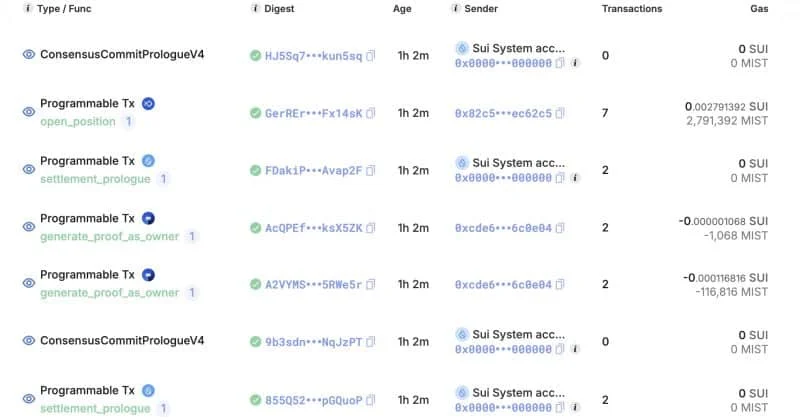
The Sui blockchain network has successfully resumed normal operations following a significant outage that lasted approximately 5 hours and 55 minutes. The disruption, which began on May 28, was attributed to a critical bug within the gas charging logic of the network’s latest software release, version 1.72. This flaw effectively halted the calculation of transaction fees, leading to a complete standstill in the production of new blocks and transaction finalization. Validators, the decentralized entities responsible for maintaining the network’s integrity, swiftly coordinated to implement a fix and upgrade to a patched version of the software, restoring normal checkpoint production on May 29.
The Genesis of the Stoppage: A Flaw in Fee Calculation
The core of the issue lay in a fundamental component of blockchain operation: the mechanism that determines the cost of transactions. In the context of Sui, the 1.72 software release introduced a defect in the code responsible for calculating gas fees. This bug meant that the network could no longer accurately determine how much users should pay for their on-chain activities. As a direct consequence, the entire network ceased to process new blocks, effectively freezing all ongoing and pending transactions. This failure in the gas charging logic triggered a cascade effect, impacting the network’s ability to maintain its consensus and produce new state updates.
Chronology of the Outage and Recovery Efforts
The incident unfolded on May 28, when validators running the newly deployed 1.72 update began to encounter the critical bug. This led to a complete cessation of new checkpoint production, the process by which the network validates and finalizes blocks of transactions. Without the ability to produce new checkpoints, no new transactions could be finalized, rendering the network inert.
The recovery process was far from instantaneous. Sui’s robust consensus mechanism, designed to ensure security and decentralization, requires a supermajority of validators – specifically, those holding more than two-thirds of all staked tokens – to adopt any critical software update. This measure, while crucial for long-term security, meant that the network could only resume operations once this significant portion of its validators had successfully upgraded to the patched software. This coordination effort, involving communication and deployment across a globally distributed set of validators, is a complex undertaking that inherently takes time.
Safety Guarantees Upheld: No User Funds at Risk
Despite the extended downtime, a critical aspect of the incident is the affirmation of Sui’s safety guarantees. During the nearly six-hour disruption, no user funds were compromised or lost. The network’s architectural design, particularly its ability to maintain data integrity even during periods of halted activity, prevented any data inconsistencies from arising. This is a significant testament to the underlying security protocols of the Sui blockchain.
Impact on Decentralized Finance (DeFi) Ecosystem
The implications of the outage extended directly to the vibrant DeFi ecosystem built atop the Sui network. Protocols operating within this environment experienced a complete freeze. This meant that users were unable to adjust their existing positions, execute new trades, or participate in any on-chain financial activities. Crucially, automated liquidation mechanisms, designed to protect against impermanent loss and maintain the solvency of lending protocols, were also rendered inoperable. This effectively put a pause on the dynamic and often time-sensitive nature of DeFi markets operating on Sui.
A Recurring Pattern: The Second Major Outage in Months
This recent incident is not the first time Sui has faced significant operational disruptions. On January 14 of the same year (referring to the provided article’s context of 2026, though this date context might be hypothetical or a typo, assuming it refers to a recent past event for the purpose of this rewrite), the network experienced a similar multi-hour stall, lasting approximately six hours. That prior outage was attributed to a different, yet equally critical, bug within the consensus commit mechanism.
The recurrence of such extended downtimes within a relatively short period – two major outages of comparable magnitude in roughly five months – presents a discernible pattern that warrants attention. Both incidents share a common thread: the introduction of a bug through a software update, followed by a substantial period of network paralysis that necessitated a large-scale, coordinated effort among validators to deploy a fix. This trend raises questions about the robustness of the testing and deployment processes for new software releases on the Sui network.
Market Reaction: The SUI Token’s Performance
The financial markets reacted swiftly to the news of the outage. The SUI token, the native cryptocurrency of the Sui blockchain, experienced a noticeable price decline during the downtime. Reports indicate that the price dropped to approximately $0.89, reflecting a decrease in the range of 6-8%. Following the resumption of normal network operations, the SUI token saw a partial recovery, indicating that market sentiment is closely tied to the network’s operational stability. This price action suggests a degree of investor sensitivity to network disruptions and a potential playbook for how the market might react to future similar events.
Broader Implications for Sui’s Positioning and Future Growth
Sui has positioned itself as a high-throughput Layer 1 blockchain, aiming to provide the foundational infrastructure necessary to support demanding decentralized finance applications and attract significant institutional capital. The network has seen substantial growth in its ecosystem, with the total value locked (TVL) across its various DeFi protocols reaching hundreds of millions of dollars since its launch.
However, the repeated instances of extended downtime pose a potential challenge to this ambitious vision. For a blockchain to be considered a reliable platform for sophisticated financial applications, especially those requiring constant availability and high transaction speeds, consistent uptime is paramount. While the safety of user funds was preserved, the inability to execute transactions for nearly six hours could erode confidence among developers, users, and potential institutional investors who prioritize network stability and predictability.
The market’s reaction, as evidenced by the SUI token’s price dip and partial recovery, suggests that while the immediate impact may be absorbed, a third major incident of this nature could have more pronounced and lasting effects on investor sentiment and the network’s long-term growth trajectory. The narrative of Sui as a robust and dependable infrastructure provider is being tested by these recurring operational challenges.
Analyzing the Root Causes and Mitigation Strategies
The nature of these outages – stemming from software bugs in critical logic areas like gas fee calculation and consensus mechanisms – points to potential areas for improvement in Sui’s development lifecycle. While thorough testing is undoubtedly part of the process, the fact that these critical flaws have made it to production and caused significant network halts suggests a need for enhanced pre-release validation, more rigorous stress testing, and potentially more granular rollout strategies for software updates.
The requirement for a two-thirds validator consensus to restore the network, while a security feature, also highlights the logistical challenge of rapid remediation. Future strategies might explore mechanisms for faster, yet still secure, rollback capabilities or more sophisticated methods for isolating and patching critical bugs without necessitating a complete network-wide upgrade in such a short timeframe.
Furthermore, the transparency and communication from the Sui development team and validators during the outage are crucial. While the article does not detail specific statements, the swift coordination implies active communication channels. However, for public perception and investor confidence, clear and timely updates detailing the problem, the steps being taken, and estimated resolution times are vital.
Looking Ahead: The Path to Enhanced Reliability
The Sui Foundation and the development team are likely to conduct a thorough post-mortem analysis of this incident. Key areas of focus will undoubtedly include:
- Code Review and Auditing: Intensifying code review processes and potentially engaging external auditors for critical components of the blockchain software.
- Testing Frameworks: Enhancing automated testing suites to simulate a wider range of edge cases and failure scenarios, particularly concerning core economic logic like gas fees.
- Staging Environments: Utilizing more robust staging environments that closely mirror the mainnet configuration to catch bugs before deployment.
- Validator Coordination Protocols: Streamlining communication and deployment protocols for validators to ensure quicker collective action in the event of critical bugs.
- Incident Response Playbooks: Developing and refining detailed incident response playbooks for various types of network disruptions.
Sui’s ambition to compete at the forefront of Layer 1 blockchain technology necessitates a flawless operational record. While the resilience shown in recovering from this outage is commendable, the recurring nature of these disruptions serves as a critical signal for the team to prioritize long-term network stability and reliability. The success of Sui in attracting and retaining users and developers, as well as its ability to onboard institutional capital, will be significantly influenced by its capacity to demonstrate consistent and unwavering uptime in the future. The ecosystem’s continued growth hinges on trust, and trust is built upon a foundation of reliable and uninterrupted service.














