


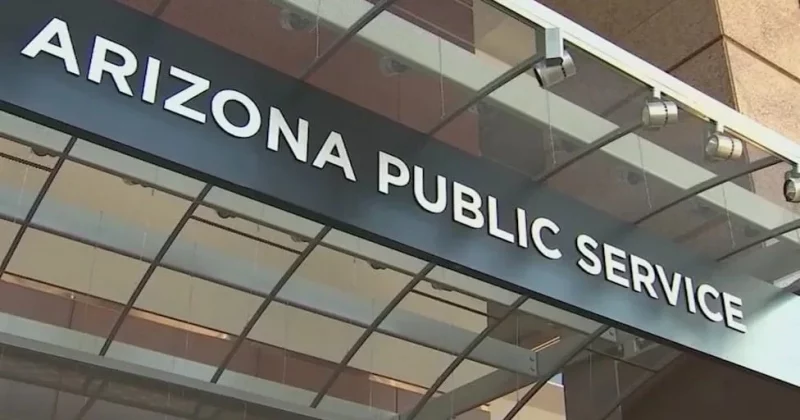
Arizona Public Service (APS), the state’s largest electricity provider, has formally initiated a regulatory process that could fundamentally reshape the economic landscape for high-energy industries in the Southwest. In a comprehensive rate case filing submitted to the Arizona Corporation Commission (ACC), the utility is seeking a revenue increase of approximately $662 million, representing a total average increase of 16% across its customer base. However, the burden of this proposal falls disproportionately on the shoulders of extra-large industrial users, specifically targeting the data centers that have flocked to Arizona’s "Silicon Desert" over the last decade. Under the proposed plan, these high-demand entities could face a staggering 45% increase in their electricity rates, a move APS justifies as a necessary step to protect residential ratepayers from subsidizing the massive infrastructure build-out required by the artificial intelligence (AI) and cloud computing boom.
The Catalyst: A Surge in Power Demand and Infrastructure Costs
The impetus for this historic rate request lies in a dramatic shift in Arizona’s energy consumption profile. For years, Arizona was characterized by steady, predictable growth driven by residential migration. However, the rapid proliferation of data centers—spurred by the global race for AI dominance and the expansion of cloud services—has forced a radical upward revision of demand forecasts.
APS now projects that its peak load will grow by as much as 40% by the year 2031. This surge is not a gradual trend but a vertical spike driven almost exclusively by industrial-scale technology operations. To meet this demand, the utility argues it must undertake a multi-billion-dollar capital investment program to expand generation capacity, reinforce transmission lines, and modernize grid substations. The current filing, registered under Docket E-01345A-25-0105, asserts that the infrastructure required to support a single large-scale data center can often equal the power needs of an entire small city. Consequently, APS maintains that the customers responsible for this unprecedented demand must bear a proportional share of the costs associated with upgrading the electrical ecosystem.
Detailed Breakdown of the Proposed Rate Adjustments
The proposal outlines a tiered approach to cost allocation, aiming to balance the utility’s financial health with the public’s demand for affordable energy.
- Extra-Large Industrial Users (Data Centers): This category faces the most significant impact. APS has proposed a rate hike exceeding 45% for the largest energy consumers. This is specifically designed to target facilities with high load factors that operate 24/7, such as AI training clusters and massive server farms.
- Residential Customers: While the percentage is lower than the industrial tier, the impact on households remains substantial. The average residential customer would see their monthly bill increase by roughly $20, which translates to a 14% to 16% hike depending on usage patterns.
- Small to Medium Businesses: General commercial users would see moderate increases, though APS has structured the proposal to ensure that the primary "cost drivers"—the ultra-high-demand users—are the ones providing the bulk of the new revenue.
Central to the filing is the "cost of service" principle. APS argues that without these targeted increases for data centers, the financial burden of building new power plants and transmission corridors would inevitably fall on residential families and small business owners who do not benefit directly from the data center expansion.
The Formula Rate Mechanism: A Paradigm Shift in Utility Regulation
Perhaps the most controversial and consequential element of the APS filing is the introduction of a "formula rate mechanism." Historically, utility companies must file a full rate case—a process that often takes 12 to 18 months of litigation and public testimony—every time they need to adjust prices to reflect new investments.
The proposed formula rate mechanism would allow for annual, semi-automatic rate adjustments tied directly to load growth and infrastructure spending. If approved, this would create an "automatic escalator" for electricity costs. For APS, this provides the financial agility to keep pace with the rapid construction cycles of the tech industry. For data center operators, however, it introduces a high degree of fiscal uncertainty. Instead of locking in predictable energy costs for a five-year planning horizon, large-scale users would see their power expenses become a moving target, adjusted every year based on the previous year’s grid expansions.
Chronology of the 2025-2026 Rate Case
The journey of Docket E-01345A-25-0105 is expected to be one of the most closely watched regulatory battles in Arizona’s history. The timeline of the proceedings is as follows:
- Early 2025: APS filed the initial rate case application, citing the widening gap between current revenue and projected infrastructure needs.
- May 18, 2026: Public hearings officially commenced before the Arizona Corporation Commission. These hearings allowed for testimony from utility executives, consumer advocacy groups, and representatives from the tech industry.
- Summer 2026: The evidentiary phase, where intervenors—including the Residential Utility Consumer Office (RUCO) and large industrial groups—present data challenging APS’s cost projections and allocation methods.
- Late 2026: The five elected members of the ACC are expected to issue a final decision. This ruling will determine the exact percentage of the rate hike and whether the formula rate mechanism will be implemented.
Stakeholder Reactions: A Divided Front
The reception to the APS proposal has been polarized, reflecting the high stakes for Arizona’s economy.
The Utility’s Stance: APS executives have remained firm in their messaging. "Our responsibility is to maintain a reliable and resilient grid for all Arizonans," a spokesperson for the utility stated during the initial hearings. "When a single industry requires a massive acceleration of our capital plans, it is only fair that the pricing structure reflects the cost of providing that specific service."
Consumer Advocates: Organizations like RUCO have expressed cautious support for the idea of data centers paying more, but they remain wary of the overall 16% increase for residents. Advocates argue that while shifting the burden away from households is a positive step, the total revenue increase requested by APS may still be excessive given the utility’s current profitability.
The Tech and Data Center Industry: Representatives from the data center sector have signaled deep concern. Arizona, particularly the Phoenix metropolitan area, has marketed itself as a premier destination for tech infrastructure due to its geological stability and historically affordable power. Industry lobbyists argue that a 45% increase, combined with the uncertainty of a formula rate mechanism, could stall future investment and drive new projects to neighboring states like Nevada or New Mexico.
Impact on the Crypto Mining and AI Ecosystems
The specific focus on extra-large users puts two burgeoning sectors in the crosshairs: Bitcoin mining and AI development.
For Bitcoin miners, who operate in a global market with fixed rewards, electricity is the primary variable cost. Arizona has recently seen an influx of mining operations seeking to take advantage of the state’s solar-heavy grid. However, miners typically operate on thin margins. A 45% increase in overhead could instantly render many Arizona-based mining rigs unprofitable, potentially leading to a mass exodus of the industry from the state.
AI operators face a different challenge. Unlike crypto mining, which can sometimes be "interruptible" (shutting down during peak demand to help the grid), AI training clusters require constant, high-density power. For companies like Meta, Google, and Microsoft—all of which have a significant presence in the region—the cost of electricity is a major factor in the total cost of ownership for their AI hardware. While these tech giants have deeper pockets than crypto miners, the proposed "moving target" of annual rate adjustments could complicate long-term budgeting for the massive AI models currently under development.
Analysis: Arizona at a Crossroads
This rate case represents more than just a dispute over monthly bills; it is a fundamental debate over the future of Arizona’s economic identity. For the past decade, the state has successfully positioned itself as a global hub for the digital economy. The influx of data centers has brought construction jobs, tax revenue, and a reputation for innovation.
However, the "Data Center Gold Rush" is now clashing with the physical realities of the power grid. Arizona’s extreme summer heat already puts the grid under immense seasonal stress. Adding the constant, unyielding load of AI data centers creates a scenario where the utility must choose between slowing down the tech boom or asking the public to pay for its expansion.
By proposing such a sharp increase for industrial users, APS is essentially testing a new regulatory model: "Growth pays for growth." If the ACC approves the plan, Arizona will become one of the most expensive states in the country for high-load data centers, potentially cooling the very industry it worked so hard to attract. Conversely, if the commission rejects the hike or the formula mechanism, APS may struggle to find the capital necessary to prevent brownouts or grid instability as demand continues to climb toward the 2031 forecast.
Conclusion and Outlook for 2027
As the public hearings continue through 2026, the eyes of the national energy sector remain fixed on Phoenix. The final decision by the Arizona Corporation Commission will serve as a bellwether for other states facing similar AI-driven demand surges, such as Virginia, Texas, and Georgia.
If the APS proposal is adopted in its current form, 2027 will mark the beginning of a new era for Arizona’s energy markets—one where the convenience of the cloud and the power of artificial intelligence come with a significantly higher, and more volatile, price tag. For residential customers, the hope is that this shift will finally decouple their utility bills from the breakneck expansion of Big Tech. For the data centers themselves, the era of cheap, predictable power in the desert may be reaching an end.














