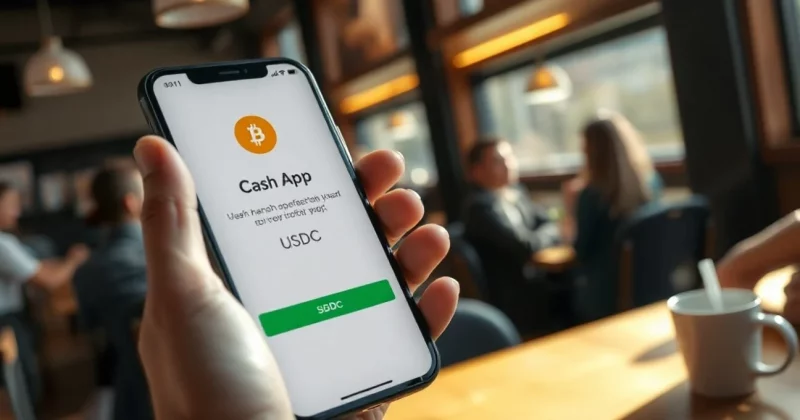
Cash App, a dominant force in the peer-to-peer payment landscape, has taken a significant leap into the broader digital asset ecosystem by integrating United States Dollar Coin (USDC) stablecoin payment functionality. This strategic move, spearheaded by Jack Dorsey’s fintech giant Block, marks a pivotal moment, positioning Cash App as one of the largest consumer platforms to offer such capabilities. The rollout commenced on May 27th, initially extending to approximately 15 million users, representing about a quarter of its nearly 60 million monthly active users. This expansion is poised to fundamentally alter how millions of Americans engage with digital currencies for everyday transactions.
The newly introduced feature allows users to send and receive USDC, a stablecoin designed to maintain a 1:1 peg with the U.S. dollar. Crucially, these transactions are settled on the high-speed, low-cost Solana blockchain. A key benefit for Cash App users is the seamless and instantaneous conversion of received USDC directly into their existing U.S. dollar Cash Balance within the app. This eliminates the complexities often associated with cryptocurrency transactions, such as managing separate wallets or navigating intricate bridging mechanisms between different blockchain networks.
The Mechanics of Seamless Stablecoin Transactions
The integration is engineered for user simplicity, abstracting away the underlying blockchain complexities. Each Cash App user is provisioned with a unique blockchain deposit address specifically for USDC transactions. This innovative approach means that sending USDC to a Cash App account is not limited to other Cash App users. Anyone, irrespective of whether they possess a Cash App account themselves, can send USDC to a Cash App recipient by utilizing a standard Solana wallet address. This broadens the utility of the feature, enabling easier remittances and payments from a wider range of digital asset holders.
The magic of the user experience lies in the automatic conversion process. Once USDC is received into a user’s Cash App account, it is instantaneously converted into their U.S. dollar Cash Balance. This eliminates the need for users to actively manage a separate cryptocurrency wallet or engage in manual conversion steps. Furthermore, the system is designed to bypass the often prohibitive "gas fees" associated with transactions on more congested blockchains. The absence of gas fee anxiety is a significant draw, particularly for everyday transactions where even nominal fees can render payments uneconomical.
Block’s decision to leverage the Solana blockchain as the settlement layer is a testament to the network’s inherent advantages. Solana has gained prominence for its exceptional speed and remarkably low transaction costs. In contrast, during periods of high network congestion on the Ethereum mainnet, transaction fees can surge dramatically, rendering small-value payments, such as sending a modest sum to a friend, financially impractical. Solana’s transaction costs, often measured in fractions of a cent, make micropayments a genuinely viable proposition, aligning perfectly with the goal of facilitating everyday consumer transactions.
The phased rollout, which began this week, is progressing with considerable speed. The initial deployment to 25% of the user base is expected to be followed by a full expansion to all Cash App users by the end of the current week. This rapid scaling indicates Block’s confidence in the infrastructure and its commitment to bringing this transformative feature to its entire user community in a timely manner.
Evolution from Bitcoin Pioneer to Digital Asset Enabler
Cash App’s journey in the digital asset space is not new. The platform has a long-standing and robust integration with Bitcoin, allowing users to buy, sell, and make payments using the cryptocurrency, notably through the Lightning Network. However, the addition of USDC represents a significant strategic pivot. While Bitcoin serves as an excellent store of value and a speculative asset, its inherent price volatility makes it less ideal for direct, everyday payments where precise dollar amounts are required. The gap between hitting "send" and the recipient checking their balance could result in value discrepancies due to Bitcoin’s fluctuating price.
USDC, on the other hand, is engineered to maintain stability. It is pegged at a 1:1 ratio with the U.S. dollar and is backed by reserves of cash and short-dated U.S. Treasuries, providing a high degree of confidence in its stability. This inherent stability makes it a far more suitable instrument for transactional purposes, akin to traditional fiat currency.
Block first publicly announced its intention to integrate stablecoin support back in November 2025. At that time, the company outlined plans to introduce USDC functionality on Solana, alongside enhancements to its existing Bitcoin payment features. The current May rollout aligns with this roadmap, arriving approximately on the timeline Block had originally projected, with an earlier indication of an early 2026 launch. This demonstrates a consistent commitment to innovation and execution within the digital asset space.
Implications for Investors and the Broader Ecosystem
The integration of USDC payments by a platform with nearly 60 million monthly active users carries profound implications for various stakeholders within the digital asset ecosystem. Solana, the chosen settlement layer, stands to benefit immensely from a potentially colossal increase in transaction volume as Cash App scales this feature across its entire user base. A surge in transactions could solidify Solana’s position as a leading blockchain for consumer-facing applications and further validate its technical capabilities.
For Circle, the issuer of USDC, this partnership represents a significant win. Cash App’s extensive reach could substantially boost USDC’s circulation and daily transaction volume. This increased adoption would strengthen USDC’s competitive standing against its primary rival, Tether’s USDT, in the burgeoning stablecoin market. A larger user base for USDC translates to greater liquidity and broader acceptance, reinforcing its status as a preferred stablecoin for both consumers and businesses.
Block itself stands to unlock new revenue streams through this stablecoin integration. Potential avenues include revenue generated from conversion spreads when users buy or sell USDC, transaction fees, or even yield generated from the USDC reserves held on behalf of users. Cash App’s existing Bitcoin trading feature already contributes significantly to Block’s revenue, and the addition of stablecoin services is expected to further diversify and enhance its financial performance.
The move by Cash App follows a trend observed across major financial technology players. PayPal has launched its own stablecoin, and Stripe has made strategic acquisitions, such as Bridge, to facilitate stablecoin payments. Cash App’s routing of consumer transactions through Solana underscores the growing institutional adoption of blockchain technology for mainstream financial services.
Navigating the Regulatory Landscape
Despite the promising technological advancements and market opportunities, the stablecoin landscape remains subject to regulatory scrutiny. The United States, in particular, is still developing its legislative framework for stablecoins. Any future regulatory changes could impose new requirements that might alter the economic calculus of offering these services. For instance, stricter regulations could necessitate higher capital reserves or compliance overhead, impacting profitability.
However, the potential for stablecoins to disrupt traditional financial services, particularly in areas like remittances, is substantial. Legacy remittance services often charge fees in the range of 5% to 10%. Stablecoin-powered payment systems, with their significantly lower transaction costs and greater speed, have the potential to offer a compelling alternative, posing a competitive threat to established players like Western Union and other money transfer services. Cash App’s integration, by making stablecoin payments accessible to millions, could accelerate this disruption, driving greater efficiency and affordability in cross-border and domestic transfers.
The success of this integration will hinge not only on technological execution but also on navigating the evolving regulatory environment. As Block continues to expand its digital asset offerings, maintaining compliance and adapting to new regulations will be paramount to its long-term strategy and the broader adoption of stablecoins in consumer finance. The commitment to providing a seamless, low-cost payment solution for millions of users positions Cash App at the forefront of this financial evolution, signaling a future where digital currencies are an integral part of everyday commerce.