


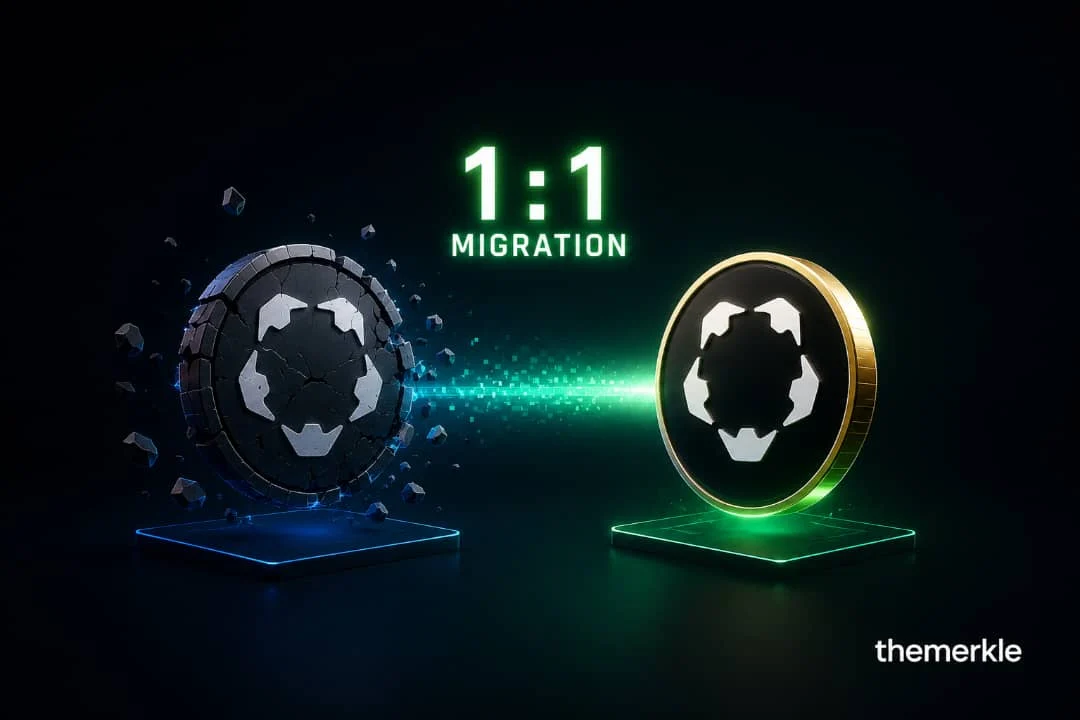
This decision by Humanity Protocol represents one of the more significant and complex post-exploit recovery operations observed in the recent history of the decentralized finance (DeFi) and broader Web3 space. The intricate details of this migration plan are paramount for existing holders, investors, and industry observers attempting to ascertain the immediate and long-term implications for the project and its community. The transparency, albeit with a firm stance on eligibility, is a critical component of their communication strategy in navigating a challenging period.
Unpacking the Security Breach: The Catalyst for Token Replacement
The root cause of this extensive recovery operation was a severe security breach that compromised the Humanity Protocol ecosystem to an extent that rendered its existing H token untenable. Rather than pursuing a less disruptive, patch-and-continue approach, the project’s leadership determined that a complete token retirement and redeployment was the only viable path to ensure the long-term integrity and security of its platform. This choice underscores the gravity of the exploit and the perceived depth of the compromise.
The team’s proactive decision to deploy a new, presumably audited, ERC-20 contract on the Ethereum blockchain signals a commitment to a clean slate. This strategy effectively establishes a hard line in the sand, using a pre-attack snapshot as the immutable determinant for eligibility in the upcoming token distribution. This method, while sometimes controversial, aims to isolate the impact of the exploit to a specific window and prevent further manipulation or opportunistic trading from being rewarded.
The exact moment of the snapshot was meticulously recorded across multiple blockchain networks to ensure accuracy and comprehensive coverage. These critical block heights and the corresponding timestamp are: Ethereum block 25,274,179, Binance Smart Chain (BSC) block 103,071,069, and Humanity Mainnet block 24,247,803. All three correspond precisely to June 8, 2026, at 17:25:35 UTC. Only token balances recorded at this precise moment will be deemed eligible for the new H tokens. This strict cutoff means that any individuals who acquired H tokens after this timestamp, including those who engaged in post-crash speculative buying in hopes of a recovery trade, are explicitly excluded from the replacement airdrop.
This deliberate exclusion policy, while potentially harsh for some late-stage buyers, is framed by the Humanity Protocol team as a necessary measure. It signals a refusal to validate or reward any market activity that occurred after the exploit window, thereby discouraging speculative behavior that might capitalize on a project’s distress. Such a stance, while not unprecedented, often sparks debate within the crypto community regarding fairness versus protocol integrity and the responsibility of participants.
A Detailed Chronology of the Crisis and Recovery Efforts
The timeline of events surrounding Humanity Protocol’s security incident and subsequent recovery plan can be delineated as follows:
- June 8, 2026, 17:25:35 UTC: The critical moment of the security breach. This timestamp marks the exact point when the snapshot across Ethereum, BSC, and Humanity Mainnet was taken. This is the cutoff for eligibility for new H tokens.
- Post-Exploit Window: Following the breach, the H token experienced significant market volatility. During this period, some traders engaged in "buying the dip," acquiring tokens at distressed prices, hoping for a subsequent recovery.
- Tuesday Statement (Date unspecified, but post-exploit): Humanity Protocol officially announced the full migration plan. This statement confirmed the scrapping of the old H token, the deployment of a new ERC-20 token on Ethereum, and detailed the recovery steps. This announcement also clarified the strict eligibility criteria, excluding post-snapshot buyers.
- Ongoing Period: The team is now actively engaged in coordinating the migration, which involves:
- Auditing the New ERC-20 Contract: Ensuring the new token contract is thoroughly vetted for vulnerabilities before deployment.
- Preparing the Snapshot-Based Airdrop: Technical preparations to distribute new tokens to eligible holders.
- Developing the Compensation Fund and Claims Portal: Setting up the infrastructure to handle edge cases and post-snapshot eligible purchasers.
- Coordinating with Exchanges and Infrastructure Partners: Facilitating the transition for tokens held on centralized platforms.
- Mainnet Relaunch Preparations: Getting the Humanity Protocol mainnet ready to integrate with the new token.
This chronology highlights the rapid response required in the face of a severe security incident and the multi-faceted approach necessary for a comprehensive recovery.
The New Token: Specifications, Ratio, and Network Integration
The replacement asset will retain the familiar $H ticker, maintaining brand continuity despite the underlying technological shift. It will be launched as an ERC-20 token on the robust and widely adopted Ethereum blockchain, a move that often enhances security perception and interoperability within the broader DeFi ecosystem. The official smart contract address for the new H token has been provided as 0xE76c5b78f93909d34404E9eb4C1f19e7582a5dE1.
A crucial detail for holders is the swap ratio, which has been set at 1:1. This means that every old H token held by an eligible participant before the snapshot will be directly translated into one new H token, with no haircut or reduction applied to eligible balances. This 1:1 ratio is a positive signal for affected holders, indicating that their original stake, pre-exploit, is being fully honored in terms of quantity.
Eligible holders for the new H token span three distinct blockchain networks: Ethereum, BNB Chain, and Humanity Mainnet. This multi-chain support reflects the original deployment strategy of Humanity Protocol and ensures that holders across these environments are covered by the recovery plan.
The distribution mechanism varies based on where the tokens were held:
- Self-Custody Wallets: Users holding H tokens in standard, non-custodial wallets (e.g., MetaMask, Ledger) will receive the new tokens directly through the automated airdrop mechanism. This is generally the most straightforward distribution path.
- DeFi Protocols and Liquidity Pools: Tokens locked within decentralized finance protocols, such as lending platforms or liquidity pools, present a more complex scenario. These balances are often structured differently on-chain and require a separate, dedicated distribution process managed directly by the Humanity Protocol team. This bespoke approach acknowledges the complexities of retrieving and re-allocating assets from smart contracts.
- Centralized Exchanges (CEXs): For H holders on centralized exchanges, the migration process will be coordinated directly between Humanity Protocol and the respective exchange platforms. Users are advised to monitor official announcements from their specific exchanges for guidance on how their tokens will be transitioned. This usually involves the exchange temporarily halting trading, converting old tokens to new ones internally, and then resuming trading.
A critical component of the recovery strategy is the explicit exclusion of addresses identified as connected to the exploit. This measure is fundamental to preventing the perpetrators from benefiting from their illicit activities and is a standard practice in post-exploit recovery efforts across the crypto industry.
The Compensation Fund and Claims Portal: Addressing Edge Cases
Recognizing that a rigid, snapshot-based airdrop cannot perfectly accommodate every unique situation, the Humanity Protocol team has proactively established both a compensation fund and a dedicated claims portal. This foresight is vital for maintaining community trust and ensuring a more equitable recovery.
The existence of this portal is particularly significant because snapshot-based recoveries almost invariably leave a category of holders in ambiguous positions. These can include:
- Tokens in Transit: Balances that were locked in pending transactions at the exact moment the snapshot occurred.
- Unusual Custody Arrangements: Tokens held in multi-signature wallets, specific smart contracts, or other non-standard setups that might not be easily identified by the primary airdrop script.
- Eligible Post-Snapshot Purchasers: While the general rule excludes post-snapshot buyers, there might be specific, verifiable instances where a legitimate transaction initiated before the exploit completed after the snapshot, creating a grey area that needs human review.
The claims process provides these holders with a formal path to resolution, preventing them from being left without recourse. This demonstrates a commitment beyond mere technical execution, leaning into a more user-centric approach to crisis management. The criteria for claiming through this portal will likely be stringent, requiring verifiable proof of ownership and transaction history to prevent fraudulent claims.
Alongside the migration details, the team issued a critical security warning. They emphasized that all official announcements and instructions will come exclusively from verified Humanity Protocol channels. Holders are strongly cautioned to treat any unsolicited "claim" links or messages with extreme suspicion. This warning is crucial, as post-exploit phishing attempts, social engineering scams, and other malicious activities targeting affected communities are depressingly common. Proactive communication on this front is a vital protective measure for the community.
Market Reaction and Financial Implications
Markets responded to the breach and the subsequent migration news with predictable volatility and downward pressure. CoinMarketCap data indicated that the H token declined approximately 17% on the day of the announcement. This significant drop reflects a confluence of factors: the direct negative impact of the exploit itself, the inherent uncertainty that always accompanies a forced token migration (regardless of how well-structured the recovery plan appears), and the explicit policy regarding post-snapshot buyers.
The 17% decline particularly captures the market pricing in the confirmation that post-snapshot buyers are now definitively excluded from receiving replacement tokens. These individuals, who purchased H in the hours or days following the attack when the token was trading at distressed levels, were essentially betting on an inclusive recovery plan that would honor their purchases. With the team’s firm stance, these purchases now have no path to replacement tokens, resulting in significant losses for those speculative buyers. Conversely, the sellers on the other side of those trades effectively exited their positions, albeit at a lower price, at the expense of buyers who were hoping for a lottery ticket on a distressed asset. This creates a clear winner and loser dynamic in the immediate aftermath of the policy announcement.
Broader Implications for the Crypto Ecosystem
The Humanity Protocol incident and its subsequent recovery plan carry several broader implications for the cryptocurrency and Web3 ecosystem:
- Emphasis on Security: The incident serves as another stark reminder of the persistent and evolving threat landscape in crypto. Despite advancements, projects remain vulnerable to sophisticated attacks, underscoring the critical need for continuous security audits, robust infrastructure, and rapid incident response protocols.
- Project Responsibility and Transparency: Humanity Protocol’s detailed communication and multi-faceted recovery plan, including a compensation fund for edge cases, sets a benchmark for project responsibility in crisis. While the "no dip buyers" policy is firm, the overall transparency in outlining the plan is crucial for rebuilding trust.
- Investor Due Diligence: The exclusion of post-snapshot buyers highlights the inherent risks of "buying the dip" in distressed assets, especially during an ongoing security crisis. It reinforces the need for investors to exercise extreme caution and conduct thorough due diligence, understanding that recovery plans are not guaranteed to be all-encompassing.
- Evolution of Recovery Models: The industry continues to refine its approaches to post-exploit recovery. Humanity Protocol’s decision for a full token replacement rather than a patch-and-continue, combined with a dedicated claims portal, contributes to the evolving playbook for such events.
- Centralization vs. Decentralization in Crisis: While Humanity Protocol is a Web3 project, the recovery process involves a degree of centralized coordination (team managing claims, coordinating with CEXs). This illustrates the practical necessity of centralized decision-making and execution during critical security incidents, even within decentralized paradigms.
Industry Context: A Landscape of Exploits and Recoveries
The cryptocurrency industry has a well-documented history of security breaches and subsequent recovery efforts, each offering unique lessons. From the infamous DAO hack on Ethereum in 2016, which led to a contentious hard fork, to more recent multi-million dollar exploits on bridges and DeFi protocols, the challenge of maintaining security in a rapidly evolving technological landscape is constant.
Many projects have attempted various recovery strategies:
- Hard Forks: As seen with Ethereum after The DAO hack, a controversial but effective way to roll back an entire blockchain to a pre-exploit state.
- Treasury Reimbursements: Projects sometimes use their own treasury funds to reimburse affected users, often partially, to mitigate losses.
- Token Swaps/Migrations: Similar to Humanity Protocol, some projects opt for a complete token replacement, especially when the underlying contract or security mechanism is fundamentally compromised. Examples include the Ronin Bridge hack, where a new token was not strictly necessary, but extensive recovery efforts were undertaken.
- Law Enforcement Involvement: In some cases, projects work with law enforcement to track and recover stolen funds, though this can be a lengthy and often unsuccessful process.
Humanity Protocol’s approach, combining a full token swap with a snapshot and a compensation fund, reflects a hybrid model aiming for both efficiency and fairness, within the constraints of the exploit’s impact. It seeks to balance the technical necessity of a clean break with the ethical imperative to support its legitimate user base.
The Road Ahead: Challenges and Future Outlook
The road ahead for Humanity Protocol is undoubtedly challenging. Beyond the technical complexities of executing a seamless token migration across multiple networks and diverse holding scenarios, the project faces the significant task of rebuilding trust and re-engaging its community. The success of the mainnet relaunch and the efficiency of the compensation fund will be critical in demonstrating the team’s capabilities and commitment.
Market sentiment, while currently negative, could gradually recover if the migration is executed flawlessly and the project demonstrates renewed focus on security and development. The value proposition of Humanity Protocol, presumably centered around decentralized identity or similar Web3 utility, will need to be re-emphasized and proven resilient in the wake of this setback.
In conclusion, Humanity Protocol’s decision to scrap its existing H token for a new Ethereum-based version following a security breach is a bold and necessary step. While the immediate market reaction reflects the severity of the incident and the implications of its recovery policy, the comprehensive nature of the plan — encompassing a precise snapshot, airdrop, mainnet relaunch, and a dedicated compensation fund — underscores a determined effort to navigate this crisis. The crypto community will be watching closely as Humanity Protocol attempts to turn this significant setback into a testament to resilience and responsible project management within the volatile Web3 landscape.














