


Samsung Group, South Korea’s largest conglomerate, is poised to announce an extraordinary corporate commitment of 1,000 trillion won – equivalent to approximately $648 billion USD – slated for deployment over the next decade. This monumental investment, first reported by the Maeil Business Newspaper, signals an aggressive strategic pivot aimed at cementing the nation’s leadership in crucial next-generation technologies, most notably artificial intelligence, advanced semiconductors, and energy solutions. The formal declaration is anticipated to occur during a high-level conference at the presidential headquarters on Monday, with South Korean President Lee Jae Myung presiding. The event will bring together senior leadership from both Samsung Electronics and its domestic rival, SK Hynix, underscoring the national significance and collaborative spirit behind this ambitious initiative.
A Decade of Strategic Investment: The Blueprint for Future Dominance
The comprehensive investment blueprint extends across a diverse array of technology domains, reflecting a holistic approach to securing future growth and competitive advantage. Key areas of focus include the burgeoning field of artificial intelligence infrastructure, cutting-edge energy storage solutions, and advanced display technologies. Central to this gargantuan initiative is an estimated 300 trillion won ($194 billion) allocation specifically earmarked for the construction of new, state-of-the-art semiconductor production facilities within the nation’s southwestern territories. This allocation alone represents a significant portion of the total investment, highlighting the critical role that advanced chip manufacturing plays in South Korea’s long-term economic strategy and its aspiration to remain at the forefront of global technological innovation.
The sheer scale of this investment plan is staggering, representing roughly one-third of South Korea’s annual gross domestic product (GDP), which stood at approximately $1.7 trillion in 2023. Such a commitment from a single corporate entity is virtually unprecedented on a global scale, signaling a profound belief in the transformative power of these technologies and South Korea’s capacity to lead their development. For context, the entire global semiconductor market was valued at around $520 billion in 2023, making Samsung’s planned investment in this sector alone a significant fraction of the global annual market.
Geographic Expansion and National Economic Rebalancing
Historically, South Korea’s highly concentrated semiconductor industry has predominantly clustered around the bustling Seoul metropolitan area, particularly in provinces like Gyeonggi. While this concentration has fostered a robust ecosystem of talent and infrastructure, it has also led to concerns regarding resource limitations, urban congestion, and regional economic disparities. President Lee Jae Myung has made regional economic development a cornerstone of his fundamental policy objectives, emphasizing the need to decentralize industrial growth and foster prosperity across the entire nation. Consequently, the strategic location of these new semiconductor facilities has become a matter of considerable national significance, aligning corporate expansion with governmental policy priorities.
The announcement follows a period of intense lobbying and competitive campaigning among various localities nationwide. Prior to the municipal elections held on June 3, provinces and cities vied aggressively to secure commitments from both Samsung and SK Hynix, understanding the immense economic benefits – including job creation, infrastructure development, and an influx of capital – that such facilities would bring. Competing proposals included a massive 500 trillion won manufacturing complex envisioned for the southwestern region, alongside alternative sites pitched across Gyeonggi, Chungcheong, and Gangwon provinces. The ultimate decision to focus a substantial portion of the investment in the southwestern territories reflects a concerted effort to distribute industrial wealth and foster new growth hubs beyond the traditional economic powerhouses.
A government adviser confirmed this week that active negotiations with both semiconductor manufacturing giants are intensely focused on expediting the construction of these major facilities. This urgency is driven by a shared understanding that market demands, particularly for AI-driven memory chips, are accelerating at an unforeseen pace. Projects initially scheduled for the 2040s are now being fast-tracked, with operations potentially commencing as early as the mid-2030s. This accelerated timeline reflects a strategic imperative to capitalize on the current market momentum and avoid future supply chain bottlenecks. Government officials have characterized the demand for AI-driven memory chips as "exponential and explosive," noting that existing metropolitan infrastructure faces critical constraints in terms of available land, electrical capacity, and water resources – factors that make new, regionally diversified sites increasingly attractive and necessary.
Market Dynamics: SK Hynix’s Ascent and the HBM Imperative
The context of this massive investment is further shaped by evolving market dynamics within the semiconductor industry, particularly the intense competition in high-bandwidth memory (HBM). In a significant development, SK Hynix, Samsung’s long-standing domestic competitor, has recently surpassed Samsung Electronics in total market capitalization, achieving a valuation near $1.35 trillion. This transition reflects SK Hynix’s commanding position in the rapidly expanding HBM segment – specialized chips that are absolutely essential for high-performance AI computation.
HBM chips are designed to overcome the memory bottleneck in AI accelerators, providing significantly higher bandwidth and lower power consumption compared to traditional DRAM. This makes them indispensable components for AI processor manufacturers like Nvidia, which rely extensively on HBM supplies for their cutting-edge graphics processing units (GPUs) and AI supercomputing platforms. SK Hynix has established itself as the market leader in HBM, having been an early innovator and mass producer of the technology. Its HBM3 and upcoming HBM3E products are highly sought after, giving it a critical edge in the current AI boom.
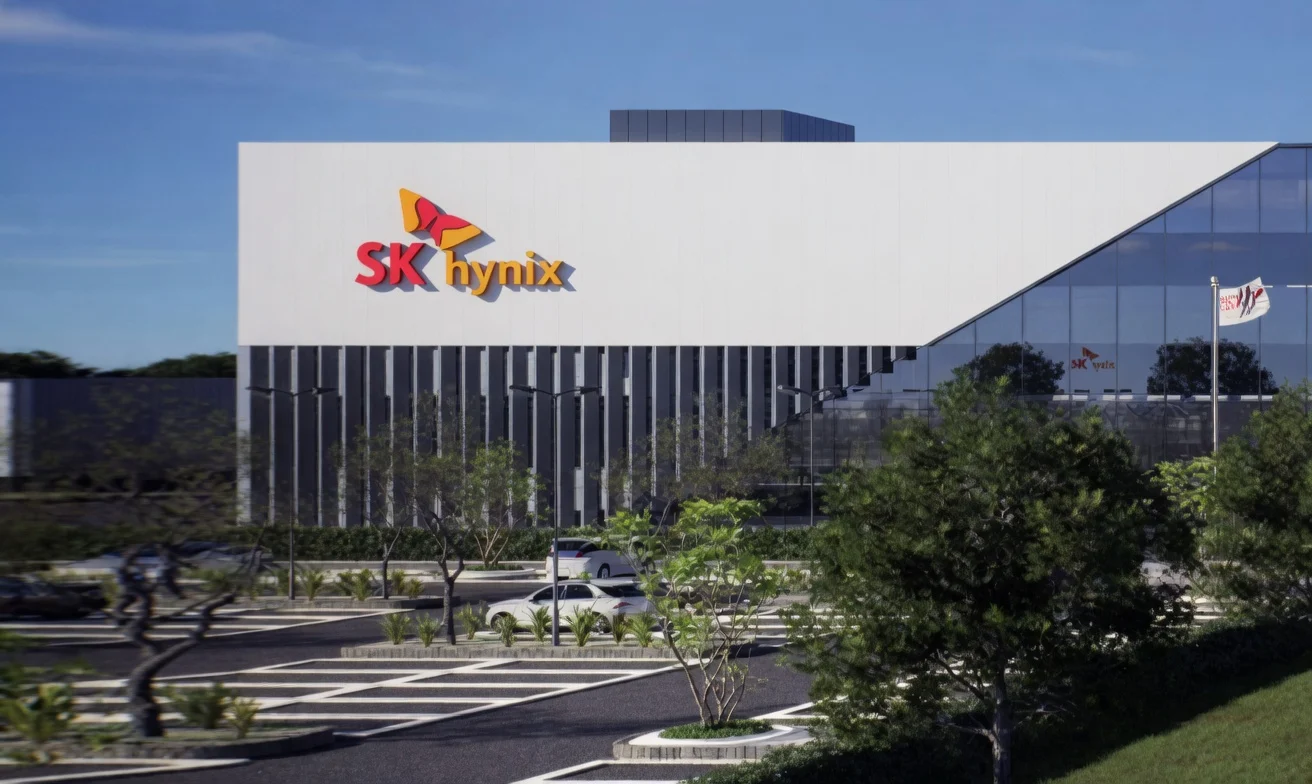
SK Hynix had previously demonstrated its commitment to expanding production infrastructure, pledging $15 billion toward new facilities in February 2026. The joint announcement with Samsung, however, substantially elevates the overall investment levels, showcasing a unified national effort to bolster South Korea’s position in the global semiconductor landscape. The combined force of these two industry titans, backed by government support, positions South Korea as an undeniable powerhouse in the future of AI and advanced computing.
Previous iterations of South Korea’s national semiconductor roadmap projected aggregate spending near $471 billion extending through 2047. The expanded $648 billion commitment, now concentrated over a shorter decade-long horizon, dramatically demonstrates the accelerating trajectory of AI-related demand forecasts and the urgency with which South Korea is responding to these global technological shifts. This reflects a recalibration of national strategy, acknowledging that the pace of innovation and market growth in AI necessitates a much more aggressive investment schedule than previously anticipated.
Samsung Group: A Multifaceted Conglomerate Driving National Prosperity
Samsung Group represents South Korea’s preeminent business conglomerate, or chaebol, wielding immense economic influence both domestically and globally. Its vast portfolio extends far beyond the well-known Samsung Electronics, encompassing critical industries such as battery manufacturing through Samsung SDI, and technology services provision via Samsung SDS. This diversified structure allows Samsung to leverage synergies across various sectors, from the fundamental components of computing (semiconductors, displays) to the power sources (batteries) and the software infrastructure (IT services) that drive modern technology. The group’s sheer size and comprehensive capabilities make it a pivotal engine for South Korea’s economic growth, technological advancement, and global competitiveness.
The scale of this investment is not merely a corporate decision but a national strategic imperative. The South Korean government views the semiconductor industry not just as an economic driver but as a matter of national security and technological sovereignty. In an increasingly competitive and geopolitically fragmented world, securing a domestic supply chain for critical components like advanced semiconductors is paramount. This investment ensures that South Korea remains a central pillar in the global technology supply chain, mitigating risks associated with reliance on external sources and reinforcing its position as a key player in the ongoing technological arms race.
President Lee’s Economic Platform and Political Context
The timing and magnitude of Monday’s announcement also carry significant political weight for President Lee Jae Myung. Public approval for President Lee has recently declined to 51%, marking its lowest point since his June inauguration, according to Gallup Korea polling. Against this backdrop, the unveiling of such a massive economic initiative represents a cornerstone element of his economic platform. It serves as a powerful demonstration of his administration’s commitment to fostering national growth, creating high-value jobs, and securing South Korea’s economic future amidst global uncertainties.
By actively participating in the announcement and emphasizing regional development, President Lee seeks to showcase tangible progress on his policy agenda and potentially bolster public confidence. The promise of new industrial complexes and the associated economic benefits for previously underserved regions can resonate strongly with voters, demonstrating that his administration is delivering on its promises of inclusive growth. The newly planned semiconductor facilities, targeting operational readiness between 2034 and 2035, align perfectly with a long-term vision for sustainable national prosperity and technological leadership.
Broader Implications and Future Outlook
The implications of Samsung Group’s unprecedented investment are far-reaching, extending beyond immediate economic gains. On a national level, it will undoubtedly spur significant job creation, not only in high-tech manufacturing but also across supporting industries, including construction, logistics, and research and development. It will also attract and cultivate top talent, further solidifying South Korea’s reputation as a global hub for innovation and engineering expertise. The investment will likely lead to a surge in R&D spending, fostering breakthroughs in materials science, chip design, and energy technologies that could have ripple effects across various sectors.
Globally, this investment reinforces South Korea’s critical role in the international technology supply chain. As nations worldwide grapple with the challenges of semiconductor shortages and geopolitical tensions, South Korea’s expanded production capacity will be vital. It will also intensify competition within the global semiconductor market, pushing other players to accelerate their own investment plans and technological advancements. The focus on AI infrastructure and HBM chips specifically highlights South Korea’s determination to lead in the most advanced and strategic segments of the industry.
However, such a massive undertaking is not without its challenges. Ensuring a steady supply of skilled labor, managing environmental impacts, and navigating potential global market volatilities will require careful planning and execution. Geopolitical risks, including trade disputes and technological protectionism, could also impact the global market for these advanced products. Nevertheless, Samsung Group’s audacious investment, backed by national strategic imperatives, positions South Korea to not only weather these challenges but to emerge as an even more dominant force in the global technological landscape of the coming decade. This commitment is a powerful testament to South Korea’s ambition and its unwavering dedication to shaping the future of technology.














