


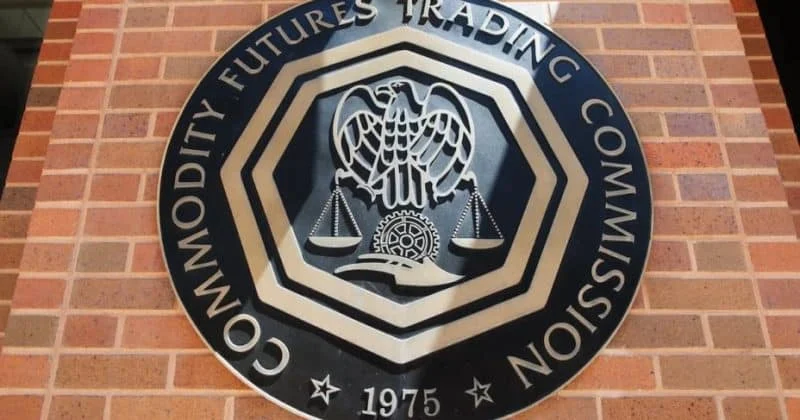
The Commodity Futures Trading Commission (CFTC) has officially unveiled a comprehensive proposal aimed at tightening the regulatory oversight of prediction markets, marking a significant pivot in how the agency manages the burgeoning sector of event-based derivatives. Through a formal Notice of Proposed Rulemaking (NPRM), the federal regulator seeks to refine the protocols for reviewing event contracts, specifically those that allow participants to trade on the outcomes of real-world occurrences ranging from economic indicators to geopolitical shifts.
This legislative move comes at a time when the popularity of prediction markets—platforms where users buy and sell "shares" in the outcome of future events—has surged. While proponents argue these markets provide invaluable "wisdom of the crowd" data and hedging opportunities, the CFTC’s latest proposal signals a growing concern over the potential for these instruments to facilitate activities that are either illegal or contrary to the broader public interest.
The Scope of the Proposed Rulemaking
Under the newly proposed framework, the CFTC would be tasked with a rigorous assessment of whether specific event contracts implicate activities explicitly listed as problematic under the Commodity Exchange Act (CEA). The proposal highlights several high-stakes categories that would trigger intense scrutiny, including contracts related to terrorism, assassination, war, gaming, or any conduct that is unlawful under state or federal law.
The core of the proposal rests on the Commission’s authority to determine if such instruments should be deemed "contrary to the public interest." If a contract is found to meet this threshold, it would be prohibited from being listed for trading or cleared by any registered entity. This move effectively creates a "red line" for the industry, particularly regarding contracts that resemble gambling or those that could provide financial incentives for harmful real-world actions.
Beyond the categorical prohibitions, the rule introduces a standardized procedural change: a formal 90-day review window. This window is designed to replace the current, often ad-hoc review process with a predictable timeline. During this period, the Commission will evaluate contracts on a case-by-case basis using a set of standardized factors, ensuring that all market participants are held to the same evidentiary and regulatory standards.
Background and Context: The Evolution of Event Contracts
The CFTC’s decision to formalize these rules is the culmination of years of escalating tension between regulators and prediction market operators. Historically, the CFTC has maintained a cautious stance toward "event contracts," which differ from traditional commodity futures (like oil or wheat) because they are often binary—paying out a fixed amount if an event happens and zero if it does not.
The tension reached a boiling point over the last three years, driven largely by the emergence of platforms like Kalshi and PredictIt. In 2022 and 2023, the industry saw a flurry of legal and administrative battles. Kalshi, a CFTC-regulated exchange, sought permission to list contracts on which political party would control the U.S. Congress. The CFTC rejected this proposal, arguing that such contracts constituted "gaming" and were not in the public interest. Kalshi subsequently sued the regulator, leading to a high-profile legal battle that questioned the limits of the CFTC’s jurisdiction over elections.
Simultaneously, PredictIt, a platform operating under a long-standing "no-action" letter from the CFTC, faced its own hurdles when the Commission attempted to withdraw that letter in 2022. These events underscored a lack of clear, codified rules, leaving both the regulator and the regulated in a state of perpetual litigation and uncertainty. The current proposal is seen as the CFTC’s attempt to "codify" its stance and provide a durable legal foundation that can withstand court challenges.
Chronology of Regulatory Action
To understand the necessity of the new proposal, one must look at the timeline of event contract regulation:
- 2012: The CFTC prohibits the North American Derivatives Exchange (Nadex) from listing political event contracts, setting an early precedent against election betting.
- 2014: The CFTC grants a "no-action" letter to the University of Victoria to operate PredictIt for academic purposes, allowing limited political wagering.
- 2020: Kalshi becomes the first dedicated "Designated Contract Market" (DCM) for event contracts, focusing on non-political events like weather and economic stats.
- August 2022: The CFTC rescinds PredictIt’s no-action letter, ordering the platform to wind down (a move later stayed by court injunction).
- September 2023: The CFTC officially disapproves Kalshi’s congressional control contracts, leading Kalshi to file a lawsuit against the Commission.
- May 2024: The CFTC issues the current Notice of Proposed Rulemaking to establish a permanent framework for all future event contracts.
Supporting Data and Market Growth
The drive for regulation is fueled by the sheer scale of the market. While regulated U.S. platforms like Kalshi and ForecastEx are growing, they are dwarfed by offshore, decentralized platforms. For example, Polymarket, a decentralized prediction market operating on the Polygon blockchain, has seen its volume explode in 2024. Reports indicate that Polymarket processed over $100 million in monthly volume during peak political cycles, despite officially being barred from serving U.S. users following a 2022 settlement with the CFTC.
The CFTC’s data suggests that as trading activity in event-based derivatives expands across registered platforms, the risk of "gaming" increases. The Commission notes that without clear rules, the line between a legitimate hedging tool—such as a business owner hedging against a change in corporate tax law—and a pure speculative bet becomes dangerously blurred.
By introducing the 90-day review window, the CFTC aims to manage the volume of new applications. Currently, registered exchanges can "self-certify" many contracts, which allows them to go live almost immediately unless the CFTC stays the listing. The new proposal would shift the burden of proof, requiring a more proactive "approval" phase for sensitive event categories.
Official Responses and the "Innovation vs. Integrity" Debate
The announcement has sparked a range of reactions from within the Commission and the broader financial industry. CFTC Chairman Michael Selig emphasized that the framework is not intended to stifle the market, but rather to provide the clarity necessary for long-term stability.
“The CFTC will protect the integrity of our regulated markets without standing in the way of responsible innovation,” Selig said in a statement. “This proposal gives the Commission a durable, transparent framework to identify the contracts Congress directed us to scrutinize while letting legitimate markets move forward.”
However, the proposal is expected to face pushback. Within the CFTC itself, there has historically been a partisan divide. Republican commissioners have often voiced concerns that the agency is overreaching its authority by attempting to regulate "public interest" or "morality," which they argue should be left to Congress or state legislatures.
Industry advocates argue that prediction markets are more accurate than traditional polling and provide vital data for economists. They contend that by categorizing "gaming" too broadly, the CFTC could inadvertently ban useful financial products.
Analysis of Implications
If the proposal is adopted in its current form, the implications for the financial industry will be profound.
- The End of Political Betting on Regulated Exchanges: By explicitly mentioning "gaming" and "unlawful conduct" in the context of the public interest, the CFTC is likely signaling a permanent ban on election-related contracts. This would force political speculators to remain on unregulated or offshore platforms, potentially creating a "shadow market" that lacks consumer protections.
- Increased Compliance Costs: The 90-day review period and the requirement to meet "standardized factors" will increase the legal and administrative costs for startups in the space. Only well-capitalized exchanges may have the resources to navigate the new review process.
- Clarity for "Exotic" Hedging: On a positive note, the rule provides a roadmap for "legitimate" event contracts. Companies looking to hedge against specific risks—such as the passage of a specific piece of legislation or a change in a foreign interest rate—will have a clearer understanding of what the CFTC deems acceptable.
- Impact on DeFi: While the CFTC primarily regulates "registered platforms," this rulemaking sets a standard that will likely be used in future enforcement actions against decentralized finance (DeFi) protocols. By defining what is "contrary to the public interest," the CFTC is building a legal toolkit to go after offshore entities that offer prohibited contracts to Americans.
Conclusion
The CFTC’s proposed rules represent a landmark moment in the regulation of 21st-century finance. By attempting to balance the "wisdom of the crowd" with the need for market integrity, the Commission is stepping into a role that is as much about ethics and public policy as it is about economics.
As the 60-day public comment period begins, the industry will undoubtedly lobby for a narrower definition of "gaming" and more flexibility for innovation. However, the Commission’s message is clear: as prediction markets move from the fringes of the internet to the center of the financial world, the "Wild West" era of event-based trading is coming to an end. The final rule, expected later this year, will likely define the boundaries of the American derivatives market for decades to come.














