The Institutional Strategy: Dispelling the Altcoin Bailout Myth
Recent market chatter has suggested that institutional behemoths, most notably BlackRock, might act as a "lender of last resort" or a liquidity provider for the struggling altcoin sector. However, seasoned industry analysts and market strategists have moved to dismiss these rumors as a fundamental misunderstanding of how institutional capital operates. Unlike retail investors who often trade based on community sentiment or perceived "undervaluation," firms like BlackRock, Fidelity, and Franklin Templeton operate under strict fiduciary mandates and risk-management protocols.
Experts emphasize that traditional finance (TradFi) giants view the majority of the altcoin market with skepticism. In the eyes of Wall Street, many projects are perceived as decentralized fundraising vehicles rather than productive assets with sustainable economic models. The prevailing sentiment among institutional desks is that there is a disconnect between the utility of a blockchain project and the intrinsic value of its native token. Consequently, the idea that BlackRock would "buy the bags" of retail investors to spark a market recovery is increasingly seen as a fallacy. Instead, institutional interest is concentrating on assets that offer clear regulatory pathways and institutional-grade infrastructure.
Solana’s Path to Wall Street and the Rise of Tokenized Assets
While the broader altcoin market faces stagnation, Solana (SOL) is emerging as a primary candidate for the next phase of institutional adoption. Following the lead of VanEck and 21Shares, which have already filed for spot Solana ETFs, the network is being positioned as a high-performance alternative to Ethereum. Solana’s ability to handle high transaction throughput at minimal costs has caught the attention of institutional players looking toward the future of "Real-World Assets" (RWA).
According to Weiss Crypto, the long-term integration of blockchain technology and Wall Street will likely bypass traditional stock exchanges in favor of direct listings on high-performance Layer-1 networks. In this projected future, assets such as real estate, private equity, and debt instruments will be tokenized directly on blockchains like Solana or Ethereum. This shift represents a move from holding speculative "utility tokens" to holding direct ownership of productive assets on-chain. By utilizing the speed of Solana, financial institutions can settle trades in seconds rather than days, potentially rendering the current infrastructure of the New York Stock Exchange or NASDAQ obsolete for certain asset classes.
Technical Decay: The Harsh Reality for Altcoin Holders
Despite the optimistic outlook for institutional infrastructure, the current price action for the majority of the market remains bleak. Data indicates that approximately 84% of altcoins listed on Binance, the world’s largest cryptocurrency exchange by volume, are currently trading below their 200-day moving average (MA). The 200-day MA is a critical technical indicator used by traders to determine the long-term trend of an asset; trading below this line typically signals a macro bearish phase.
This period of underperformance has persisted for nearly eight months, marking the second-longest streak of bearishness since 2020. The only period that surpassed this current stagnation was the ten-month "crypto winter" of the previous bear market cycle. This prolonged lack of momentum suggests that liquidity is not rotating into smaller-cap assets as it has in previous "altseasons." Instead, capital appears to be concentrated in Bitcoin or exiting the market entirely as investors contend with high interest rates and a hawkish stance from central banks.
Analyzing the Altcoin Season Index and Market Dominance
The CoinMarketCap Altcoin Season Index currently sits at a reading of 48 out of 100. In the nomenclature of crypto analytics, a reading below 75 indicates that the market is firmly in "Bitcoin Season." This means that Bitcoin is outperforming the top 50 altcoins over a 90-day period. Furthermore, the "Total 3" index—which measures the total market capitalization of all cryptocurrencies excluding Bitcoin and Ethereum—has continued to slide, losing significant ground over the last quarter.
The decline in the Total 3 index highlights a lack of fresh capital entering the broader ecosystem. While Bitcoin has benefited from the consistent inflows into spot ETFs, that liquidity has not "trickled down" to the rest of the market. This divergence is a departure from historical patterns where a Bitcoin rally would inevitably lead to a surge in altcoin valuations. The current environment suggests a "flight to quality," where investors are only willing to take risks on the most established and liquid assets.
Performance of Tier-1 Assets: ETH, BNB, and XRP under Pressure
Even the most established altcoins are not immune to the current market pressures. Ethereum (ETH), the second-largest cryptocurrency by market cap, recently experienced a 2.54% decline, bringing its price down to approximately $1,579.21. Ethereum’s price action has been increasingly dictated by its correlation with traditional equities, specifically the S&P 500. As the Federal Reserve signals that interest rates may remain "higher for longer," risk-on assets like Ethereum have faced significant selling pressure.
Binance Coin (BNB) has also seen a decline of 2.57%, following a technical breakdown below critical support levels. The asset has been under scrutiny due to ongoing regulatory adjustments surrounding its parent exchange, leading to a cautious approach from large-scale holders.
Meanwhile, XRP remains a focal point for both retail and institutional observers. Currently trading around $1.04, the asset has seen a 2.36% dip as traders focus on defending the psychological support level of $1.00. The potential for an XRP ETF remains a topic of intense debate. Following the partial legal victory for Ripple Labs against the SEC—where a judge ruled that XRP is not a security when sold on public exchanges—the path for a spot ETF has become clearer. However, the SEC’s potential appeal of certain aspects of the ruling continues to cast a shadow of uncertainty over the asset’s short-term regulatory status.
The Road Ahead: SEC Scrutiny and Regulatory Milestones
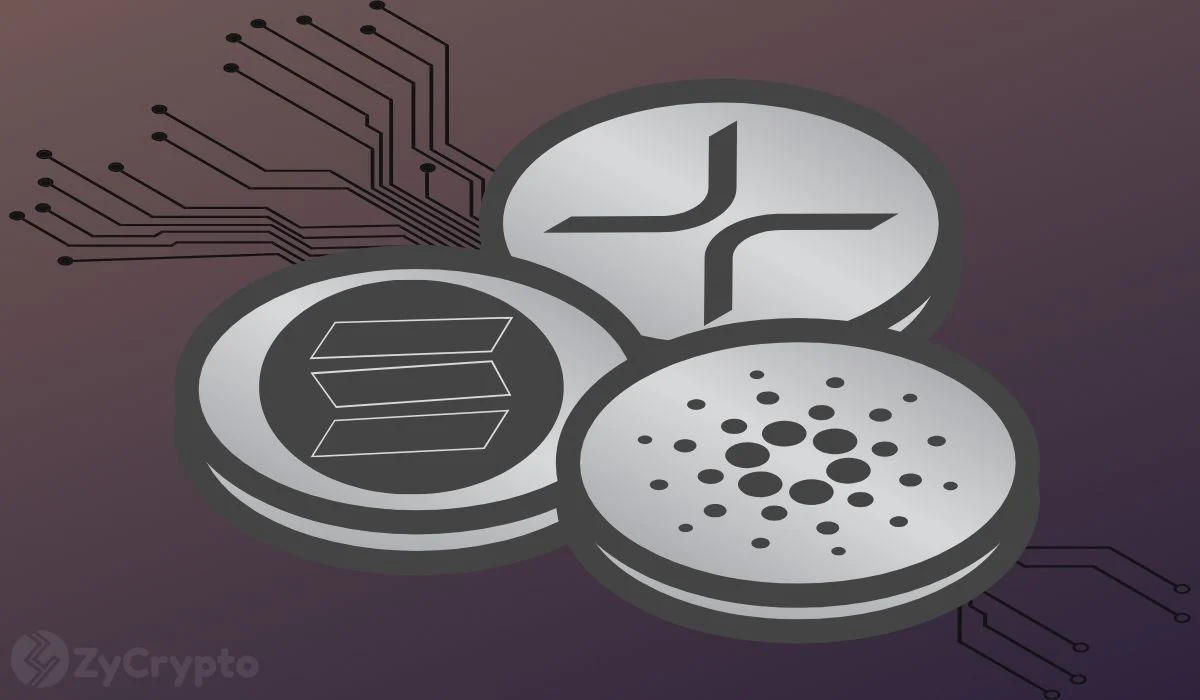
The prospect of XRP, Shiba Inu, and Cardano ETFs reaching the SEC’s table represents a significant milestone for the industry, but the path to approval is fraught with hurdles. The SEC, under Chair Gary Gensler, has maintained a rigorous standard for crypto-linked products, primarily focusing on market manipulation concerns and the lack of comprehensive surveillance-sharing agreements on unregulated exchanges.
For assets like Cardano (ADA) and Shiba Inu (SHIB), the challenge is twofold. First, they must demonstrate sufficient market depth and liquidity to satisfy institutional requirements. Second, they must navigate the "Howey Test" criteria that the SEC uses to determine whether an asset is an investment contract. While Shiba Inu has made strides in developing its "Shibarium" Layer-2 network to transition from a meme coin to a utility-focused ecosystem, it remains to be seen if the SEC will view such assets as mature enough for an ETF wrapper.
Conclusion: A Market in Transition
The cryptocurrency market is currently at a crossroads. On one hand, the technological and institutional foundation for a "tokenized" future is being laid by leaders like Solana and Ethereum, with the backing of major financial institutions. On the other hand, the vast majority of the altcoin market is suffering from a liquidity drought and a lack of clear value propositions, as evidenced by the dismal performance against the 200-day moving average.
For investors, the coming months will be a test of conviction. Without a meaningful catalyst—such as a shift in Federal Reserve policy or a surprise SEC approval for a new spot ETF—the current period of stagnation may continue. The transition from a speculative retail market to a disciplined institutional market is a painful process for many existing projects, but it is a necessary evolution for the long-term viability of the digital asset class. As the industry awaits the next move from the SEC and the continued integration of Wall Street, the focus remains on which assets will survive this period of consolidation and which will fade into the background of crypto history.