Opendoor Technologies (OPEN) experienced a notable surge in its share price during Wednesday’s trading session, climbing over 9% to reach the $5.05 mark. This significant upward movement was propelled by a convergence of factors, including the proptech company’s confirmed entry into a major benchmark index, highly optimistic commentary from a prominent Wall Street analyst, and robust bullish positioning observed in its derivatives market. The confluence of these drivers suggests a potential shift in investor sentiment and a renewed focus on the long-term prospects of the iBuyer pioneer, which has navigated a challenging real estate landscape in recent years.
The Company and the iBuyer Model: A Transformative Approach to Real Estate
Opendoor Technologies, founded in 2014, pioneered the "iBuyer" model, an innovative approach to real estate transactions designed to streamline and simplify the home selling process. The core premise of iBuying involves companies using technology and data analytics to make instant cash offers on homes, purchase them directly from sellers, make necessary repairs, and then relist them for sale. This model aims to remove the uncertainties, delays, and complexities traditionally associated with selling a home through conventional methods, offering speed, convenience, and certainty to homeowners.
Initially met with significant enthusiasm, the iBuyer model, including Opendoor’s operations, experienced rapid growth during periods of robust housing market activity. The company’s technology platform, leveraging machine learning and vast datasets, promised to accurately price homes and manage inventory efficiently. However, the capital-intensive nature of purchasing and holding real estate, coupled with the inherent volatility of housing markets, presented substantial challenges. Opendoor, like its competitors, faced periods of significant losses, particularly when market conditions shifted rapidly, leading to inventory depreciation and increased holding costs. The company underwent strategic adjustments, including optimizing its pricing algorithms, focusing on unit economics, and managing its inventory more prudently to adapt to changing macroeconomic environments, particularly the surge in interest rates in 2022 and 2023 that cooled the previously red-hot housing market. Its ability to pivot and refine its operational model has been crucial to its survival and continued pursuit of market dominance in the digital real estate space.
Russell 3000 Inclusion: A Catalyst for Institutional Investment
A primary catalyst for Opendoor’s recent share price appreciation was the official confirmation of its inclusion in the Russell 3000 Index. This highly anticipated benchmark addition is set to take effect at market close on June 26, prompting a wave of institutional buying. The Russell 3000 Index is a broad market capitalization-weighted equity index maintained by FTSE Russell that tracks the performance of the 3,000 largest U.S.-traded stocks. It is widely regarded as a comprehensive gauge of the U.S. equity market and forms the basis for numerous index funds and exchange-traded funds (ETFs).
Inclusion in such a prominent index is not merely symbolic; it triggers a significant mechanical buying effect. Passive investment funds, which aim to replicate the composition and performance of the Russell 3000, are mandated to purchase shares of newly added constituents to align their portfolios with the index’s updated weighting. This institutional demand creates a floor for the stock price and often provides a short-term boost in liquidity and trading volume. Beyond the immediate buying pressure, inclusion in a widely followed index like the Russell 3000 enhances a company’s visibility, attracts broader institutional interest, and can lead to increased analyst coverage, potentially fostering a more stable and diverse shareholder base over the long term. For Opendoor, this marks a significant milestone, signaling a level of maturity and market acceptance after years of navigating a disruptive business model and volatile market conditions.
Leadership Alignment and Strategic Vision Under Kaz Nejatian
Another factor contributing to renewed investor confidence is the compensation framework for Opendoor’s CEO, Kaz Nejatian. The structure, which heavily emphasizes performance-driven incentives rather than guaranteed base compensation, underscores a strong alignment between executive leadership and shareholder value creation. Nejatian, who took the helm in December 2022, brought a background focused on product and operations from Meta (formerly Facebook), signaling a strategic pivot towards operational efficiency and technological innovation.
Performance-based compensation typically links executive bonuses and equity awards to specific financial and operational metrics, such as revenue growth, profitability, market share expansion, or share price performance. This approach is designed to motivate executives to make decisions that directly benefit shareholders over the long haul. For Opendoor, a company still on its path to sustained profitability, such a structure is particularly crucial. It communicates to the market that the CEO’s personal financial success is intricately tied to the company’s ability to execute its strategy, achieve key milestones, and ultimately deliver value to its investors. This alignment can instill greater trust in the leadership team’s commitment to steering the company towards sustainable growth and improved financial health, especially as Opendoor continues to refine its iBuyer model in a dynamic housing market.
The "Tesla Moment": Bullish Analyst Sentiment and Ambitious Projections
Perhaps the most attention-grabbing element of Wednesday’s rally was the highly optimistic commentary from Eric Jackson of EMJ Capital. Jackson has provocatively characterized Opendoor as experiencing "real estate’s Tesla moment," drawing a parallel to the transformative impact Tesla has had on the automotive industry. His projections for Opendoor’s stock are exceptionally ambitious, forecasting a potential rise to $82 per share by 2028, with an even more audacious long-range target of $500 by 2033.
Jackson’s investment thesis is multifaceted, centering on Opendoor’s vertical integration strategy, its potential for asset class ownership, and the nascent possibilities surrounding real estate tokenization.
- Vertical Integration: Opendoor has been strategically expanding its service offerings beyond simply buying and selling homes. This includes venturing into mortgage lending, title, and escrow services. By controlling more aspects of the transaction lifecycle, Opendoor aims to capture a larger share of the transaction fees, enhance customer experience, and improve operational efficiencies. This strategy reduces reliance on third-party providers and allows for a more seamless, end-to-end digital real estate experience, similar to how Tesla integrates manufacturing, sales, and charging infrastructure.
- Asset Class Ownership: Jackson’s perspective suggests that Opendoor is not merely a service provider but is evolving into a significant owner and manager of real estate assets, leveraging technology to optimize its portfolio. This implies a future where Opendoor actively manages a large, liquid portfolio of residential properties, potentially generating rental income or capital appreciation in addition to transaction-based revenues.
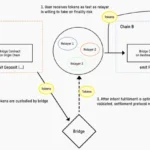
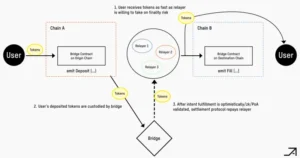
- Real Estate Tokenization: This is perhaps the most forward-looking aspect of Jackson’s thesis. Real estate tokenization involves representing ownership or fractional ownership of properties as digital tokens on a blockchain. This technology could revolutionize real estate liquidity, making it easier to buy, sell, and invest in properties, potentially opening up real estate as an investment to a much broader global audience. While still in its early stages, the integration of blockchain technology could allow Opendoor to create new financial products, enhance transparency, and reduce transaction costs, potentially unlocking immense value.
While these projections are extremely aggressive and hinge on significant market adoption and technological advancements, Jackson’s thesis has undeniably captured market attention, fueling speculative interest and highlighting the disruptive potential that some see in Opendoor’s long-term vision. Skeptics, however, might point to the inherent volatility of the housing market, the capital-intensive nature of iBuying, and the regulatory complexities surrounding real estate tokenization as significant hurdles to such ambitious growth.
Technical Indicators Point to Shifting Momentum
From a technical analysis perspective, Opendoor’s recent price action suggests a nascent shift in momentum, though long-term challenges persist. The stock currently trades 12.7% above its 20-day simple moving average (SMA) of $4.51 and 5.8% above its 50-day SMA at $4.81. This positioning indicates that near-term buying pressure is outweighing selling pressure, signaling positive short-term momentum. Traders often view a stock trading above these key short-term moving averages as a bullish sign.

However, the extended timeframe presents a more nuanced and complicated scenario. Shares remain 14.6% beneath the 200-day moving average of $5.96. The 200-day SMA is a widely watched indicator for assessing long-term trends, and trading below it generally suggests that the long-term trend remains bearish or has not yet fully reversed course. The divergence between the short-term bullishness and the lingering long-term weakness creates a complex picture for investors.
Further technical indicators offer mixed signals. The Moving Average Convergence Divergence (MACD) indicator currently sits above its signal line with positive histogram readings, which typically suggests strengthening upward momentum. This reinforces the idea that buyers are gaining control in the immediate term. Conversely, the "death cross" formation from March, which occurred when the 50-day average dropped below the 200-day average, remains a significant technical headwind. A death cross is often interpreted as a bearish signal indicating potential for prolonged weakness. While the stock has seen recent gains, the persistence of this long-term bearish crossover suggests that fundamental structural issues or broader market sentiment challenges have not been fully resolved.
Critical resistance for OPEN appears at the $5.50 level. This psychological barrier has historically been a point where previous rallies have encountered significant selling pressure, making it a key level for bulls to overcome to sustain upward movement. On the downside, strong support emerges at the $4.50 zone, which conveniently coincides with the 20-day moving average, suggesting that this level could act as a floor if the stock experiences a pullback. Overcoming the $5.50 resistance and ultimately the 200-day SMA at $5.96 would be crucial for establishing a more definitive long-term bullish trend.
Derivatives Activity Signals Strong Bullish Positioning
Perhaps the most compelling signal of robust bullish sentiment on Wednesday came from the options market. Total call volume for Opendoor reached an exceptional 99,802 contracts, approximately double the normal activity levels observed for the stock. This surge in call options trading indicates a widespread expectation among derivatives traders for the stock price to continue rising.
The most heavily traded positions included the July 2nd weekly $5 calls and $5.50 calls, which combined for nearly 32,200 contracts. These specific contracts, expiring in the very near term, suggest a conviction that the stock could reach or surpass these price points rapidly. The implied volatility for these options expanded by more than 3 points, reaching 85.43%. An increase in implied volatility typically reflects heightened expectations of future price swings, driven by increased demand for options contracts, especially calls, in anticipation of significant upward movement.
Further reinforcing the bullish narrative was the Put/Call Ratio, which registered an exceptionally low reading of just 0.14. The Put/Call Ratio compares the volume of put options (bets on a stock price decline) to call options (bets on a stock price increase). An extremely low ratio, significantly below 1.0, indicates that traders are predominantly positioning for continued upside movement in the coming sessions, with very little hedging or speculation on a downside move. This aggressive positioning in the derivatives market highlights strong speculative interest and a high degree of confidence among options traders that Opendoor’s stock has further room to run, potentially driven by the Russell 3000 inclusion and broader market enthusiasm. Such concentrated bullish activity can also sometimes contribute to upward price momentum, as market makers adjust their positions to hedge their options exposure, potentially creating a "gamma squeeze" effect.
Ahead of Q2 Earnings: What to Watch on August 6
Looking ahead, Opendoor is scheduled to report its quarterly earnings on August 6. This event will be a critical juncture for the company, providing investors with a detailed look at its financial performance and strategic progress. Following the recent surge in stock price and heightened investor expectations, the earnings report will be closely scrutinized for signs of sustainable growth and improved profitability.
Key metrics that investors will be watching include:
- Homes Purchased and Sold: The volume of transactions will indicate Opendoor’s market penetration and operational scale.
- Revenue Growth: While important, investors will also focus on the quality of revenue, particularly its gross profit margins per home.
- Contribution Margin per Home: This metric, which measures the profitability of each home transaction after direct costs, is crucial for assessing the efficiency and financial viability of the iBuyer model.
- Inventory Levels and Turnover: Efficient management of inventory, including minimizing holding periods and avoiding depreciation, is vital for a capital-intensive business like Opendoor.
- Operating Expenses: The company’s ability to control its overhead and achieve operational leverage will be critical for its path to sustained profitability.
- Guidance for Future Quarters: Management’s outlook on future performance, including revenue projections and profitability targets, will significantly influence investor sentiment and the stock’s trajectory.
Previous earnings reports for Opendoor have often been accompanied by significant stock price volatility, as the market reacts sharply to any surprises or shifts in guidance. Given the current bullish sentiment, a strong earnings report could further accelerate the stock’s upward momentum, while any disappointments could lead to a swift correction, especially considering the aggressive options positioning.
Broader Industry Context and Future Outlook for Proptech
Opendoor’s recent performance is set against the backdrop of a dynamic and often challenging U.S. housing market. High interest rates, while showing signs of potential moderation, have significantly impacted affordability and dampened transaction volumes compared to the pandemic-era boom. Inventory levels remain a key concern, with many homeowners reluctant to sell due to favorable existing mortgage rates. These macroeconomic factors directly influence the operational environment for iBuyers, which thrive on liquidity and predictable market conditions.
Despite these challenges, the broader proptech sector continues to evolve, driven by ongoing digitalization and consumer demand for more efficient real estate solutions. Opendoor, as a leader in this space, is at the forefront of leveraging technology to transform traditional real estate transactions. Its long-term strategy involves not only optimizing the iBuyer model but also exploring new avenues like integrated financial services and potentially advanced technologies such as real estate tokenization. The company’s ability to adapt to market cycles, innovate its offerings, and manage its capital efficiently will be paramount to its long-term success. The current market enthusiasm, driven by its index inclusion and aggressive analyst calls, suggests that a segment of investors believes Opendoor is well-positioned to navigate these complexities and potentially unlock significant value in the evolving digital real estate landscape.