In a decisive move that signals a growing legislative appetite for digital asset integration, the Montana State Senate has passed Senate Bill 178, a comprehensive piece of legislation designed to provide a robust legal framework for the cryptocurrency mining industry. The bill, which passed with a significant majority of 37 votes in favor to 13 against, seeks to enshrine the "right to mine" digital assets within the state’s legal code. By doing so, Montana joins a burgeoning group of U.S. states attempting to lure blockchain-based businesses by offering regulatory certainty and protection against what proponents describe as discriminatory local and state-level policies.
The legislation arrives at a critical juncture for the domestic crypto industry, as federal oversight intensifies and various municipalities express concern over the environmental and infrastructural impact of large-scale mining operations. Senate Bill 178 is not merely a symbolic gesture; it includes specific provisions that strip local governments of the power to use zoning laws to shutter active mining operations and prevents the imposition of discriminatory electricity rates specifically targeted at miners. As the bill moves toward the House of Representatives, its potential enactment could transform Montana into a premier hub for North American digital asset infrastructure.
Defining the Right to Mine and Individual Protections
At the core of Senate Bill 178 is the establishment of a fundamental right for citizens and corporations to engage in the process of securing blockchain networks. This "right to mine" applies both to industrial-scale data centers and to individual hobbyists operating from their private residences. The bill explicitly protects "at-home mining," ensuring that local ordinances cannot arbitrarily prohibit individuals from running mining hardware in residential areas, provided those operations comply with existing noise and safety standards.
Furthermore, the bill addresses a long-standing grievance within the mining community: utility rate discrimination. Historically, some utility providers and local governments have sought to impose "crypto-only" surcharges or higher electricity tiers for mining firms, citing the high energy density of the operations. SB 178 would make such practices illegal, requiring that miners be charged the same rates as other industrial or residential users with similar energy profiles. This provision is seen as a vital economic safeguard, ensuring that Montana remains competitive with other energy-rich states like Texas and Wyoming.
The bill also curtails the authority of local governments to utilize zoning laws as a "backdoor" to ban mining. While municipalities retain the right to manage general land use, they would be prohibited from enacting rules that specifically target digital asset mining for exclusion. This shift in power from local to state level reflects a broader trend in Republican-led states to centralize the regulation of emerging technologies to prevent a "patchwork" of conflicting local rules.
Classification as Personal Property and Tax Reform
Beyond the operational aspects of mining, Senate Bill 178 introduces significant changes to how digital assets are treated under Montana’s tax and property laws. The legislation proposes that cryptocurrencies and non-fungible tokens (NFTs) be legally classified as "personal property." This classification aligns digital assets with traditional financial instruments such as stocks, bonds, and other intangible assets.
This reclassification carries profound implications for taxation. By defining Bitcoin and other tokens as personal property, the bill aims to prevent the imposition of additional state taxes on the use of cryptocurrency as a method of payment. Currently, many jurisdictions struggle with whether to treat a crypto transaction as a barter exchange or a sale of a security. Montana’s approach simplifies this by treating the asset as a form of property that can be used in commerce without incurring double taxation at the point of sale.

This move is particularly relevant to the state’s broader economic strategy. By eliminating these tax hurdles, Montana hopes to encourage local merchants to adopt digital payment systems, potentially integrating the state more deeply into the global digital economy. The bill also serves to protect the capital gains of investors by providing a clear legal status for their holdings, which can be critical for estate planning and corporate balance sheets.
Historical Context and the Missoula Precedent
The push for SB 178 did not emerge in a vacuum. It is, in many ways, a direct response to local tensions that have been simmering in Montana for years. In 2020, Missoula County passed a controversial ordinance that required all Bitcoin miners operating within the county to either purchase or build renewable energy assets to offset 100% of their electricity consumption. While praised by environmental advocates, the move was criticized by the industry as an overreach that placed an undue burden on a single sector.
SB 178 seeks to balance these interests by creating a statewide standard that supersedes such local mandates. While the bill does not ignore environmental concerns, it prioritizes a uniform regulatory environment. Proponents argue that by providing a stable legal framework, the state will actually encourage miners to invest in long-term, sustainable infrastructure rather than temporary, high-impact setups.
The legislative journey of SB 178 has been bolstered by advocacy groups such as the Satoshi Action Fund, a non-profit organization dedicated to educating policymakers on the benefits of Bitcoin mining. These groups argue that mining can act as a "load balancer" for the energy grid, consuming excess power during periods of low demand and shutting down during peak hours to stabilize the system.
A Growing National and International Trend
Montana is not alone in its pursuit of pro-mining legislation. The state’s move mirrors a similar bill recently passed by the Mississippi Senate, which also sought to protect miners from discrimination and provide a "right to mine" framework. These state-level efforts are increasingly seen as a counter-maneuver to federal uncertainty and the aggressive posture of the Securities and Exchange Commission (SEC) and other federal regulators.
The international landscape also provides context for Montana’s legislative push. In May 2022, the Parliament of Norway famously rejected a proposed ban on Bitcoin mining. The proposal, spearheaded by the country’s Red Party, was defeated by a majority that argued that banning a specific use of energy was a dangerous precedent. Like Montana, Norwegian lawmakers concluded that the industry should be regulated through existing environmental and industrial frameworks rather than through targeted prohibitions.
In the United States, the competition between states to attract the "hashrate" (the computational power of the Bitcoin network) is intensifying. Texas has long been the leader in this space, offering a deregulated energy market and tax incentives. Montana, with its cold climate—which reduces the cost of cooling massive server arrays—and its abundant energy resources, is positioning itself as the northern equivalent to the Texan crypto-hub.
Economic Implications and Market Reaction
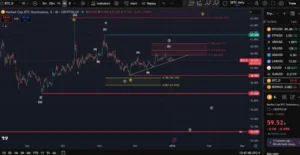
The timing of the bill’s progress coincides with a period of relative stabilization in the cryptocurrency markets. Following the dramatic volatility of late 2021 and 2022, Bitcoin has demonstrated resilience, trading in the $23,000 to $25,000 range during the period of the bill’s initial Senate success. For miners, whose profit margins are dictated by the price of the asset versus the cost of electricity, legislative certainty is often as important as market price.

Market analysts suggest that bills like SB 178 provide the "institutional-grade" environment necessary for large-scale capital investment. When a state codifies the right to mine and protects against sudden tax changes, it lowers the "political risk" for investors. This can lead to the construction of permanent data centers, the creation of high-tech jobs in rural areas, and increased tax revenue for the state through corporate income and property taxes.
Furthermore, the integration of Bitcoin into the broader economy continues to advance. The recent pilot program by digital wallet provider Strike and point-of-sale giant Clover demonstrates that the infrastructure for Bitcoin payments is maturing. By allowing merchants to accept Bitcoin via the Lightning Network—a "layer 2" protocol that makes transactions nearly instantaneous and very cheap—companies are preparing for a future where digital assets are a common medium of exchange. Montana’s SB 178 provides the legal bedrock for this evolution to take place within its borders.
Challenges and Next Steps
Despite the strong support in the Senate, the bill faces potential hurdles. Environmental groups continue to raise concerns about the carbon footprint of Proof-of-Work mining, particularly if it relies on Montana’s coal-fired power plants. Critics argue that the bill’s restriction on local zoning power undermines the principle of "home rule," where local communities have the right to decide what kind of industry operates in their backyard.
The bill now moves to the Montana House of Representatives for further deliberation. Should it pass the House, it will land on the desk of Governor Greg Gianforte. A Republican with a background in the technology sector—having founded RightNow Technologies before entering politics—Gianforte is widely expected to view the bill favorably, though he has not yet issued a formal statement on his intent to sign.
If signed into law, SB 178 will represent one of the most comprehensive "pro-crypto" statutes in the United States. It would mark a significant victory for the digital asset industry, proving that despite the "crypto winter" and increased federal scrutiny, the legislative momentum at the state level remains firmly in favor of innovation and the protection of digital property rights.
Conclusion: A Blueprint for Other States?
The passage of SB 178 in the Montana Senate serves as a blueprint for how states can approach the complex intersection of technology, energy, and law. By focusing on non-discrimination, property rights, and the limitation of local overreach, Montana is attempting to create an ecosystem where the digital economy can flourish alongside traditional industries.
As the global race for blockchain dominance continues, the actions of individual states like Montana, Mississippi, and Texas will likely dictate the future of the industry in the United States. For miners, investors, and everyday users, the message from Helena is clear: Montana is open for business, and the right to participate in the digital economy is being written into the law of the land. The outcome of this legislative experiment will be closely watched by policymakers across the country, as they grapple with how to regulate the most significant financial innovation of the 21st century.