The United States Senate has overwhelmingly approved a landmark legislative package aimed at transforming the domestic residential real estate market and setting firm boundaries on the future of digital currency in the American financial system. In a rare display of bipartisan unity, the chamber voted 85-5 on Monday to pass the 21st Century ROAD to Housing Act, a comprehensive bill designed to curb the influence of large institutional investors in the housing market while simultaneously imposing a multi-year moratorium on the development of a central bank digital currency (CBDC). The legislation, which now moves to the House of Representatives for final approval, represents a significant policy shift during President Trump’s second term, reflecting a growing consensus on the need to protect individual homeownership and financial privacy.
The passage of the bill marks the culmination of months of intensive negotiations between senior Democrats and Republicans who sought to reconcile disparate versions of housing and financial reform. By addressing the dual concerns of skyrocketing home prices and the potential for government-led financial surveillance, the legislation seeks to provide a structural fix to the "affordability crisis" that has dominated the American economic landscape for several years. The Trump administration has signaled its full support for the measure, framing it as a vital component of a broader strategy to expand the middle class and restore the "American Dream" of property ownership.
The CBDC Moratorium and Financial Privacy Concerns
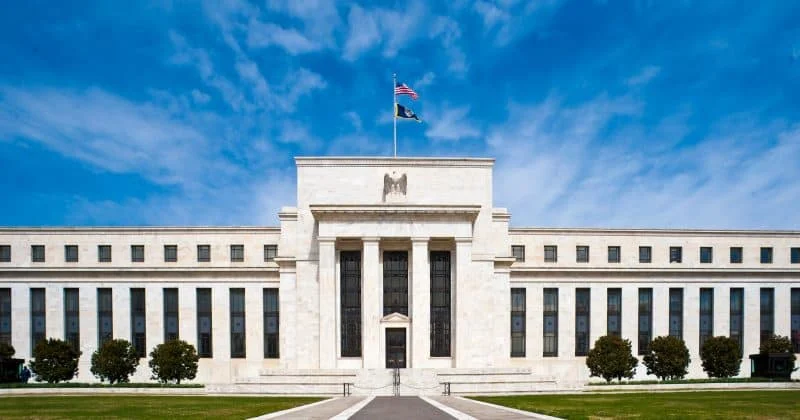
A pivotal and highly debated provision of the 21st Century ROAD to Housing Act is the four-year prohibition on the Federal Reserve’s ability to issue a retail central bank digital currency. Under the terms of the bill, the Fed is barred from moving forward with a digital dollar through at least the end of 2030. This legislative roadblock was a non-negotiable demand from Republican lawmakers, who have consistently argued that a government-backed digital currency could serve as a tool for unprecedented financial surveillance.
Proponents of the ban, including several high-ranking members of the Senate Banking Committee, have raised alarms about the potential for a CBDC to allow federal agencies to monitor individual transactions in real-time. They argue that unlike decentralized cryptocurrencies or traditional cash, a CBDC would give the central bank a direct window into the private financial lives of citizens, potentially allowing for the "de-banking" of individuals based on political or social activities. This sentiment aligns with the public stance of President Trump and Federal Reserve Chair Kevin Warsh, both of whom have expressed skepticism regarding the necessity and safety of a digital dollar.
Despite this public-facing moratorium, the landscape of digital finance remains in a state of flux. Former Commodity Futures Trading Commission (CFTC) Chairman Timothy Massad recently highlighted a disconnect between the government’s public restrictions and its private research activities. Speaking at the Digital Money Summit 2026, Massad noted that while the Federal Reserve has officially stepped back from endorsing a US CBDC, the government continues to participate in international digital settlement initiatives. Specifically, Massad pointed to "Project Agora," a collaborative effort involving the Bank for International Settlements (BIS) and several central banks aimed at exploring the tokenization of commercial bank money and its integration with central bank deposits.
Massad suggested that the rise of stablecoins and the broader "tokenization" of financial markets may eventually force the United States to reconsider its position. He argued that if the global financial system shifts toward blockchain-based settlement, the U.S. might risk losing its competitive edge or the dollar’s hegemony if it does not eventually adopt some form of digital infrastructure, even if it is not a direct retail CBDC.
Addressing the Housing Affordability Crisis
The primary thrust of the 21st Century ROAD to Housing Act is to mitigate the factors that have made homeownership increasingly unattainable for the average American family. Central to this effort is a new regulation that prevents large institutional investors—defined as firms managing billions in assets—from purchasing single-family homes. Over the last decade, the entry of private equity firms and hedge funds into the residential real estate market has been a point of intense public outcry. Critics argue that these corporate buyers, with their vast capital reserves, often outbid individual families, driving up prices and converting potential owner-occupied homes into permanent rentals.
Data from various housing market analyses indicate that in certain metropolitan areas, institutional investors have at times accounted for nearly 20% to 25% of all single-family home purchases. This competition has contributed to a national housing shortage estimated by some experts to be as high as 3.2 million units. By restricting these large-scale acquisitions, the bill intends to level the playing field for first-time homebuyers and families seeking to build generational wealth through property.
In addition to curbing corporate competition, the legislation addresses the supply side of the housing equation. The bill includes several key provisions:
- Incentivized Construction: The act allocates federal funding for grant programs that assist municipalities in modernizing their infrastructure to support new housing developments.
- Regulatory Streamlining: It mandates a reduction in "regulatory hurdles" that often delay construction projects. This includes federal guidance on streamlining environmental reviews and encouraging local governments to reform restrictive zoning laws that prevent high-density or "missing middle" housing.
- Faster Approval Processes: By providing technical assistance to local planning departments, the bill seeks to shorten the time between a project’s inception and its completion.
A Timeline of the Legislation’s Journey
The path to the 85-5 Senate vote was characterized by a series of high-stakes compromises. The legislative journey began in early 2025, shortly after the commencement of the current administration, when separate housing bills were introduced in the House and Senate.
- February 2025: The House Financial Services Committee introduced the "Housing Opportunity Act," which focused primarily on deregulation and supply-side incentives.
- April 2025: The Senate Banking Committee introduced a more restrictive version that included the ban on institutional investors and the CBDC moratorium.
- Summer 2025: A "Gang of Eight" senators from both parties began meeting privately to bridge the gap between the two versions. Key sticking points included the definition of an "institutional investor" and the duration of the CBDC ban.
- October 2025: A unified text, rebranded as the 21st Century ROAD to Housing Act, was released.
- November 2025: The Senate floor debate saw minor amendments added to ensure that the bill would not inadvertently penalize small-scale local landlords or non-profit housing developers.
- December 2025: The final vote was held, resulting in the decisive 85-5 victory.
The five dissenting votes came from a mix of lawmakers; some argued the bill did not go far enough in penalizing Wall Street, while others expressed concern that the CBDC ban might hinder American technological innovation in the face of China’s advancing digital yuan.
Official Reactions and Market Implications
The reaction from stakeholders has been swift. Housing advocacy groups have largely praised the bill, calling it a "turning point" for the American housing market. "For too long, families have been competing against nameless, faceless corporations for the very roof over their heads," said a spokesperson for a leading national tenants’ union. "This bill returns the focus of the housing market to its original purpose: providing shelter and stability for people, not just yields for shareholders."
Conversely, some voices in the financial sector have expressed caution. Real estate investment trusts (REITs) and large-scale property management firms argue that institutional capital provides necessary liquidity to the market and helps maintain the quality of rental stock. Industry analysts suggest that while the bill may slow the rise of home prices in the short term, the long-term solution remains a massive increase in total housing inventory, which the bill’s deregulation provisions must successfully trigger to be effective.
On the financial technology front, the CBDC moratorium has been met with approval by the banking industry. Commercial banks have long feared that a Fed-issued digital dollar could lead to "disintermediation," where consumers move their deposits from private banks directly to accounts at the Federal Reserve, thereby stripping commercial banks of the capital they use to issue loans.
Broader Economic Impact and Future Outlook
As the bill heads to the House, economists are beginning to model the potential long-term impacts. If the legislation successfully stimulates the construction of hundreds of thousands of new homes, it could exert downward pressure on inflation, as housing costs are a primary driver of the Consumer Price Index (CPI). Furthermore, by preventing the consolidation of residential land by a few large entities, the bill may promote a more decentralized and resilient housing market.
The 2030 deadline for the CBDC moratorium also sets a clear "wait-and-see" period. This allows the United States to observe the successes and failures of digital currencies in other jurisdictions—such as the European Union’s Digital Euro or various Caribbean "Sand Dollars"—before committing to a domestic version. It also gives the private sector a six-year window to innovate with stablecoins and tokenized deposits under a clearer regulatory framework.
If signed into law, the 21st Century ROAD to Housing Act will likely be remembered as one of the most significant bipartisan achievements of the decade. It represents a rare moment where populist concerns about corporate overreach and conservative anxieties about government surveillance converged into a single, potent piece of national policy. The coming months will be critical as the House considers the measure and the various federal agencies begin the complex task of implementing its wide-ranging mandates.