The euro stablecoin sector, often overshadowed by its dollar-pegged counterparts, is currently experiencing a significant internal reshuffling, with recent data indicating a striking concentration of growth around a select few tokens. This nascent market, while still relatively small compared to the multi-billion dollar dollar stablecoin ecosystem, offers a clearer narrative due to its more manageable figures, revealing emerging trends that are crucial for understanding the future of digital euros. Over the past seven days, nearly all new capital flowing into the ten largest euro-pegged tokens has converged into just three assets, with a notable lead taken by a bank-issued token, outperforming two of its most prominent crypto-native rivals combined. This pattern suggests a critical juncture in the European stablecoin landscape, where foundational elements like regulatory compliance, robust infrastructure, and established distribution channels are proving more impactful than sheer number of blockchain deployments.
Understanding the Euro Stablecoin Landscape and its Strategic Importance
Stablecoins are a class of cryptocurrencies designed to minimize price volatility by pegging their value to a stable asset, such as a fiat currency like the euro or the US dollar, or to a commodity. In the broader cryptocurrency market, dollar-pegged stablecoins like Tether (USDT) and USD Coin (USDC) dominate, boasting market capitalizations in the tens of billions, acting as crucial liquidity bridges between traditional finance and the rapidly expanding decentralized finance (DeFi) ecosystem. Euro stablecoins serve a similar purpose but specifically for the Eurozone, aiming to provide a stable digital representation of the euro for cross-border payments, remittances, and DeFi applications within the European economic sphere. Their development is strategically significant for Europe, offering a potential path to digital financial sovereignty, enhancing payment efficiency, and providing a private sector alternative or complement to potential central bank digital currencies (CBDCs) like the Digital Euro currently being explored by the European Central Bank (ECB).
The regulatory environment is a powerful driver in this market. The European Union’s Markets in Crypto-Assets (MiCA) regulation, set to largely come into effect from December 2024, is poised to create a comprehensive legal framework for crypto-assets, including stablecoins. MiCA categorizes stablecoins into "e-money tokens" (EMTs), which are electronic money tokens pegged to a single fiat currency, and "asset-referenced tokens" (ARTs), which are pegged to a basket of currencies or assets. The regulation imposes stringent requirements on issuers regarding reserve backing, custody, redemption rights, and operational resilience, aiming to protect consumers and maintain financial stability. This regulatory clarity is a double-edged sword: it legitimizes the market but also raises the barrier to entry, favoring well-capitalized entities that can meet compliance standards. The current market dynamics, where compliant and institutionally backed tokens are gaining traction, reflect this impending regulatory reality.
The Emergence of a Concentrated Front: Three Tokens Leading the Pack
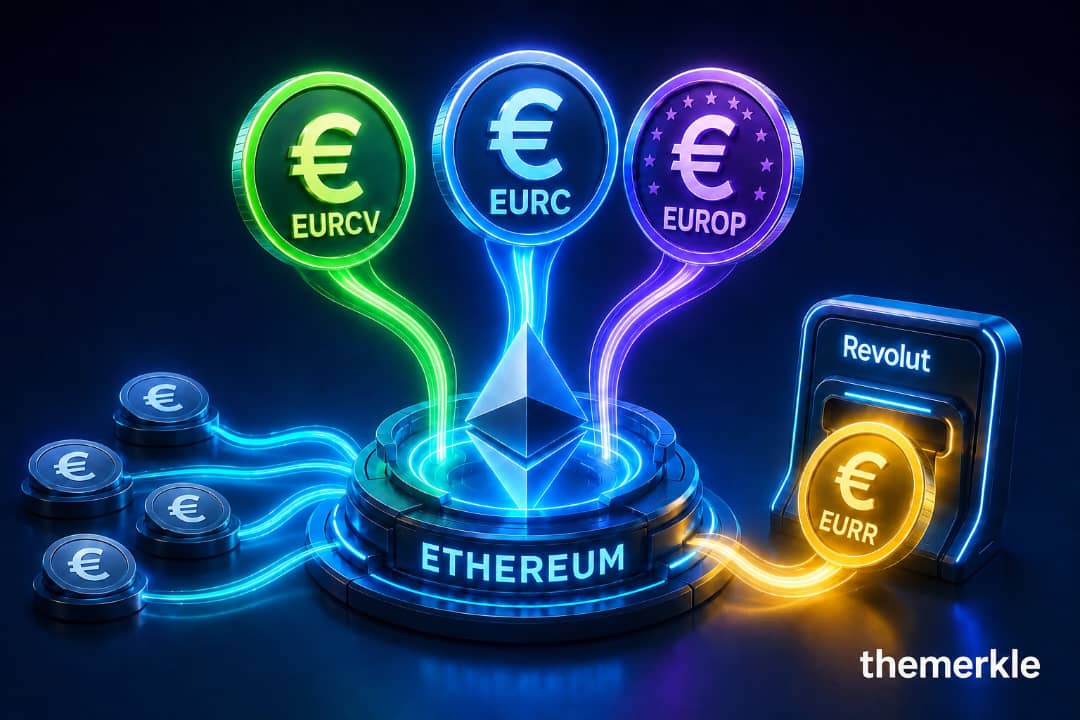
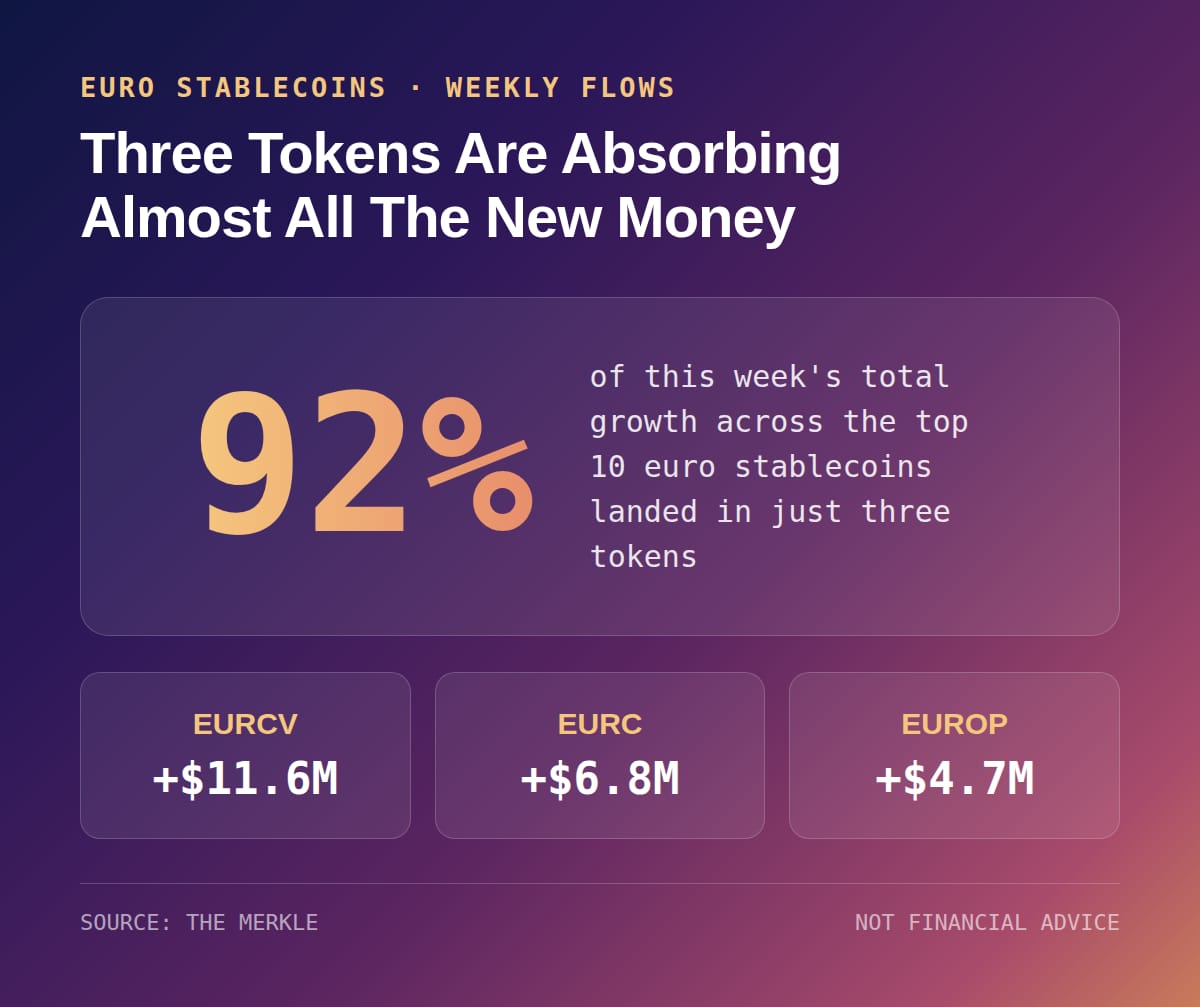
The headline finding from the latest weekly data is the pronounced concentration of growth, rather than broad-based expansion across the entire euro stablecoin sector. Out of the top ten euro-pegged tokens by market capitalization, a staggering 92% of the total growth recorded this week clustered around just three assets: EURCV, EURC, and EUROP. This pattern signals a market in its early stages of maturity, where genuine institutional and retail demand is beginning to coalesce around trusted and well-supported offerings, leaving a longer tail of less active or less integrated tokens struggling for significant traction.
EURCV, the euro stablecoin issued by Societe Generale’s digital asset arm, SG Forge, demonstrated exceptional performance, adding an impressive $11.6 million to its market capitalization over the week. This gain, on its own, slightly surpassed the combined growth of its two closest high-profile competitors: EURC, issued by the crypto-native financial technology company Circle, and EUROP, issued by Schuman Financial. This outcome is particularly noteworthy as it highlights the increasing influence of traditional financial institutions entering the digital asset space, leveraging their established trust, regulatory expertise, and client networks. Societe Generale, a major French multinational investment bank, launched EURCV as part of its broader initiative to offer institutional-grade digital asset services, showcasing a clear strategy to bridge traditional finance with blockchain technology. Their focus on building a genuinely multi-chain footprint, extending beyond its initial Ethereum deployment to various other networks, appears to be translating directly into tangible inflows rather than just theoretical adoption. This expansion is critical for institutional clients who operate across diverse blockchain ecosystems and require seamless interoperability.
Circle’s EURC, while not matching EURCV’s pace this week, still posted a solid gain of $6.8 million. Circle is a prominent player in the stablecoin market, best known for its widely adopted USD Coin (USDC). EURC benefits significantly from Circle’s extensive stablecoin infrastructure, which includes robust compliance frameworks, strong banking relationships, and a broad network of integrations across various blockchains and DeFi protocols. As a MiCA-compliant and fully reserve-backed euro token, EURC appeals to institutional and retail users who prioritize regulatory adherence and transparency. Its ongoing expansion across networks like Base further solidifies its position as a major contender.
Similarly, EUROP, issued by Schuman Financial, registered a respectable $4.7 million in growth. Schuman Financial has strategically positioned EUROP with a strong emphasis on regulatory clarity and auditing. Holding a French ACPR (Autorité de Contrôle Prudentiel et de Résolution) license and featuring KPMG-audited reserve structures, EUROP targets institutional clients who demand the highest levels of regulatory assurance and transparency regarding asset backing. This focus on traditional financial auditing and regulatory endorsement underscores a growing demand for stablecoins that meet stringent compliance standards, particularly as MiCA approaches full implementation.
Ethereum’s Unwavering Dominance in Liquidity Absorption
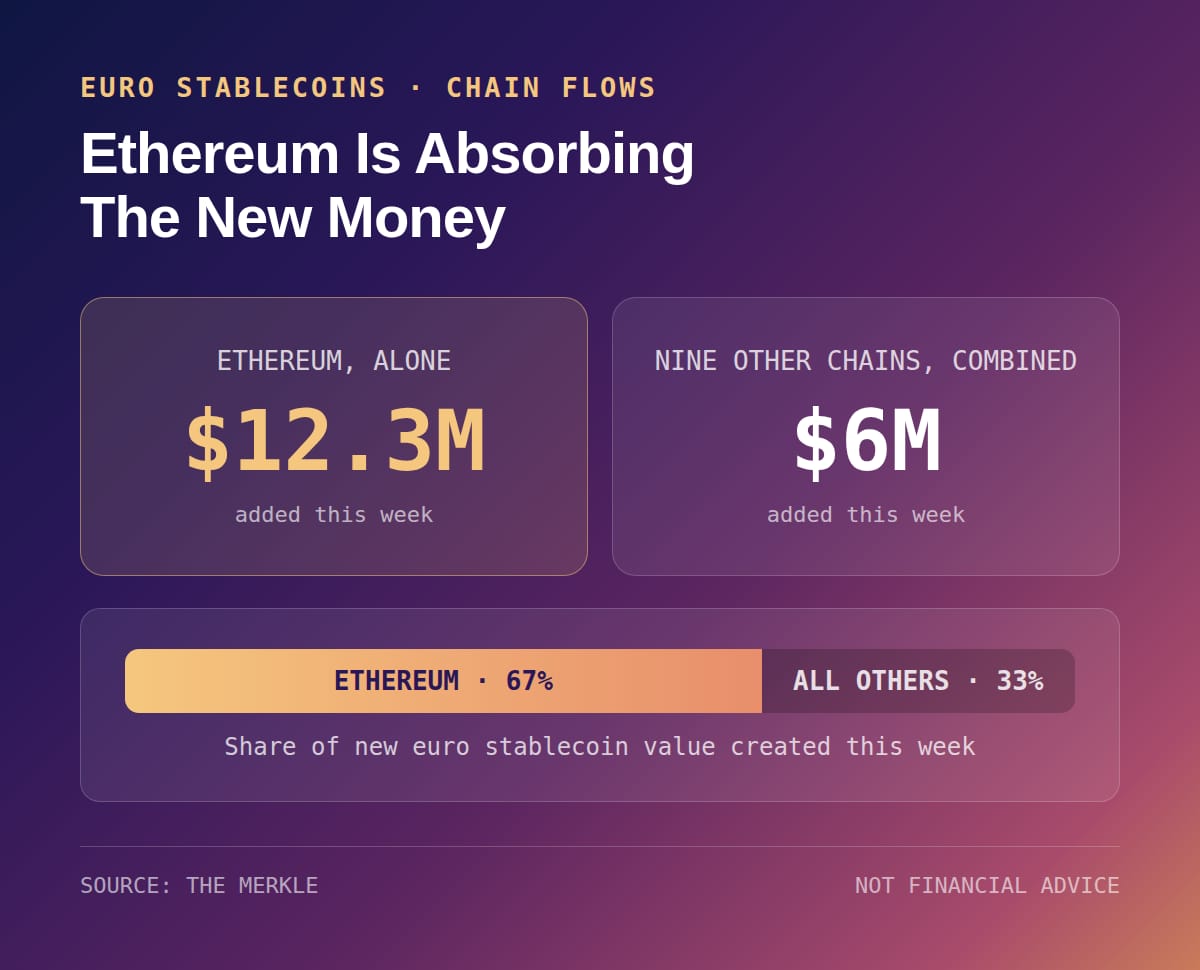
The trend of concentration is not limited to individual tokens; it extends to the underlying blockchain infrastructure. Despite the proliferation of euro stablecoins across a wide array of networks, including Solana, Polygon, Avalanche, XRP Ledger, and Stellar, Ethereum continues to absorb the lion’s share of new capital. Over the past week, euro stablecoin market capitalization on Ethereum alone increased by $12.3 million. In stark contrast, all other nine chains combined managed to attract just $6 million in new value. This means Ethereum captured approximately two-thirds of all new euro stablecoin value created this week.
This lopsided distribution underscores Ethereum’s enduring network effects and its status as the leading platform for decentralized finance. While multi-chain expansion is crucial for increasing accessibility and catering to diverse user preferences, it does not automatically translate into balanced liquidity growth. Ethereum’s established ecosystem, robust security, deep liquidity pools, and the sheer volume of institutional and DeFi activity occurring on the network make it the preferred destination for significant capital inflows. The fact that EURCV, EURC, and EUROP all maintain a substantial presence on Ethereum further explains this trend; if these leading tokens are attracting the bulk of demand, and they are heavily integrated with Ethereum, then the chain itself will naturally reflect the deepest gains. This pattern serves as a reminder that while deploying on multiple networks is a sound strategy for reach and marketing, the primary liquidity and transactional volume for high-value stablecoin movements often gravitate towards the most established and liquid networks.
Revolut’s EURR: A Retail Challenger on the Horizon
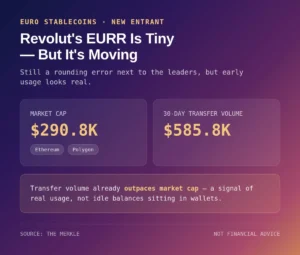
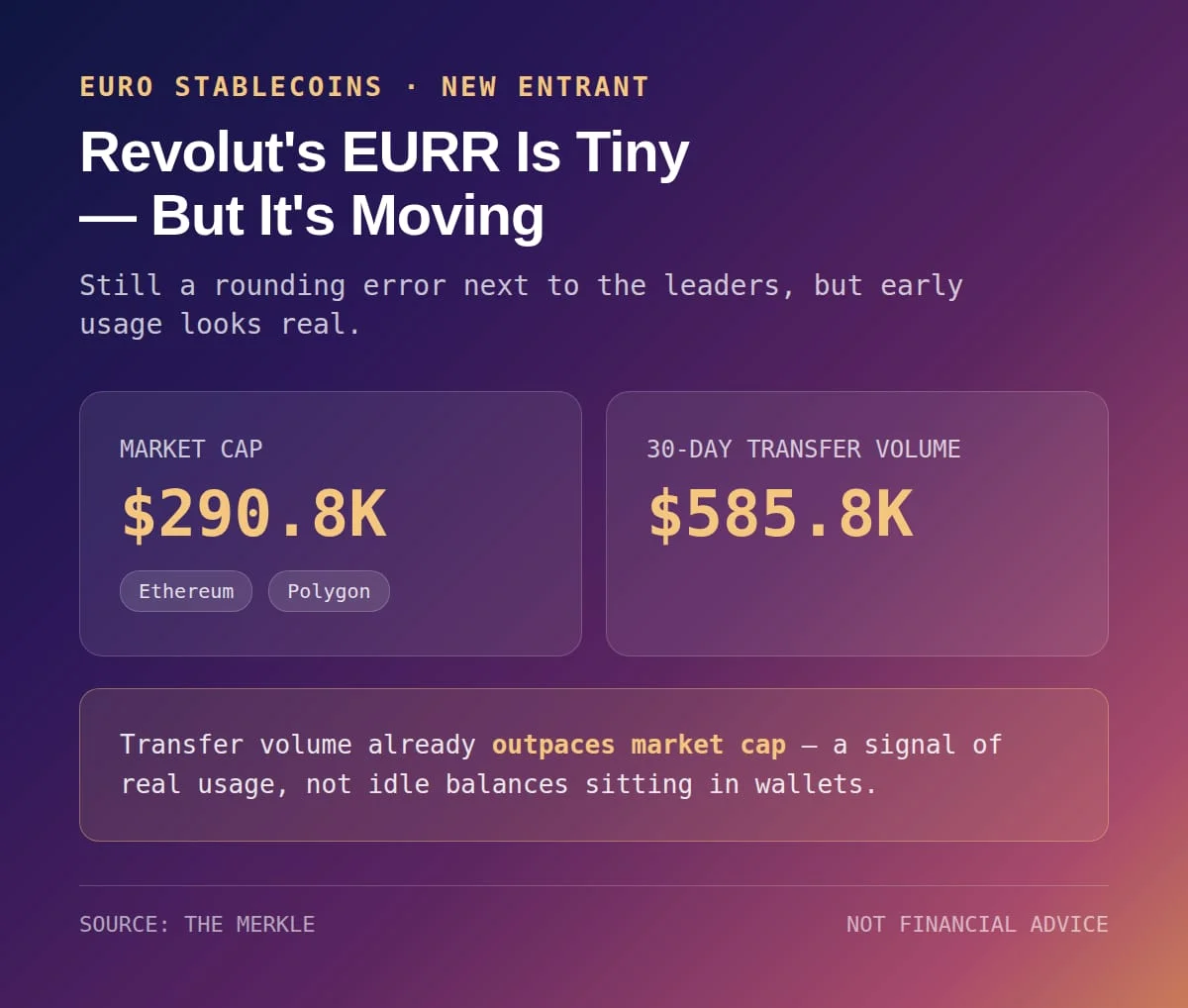
Amidst the established players and their concentrated growth, a new entrant holds significant potential: Revolut’s euro stablecoin, EURR. Currently, EURR’s market capitalization stands at a modest $290.8 thousand, with transfer volumes of $585.8 thousand over the past 30 days across Ethereum and Polygon. These figures are minuscule compared to the tens of millions moved by EURCV in a single week, indicating that EURR is still in its nascent stages. However, dismissing EURR based on its current size would be a mistake.
What makes EURR particularly compelling is the formidable distribution network behind it. Revolut, a leading global fintech company, boasts tens of millions of existing retail users across Europe and beyond. EURR is designed to be plugged directly into the Revolut banking application, offering a seamless user experience that bypasses the complexities of traditional crypto-native wallets. This integration into a familiar retail banking interface dramatically lowers the barrier to entry for mainstream users, providing a direct on-ramp for stablecoin adoption. While EURR is currently in a pilot phase, rolling out to customers in a limited number of European markets, its potential growth ceiling is vastly different from tokens that primarily target crypto-savvy individuals or institutions. The fact that its transfer volume already outpaces its market cap suggests active usage rather than just idle balances, indicating early signs of genuine utility and demand among its initial user base. Should Revolut successfully onboard even a fraction of its vast customer base to EURR, it could fundamentally alter the competitive landscape of the euro stablecoin market, introducing a massive retail liquidity channel that could rival or even surpass institutional flows over time.
Broader Implications and the Future of Europe’s Stablecoin Race
Zooming out, the current dynamics paint a clear picture of a market still very much in its formative stages, actively identifying its leaders and defining its trajectory. The 92% concentration of weekly growth in just three tokens, coupled with two-thirds of new value landing on a single blockchain, is characteristic of an emergent market rather than a mature, evenly distributed sector. This intense competition is shaping the criteria for success in the European stablecoin arena.
Key factors that are proving decisive include:
- Regulatory Credibility: The impending MiCA regulation is accelerating the demand for tokens that are demonstrably compliant and backed by robust, audited reserves. This favors institutions with the resources and expertise to navigate complex regulatory frameworks.
- Existing Distribution Networks: Both traditional financial giants like Societe Generale and fintech innovators like Revolut are leveraging their established client bases and brand recognition to drive adoption. This highlights that trust and accessibility are paramount.
- Robust Infrastructure and Liquidity: Circle’s proven stablecoin technology and Ethereum’s dominant network effects demonstrate the importance of scalable, secure, and liquid underlying infrastructure.
- Strategic Partnerships: Collaborations with major exchanges, DeFi protocols, and payment providers are crucial for expanding reach and utility.
The observed "widening gap" between a small group of tokens with real distribution and a longer tail of less active euro stablecoins is a normal evolutionary pattern in early-stage markets. It indicates that capital and user activity are naturally gravitating towards offerings that demonstrate clearer value propositions, greater trustworthiness, and superior integration.
While euro stablecoins remain a fraction of the overall stablecoin market when compared to their dollar-pegged counterparts, weeks like this one provide invaluable insights into where the early momentum is consolidating. For now, the lead is held by a compelling mix: Societe Generale’s institutionally backed EURCV, Circle’s crypto-native yet compliance-focused EURC, and Schuman Financial’s regulation-first EUROP. In the background, Revolut’s EURR stands as a potent, app-based challenger, poised to disrupt the market by tapping into the vast retail consumer base. The interplay between institutional demand, retail accessibility, and the evolving regulatory landscape will undoubtedly define the winners and losers in Europe’s accelerating stablecoin race. The coming months, particularly as MiCA’s implementation draws closer, will be critical in observing how these early trends solidify and reshape the digital euro ecosystem.