


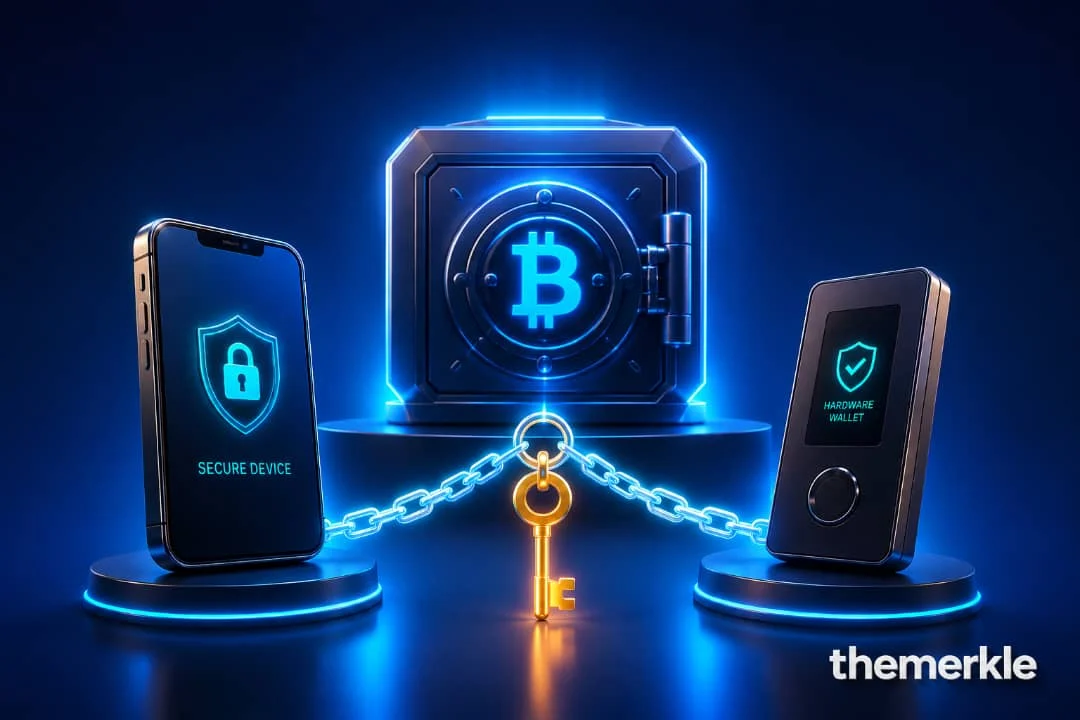
The recent commentary by prominent blockchain investigator ZachXBT regarding hardware wallet security has ignited a fervent discussion within the cryptocurrency community, pivoting on the question of whether a dedicated iPhone might offer a safer alternative for managing digital assets than traditional hardware wallets like Ledger. However, a deeper analysis reveals that the prevailing focus on device comparison overlooks a more critical, fundamental challenge in self-custody: the long-term accessibility and inheritance of digital wealth. This often-neglected aspect, concerning what happens to crypto assets when the owner is no longer able to access them, poses a silent but significant risk far exceeding the immediate security vulnerabilities of any single device.
The Catalyst: Recent Security Incidents and ZachXBT’s Stance
ZachXBT, known for his relentless pursuit of scammers and his in-depth investigations into on-chain illicit activities, recently shared his reservations on Telegram regarding the reliability of current hardware wallets for critical transactions or storing substantial crypto holdings. His sharpest criticisms were directed at Ledger, citing frequent Ledger Live updates that, in his view, disrupt basic functionality without providing discernible benefits to users. Instead, he controversially recommended a dedicated iPhone, used exclusively for crypto management, as a more secure alternative for advanced users.
This debate did not emerge in a vacuum but was catalyzed by a series of high-profile security incidents that have eroded user trust in various facets of the crypto ecosystem. In April, a sophisticated phishing attack involving a fake Ledger Live application managed to bypass Apple’s App Store review process, leading to the draining of approximately $9.5 million from unsuspecting victims before its eventual removal. This incident highlighted the persistent threat of impersonation and the vulnerabilities inherent even in seemingly trusted application platforms. Prior to this, in January, a single individual became the victim of a sophisticated social engineering scam, resulting in the loss of an astonishing $282 million through a hardware wallet compromise—one of the largest individual thefts ever recorded in the digital asset space. These incidents underscore ZachXBT’s underlying argument: the problem isn’t necessarily the hardware itself, but the broader ecosystem—the accompanying software, the pervasive risk of impersonation, and the ever-expanding phishing surface—that repeatedly fails users.
It is crucial to contextualize ZachXBT’s advice as guidance intended for "advanced users." This distinction is paramount, as advanced users are more likely to possess the technical acumen and existing security protocols, including documented recovery plans, that mitigate some of the inherent risks of his suggested approach. For the vast majority of crypto holders, adopting such advice without a comprehensive understanding of its implications and without implementing robust, documented recovery strategies could inadvertently expose them to even greater risks.
Hardware Wallets: Design Philosophy vs. User Experience Reality
Hardware wallets were conceptualized and designed around a foundational security principle: isolating private keys from internet-connected devices. Their core function is to provide an offline environment for signing transactions, ensuring that the critical cryptographic keys never leave the secure element within the device. The seed phrase model, upon which most hardware wallets are built, was specifically engineered for continuity and recovery. A seed phrase, typically a sequence of 12 or 24 words, can be physically written down, stored securely, and, critically, handed off to a trusted individual or institution for recovery should the original owner become incapacitated or unavailable. This mechanism is central to the concept of digital asset inheritance and long-term custodianship.
However, the practical user experience of hardware wallets, particularly for mainstream users, has often been a point of contention. The security community, while largely affirming the theoretical advantages of hardware wallets, has acknowledged that the real-world experience can be frustrating. Regular UI updates, frequent firmware changes, and software modifications often disrupt basic functionality, creating friction and a steep learning curve for users. This sentiment was echoed in reactions to ZachXBT’s comments, with security-focused users agreeing that the current hardware wallet experience "genuinely sucks" due to these issues. Some have even expressed a preference for alternatives like Trezor over Ledger, citing similar frustrations, while acknowledging that no solution is entirely without its flaws.
A critical, often-understated benefit of hardware wallets is their ability to provide an independent, verifiable display. This feature allows users to confirm that the transaction details displayed on their internet-connected computer or mobile device precisely match what is shown on the hardware wallet’s own screen before signing. This "what you see is what you sign" (WYSIWYS) principle is a crucial defense against malware that might attempt to alter transaction details in transit, a protection that a single-device setup, such as a dedicated iPhone, inherently relinquishes.
The Single Point of Failure: The Peril of Undocumented Custody
The core of the counter-argument to ZachXBT’s iPhone recommendation lies in the concept of a "single point of failure," particularly when it intersects with the critical, yet often ignored, issue of digital asset inheritance and recovery. While a dedicated iPhone, used solely for crypto, might appear clean on paper due to its isolated nature, it concentrates all critical functions—key storage, transaction signing, and recovery information—onto one physical object that only one person fully understands how to operate.
This setup fundamentally breaks the continuity model inherent in the seed phrase system. Without meticulous documentation of the exact configuration, thorough testing of the recovery process, and the sharing of this vital information with a trusted individual, that iPhone transforms into a digital vault accessible only to its original owner. This creates an enormous risk profile, far exceeding the inconvenience of a Ledger Live update bug. The original article correctly identifies this as a bigger risk than any software glitch, yet it was largely absent from the broader public discourse surrounding ZachXBT’s initial comments.
The digital asset space is rife with stories of substantial crypto holdings becoming irrevocably lost due to the owner’s death, incapacitation, or simple loss of access. Estimates vary, but reports from firms like Chainalysis and various industry surveys suggest that millions, if not billions, of dollars in cryptocurrency are effectively out of circulation because their owners either failed to plan for their demise or lost their private keys without a recovery mechanism. This "lost crypto" phenomenon underscores the dire consequences of neglecting a robust recovery and inheritance strategy.
The Digital Asset Inheritance Conundrum: A Neglected Frontier
The challenge of digital asset inheritance is a multifaceted problem that the self-custody culture has yet to adequately address. Unlike traditional financial assets, which are typically held by regulated institutions and subject to established legal frameworks for probate and inheritance, cryptocurrencies are bearer instruments. Possession of the private key or seed phrase is tantamount to ownership. Without access to these, assets can be permanently inaccessible.
For most individuals, estate planning for digital assets is an afterthought, if considered at all. A 2022 study by Cremation Institute indicated that a significant portion of crypto owners (over 80%) had no plan for their digital assets in the event of their death. The implications are profound: loved ones are left without a clear path to access or transfer these assets, often leading to complex legal battles, significant financial loss, or simply the permanent forfeiture of wealth. Legal precedents are still evolving, and existing probate laws are often ill-equipped to handle the unique characteristics of decentralized digital assets.
A documented plan for crypto inheritance must go beyond merely storing a seed phrase. It requires:
- Clear Instructions: Detailing the specific wallets, exchanges, and accounts used.
- Access Protocols: Explaining how to access these accounts, including passwords, PINs, and the location of seed phrases.
- Trusted Executors: Designating individuals who understand these instructions and have the technical aptitude to follow them.
- Regular Updates: As crypto holdings and methods of storage evolve, the plan must be periodically reviewed and updated.
The irony is that hardware wallets, despite their user experience flaws, inherently support this through the seed phrase model. An undocumented iPhone setup, while potentially offering a smoother experience for daily transactions, actively undermines this critical long-term continuity unless specific, comprehensive inheritance protocols are meticulously integrated by the user.
Security Paradigms: iPhone vs. Android and the Mobile Verification Gap
ZachXBT’s preference for an iPhone over an Android device for dedicated crypto management is rooted in a widely accepted security premise. Apple’s iOS ecosystem is often lauded for its more tightly controlled and unified security architecture compared to Android’s fragmented landscape. iOS benefits from a single hardware and software vendor, allowing for faster security updates, a more stringent app review process, and a more uniform security baseline across devices. Android, conversely, suffers from fragmentation across numerous manufacturers, varying software versions, and slower update cycles, which can create more potential attack vectors.
However, even within the iOS ecosystem, specific vulnerabilities persist, as demonstrated by the fake Ledger Live app incident. Moreover, the mobile environment introduces its own set of security challenges, particularly what can be termed the "mobile verification gap." Smaller mobile interfaces inherently display less information during a transaction than a desktop screen. This reduced visibility makes it easier for users to miss crucial details, such as a subtly altered address in a phishing attempt or an unexpected gas fee, potentially leading to costly errors. A desktop setup typically offers more visible context and a larger screen real estate, providing a more comprehensive overview during transaction signing. A phone-only setup, therefore, compounds the single-point-of-failure problem by simultaneously carrying both the custody risk and the reduced-visibility risk.
Regardless of the chosen device—be it a dedicated iPhone or a hardware wallet—the fundamental security practice of storing seed phrase backups offline, rather than as screenshots or digital files on the transacting device, remains absolutely essential. This practice protects against device loss, damage, or compromise.
Expert Reactions and Industry Perspectives
The immediate aftermath of ZachXBT’s comments saw a flurry of reactions from across the crypto security landscape. While no official statements directly refuting ZachXBT’s specific recommendations were issued by hardware wallet manufacturers, their consistent public messaging and product development strategies inherently address the underlying security concerns. Companies like Ledger and Trezor regularly emphasize the importance of the secure element, the offline signing process, the unique screen verification mechanism, and, crucially, the user’s responsibility in securing their seed phrase. They often publish educational content on best practices for self-custody, recovery planning, and identifying phishing attempts. Their focus remains on building robust, auditable hardware and software environments, while acknowledging the ongoing battle against social engineering and user error.
The broader security community, including cybersecurity researchers and white-hat hackers, largely agreed on the fundamental principle that user experience in hardware wallets could be improved. However, they consistently re-emphasized the core security benefits of hardware wallets, particularly the physical isolation of private keys and the independent transaction verification screen. Many experts cautioned against a wholesale shift to a dedicated phone without a deep understanding of the associated risks, particularly for average users who may not possess the advanced security hygiene of someone like ZachXBT.
Financial advisors and estate planning professionals, increasingly encountering digital assets in their clients’ portfolios, underscored the urgency of establishing clear digital asset inheritance plans. They consistently highlight the legal complexities, the absence of centralized custodians for self-custodied assets, and the potential for significant financial loss if plans are not meticulously drafted and communicated. Their perspective serves as a crucial reminder that wealth management extends beyond acquisition and security to encompass intergenerational transfer.
Broader Implications for Crypto Adoption and User Education
The debate sparked by ZachXBT’s comments illuminates a fundamental tension within the cryptocurrency space: the perpetual trade-off between security, usability, and mass adoption. While advanced users might navigate complex security setups, the average individual seeks convenience and simplicity. The current state of self-custody, whether through hardware wallets or a dedicated phone, often demands a high degree of technical understanding and meticulous personal responsibility—a barrier to widespread mainstream adoption.
This ongoing discussion underscores the critical need for comprehensive user education that extends beyond simply choosing a device. It must encompass:
- Threat Modeling: Understanding the various attack vectors (phishing, malware, social engineering).
- Seed Phrase Management: Best practices for generating, storing, and protecting seed phrases.
- Transaction Verification: The importance of double-checking addresses and amounts.
- Recovery Planning: Establishing clear, documented, and tested procedures for accessing assets in emergencies or after death.
- Multi-Factor Security: Implementing layers of protection beyond just one device.
The future of crypto custody will likely see innovation in solutions that attempt to bridge this gap. Concepts like multi-signature wallets, social recovery mechanisms (where multiple trusted parties are required to approve a transaction or recovery), and specialized digital asset inheritance services are emerging. These aim to provide greater resilience against single points of failure and enhance the ability to recover assets, moving beyond the binary choice of one device over another.
Conclusion: Beyond Device Choice, Towards Holistic Security
Ultimately, ZachXBT’s advice, while valid for a security researcher with an intimate understanding of key management and recovery protocols, holds considerably less universal applicability. For anyone who has not meticulously documented, tested, and shared a robust recovery plan with a trusted individual or entity, blindly adopting a single-device custody solution—whether it’s an iPhone or an underutilized hardware wallet—presents a profound and often irreversible risk. The real question that this critical debate should compel the crypto community to address is not merely which device offers superior security today, but rather: what provisions are in place for these digital assets the day their owner is no longer able to access them?
This existential question of long-term accessibility and inheritance remains a largely unsolved challenge within the self-custody paradigm. It deserves an equivalent, if not greater, degree of attention and innovative problem-solving as the ongoing discussions surrounding hardware wallet features or software updates. A truly secure and sustainable self-custody culture must evolve beyond device-centric debates to embrace a holistic security strategy that accounts for the entire lifecycle of digital assets, ensuring their integrity and accessibility across generations.














