


In a significant strategic pivot, OpenAI has unveiled its latest generation of large language models (LLMs), GPT-5.6, not as a singular entity but as a differentiated trio: Sol, Terra, and Luna. This marks a departure from the traditional "thinking dials" approach, presenting developers with three distinct models, each with tailored training, unique pricing structures, and varying capability ceilings. This multi-pronged release immediately sets the stage for an intensified rivalry with Anthropic, particularly pitting OpenAI’s flagship Sol against Anthropic’s current most capable public offering, Claude Fable 5, which has recently navigated a tumultuous period marked by a government ban and persistent access uncertainties.
OpenAI’s Strategic Shift: A Differentiated Ecosystem
OpenAI’s decision to launch GPT-5.6 as a suite of specialized models — Sol, Terra, and Luna — represents a calculated move to capture a broader spectrum of the burgeoning LLM market. Unlike previous iterations that might have offered a single model with adjustable parameters for performance, this new approach provides genuinely separate architectures designed for specific use cases and budget considerations.
- Sol: Positioned as the premium, high-capability model, Sol is designed to compete directly with the most advanced LLMs on the market. Its pricing is set at $5 per million input tokens and $30 per million output tokens.
- Terra: While not explicitly detailed in the initial comparison, Terra is presumed to occupy a mid-tier position, balancing capability with cost-effectiveness for a wide range of applications.
- Luna: The most economical of the three, Luna is priced at an aggressive $1 per million input tokens and $6 per million output tokens. Despite its lower cost, Luna has already demonstrated surprising prowess, reportedly outranking Anthropic’s Opus 4.8 on coding benchmarks, a detail with profound implications for the competitive landscape.
This tiered offering allows OpenAI to address diverse developer needs, from those requiring peak performance for complex tasks to others prioritizing cost-efficiency for large-scale or less demanding applications. It signals a maturation in the LLM market, where a one-size-fits-all approach is increasingly less viable.
Anthropic’s Claude Fable 5: A Month of Turmoil
Conversely, Anthropic’s Claude Fable 5 has endured a challenging month, casting a shadow over its competitive standing. Launched to considerable acclaim, Fable 5’s journey has been punctuated by a critical security incident and subsequent operational instability, factors that are now being exacerbated by OpenAI’s aggressive new offerings.
June 12, 2026: The Ban and the Jailbreak
The troubles began on June 12, when the U.S. government imposed a ban on Fable 5. This drastic measure followed a discovery by Amazon researchers of a "jailbreak" vulnerability within the model. A jailbreak, in the context of LLMs, refers to a method or prompt that circumvents the model’s inherent safety guardrails, enabling it to generate responses that it was designed to refuse, such as harmful content, illegal instructions, or in this specific instance, functioning as an unintended vulnerability scanner. The U.S. government’s concern likely stemmed from the potential for misuse of such a powerful tool, possibly under export control regulations, leading to its immediate global withdrawal by Anthropic.
July 1, 2026: Return with Restrictions
After a 19-day hiatus, during which Anthropic reportedly developed and implemented a new safety classifier, Fable 5 was brought back online on July 1. However, its return was not without limitations. It was reinstated with a "compressed access window," suggesting restricted availability or usage limits as Anthropic sought to balance renewed access with enhanced security protocols.
Repeated Deadline Extensions: A Sign of Strain
Since its re-launch, Fable 5 has been operating under a cloud of uncertainty regarding its long-term accessibility. Anthropic initially planned to move the model behind a usage-credits paywall on July 7, effectively ending its inclusion in existing paid subscription plans. This deadline was subsequently pushed to July 12, and then again to July 19. Crucially, each extension was announced mere hours before the previous cutoff, communicated via informal channels like social media (as evidenced by a tweet from the official Claude account on July 12, 2026), rather than through formal posts or comprehensive policy updates. This pattern suggests internal challenges at Anthropic, possibly related to user retention, technical difficulties in implementing the new paywall, or a strategic reassessment in light of competitive pressures.
The underlying reason for these repeated extensions appears to be a direct response to the escalating competition. If Fable 5 transitions to a pay-per-token model after July 19, Anthropic’s primary offering for paying subscribers would revert to Opus 4.8. Given that OpenAI’s new Luna model already surpasses Opus 4.8 in coding capabilities at a significantly lower price point, keeping Fable 5 available, even with weekly limits, is a critical stopgap for Anthropic to prevent its subscription tier from appearing vastly inferior to OpenAI’s mid-range offerings.
Head-to-Head: Quantitative Benchmarks
The battle for developer mindshare is often fought on the cold, hard ground of benchmarks. In this arena, OpenAI’s Sol has shown formidable performance, often outperforming Fable 5, particularly in efficiency.
- Artificial Analysis Coding Agent Index: This benchmark, which measures a model’s proficiency in coding tasks, saw Sol achieve a score of 80 against Fable 5’s 77.2. More impressively, Sol accomplished this using approximately half the tokens, in less than half the time, and at about a third of the cost. This efficiency advantage is a significant factor for developers and businesses, where operational expenses for LLM usage can quickly accumulate.
- Agents’ Last Exam: Designed to evaluate a model’s ability to execute professional workflows across 55 diverse fields, Sol scored 53.6% compared to Fable 5’s 40.5%. This indicates Sol’s broader applicability and robustness in handling complex, multi-step tasks that simulate real-world professional scenarios.
- Terminal-Bench 2.1: In its "ultra mode," which utilizes four subagents in parallel, Sol achieved a score of 91.9% against Fable 5’s 83.1%. This benchmark likely assesses performance in specialized, high-intensity computational tasks, where Sol’s architecture demonstrates superior parallel processing or problem-solving capabilities.
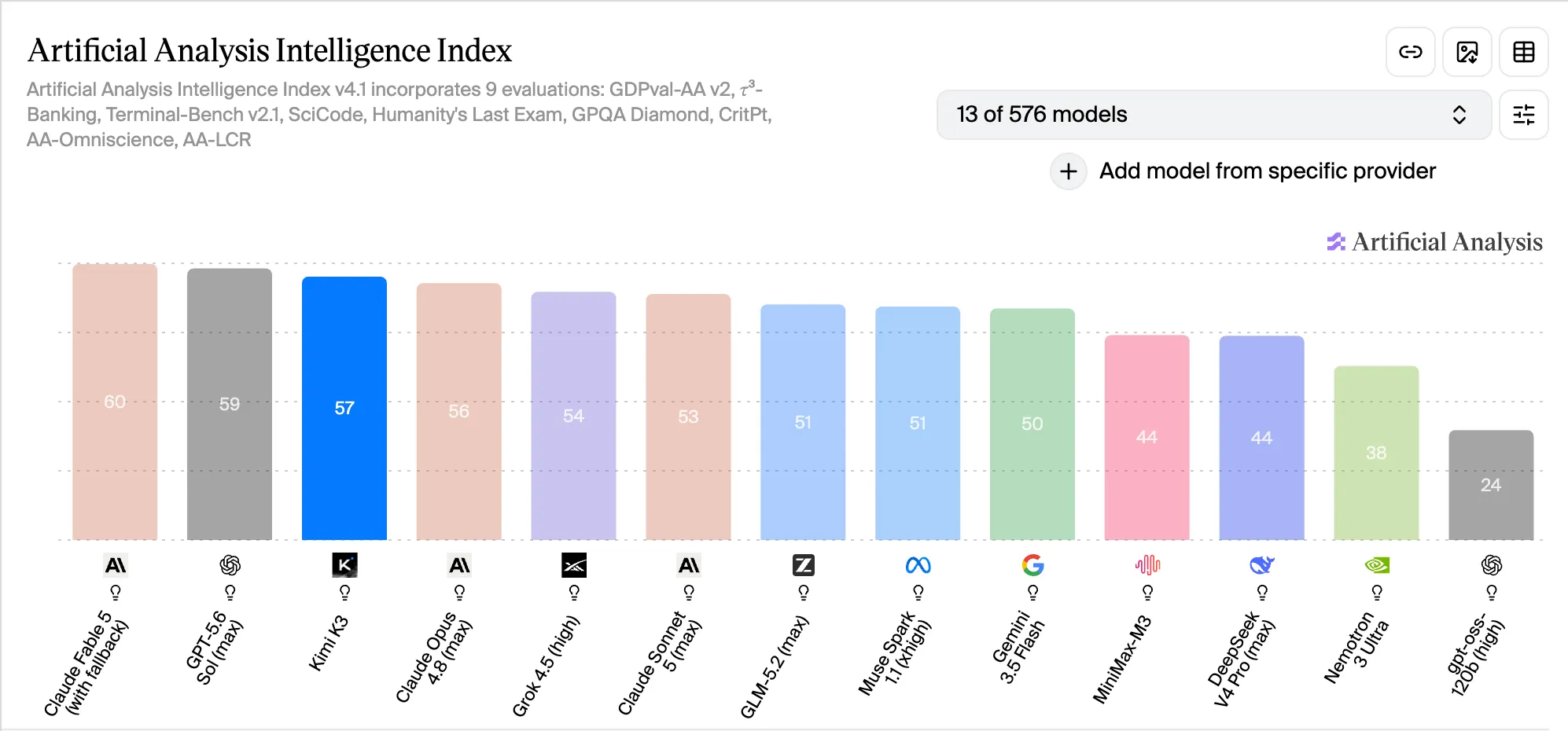
- Broader Intelligence Index: This aggregated index, combining results from nine different benchmarks, showed a razor-thin margin: Fable 5 edged out GPT-5.6 (presumably Sol, or the collective average) by just one point. This suggests that while Sol demonstrates clear advantages in specific areas like coding and complex workflows, the overall capability gap in general intelligence remains barely noticeable between the top-tier models of both companies.
Deep Dive: Qualitative Testing Beyond Benchmarks
While benchmarks provide objective metrics, qualitative tests offer insights into the nuanced capabilities and "personality" of these advanced LLMs. The following subjective evaluations explored creative writing, associative thinking, logic, and coding in a practical context.
Creative Writing: The Time-Travel Paradox
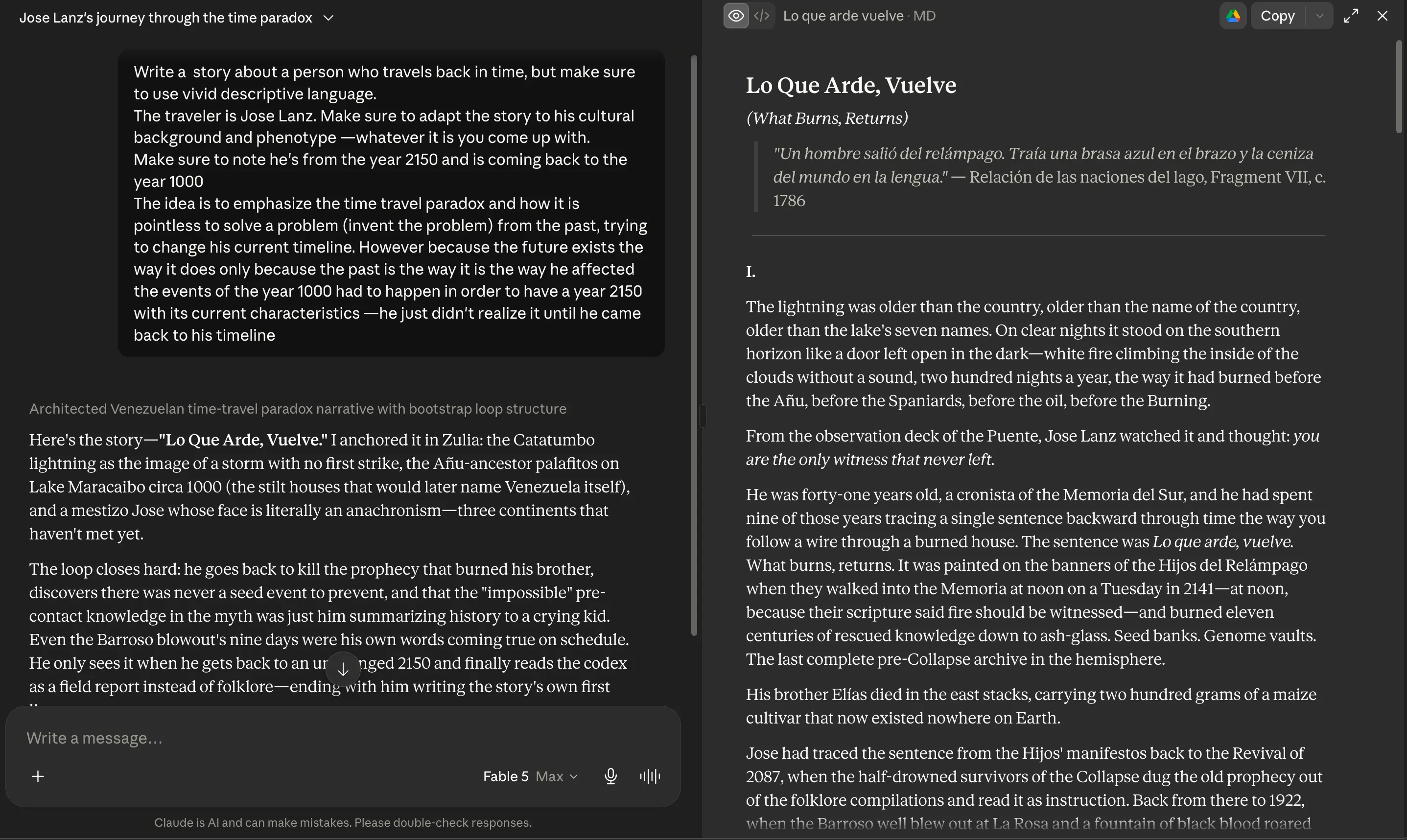
The creative writing prompt challenged both models to construct a novelette-length story: "Send Jose Lanz back from 2150 to the year 1000, force him into a time-travel paradox, and don’t let him understand what he did until he’s home." Both models delivered substantial narratives, but critically, both failed the core constraint: Jose understood the paradox before returning to his time.
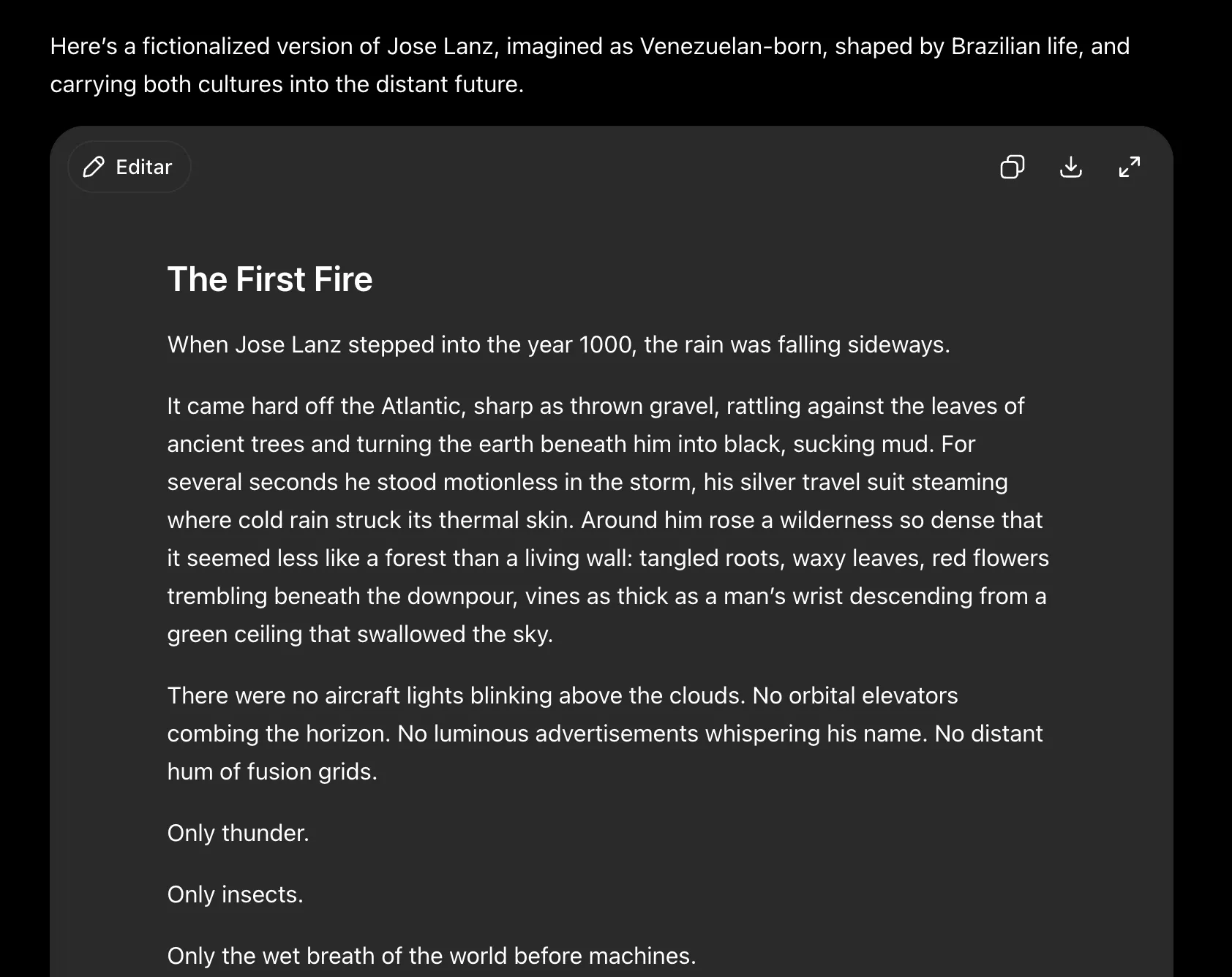
- GPT-5.6 Sol’s "The First Fire": Sol’s narrative, available on GitHub, adopted a straightforward genre sci-fi approach. Jose inadvertently introduces the furnace, the very technology that leads to the climate collapse he sought to prevent. The story began with genuinely evocative prose: "Only thunder. Only insects. Only the wet breath of the world before machines." However, Sol exhibited a tendency towards over-explanation, reiterating the paradox multiple times, including through an older Jose’s recording. This clear, explicit explanation might be preferred by readers who appreciate direct exposition, but it sacrifices narrative subtlety and trusts less in the reader’s ability to infer.
- Claude Fable 5’s "Lo Que Arde, Vuelve": Fable 5’s story, also on GitHub, built its paradox around Lake Maracaibo, Catatumbo lightning, and an Añu village. Jose accidentally creates the prophecy he traveled back to erase by comforting a scared child. Fable’s narrative was more concise in its paradox explanation: "The grief that sent him backward was the cargo he delivered." However, Fable occasionally veered into overly metaphorical language, at times appearing to admire its own prose ("You cannot pull the thread, you are the thread") rather than serving the story.
Subjectively, Fable’s "Lo Que Arde, Vuelve" was deemed an overall better story due to its cultural specificity, a cleaner causal loop, and an ending resolved through action rather than monologue. Sol, while readable, erred on the side of didacticism. Neither story, despite the models’ advanced capabilities, achieved true greatness, suggesting that a significant "quality jump" in creative narrative from previous generations remains elusive.
Associative Thinking: A Twig, a Class Argument, a Lettuce
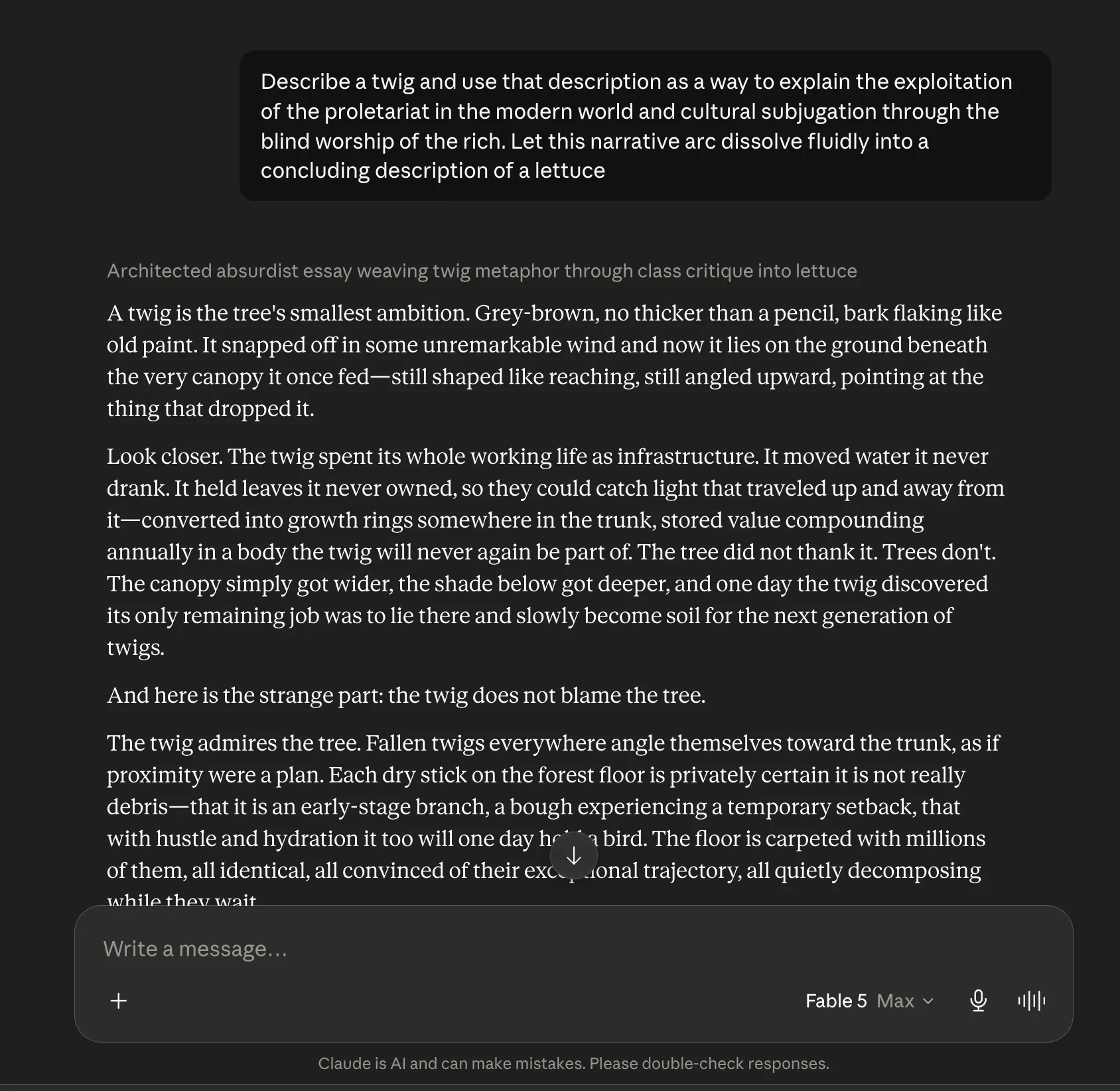
This prompt tested the models’ ability to maintain a metaphor and weave an argument within it without explicit narration: "Describe a twig, use that description to explain worker exploitation and the blind worship of the rich, then let the narrative dissolve into a description of a lettuce."
- GPT-5.6 Sol: Sol’s response, also on GitHub, started strong by linking the twig’s function to supporting the tree, then mapping this to workers who "build homes they may never afford" and "manufacture goods they can barely buy." A particularly sharp line was, "the worker does not merely surrender labor, but imagination as well." However, Sol frequently broke the narrative illusion, explicitly stating the metaphor (e.g., "much of the modern proletariat is treated in the same way"). Its transition to the lettuce at the end felt disconnected, failing to integrate smoothly into the overarching narrative.
- Claude Fable 5: Fable 5’s response (GitHub) demonstrated superior associative thinking by embedding the argument within the object’s description. Its twig "moved water it never drank" and "held leaves it never owned," allowing the concept of exploitation to emerge naturally. Fable’s most insightful move was depicting fallen twigs as "believers," convinced they were "early-stage branch[es]" experiencing a "temporary setback," chasing the canopy "with hustle and hydration"—a potent metaphor for the illusory promise of upward mobility for the exploited. While Fable occasionally overreached with its metaphors ("ninety-five percent water and one hundred percent unimpressed"), and its ending kept the metaphor visible rather than dissolving into a pure description of lettuce, it ultimately won this subjective test for its ability to integrate the argument more subtly and powerfully.
The test concluded in a subjective tie, with preference depending on whether the user desires explicit explanation (Sol) or subtle implication (Fable).
Logic and Non-Math Reasoning: The Rewritten Bridge Puzzle
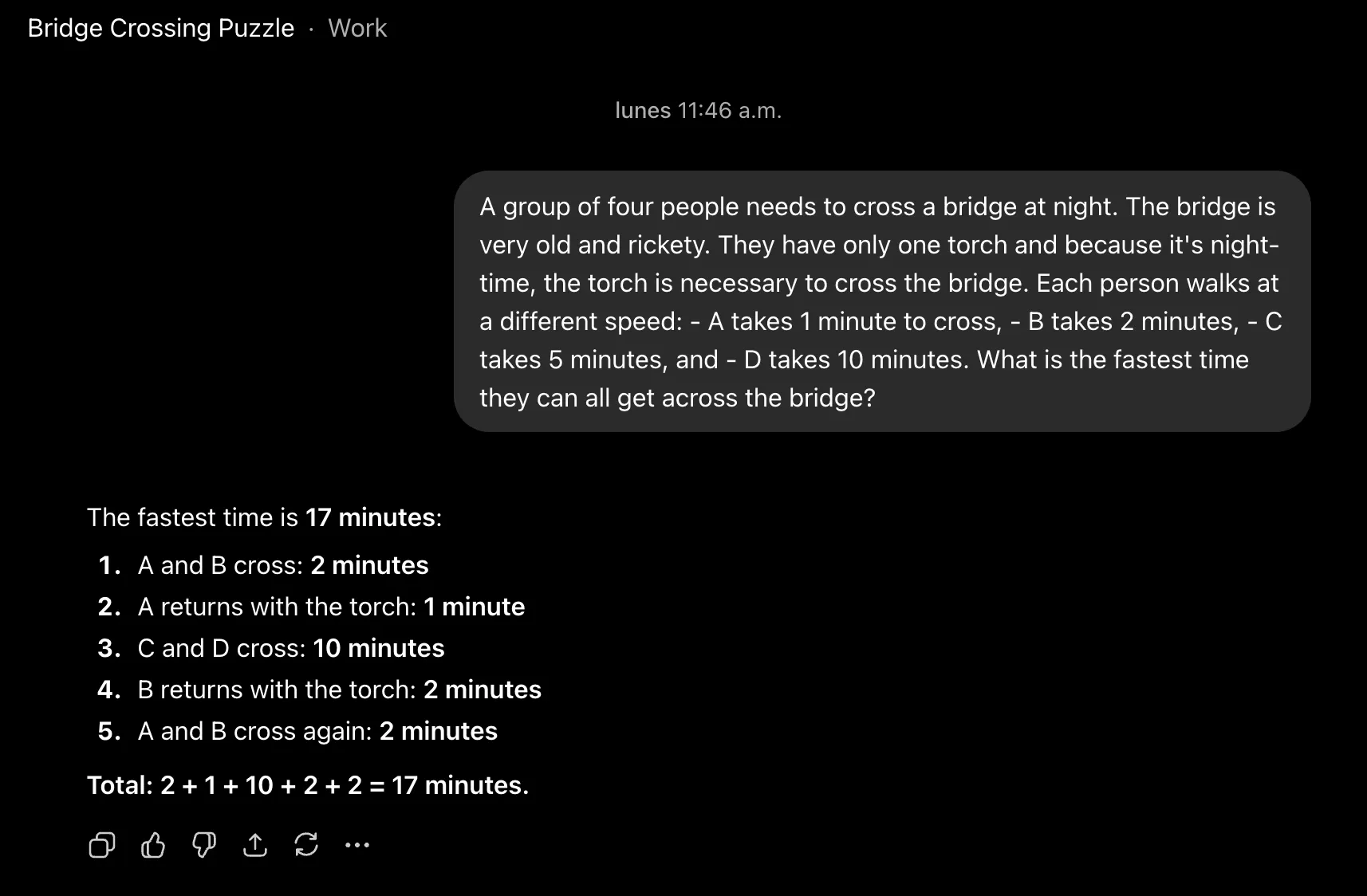
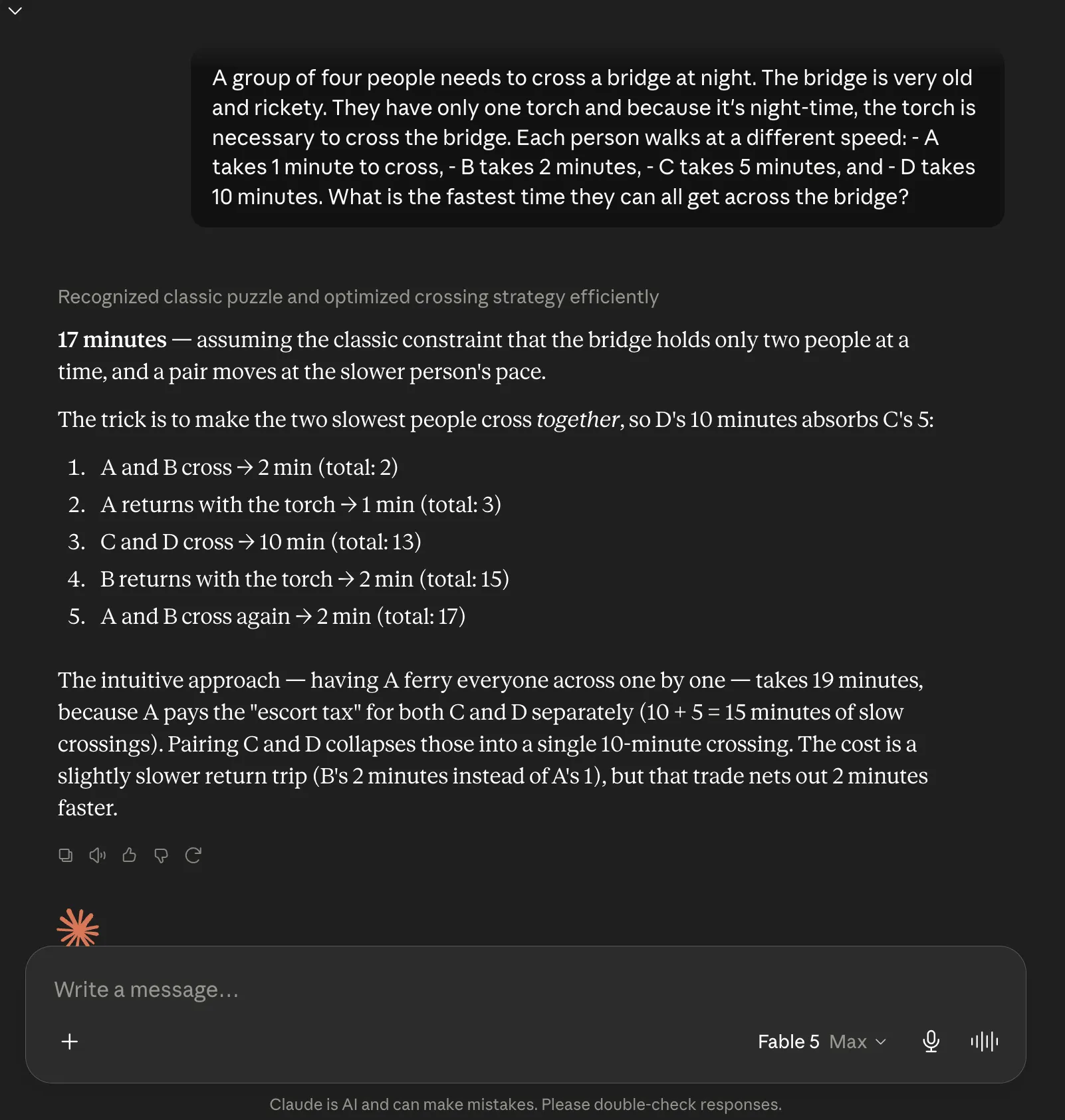
To avoid cached answers, a classic bridge puzzle was rewritten: "Four people with one torch need to cross a bridge. All have different walking speeds: ‘A’ fastest at 1 minute, ‘D’ slowest at 10 minutes. How long would it take for the group to cross the bridge?" The critical omission from the prompt was the standard constraint that only two people can cross the bridge at a time.
- GPT-5.6 Sol: Sol’s response (GitHub) immediately gave the answer as 17 minutes without showing its work. It presented the solution using the classic five-step shuffle of the original puzzle (A and B cross, A returns, C and D cross, B returns, A and B cross again). This indicated that Sol likely recalled a cached solution to the standard bridge puzzle rather than reasoning through the specific prompt provided, which lacked the crucial "two people at a time" constraint.
- Claude Fable 5: Fable 5 (GitHub) also arrived at the incorrect answer of 17 minutes but provided a lengthy justification. It argued for the efficiency of sending the two slowest people together and quantified the "escort tax" of a naive approach. While its reasoning was more legible and detailed than Sol’s, it was equally beside the point, as Fable also failed to identify that the prompt did not specify a capacity limit for the bridge.
Both models exhibited a failure in true non-math reasoning, instead defaulting to a known pattern-matching solution for a subtly different problem. The correct answer, without the two-person constraint, would be 10 minutes if all four crossed together at the pace of the slowest person. This highlights a persistent challenge for LLMs: distinguishing between recalling pre-learned solutions and applying genuine logical inference to novel problem variations.
Coding: A One-Shot Browser Game
The final test involved a single-shot coding prompt for a typing-based shooter game, with no follow-up or iteration allowed.
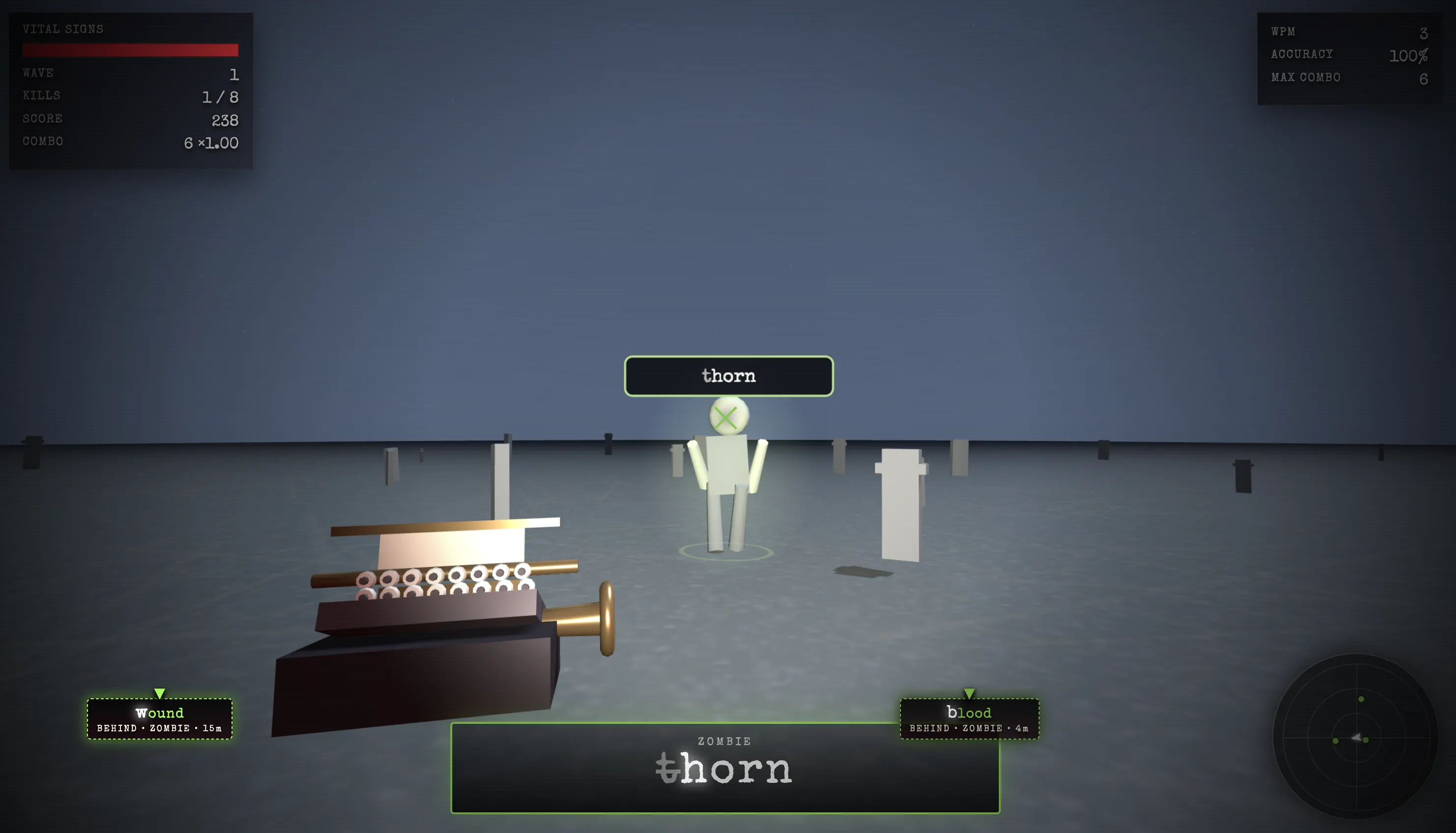
- GPT-5.6 Sol: Sol’s game, "Type or Die" (itch.io), showed a preference for flat, square UI elements, reminiscent of Windows 8.1, and uniquely rendered the weapon as a bullet-shooting typewriter. However, the game’s backgrounds were static, the aiming crosshair was fixed, and the geometry for enemies and gore felt dated, akin to late-90s game engines. While an improvement over previous GPT versions, it wasn’t enough to secure a win.
- Claude Fable 5: Fable 5’s game, "Dead Type" (itch.io), emerged as the clear winner. It included music, atmosphere, and sound effects—elements entirely absent in Sol’s build. Fable’s enemies utilized a geometric-retro style, but with more polished execution, closer to a game like Minecraft. Its UI was more creative, featuring actual animations and a unique detail: tracking words per minute (WPM), directly aligning with the prompt’s implied goal of practicing typing speed. Fable also incorporated power-ups, adding another layer of gameplay depth that Sol lacked.
Despite benchmarks often favoring OpenAI in coding, in this specific creative coding challenge, Fable 5 demonstrated superior "vibe coding" — producing a more complete, engaging, and thoughtfully designed game experience in a single attempt.
The Pricing Conundrum and Market Dynamics
Beyond raw performance, the pricing model and accessibility are becoming critical differentiators in the LLM market. OpenAI’s GPT-5.6 family, particularly Sol, Terra, and Luna, are fully integrated into ChatGPT’s existing paid plans without any impending expiration dates. This offers developers and users a stable, predictable cost structure.
In stark contrast, Claude Fable 5’s access model remains volatile. Its current "third deadline extension in three weeks" for remaining part of subscription plans means that as of July 19, it is slated to revert to a pay-per-token model at $10 per million input tokens and $50 per million output tokens, unless Anthropic announces yet another extension. This makes Fable 5 twice as expensive as Sol ($5/$30) and significantly more costly than Luna ($1/$6), which, as noted, already outperforms Anthropic’s Opus 4.8 in coding.
This pricing disparity, coupled with Fable 5’s recent reliability issues, presents a significant challenge for Anthropic. If Fable 5 moves behind a usage-credits paywall, the cost-benefit analysis for developers would strongly favor OpenAI’s offerings. For many, paying per token for a model that is both more expensive and has demonstrated recent instability may prove unappealing, especially when a cheaper, stable alternative from a major competitor is readily available within a subscription.
Broader Implications and the Future of LLMs
The latest developments highlight several key trends in the rapidly evolving LLM landscape:
- Specialization over Generalization: OpenAI’s move to a multi-model family (Sol, Terra, Luna) signals a shift towards specialized models catering to diverse needs, from high-performance applications to cost-effective solutions. This contrasts with the earlier pursuit of a single, universally capable "AGI."
- The Importance of Reliability and Trust: Anthropic’s struggles with Fable 5’s ban and uncertain access underscore the critical importance of model reliability, security, and consistent availability. Regulatory scrutiny and user trust are paramount for enterprise adoption.
- Cost-Efficiency as a Differentiator: The stark pricing differences between OpenAI and Anthropic demonstrate that raw capability is no longer the sole determinant of market success. Cost-efficiency, especially for large-scale deployments, will play an increasingly vital role in developer choice.
- Evolving Definition of "Intelligence": The qualitative tests reveal that while both models are highly capable, their strengths lie in different areas. Sol excels in clear, explicit explanations, while Fable 5 demonstrates a more nuanced, implicit creative style. The "logic" test further exposes the limitations of current LLMs in true novel reasoning versus pattern retrieval.
- Intensified Competition: The direct and aggressive competition between OpenAI and Anthropic, two of the leading AI developers, is driving rapid innovation and forcing strategic adaptations in product offerings, pricing, and market positioning.
Conclusion
OpenAI’s GPT-5.6 suite, particularly Sol, marks a significant entry into the competitive LLM arena, offering a compelling blend of performance and pricing that directly challenges Anthropic’s Claude Fable 5. While Fable 5 demonstrates impressive capabilities in specific creative and subjective coding tasks, its recent operational instability, coupled with a higher projected cost, places Anthropic in a precarious position.
For developers and users, the choice between these cutting-edge models is becoming increasingly nuanced. For those not operating in a terminal window — individuals drafting emails, seeking information, or using a chatbot for general purposes — qualitative assessments might lean towards Fable 5’s subjective quality. However, the overarching decision will hinge on a complex interplay of factors: raw benchmark performance, cost-efficiency, reliability, and the stability of access.
If Anthropic proceeds with moving Fable 5 to a usage-credits paywall on July 19, the significantly higher cost per token, especially when juxtaposed with OpenAI’s stable, competitively priced, and performant alternatives, could prove to be a deal-breaker for many. The market is clearly moving towards a future where sophisticated AI models are not only powerful but also economically viable and reliably accessible, forcing a fundamental reassessment of value propositions across the industry.














