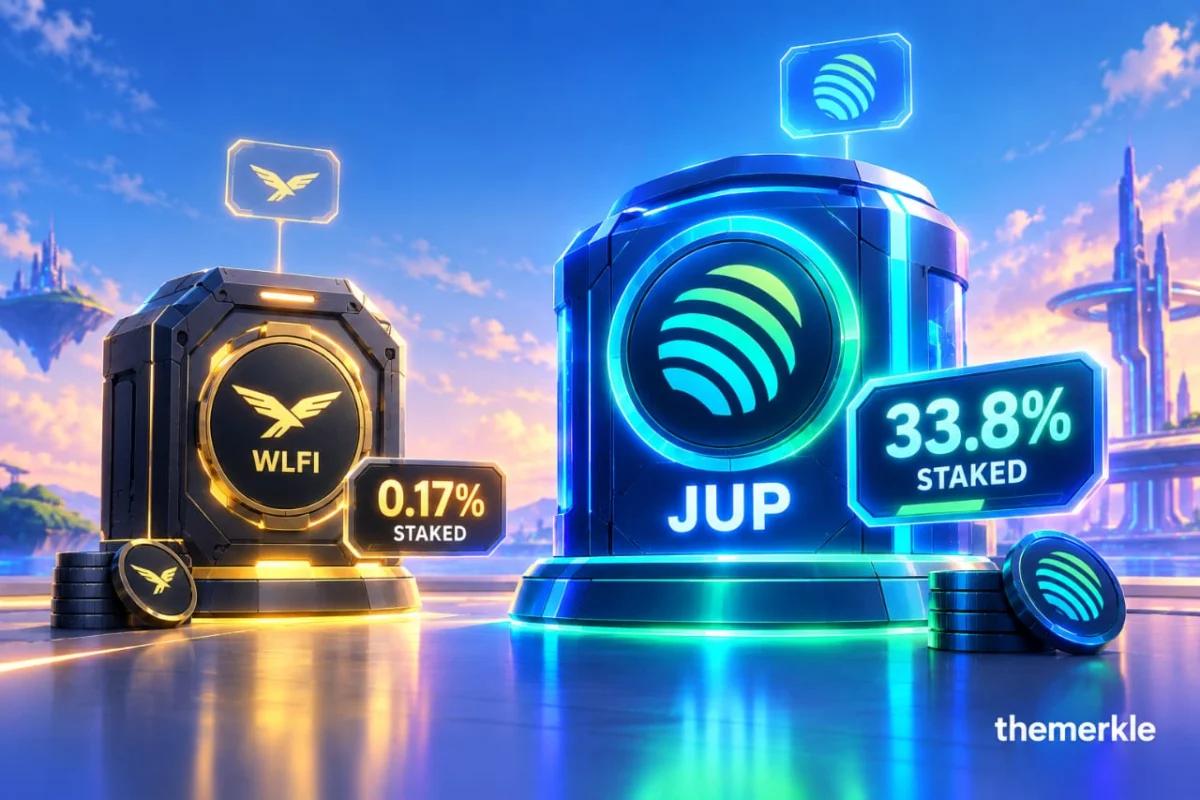
The nascent staking program for World Liberty Financial’s WLFI token has recorded 54.18 million tokens locked, a figure that appears modest when juxtaposed against the over one billion JUP tokens currently staked within the Jupiter ecosystem. While these raw figures offer an initial glimpse into participant engagement, their true significance can only be ascertained through a rigorous analysis that accounts for each project’s unique tokenomics, operational maturity, and program mechanics. A direct comparison without such contextualization risks painting a misleading picture of their respective community involvements and long-term viability.
The Core Principle of Cryptocurrency Staking
At its heart, cryptocurrency staking involves participants locking up their digital assets in a blockchain protocol to support its operations, typically in exchange for rewards. This mechanism serves several vital functions, including securing the network, validating transactions, and facilitating decentralized governance. For many projects, staking is a cornerstone of their tokenomics, aiming to reduce circulating supply, foster long-term holding, and build a dedicated community of stakeholders. The design of a staking program—encompassing reward structures, lockup periods, and governance requirements—profoundly influences investor behavior and the overall health of the ecosystem.
Introducing the Contenders: World Liberty Financial and Jupiter
World Liberty Financial (WLFI)
World Liberty Financial (WLFI) positions itself within the decentralized finance (DeFi) landscape with an ambitious vision, though specific details beyond its staking program are still emerging. The project’s native stablecoin, USD1, suggests an aim to provide a stable medium of exchange or a reliable anchor within its ecosystem, drawing from a shared distribution pool to reward stakers. As a relatively new entrant, WLFI is in the foundational stages of cultivating its community and establishing its market presence. The staking program, launched on October 1, 2026, represents a critical initial step in incentivizing token holders to commit to the project’s long-term success. The stringent requirements, including a minimum 180-day lockup and active governance participation, appear designed to attract committed, long-term participants rather than short-term speculators, indicating a strategic focus on stability and dedicated community building from the outset.
Jupiter (JUP)
In stark contrast, Jupiter (JUP) is a well-established and prominent player within the Solana ecosystem, widely recognized as a leading decentralized exchange (DEX) aggregator. Its primary function is to optimize routing for swaps across various liquidity sources on Solana, providing users with the best possible trade execution. Jupiter’s longevity and integral role in Solana’s DeFi infrastructure have allowed it to cultivate a vast and active user base. The JUP token, beyond its utility in governance and platform fees, benefits from its deep integration into a mature and high-volume ecosystem. Jupiter’s staking program, having operated for "years," reflects a more seasoned approach, leveraging a robust community and a track record of consistent operation to drive participation. Its flexible unstaking terms and consistent JUP payouts through Active Staking Rewards cater to a broader spectrum of investors, from long-term holders to those seeking more liquid engagement with governance.
Chronology of Staking Initiatives and Key Milestones
The distinct timelines of these two staking programs are paramount to understanding their current participation rates.
WLFI’s Genesis and Early Phase:
The World Liberty Financial staking program officially went live on October 1, 2026. This marks its very recent entry into the competitive DeFi staking arena. Prior to this, a significant governance proposal was introduced on September 14, 2026, which would profoundly shape the program’s requirements. This proposal mandated that stakers must actively participate in at least one governance vote every 90 days to maintain their eligibility for rewards. Such a condition, implemented even before the staking program’s launch, signals WLFI’s intent to foster an engaged and active community from its inception, albeit at the cost of immediate, widespread adoption. As of October 14, 2026, merely two weeks into its operation, the WLFI dashboard registered the aforementioned 54.18 million tokens staked. This early snapshot represents the initial commitment of a pioneering group of investors, likely those most aligned with WLFI’s vision or those willing to accept higher entry barriers for potential early advantages. The annualized rate of 82.41% recorded at this early stage, while impressive, came with an explicit warning that it is dynamic and will decrease as more WLFI joins the pool, preventing it from being interpreted as a forward-looking yield projection.
Jupiter’s Established Trajectory:
Jupiter’s staking program, by contrast, has been operational for "years," implying a much longer and more mature development cycle. While a specific launch date is not provided, its established presence suggests a gradual accumulation of participants and a refining of its program mechanics over time. The program’s longevity has allowed it to build significant trust and familiarity within the Solana ecosystem. Quarterly JUP payouts through Active Staking Rewards have provided consistent incentives, fostering a loyal base of token holders. The flexibility to unstake holdings at any time is a critical feature that differentiates it from WLFI, allowing participants to manage their liquidity without stringent lockup penalties. As of October 14, 2026, Jupiter’s governance dashboard showcased a robust 1,121,948,276 JUP staked across an impressive 357,681 distinct staker addresses, with an estimated APY of 17.83%. This extensive participation base is a testament to the program’s accessibility, the utility of the JUP token, and Jupiter’s established reputation.

Dissecting Program Mechanics and Incentives
A deeper examination of the operational mechanics reveals the strategic differences underpinning WLFI and Jupiter’s approaches to community engagement and tokenomics.
WLFI’s Rigorous Engagement Model:
World Liberty Financial’s staking program is characterized by a high degree of commitment required from its participants. The minimum 180-day lockup period for new stakes is a significant barrier to entry, demanding a long-term outlook from investors. This design choice inherently limits short-term speculation and encourages deeper alignment with the project’s roadmap. Furthermore, the rewards, paid in USD1, are explicitly stated as non-guaranteed, adding an element of risk that stakers must acknowledge. This could mean rewards are contingent on protocol performance, treasury health, or other factors yet to be fully elucidated. The September 14 governance proposal, which mandates voting on at least one proposal every 90 days to maintain reward eligibility, is a potent mechanism to ensure active community participation. While fostering a truly decentralized governance model, it also adds an administrative burden, making staking a more involved process than merely holding and earning. The reported 82.41% variable annualized rate on October 14, while seemingly high, is subject to dilution as more WLFI tokens are staked, reinforcing the non-guaranteed nature of future returns. The 1.25 million USD1 in all-time allocated rewards and 1.17 million USD1 currently available underscore the initial reward distribution, but the long-term sustainability and magnitude of these payouts will be crucial for retaining stakers beyond their initial lockup.
Jupiter’s Flexible and Rewarding Structure:
Jupiter’s program offers a stark contrast, prioritizing accessibility and user flexibility. Token holders can stake JUP, participate in active protocol decisions, and earn JUP payouts through Active Staking Rewards every quarter. Crucially, Jupiter stakers retain the flexibility to unstake their holdings at any time. This absence of a lockup period significantly reduces the liquidity risk for participants, making it an attractive option for a broader range of investors who may need to access their capital periodically. The rewards, paid in native JUP tokens, directly tie participant returns to the success and market value of the Jupiter ecosystem. While this exposes stakers to JUP price volatility, it also offers the potential for compounding gains if JUP’s value appreciates. The estimated APY of 17.83% on October 14, coupled with the ability to unstake at will, presents a compelling value proposition. The average position of approximately 3,137 JUP per staker, equating to roughly $1,000 at recent valuations, strongly indicates a broad foundation of small and mid-sized retail holders. This distribution points to a highly decentralized and community-driven staking pool, rather than one dominated by a few large "whale" wallets, which is often seen as a sign of robust ecosystem health.
Normalizing the Data: Beyond Raw Numbers
To truly understand the disparity in staking participation, it is imperative to normalize the figures against each project’s total and circulating token supplies. Raw token counts alone are inherently misleading due to vast differences in tokenomics.
Token Supply Fundamentals:
World Liberty Financial (WLFI) operates with a substantial maximum supply cap of 100 billion tokens. As of the reporting period, approximately 31.78 billion tokens are in active circulation. This large supply cap suggests a long-term distribution strategy and potentially significant future dilution if not managed carefully.
Jupiter (JUP), on the other hand, features a considerably smaller maximum token cap of 7 billion, with around 3.32 billion JUP currently in active circulation. This more constrained supply, especially for a project of Jupiter’s prominence, could contribute to higher per-token valuations and a perception of scarcity.
Relative Staking Participation:
When the staked amounts are evaluated against their respective active circulating supplies, the differences become profound:
- WLFI’s 54.18 million staked tokens represent approximately 0.17% of its circulating supply.
- Jupiter’s 1.12 billion staked tokens account for roughly 33.8% of its circulating supply.
This normalization reveals that Jupiter’s relative staking participation rate is approximately 198 times higher than WLFI’s, indicating a significantly deeper level of engagement relative to its available tokens.
Extending the comparison to maximum supply caps further illustrates the scale:
- WLFI’s staked tokens represent roughly 0.05% of its maximum supply.
- JUP’s staked tokens represent approximately 16.0% of its maximum supply.
In terms of overall monetary value, the gap, while narrowing, remains substantial. With Jupiter’s staked JUP valued at roughly $371 million (based on recent valuations of ~3,137 JUP at $1,000, implying a JUP price of ~$0.32), and WLFI’s staked tokens at approximately $3.1 million (derived from a hypothetical average token value to match the overall monetary gap), there is a staggering 120-fold difference. This financial commitment underscores the trust and capital flowing into the established Jupiter ecosystem compared to the nascent WLFI.

Analyzing the Wide Disparity in Staking Participation
The significant gap in staking participation between WLFI and Jupiter is not arbitrary but a direct consequence of several interconnected factors.
Operational Age and Market Maturity:
The most straightforward explanation lies in operational age. WLFI’s staking program is merely two weeks old, a nascent phase in the rapidly evolving cryptocurrency market. Projects require time to build awareness, attract users, demonstrate stability, and establish a track record. Jupiter, having operated its program for "years," has had ample time to cultivate participant habits, build a loyal community, and integrate its staking mechanism deeply into its ecosystem. This maturity translates into higher trust and broader adoption. New projects like WLFI face the uphill battle of proving themselves in a crowded market.
Capital Exit Terms and Liquidity:
The flexibility of capital exit terms plays an even larger role. Jupiter’s model allows users to unstake capital at any time, rendering staking a fully reversible financial decision. This provides stakers with peace of mind regarding liquidity and capital accessibility, significantly lowering the perceived risk. In contrast, WLFI mandates a minimum 180-day lockup period for every new deposit. This means participants who staked on October 1 are committed until approximately March 30, 2027. Such a long lockup period represents a substantial illiquidity risk for investors, especially in a volatile market. Many potential stakers might be deterred by this commitment, opting for more liquid alternatives or waiting for the project to mature further before locking up their funds for extended periods.
Active Management and User Friction:
Beyond lockup periods, WLFI demands extra active management from its user base. The requirement to cast governance votes at least once every 90 days to earn rewards adds a layer of responsibility and potential friction that Jupiter stakers do not face. While designed to foster active governance and decentralization, this condition can be a deterrent for passive investors or those who prefer a "set and forget" approach to staking. It necessitates ongoing engagement and awareness of governance proposals, which not all token holders are willing or able to provide. This additional hurdle significantly increases the cognitive load and time commitment for WLFI stakers.
Reward Structure and Asset Classification:
Finally, the asset classification of rewards influences investor appeal. Jupiter distributes rewards in native JUP tokens. This means real participant returns are directly tied to JUP’s spot market price and are exposed to potential dilution from new token supply. While this offers upside potential if JUP appreciates, it also carries the risk of depreciation. WLFI, conversely, pays out rewards in USD1, a dollar-pegged stablecoin. This ensures that the reward payout value itself does not fluctuate with WLFI price action, offering a predictable income stream in dollar terms. However, the underlying staked WLFI asset remains exposed to market volatility. Investors might prefer the stability of stablecoin rewards, but the potential for higher capital gains through native token rewards (as offered by Jupiter) often proves more attractive to a segment of the crypto market. The choice of reward asset reflects differing philosophies on risk management and value accrual for stakers.
Inferred Statements and Community Sentiment
While direct quotes from WLFI and Jupiter officials are not available in the source material, we can infer potential perspectives based on their operational models:
From World Liberty Financial’s Standpoint:
WLFI leadership would likely view the current 0.17% staking participation as a solid and encouraging start for a brand-new program with intentionally stringent terms. They might emphasize that their model is designed to attract committed, long-term holders who are genuinely invested in the project’s vision and willing to actively participate in its governance. The 180-day lockup and mandatory voting are not accidental but strategic choices to build a resilient and engaged community from the ground up, rather than chasing inflated short-term numbers. The payment of rewards in USD1 would be highlighted as a commitment to stable, predictable returns for their dedicated stakers, shielding them from the volatility of the WLFI token price for their earned rewards. They might project that as the project matures and its value proposition becomes clearer, participation will naturally grow, attracting a more discerning investor base.
From Jupiter’s Perspective:
Jupiter’s developers and community leaders would undoubtedly point to their high staking participation rate (33.8%) and the sheer volume of staked JUP as compelling evidence of a robust, engaged, and trusting community. They would likely attribute this success to their user-centric design, particularly the flexibility of unstaking at any time, which lowers barriers to entry and fosters broad adoption among retail investors. The consistent quarterly JUP rewards and the platform’s integral role within the Solana ecosystem would be cited as key drivers of sustained interest. The high number of distinct staker addresses would underscore the decentralized nature of their governance, demonstrating that control is distributed across a wide base rather than concentrated in a few hands. Jupiter’s approach is a testament to the power of a mature product, a vibrant ecosystem, and a flexible, rewarding staking model.

Broader Implications and Future Outlook
The contrasting staking dynamics of WLFI and Jupiter offer valuable insights into the broader DeFi landscape and investor behavior.
For WLFI, the immediate implication is a strategic trade-off. By implementing high barriers to entry (long lockups, active governance), WLFI prioritizes quality of participation over quantity. This approach, while potentially slowing initial growth, could foster a more dedicated and stable core community, essential for a new project. The challenge lies in sustaining initial interest and demonstrating sufficient value and liquidity to attract a broader audience once the first lockup periods expire. Future growth will depend on successful protocol development, transparent reward distribution, and effective communication of its long-term vision. If WLFI can successfully navigate its early stages, its model could potentially lead to a highly resilient and truly decentralized governance structure, but it faces significant hurdles in scaling participation in the near term.
For Jupiter, the high participation signifies a strong, healthy ecosystem. The substantial amount of locked capital contributes to the network’s security and demonstrates strong conviction from its community. The flexible unstaking mechanism, while appealing to users, means that a significant portion of the staked supply could be withdrawn relatively quickly if market conditions or sentiment shift dramatically. However, the sheer breadth of participation (over 350,000 stakers) suggests a diversified risk profile, less susceptible to the actions of a few large holders. Jupiter’s model sets a benchmark for how established projects can leverage staking to enhance governance, reward loyal users, and maintain liquidity within their ecosystems. Its success underscores the importance of a mature product offering and a well-established market position.
Market Dynamics and Investor Psychology:
The comparison highlights the diverse strategies projects employ to incentivize token holding and participation. It also underscores the varied risk appetites and priorities of cryptocurrency investors. Some prioritize high, stable, dollar-denominated returns, even with illiquidity, aligning with WLFI’s current model. Others value liquidity and potential capital appreciation, even with market volatility, aligning with Jupiter’s approach. The choice between these models often reflects a project’s stage of development, its intended audience, and its long-term vision for decentralization and value accrual. As the DeFi space matures, these distinct staking models will continue to evolve, offering a rich tapestry of options for both projects and participants.
In conclusion, while the raw staking numbers for World Liberty Financial’s WLFI and Jupiter’s JUP present a striking contrast, a deeper, contextualized analysis reveals that these disparities are a function of vastly different operational ages, program mechanics, and strategic objectives. WLFI, in its infancy, is building a foundation with stringent requirements aimed at long-term commitment, whereas Jupiter, a mature ecosystem player, thrives on broad, flexible participation. Understanding these underlying factors is crucial for any informed assessment of their respective strengths, challenges, and future trajectories in the dynamic world of decentralized finance.