


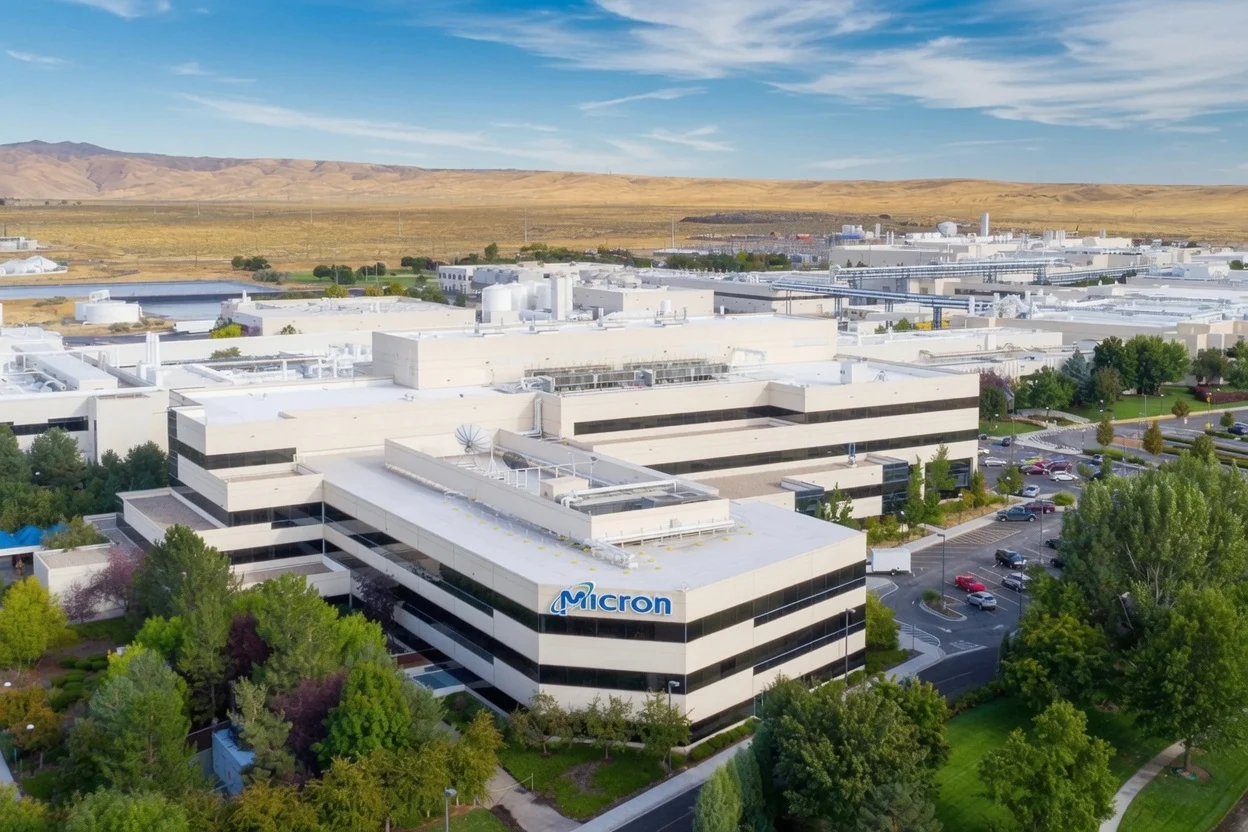
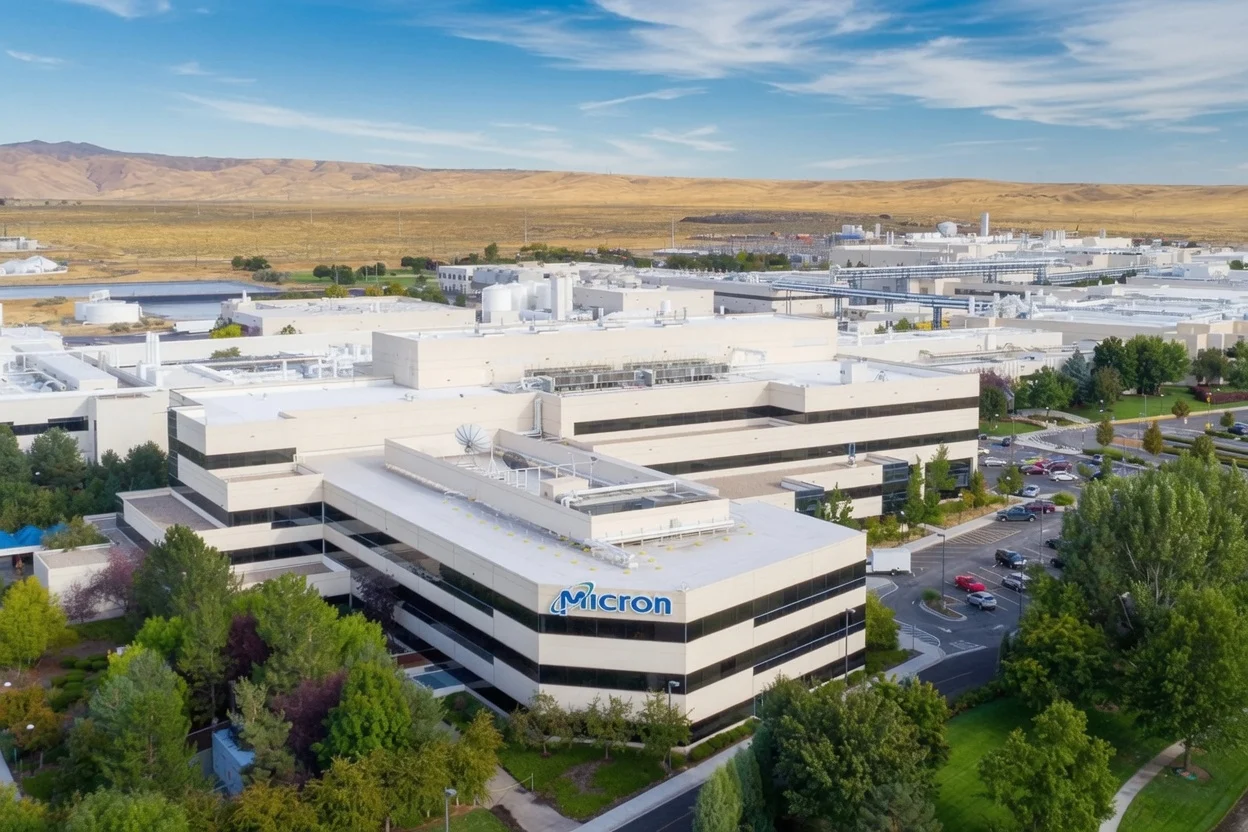
Micron Technology, Inc. (MU) has recently experienced a period of substantial market volatility, with its stock price retreating significantly from record highs, reflecting broad-based sector selling and a confluence of macroeconomic and industry-specific pressures. Currently trading at $848.34, the memory semiconductor giant has seen its shares decline by 26.5% from its peak of $1,154 recorded in June 2026. This sharp downturn, while concerning for short-term investors, is unfolding against a backdrop of robust long-term demand projections for memory chips, particularly those fueling the artificial intelligence (AI) revolution, presenting a complex narrative for market participants.
A Cascade of Catalysts Drives Recent Downturn
The recent decline in Micron’s stock can be attributed to a series of interconnected events that have collectively amplified market anxiety within the semiconductor sector. The initial catalyst for a pronounced sell-off emerged following an announcement from Taiwan Semiconductor Manufacturing Company (TSMC), a critical foundry partner for the global chip industry. Despite delivering robust revenue figures, TSMC simultaneously increased its annual capital spending forecast for 2026 to between $60 billion and $64 billion, an upward revision from its previous upper limit of $56 billion. This significant increase in capital expenditure (capex) immediately triggered concerns across semiconductor equities, as higher capex often translates to reduced free cash flow generation for companies within the supply chain, particularly those already trading at premium valuation metrics. For Micron, this news resulted in an immediate 5.7% decline in its stock value, as investors recalibrated their expectations for future profitability in an increasingly capital-intensive environment.
Just prior to the TSMC announcement, the preceding trading session had already witnessed an even steeper 8.2% decline in Micron’s shares. This particular downturn was largely spurred by news emanating from China, where ChangXin Memory Technologies (CXMT), a burgeoning domestic semiconductor manufacturer, was reportedly advancing plans for an $8.55 billion initial public offering (IPO). The prospect of a well-funded and increasingly capable Chinese competitor entering the public market signals intensifying competitive dynamics within the global memory sector over the long term. China’s ambition to achieve greater self-sufficiency in semiconductor production, particularly in memory, has been a persistent geopolitical and economic theme, and CXMT’s IPO plans underscored the tangible progress being made in this direction. This development injects a new layer of uncertainty regarding future market share and pricing power for established players like Micron, Samsung, and SK Hynix.
Further exacerbating the sentiment, reports surfaced indicating that CoreWeave, a prominent cloud infrastructure provider and significant customer for memory chips, was allegedly exploring various financial instruments to protect itself against potential memory chip price deterioration. Such defensive positioning by a major consumer of high-performance memory raises pertinent questions about near-term pricing momentum and demand stability, suggesting that some key industry players anticipate a softening in pricing power, even amidst strong underlying demand for AI-related hardware.
The contagion spread further on July 10, when memory-focused stocks absorbed significant spillover effects from the Nasdaq debut of SK Hynix’s shares. The South Korean memory giant, a direct competitor to Micron and a key player in high-bandwidth memory (HBM), saw its shares crater more than 15% on its listing day, creating a ripple effect of bearish sentiment throughout the memory subsector. This poor market reception for a major peer intensified concerns about investor appetite for memory stocks and the overall health of the industry’s valuation. Compounding these industry-specific headwinds, escalating geopolitical tensions surrounding the Strait of Hormuz added a layer of macroeconomic risk. As a critical chokepoint for global oil shipments and a potential flashpoint for international conflict, increased instability in the region tends to pressure risk-sensitive assets, with chip stocks often bearing the brunt of such selling due to their global supply chains and reliance on stable trade routes.
The Intricate Landscape of Semiconductor Market Dynamics
To fully comprehend Micron’s current predicament and future outlook, it is essential to delve into the broader dynamics of the semiconductor market, particularly the memory segment. The memory market, encompassing DRAM (Dynamic Random-Access Memory) and NAND (Non-Volatile Flash Memory), is notoriously cyclical, characterized by boom-and-bust cycles driven by supply-demand imbalances, technological transitions, and macroeconomic trends. Historically, periods of undersupply lead to surging prices and robust profits, followed by increased capital investment, oversupply, and subsequent price collapses.
However, the current cycle has been significantly influenced by the explosive growth of artificial intelligence. AI workloads, particularly those involving large language models and complex neural networks, demand vast quantities of high-performance memory, such as HBM, which Micron is heavily investing in. This unprecedented demand has been a primary driver behind Micron’s record highs in early 2026 and the generally bullish sentiment surrounding the memory sector. Data centers, edge computing, and automotive applications are also contributing to a sustained increase in memory consumption. The shift towards higher-value, specialized memory products, particularly HBM, has been a strategic pivot for Micron, aiming to reduce its exposure to the commodity-like volatility of standard DRAM and NAND.
The competitive landscape is also evolving rapidly. While Micron, Samsung, and SK Hynix have historically dominated the memory market, the rise of players like CXMT, bolstered by significant state support in China, introduces a new dimension of competition. China’s "Made in China 2025" initiative and subsequent policies have prioritized domestic semiconductor production, viewing it as a strategic imperative. CXMT’s planned IPO, therefore, is not merely a corporate fundraising event but a signal of China’s growing capability and ambition to challenge the global incumbents. This could lead to increased supply in the long term, potentially putting pressure on average selling prices (ASPs) and profit margins for all players, unless demand continues to outpace this new supply significantly.
Capital expenditure trends, exemplified by TSMC’s revised forecast, are also crucial. Investing billions in new fabrication plants (fabs), advanced equipment, and research and development is necessary to keep pace with technological advancements (e.g., smaller process nodes, advanced packaging) and meet the insatiable demand for cutting-edge chips. While essential for long-term competitiveness, such massive investments can temporarily strain cash flows and raise questions about return on investment, especially if market conditions shift unexpectedly. The AI boom requires not just more chips, but more advanced chips, necessitating continuous, heavy investment from foundries like TSMC and integrated device manufacturers (IDMs) like Micron.
Technical Indicators Offer Mixed Signals
From a technical analysis perspective, Micron’s stock presents a dichotomy, signaling immediate caution while maintaining a robust long-term outlook. Daily chart indicators flash warning signals, reflecting the intensity of the recent selling pressure. The Relative Strength Index (RSI), a momentum oscillator, registers 41, approaching oversold territory but still indicating room for further decline. The Stochastic RSI has plummeted to 0.000, a classic indicator of extreme oversold conditions, suggesting that a short-term rebound could be imminent if selling pressure abates. The Moving Average Convergence Divergence (MACD) confirms the strong downward momentum at -15.3, with the MACD line crossing below the signal line, typically a bearish signal. Near-term technical readings across all intervals, from hourly to daily, collectively suggest a "Strong Sell" recommendation for traders focused on short-term movements.
However, extending the timeframe to weekly and monthly charts reveals a distinctly different and more optimistic narrative. Both weekly and monthly indicators continue to register "Strong Buy" signals, underscoring the underlying strength of Micron’s long-term trend. The weekly RSI maintains a constructive level of 59, indicating healthy momentum without being overbought, while the weekly MACD remains firmly positive at +177.6, showcasing sustained upward trajectory over a longer period. With shares having appreciated by an impressive 631% over the trailing twelve months leading up to this recent correction, many market observers characterize the current pullback as a "healthy reset" or a necessary consolidation within a structurally sound upward trajectory, rather than a fundamental reversal.
Critical support levels for Micron’s stock are identified between $813 and $825, where weekly trend support lines intersect with the recent daily selling range. A decisive close beneath $786, however, would represent a more troubling technical development, potentially signaling a deeper correction and challenging the integrity of the long-term uptrend. Investors are closely watching these levels for signs of stabilization or further weakness.
Analyst Conviction Versus Skeptical Observations
Despite the recent share price depreciation, the broader investment community largely maintains conviction in Micron’s long-term prospects. This sentiment is reflected in several analyst reports and price targets. Citi, for instance, holds a "Buy" recommendation with an ambitious $1,400 price objective, and recently placed Micron on its prestigious 90-Day Upside Catalyst Watch List, signaling confidence in potential positive triggers in the near future. TD Cowen is even more bullish, projecting a $1,600 target, citing persistent supply constraints extending beyond 2027 and anticipating Double Data Rate (DDR) average selling price expansion exceeding 15% in the third quarter of 2026.
UBS echoes this optimism, forecasting that DRAM undersupply will persist through at least the second quarter of 2028. Their analysis highlights a significant demand-supply imbalance, with 2027 demand expansion projected at 36.2% year-over-year, substantially outpacing an estimated supply growth of merely 19.3%. Bank of America, while acknowledging the downturn, characterized it as a "healthy reset before rally," reinforcing the view that the current volatility is a temporary correction rather than a fundamental shift in the company’s trajectory.
DA Davidson provided additional insight into Micron’s evolving business model, highlighting a significant strategic shift. The firm noted that Supply Commitment Agreements (SCAs) now represent nearly 50% of Micron’s total revenues. This marks a dramatic departure from its historical commodity-driven volatility, where pricing was largely dictated by spot market conditions. SCAs provide greater revenue visibility and stability, reducing the impact of short-term market fluctuations and allowing for better planning of capital expenditures and production. This structural change is viewed as a key factor supporting the long-term bullish outlook.
However, skepticism is also present in the market. Notorious investor Michael Burry, known for his prescient bets against the housing market before the 2008 financial crisis, established put positions on Micron around $1,052 on July 1, close to the stock’s all-time highs. Burry’s move signals a bearish outlook on Micron’s near-term performance, suggesting he anticipates further downside. Adding to these concerns, insider dispositions reached their most elevated level since 2010, with Director Lynn Dugle notably offloading approximately $1.5 million in shares on June 30. Elevated insider selling can sometimes be interpreted as a lack of confidence from those closest to the company, though it can also be attributed to personal financial planning or diversification strategies. The juxtaposition of strong analyst conviction with notable skeptical positions creates a nuanced picture for investors.
Implications and The Road Ahead
The recent developments surrounding Micron Technology carry significant implications for the broader semiconductor industry and the global technology landscape. The increased capital expenditure by TSMC underscores the immense investment required to sustain technological advancement and meet the surging demand for AI chips. This could lead to a consolidation of power among companies with deep pockets, potentially raising barriers to entry for new players and intensifying competition for skilled labor and resources.
For Micron, navigating the dual challenges of increasing competition from players like CXMT and managing potential short-term pricing pressures while continuing its heavy investment in HBM and other advanced memory technologies will be critical. The company’s strategic shift towards Supply Commitment Agreements appears to be a robust mechanism for mitigating some of the inherent volatility of the memory market, offering a more stable revenue stream. However, the market will closely scrutinize its ability to maintain pricing power and profit margins in the face of expanded global supply.
Geopolitical tensions, particularly those affecting critical trade routes like the Strait of Hormuz, highlight the fragility of global supply chains. The semiconductor industry, with its complex and geographically dispersed manufacturing processes, is particularly vulnerable to such disruptions. Companies like Micron must continue to assess and mitigate these risks, potentially through diversification of manufacturing locations or strengthening of logistics networks.
All eyes will now turn to Micron’s upcoming earnings release, scheduled for September 22, 2026. This event will serve as a crucial barometer for the company’s performance and future outlook. Investors will be keenly listening for updates on HBM production and demand, management’s guidance on average selling prices for DRAM and NAND, details on capital expenditure plans, and any further insights into the competitive landscape and the impact of the new business model. The earnings call will provide an opportunity for Micron to address market concerns, reaffirm its strategic direction, and potentially assuage fears of a prolonged downturn. The current volatility, while challenging, may ultimately serve as a necessary recalibration before Micron continues its trajectory, propelled by the enduring demand for memory in an increasingly data-driven and AI-centric world.














