


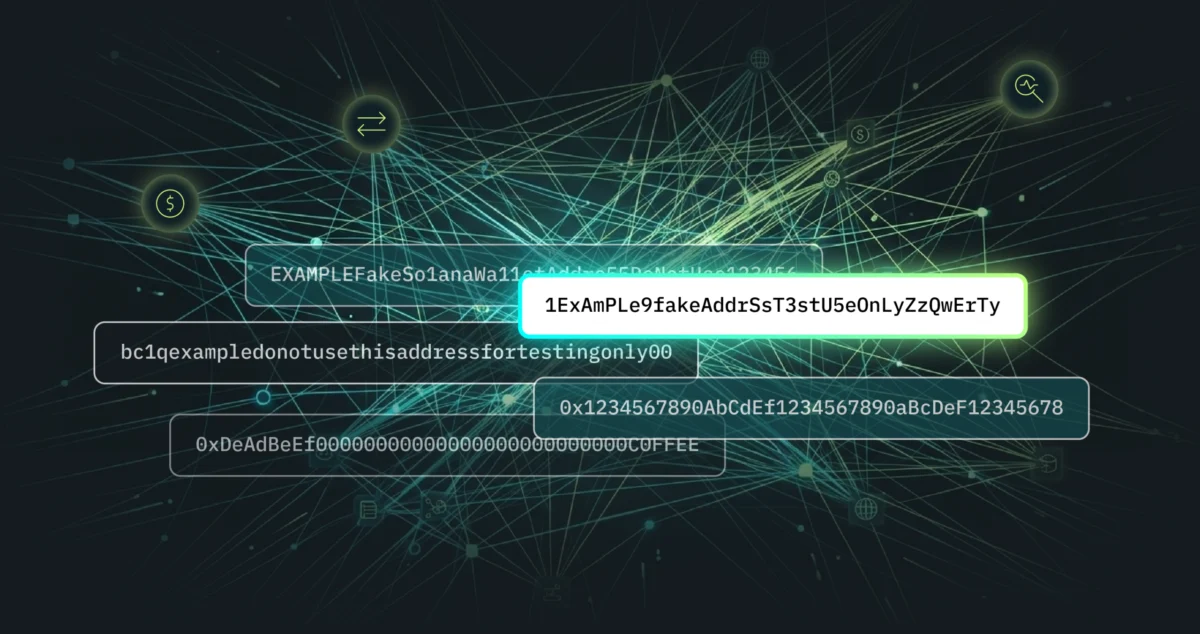
The inherent transparency of blockchain technology has long been touted as its greatest strength, offering a permanent and immutable ledger of every transaction ever conducted on public networks. However, for financial institutions, law enforcement agencies, and regulatory bodies, this transparency is often a double-edged sword; while every movement of value is visible on a block explorer, the identity and intent behind those movements remain shrouded in alphanumeric pseudonyms. This fundamental gap between raw data and actionable intelligence represents the primary challenge in the modern digital asset ecosystem. To bridge this divide, blockchain analytics firms like Elliptic have developed sophisticated methodologies that transform billions of disparate data points into a comprehensive map of the crypto-financial world, relying on a foundation of "ground truth" to ensure that accuracy is not sacrificed for the sake of scale.
The Problem of Pseudonymity in a Transparent Ledger
A block explorer provides a window into the blockchain, showing that Address A transferred a specific amount of Bitcoin to Address B at a precise timestamp. In isolation, this information is practically meaningless for compliance purposes. It does not indicate whether Address A is a sanctioned entity, such as a North Korean hacking collective, or if Address B is a "mule" account intended to facilitate money laundering. Without the context provided by high-quality labeling, a blockchain remains a labyrinth of anonymous actors.
As the crypto market has matured, the stakes for identifying these actors have risen exponentially. Total transaction volume in the crypto space reached trillions of dollars annually, and with that growth came an increase in sophisticated illicit activity. According to industry reports, while illicit activity represents a small percentage of total volume, the absolute values involve billions of dollars linked to scams, ransomware, and terrorist financing. This environment has necessitated a shift from simple transaction monitoring to advanced behavioral analysis and entity resolution.
The Foundation of Ground Truth: The Human Element
At the heart of any reliable blockchain intelligence dataset is what experts call "ground truth." This refers to data points that are verified with near-certainty regarding the direct ownership and control of specific wallet addresses. Unlike automated heuristics, which rely on patterns that can sometimes produce false positives, ground truth is the result of rigorous manual investigation by experienced analysts and researchers.
These analysts utilize a variety of techniques to "de-anonymize" the blockchain. This includes "dusting" attacks to track wallet clusters, interacting directly with services to identify their deposit addresses, and scraping the dark web for leaked information or advertisements for illicit services. By turning raw blockchain activity into intelligence that did not exist prior to their discovery, these researchers create a benchmark for the rest of the dataset. For Elliptic, this has resulted in a core of over one million high-confidence labels that serve as the "seeds" from which a broader dataset of billions of labels grows.
A Chronology of Blockchain Intelligence Evolution
The evolution of the blockchain analytics industry can be categorized into four distinct eras, each marked by increasing complexity and the integration of more advanced technology.
- The Manual Era (2009–2013): In the early years of Bitcoin, investigations were largely manual. Law enforcement and early enthusiasts tracked movements by hand, often relying on public forums like Bitcointalk where users would voluntarily link their identities to their addresses.
- The Heuristic Era (2014–2017): As the Silk Road and other darknet markets rose to prominence, the first dedicated analytics firms emerged. They developed basic heuristics, such as "common input ownership," which assumes that if multiple addresses are used as inputs in a single transaction, they are likely controlled by the same entity.
- The Multi-Chain and Automation Era (2018–2021): With the explosion of Ethereum, stablecoins, and DeFi, the complexity of the ecosystem grew. Analytics providers had to scale their operations to cover dozens of different blockchains and hundreds of thousands of tokens. This period saw the first significant integration of automated data pipelines to handle the sheer volume of information.
- The AI and Behavioral Detection Era (2022–Present): Today, the industry relies on sophisticated machine learning models that can detect "peeling chains," "mixers," and other obfuscation techniques in real-time across multiple chains. The focus has shifted from simple labeling to predictive modeling and real-time risk scoring.
Scaling Intelligence: From One Million to Billions
While human analysts are essential for establishing ground truth, they cannot keep pace with the millions of transactions occurring daily across more than 66 covered blockchains. The challenge lies in scaling the high-confidence insights of a human researcher into a global dataset without diluting the accuracy.
This scaling process is managed by intelligence engineers and data scientists who build models anchored in the ground truth. These models are designed to recognize patterns of behavior associated with specific types of entities. For example, a "spam" address might reveal itself through a specific frequency of outgoing transactions to a vast number of unique addresses. Conversely, a sophisticated state-sponsored actor might use a "peeling chain"—a method where a large amount of crypto is sent to a new address, a small portion is "peeled" off to an exchange, and the remainder is sent to another new address, repeating the process dozens of times to hide the source of funds.
By codifying these patterns, analytics providers can extend their reach. However, a critical component of this process is the "guardrail" system. Models are never allowed to run entirely unmonitored. Constant anomaly detection ensures that if a model’s output begins to deviate from expected behavioral norms, it is flagged for human review. This discipline allows the dataset to expand into the billions of labels while maintaining the integrity required by the world’s largest banks and financial institutions.
Supporting Data and the Regulatory Landscape
The demand for high-accuracy blockchain intelligence is driven largely by a tightening global regulatory framework. The Financial Action Task Force (FATF) has issued "Travel Rule" guidelines that require Virtual Asset Service Providers (VASPs) to share originator and beneficiary information for transactions above a certain threshold. Furthermore, the U.S. Office of Foreign Assets Control (OFAC) has increasingly targeted individual crypto addresses and decentralized mixers, such as Tornado Cash, placing them on the Specially Designated Nationals (SDN) list.
Data from recent enforcement actions highlights the scale of the issue:
- In 2023, the U.S. Treasury identified billions of dollars in stablecoin transactions linked to sanctioned jurisdictions, including Iran.
- The Lazarus Group, a North Korean-linked hacking collective, is estimated to have stolen over $3 billion in crypto assets over the last six years, utilizing complex cross-chain bridges to obfuscate their tracks.
- Over 700 institutional customers, including major tier-one banks, now utilize blockchain analytics to fulfill their Anti-Money Laundering (AML) and Know Your Customer (KYC) requirements.
These figures underscore why the "gap" between raw data and intelligence is a matter of national security and global financial stability.
Official Responses and Industry Sentiment
The shift toward high-fidelity data has been welcomed by both regulators and the private sector. In various industry summits, representatives from the U.S. Department of Justice and the FBI have noted that the ability to "follow the money" on the blockchain has become one of the most effective tools in modern criminal investigations.
"The myth of crypto-anonymity is being dismantled," noted a senior compliance officer at a major European bank during a recent fintech forum. "But the challenge for us is not just seeing the data; it’s trusting it. We need to know that a ‘red flag’ on a transaction is based on verifiable facts, not just a statistical guess. That is why the concept of ground truth is so vital for institutional adoption."
Similarly, cryptoasset businesses argue that accurate labeling is a prerequisite for innovation. Without the ability to distinguish between a legitimate DeFi user and a malicious actor, the industry risks being cut off from the traditional financial system—a phenomenon known as "de-risking."
Analysis of Implications: The Future of Financial Integrity
The implications of advanced blockchain intelligence extend far beyond catching criminals. As central banks explore Central Bank Digital Currencies (CBDCs) and traditional assets like real estate and bonds are "tokenized" on the blockchain, the need for a transparent yet identifiable financial system will only grow.
The synthesis of human expertise and machine learning creates a new standard for financial integrity. It allows for a "risk-based approach" to compliance, where resources are focused on the highest-threat areas rather than being spread thin across all transactions. This efficiency is crucial for the scalability of the digital asset economy.
Furthermore, the ability to detect obfuscation techniques like "chain-hopping"—where an actor moves funds from Bitcoin to Ethereum to Monero to break the audit trail—is the next frontier of this field. As Elliptic and its peers continue to map the interconnected web of global blockchains, the "opaque" nature of the internet of value is being replaced by a sophisticated, searchable, and regulated infrastructure.
In conclusion, the transformation of a string of characters into a known entity is the cornerstone of trust in the digital age. By anchoring billions of data points in the "ground truth" established by human researchers, blockchain analytics provides the necessary clarity to turn a transparent ledger into a secure financial ecosystem. For the 700+ customers who rely on this data, the difference between raw information and true intelligence is not just a technical detail—it is the foundation of their ability to operate in the modern world.














