


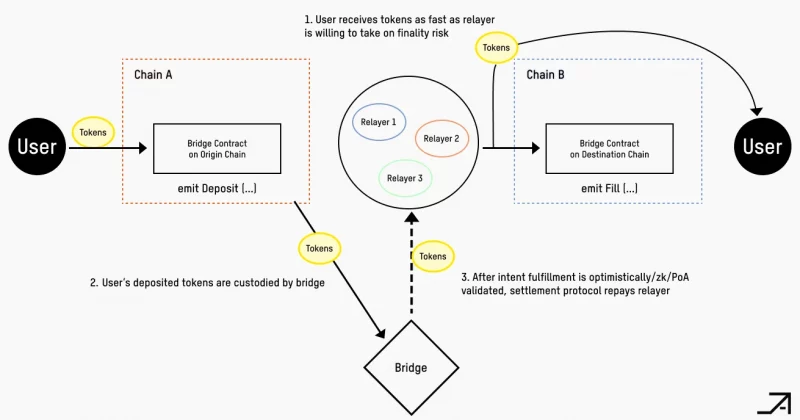
The burgeoning landscape of blockchain technology, characterized by its decentralized nature and proliferation of independent networks, has long grappled with the challenge of seamless interoperability. While numerous blockchains offer distinct advantages, the ability for these networks to communicate and transact with each other remains a critical bottleneck for widespread adoption. Addressing this fundamental need, the Open Intents Framework (OIF), launched in February 2025, is rapidly emerging as a pivotal infrastructure solution, aiming to democratize and standardize cross-chain intent execution. Spearheaded by the Ethereum Foundation in collaboration with Hyperlane and Bootnode, the OIF is not merely another protocol; it is actively positioning itself as a neutral, open standard, designed to empower developers and users alike without the constraints of proprietary systems or token-based governance.
The genesis of the Open Intents Framework can be traced back to the growing recognition within the blockchain community that a fragmented ecosystem hinders innovation and user experience. As more decentralized applications (dApps) and protocols emerged on different blockchains, the demand for efficient and secure methods to bridge these networks intensified. Early attempts at cross-chain communication often involved centralized bridges or complex, custom integrations, each carrying inherent risks of single points of failure, security vulnerabilities, and limited scalability. The OIF emerged as a response to these limitations, envisioning a future where users could seamlessly interact across multiple blockchains as if they were on a single, unified network. The collaboration between the Ethereum Foundation, a vanguard of blockchain development, and Hyperlane, a prominent interoperability protocol provider, along with Bootnode, a developer tooling firm, signifies a concerted effort to build a robust and widely adopted solution. The framework’s commitment to open-source development and its emphasis on neutrality have already garnered significant support, with over 30 teams, including major players like Arbitrum, Optimism, Polygon, ZKsync, and Starknet, endorsing its vision. This broad coalition of established layer-2 scaling solutions and prominent blockchain ecosystems underscores the perceived value and potential impact of the OIF.
The Mechanics of Cross-Chain Intent Execution
At its core, the Open Intents Framework provides a comprehensive toolkit that enables the reliable and efficient execution of cross-chain intents across a multitude of blockchain networks. This toolkit is meticulously designed to be accessible and adaptable, allowing developers to integrate its functionalities into their applications without requiring explicit permission from a central authority. The framework comprises several key components, including smart contracts that govern the settlement of intents, open-source solvers that compete to fulfill these intents, aggregators that streamline the process, and a Software Development Kit (SDK) that simplifies integration.
The foundational architecture of the OIF rests upon three critical types of smart contracts: InputSettler, OutputSettler, and Oracle contracts. The InputSettler contract acts as the entry point for an intent, receiving and validating the user’s request. The OutputSettler contract then handles the execution and confirmation of the intent on the destination chain. Oracle contracts, in turn, provide the necessary off-chain data and validation mechanisms required for cross-chain operations, ensuring the integrity and security of transactions. These contracts are interconnected and orchestrated by the interoperability SDK, which abstracts away much of the underlying complexity for developers.
Crucially, the OIF builds upon the established ERC-7683 standard, a widely recognized specification for structuring cross-chain intents. This standardization is paramount, as it ensures that intents submitted by users are understood and processed consistently across different implementations of the framework. When a user expresses an intent – for example, a desire to swap a specific token on one blockchain for another token on a different blockchain – this intent is broadcast to the network. The OIF then incentivizes a competitive marketplace of "solvers." These solvers are independent entities, typically running specialized software, that actively monitor for pending intents. They then race to fulfill these requests in the most efficient and cost-effective manner possible, seeking to profit from the spread or a small fee associated with the execution. This competitive dynamic is a cornerstone of the OIF’s design, ensuring that users receive timely and optimized outcomes for their cross-chain operations.
The practical deployment of the OIF is already underway, with active implementations live on several prominent testnets, including Ethereum Sepolia and Optimism Sepolia. These deployments serve as crucial proving grounds for the framework’s capabilities and stability. Early performance data under optimal conditions suggests that solver-fulfilled orders can be completed within a remarkably short timeframe, ranging from 10 to 60 seconds. This speed is a significant improvement over many existing cross-chain solutions and is vital for applications requiring near real-time transaction finality, such as decentralized exchanges or payment systems. The ongoing testing and iterative development on these networks are critical for identifying and addressing any potential performance bottlenecks or security vulnerabilities before broader mainnet adoption.
A Significant Endorsement: Coinbase’s Entry
The Open Intents Framework received a substantial boost in its credibility and adoption trajectory in September 2025 with the announcement that Coinbase Payments had become a core contributor. Coinbase, one of the world’s largest cryptocurrency exchanges, operates a significant payments division that facilitates a wide range of digital asset transactions. Their involvement signifies a powerful endorsement of the OIF’s potential to revolutionize cross-chain asset transfers. By contributing to the standardization of these transfers through OIF, Coinbase is not only leveraging the framework for its own operational enhancements but also signaling its commitment to fostering a more interconnected and user-friendly blockchain ecosystem. This partnership is particularly noteworthy as it brings a major institutional player with a vast user base into the OIF’s orbit, potentially accelerating mainstream awareness and adoption.
The architecture of the OIF is deliberately engineered to be modular and permissionless. This design philosophy is central to its ambition of establishing a neutral standard. "Modular" means that different components of the framework can be independently developed, updated, or replaced without disrupting the entire system. "Permissionless" signifies that any development team or individual can deploy, extend, and build upon the OIF’s smart contracts and SDK without needing to seek approval from a governing body or central authority. This open approach inherently fosters innovation and prevents the emergence of gatekeepers.
Furthermore, the OIF has consciously eschewed several common elements found in many blockchain protocols. There is no dedicated governance token, which eliminates the complexities and potential conflicts associated with token holder voting and decision-making. Similarly, the framework does not incorporate any protocol fee extraction mechanisms. This means that the OIF itself does not take a cut of the transaction fees generated by solvers. This commitment to neutrality is further reinforced by the absence of any "vendor lock-in," ensuring that users and developers are not tied to a specific provider or service. These design choices collectively aim to create an environment where the focus remains squarely on the utility and efficiency of cross-chain intent execution, rather than on speculative tokenomics or centralized control. Production-ready contracts have already been deployed across various testnets and mainnets, undergoing rigorous audits to ensure security and reliability. The roadmap for later this year includes further development of additional solver capabilities and enhancements to the framework’s overall performance and feature set.
The Strategic Significance of a "No Token" Approach
The deliberate absence of a dedicated token or cryptocurrency asset associated with the Open Intents Framework is a strategic decision with profound implications for its positioning and adoption. This "no token" approach is fundamental to the OIF’s identity as a neutral infrastructure layer. For developers and businesses looking to integrate cross-chain functionalities, this design choice significantly simplifies their planning and execution. They are freed from the burden of navigating complex tokenomics, understanding staking requirements, or adapting to fee structures that could fluctuate based on the unpredictable outcomes of token holder governance. This predictability and simplicity are invaluable for fostering long-term development and investment in the ecosystem.
However, the absence of a token also presents a unique challenge: the bootstrapping of a network of solvers and participants. Typically, protocols incentivize early adoption and network growth through token distribution, staking rewards, or other financial mechanisms. The OIF, without such direct incentives, relies on a different model: the inherent competitive dynamics of the solver marketplace. Solvers are motivated by the potential to profit from efficiently fulfilling user intents. The more intents they can process accurately and swiftly, the greater their earnings. This competitive pressure is designed to naturally drive innovation and efficiency within the solver ecosystem. As the OIF gains traction and the volume of cross-chain intents increases, the economic opportunity for solvers will grow, attracting more participants and further strengthening the network’s robustness. The success of this model hinges on the framework’s ability to attract sufficient user demand to create a compelling economic incentive for solvers, even without direct token rewards.
The implications of the OIF extend beyond its technical architecture. By establishing a neutral, open, and permissionless standard for cross-chain intents, the framework has the potential to significantly reduce friction in the blockchain ecosystem. This could lead to:
- Enhanced User Experience: Users will be able to interact with decentralized applications and move assets across different blockchains with greater ease and confidence, abstracting away much of the complexity that currently hinders adoption.
- Accelerated Innovation: Developers will have a standardized and robust infrastructure to build upon, allowing them to focus on creating novel applications and services rather than reinventing the wheel for cross-chain communication.
- Increased Liquidity and Capital Efficiency: Seamless cross-chain asset transfers can unlock greater liquidity across the entire blockchain landscape, allowing capital to flow more freely to where it can be most effectively utilized.
- Greater Network Resilience: A decentralized network of solvers, rather than a single, centralized bridge, can offer increased resilience against failures and attacks.
- Democratization of Interoperability: The permissionless nature of the OIF ensures that no single entity controls the flow of cross-chain transactions, fostering a more equitable and decentralized internet of blockchains.
The current phase of development, with ongoing audits and further solver development, indicates a commitment to maturing the framework into a production-ready solution. As the OIF continues to gain momentum, its impact on the future of blockchain interoperability will be a critical area to monitor. The support from major industry players like Coinbase, alongside the broad backing from leading layer-2 networks, suggests that the Open Intents Framework is well-positioned to become a foundational element of the next generation of decentralized applications and a crucial step towards a truly interconnected blockchain ecosystem.
Disclosure: This article was edited by Editorial Team. For more information on how we create and review content, see our Editorial Policy.














