


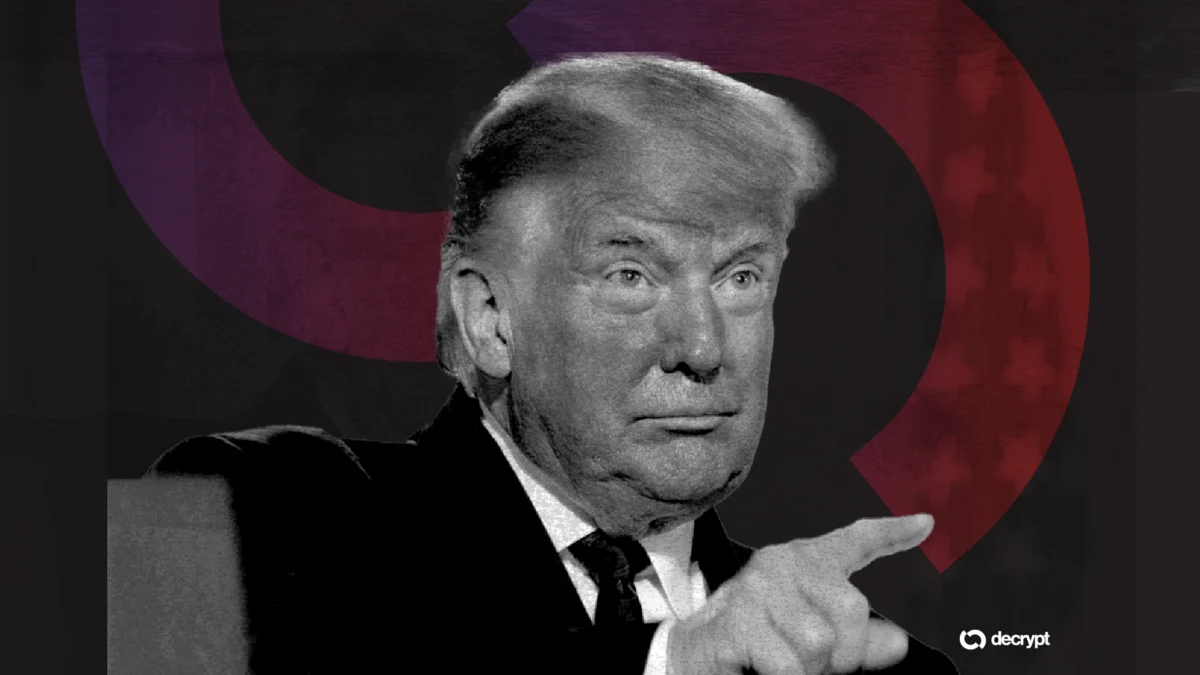
The United States Senate is currently engaged in a high-stakes legislative battle over the long-anticipated Clarity Act, with the latest 616-page draft now circulating among lawmakers. This version, critically, incorporates a hotly debated ethics provision sought by Democrats, which aims to restrict the president and their immediate family from engaging in cryptocurrency business activities while in office. However, the inclusion of a sunset clause, which would see the ban expire on January 20, 2029, and its specific wording that excludes restrictions on the children of public officials, including former President Donald Trump’s sons, has immediately drawn skepticism and strong objections from across the political spectrum. As Majority Leader John Thune pushes for floor action in the coming days, the first week of August looms as the final realistic window for this sweeping market-structure bill to advance before the Senate’s recess and the looming November midterms shift legislative priorities.
The Clarity Act: A Long-Awaited Regulatory Framework
The Clarity Act represents one of the most significant attempts to establish a comprehensive regulatory framework for digital assets in the United States, an industry that has largely operated within a legal gray area for over a decade. The lack of clear guidelines has been a persistent complaint from cryptocurrency businesses, innovators, and investors alike, leading to a fragmented regulatory landscape where various federal agencies, including the Securities and Exchange Commission (SEC) and the Commodity Futures Trading Commission (CFTC), have asserted jurisdiction, often through enforcement actions rather than proactive rulemaking. This regulatory vacuum has been cited as a major impediment to innovation, capital formation, and the U.S. maintaining its competitive edge in the global digital economy.
Previous legislative efforts, such as the Lummis-Gillibrand Responsible Financial Innovation Act, have attempted to tackle this complexity, but none have garnered the broad bipartisan support necessary for passage. The Clarity Act seeks to formally legalize most cryptocurrency activity in the United States, providing much-needed clarity on how digital assets are classified, traded, and overseen. Proponents argue that a robust framework would protect consumers, prevent illicit activities, and foster responsible growth within the burgeoning digital asset sector, which now represents a multi-trillion-dollar global market. The latest draft is considered by many to be the final iteration with a realistic chance of becoming law in the current legislative session, making the concessions and inclusions within its text particularly significant.
The Ethics Provision: A Point of Fierce Contention
At the heart of the current legislative deadlock is the newly introduced ethics provision. The draft text stipulates that public officials and employees, along with their spouses, would be prohibited from issuing or sponsoring digital assets while holding office. This prohibition is designed to prevent direct conflicts of interest where officials might use their position to benefit from the creation or promotion of specific cryptocurrencies. While this restriction is a direct response to Democratic calls for greater accountability, its limitations have quickly become a focal point of concern.
Crucially, the provision explicitly allows officials to invest in cryptocurrency, meaning they can hold and trade digital assets, but not actively create or endorse new ones. More controversially, the restrictions do not extend to the children of public officials. This specific carve-out has been widely interpreted as a direct concession to Republican concerns and a potential loophole, especially given the current political climate. The ban is also not permanent, featuring a sunset clause that declares it will have "no force and effect on and after noon on January 20, 2029," coinciding with the projected end of the current presidential term. Enforcement of this provision would fall solely to the Department of Justice (DOJ).
The Trump Factor and Democratic Demands
The immediate catalyst for this ethics language can be directly traced to former President Donald Trump’s recent and highly public foray into the cryptocurrency space. Financial disclosures released last month revealed that Trump earned more than $1.2 billion from various crypto businesses over the past year. These earnings include revenue from "meme coin ventures" and his family’s company, World Liberty Financial, which has reportedly been involved in digital asset-related activities. Democrats, led by vocal critics like Senator Elizabeth Warren, have vehemently cited these disclosures as stark evidence of potential conflicts of interest, arguing that a president or their family profiting from an unregulated or newly regulated sector could undermine public trust and create an uneven playing field.
Senator Warren, a long-standing advocate for stricter financial regulations and consumer protections, has consistently demanded that any comprehensive crypto legislation explicitly bar the president, vice president, senior officials, members of Congress, and their immediate families from profiting off the sector. Her argument centers on the principle that public service should not be leveraged for personal financial gain, particularly in nascent and volatile markets like cryptocurrency, where regulatory decisions can significantly impact valuations.
The temporary nature of the ban, its limited scope to exclude children, and the reliance on DOJ enforcement are precisely the points that are expected to draw the strongest Democratic objections. Don Jr. and Eric Trump, both involved in World Liberty Financial, would not be subject to the restrictions, leading many to argue that the provision fails to address the full spectrum of potential conflicts of interest. For Democrats, who require at least 10 votes to reach the 60-vote threshold needed to clear the Senate, these perceived loopholes could be deal-breakers, especially given that many have already expressed significant reservations about the bill. The concern is that if the family of a sitting president can engage in extensive crypto business, it creates an environment ripe for ethical breaches, lobbying pressures, and the potential for official policy to be swayed by personal financial gain.
Blockchain Regulatory Certainty Act (BRCA) and Developer Safe Harbor
Beyond the ethics debate, the latest draft of the Clarity Act also preserves a crucial provision known as the Blockchain Regulatory Certainty Act (BRCA). This measure is designed to create a "safe harbor" for non-custodial software developers by clarifying that they are not to be classified as "money transmitters." The distinction is vital for the crypto industry. Money transmitters, under existing federal and state laws, are subject to stringent compliance obligations, including Know Your Customer (KYC) and Anti-Money Laundering (AML) regulations, along with costly state-by-state licensing requirements. Applying this designation to developers who merely write code for decentralized protocols, without holding or controlling user funds (i.e., non-custodial), is seen by the industry as a fundamental misunderstanding of their role and an existential threat to innovation.
The crypto industry widely considers the BRCA a "red line" issue. Proponents argue that providing legal certainty to developers is essential for fostering innovation, preventing a "brain drain" of talent to more crypto-friendly jurisdictions, and keeping blockchain development onshore in the United States. Without such protections, developers creating open-source tools, decentralized applications (dApps), and privacy-enhancing technologies could face the risk of criminal prosecution, as demonstrated by several Trump-era DOJ actions that sent crypto developers to prison for building privacy tools, even when they had no direct control over how those tools were used. The arrest and indictment of the developer associated with the Tornado Cash mixing service, for instance, sent shockwaves through the developer community, highlighting the precarious legal position of those building core infrastructure for decentralized finance (DeFi).
However, the BRCA provision has also drawn significant opposition. Law enforcement groups, alongside a coalition of 82 Catholic leaders, have vociferously warned that these developer protections could inadvertently weaken existing safeguards against serious illicit activities. Their concerns center on the potential for anonymous or pseudo-anonymous blockchain tools to be exploited for human trafficking, money laundering, child exploitation, and terrorist financing. They argue that by exempting developers from "money transmitter" obligations, the bill could create avenues for criminals to operate with reduced traceability, making it harder for law enforcement to track and seize illicit funds. Data from organizations like Chainalysis often highlight the significant, though proportionally small, volume of crypto used in illicit activities, fueling these concerns among those focused on national security and public safety. Finding a balance between fostering innovation and preventing crime remains one of the most difficult challenges in crypto regulation.
The Stablecoin Yield Controversy
Another major point of contention that remains unchanged from previous versions of the bill is the matter of so-called "stablecoin yield." This issue has drawn the ire of the traditional banking industry, which sees it as a form of unfair competition and a potential source of systemic risk. The language in the Clarity Act places significant limits on "idle yield," meaning that neither stablecoin issuers (like Tether or Circle) nor crypto platforms and providers (like Coinbase) would be able to offer rewards or interest solely on stablecoin balances.
Stablecoins, digital assets pegged to the value of fiat currencies like the U.S. dollar, have become a cornerstone of the crypto ecosystem, facilitating trading, lending, and remittances. Many platforms have offered yield or interest on stablecoin holdings, akin to interest-bearing savings accounts, to attract users and provide liquidity. The banking sector argues that allowing crypto companies to offer these services without being subject to the same rigorous regulatory oversight, capital requirements, and consumer protection laws as traditional banks creates an uneven playing field. They also raise concerns about the potential for "runs" on stablecoin issuers if market conditions deteriorate, posing risks to broader financial stability, similar to historical bank runs.
For the crypto industry, restricting idle yield could significantly impact the attractiveness and utility of stablecoins, potentially driving users and innovation to offshore platforms where such services are permitted. It could also diminish the overall liquidity and efficiency of decentralized finance (DeFi) markets, which heavily rely on stablecoins and the ability to earn returns on them. The banking industry’s lobbying power is substantial, and their concerns about regulatory arbitrage have clearly influenced the persistence of this restrictive language in the bill.
Political Maneuvering and the Looming Deadline
The path forward for the Clarity Act is fraught with political challenges. Majority Leader John Thune has signaled his intention to move to floor action in the coming days, underscoring the urgency to pass the bill. However, the legislative calendar is unforgiving. The Senate’s August recess is fast approaching, and the first week of August is widely considered the last realistic window for the bill to advance before lawmakers depart. Once the recess begins, attention will quickly shift to the November midterms, where many senators will be campaigning for re-election, making it exceedingly difficult to muster the necessary focus and bipartisan cooperation for complex legislation.
To pass the Senate, the Clarity Act requires 60 votes, meaning it needs support from at least 10 Democrats, assuming all Republicans vote in favor. Given the strong objections raised by influential Democrats like Senator Warren regarding the ethics provision’s limitations, securing these crucial votes will be a significant challenge. The debate over crypto regulation has often highlighted deep ideological divides within both parties, with some seeing it as an engine of innovation and economic freedom, and others viewing it as a breeding ground for financial crime and systemic risk. The specific details of the ethics ban, developer protections, and stablecoin rules have become proxies for these broader philosophical disagreements, making consensus elusive.
Broader Implications and the Future of U.S. Crypto Regulation
The passage or failure of the Clarity Act will have profound implications for the future of the cryptocurrency industry in the United States and its global standing. If passed, the bill could usher in an era of unprecedented clarity, encouraging institutional adoption, fostering domestic innovation, and solidifying the U.S. as a leader in the digital asset space. Clear rules of the road would likely attract more traditional financial institutions, venture capital, and established companies into the sector, potentially legitimizing crypto in the eyes of mainstream investors and the public. It would also provide a legal framework for the SEC and CFTC to operate within, reducing the reliance on enforcement actions to define regulatory boundaries.
Conversely, if the bill fails to pass, the U.S. crypto industry would likely remain mired in regulatory uncertainty. This could lead to a continued "brain drain" of talent and capital to more hospitable jurisdictions, such as the European Union, which has already enacted its comprehensive Markets in Crypto-Assets (MiCA) regulation, or the United Kingdom, which is actively developing its own robust framework. Without congressional action, the regulatory landscape would continue to be shaped by ongoing litigation, executive orders, and agency-specific guidance, creating a piecemeal and often contradictory environment. This fragmented approach could hinder the U.S.’s ability to compete effectively in the global digital economy and stifle the growth of a sector that many believe holds immense promise for technological advancement and economic opportunity.
Ultimately, the debate surrounding the Clarity Act is not merely about cryptocurrency; it is about the broader principles of government ethics, the balance between innovation and regulation, and the role of the United States in shaping the future of finance. As the clock ticks down to the August recess, the Senate faces a critical decision that will undoubtedly reverberate across the digital asset world and beyond.














