


In a decisive and unprecedented coordinated effort to dismantle the financial and operational pillars of international cybercrime, the United States, the European Union, and the United Kingdom announced a sweeping series of sanctions on July 13, 2026. This trilateral action targets a vast and interconnected network of nation-state hackers, prolific cybercriminals, and the specialized service providers who enable their global campaigns of extortion. The enforcement action marks one of the most significant milestones in the history of cyber law enforcement, signaling a strategic shift toward neutralizing the entire ecosystem that supports ransomware rather than merely pursuing individual actors. According to official statements, the infrastructure and individuals identified in this sweep are collectively responsible for billions of dollars in damages inflicted upon private enterprises, healthcare systems, and government agencies across the globe.
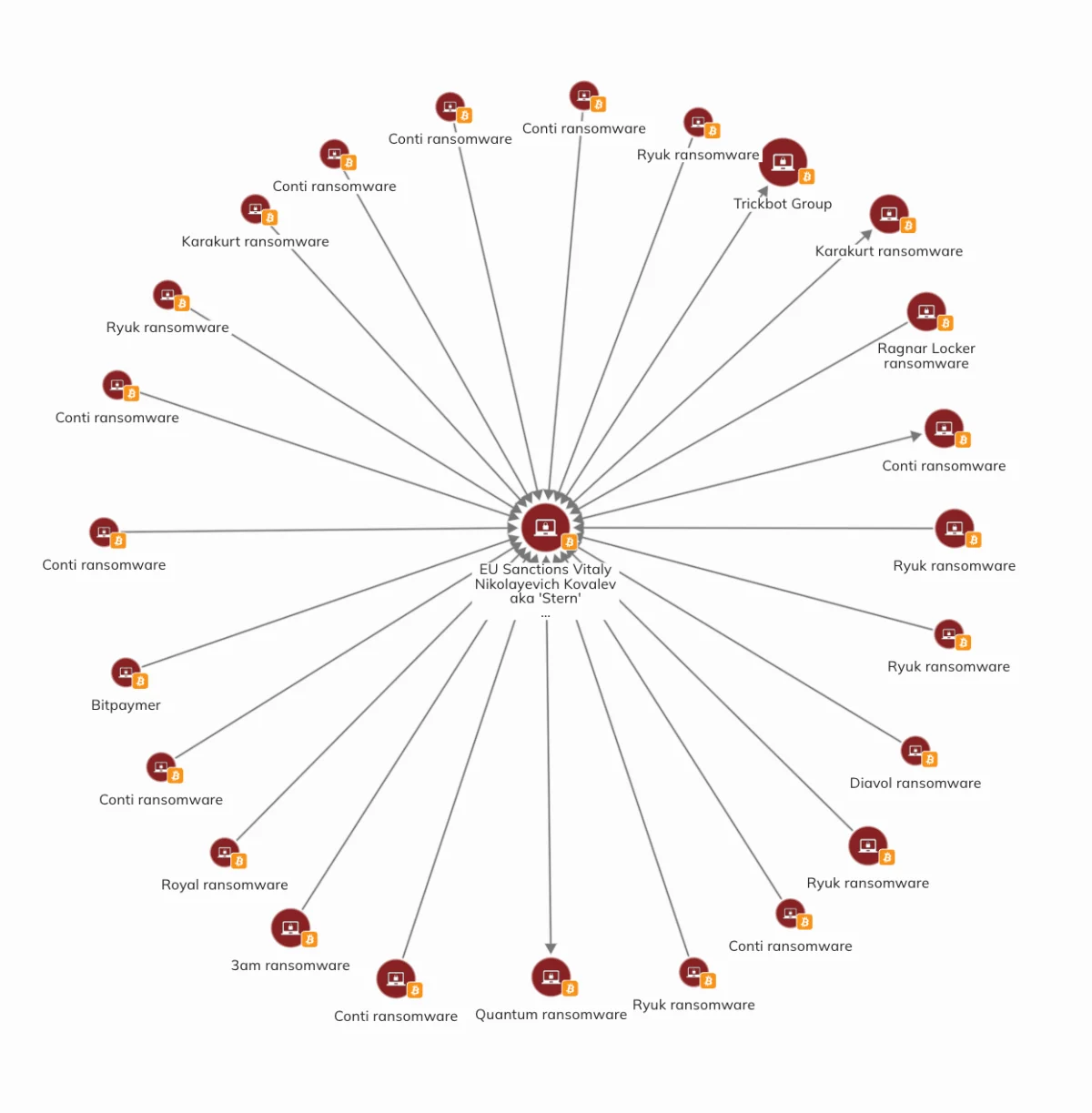
Central to this enforcement action is the unmasking and designation of Vitaly Nikolayevich Kovalev, a Russian national known in the criminal underworld by the moniker “Stern.” While Kovalev had been previously identified by U.S. and U.K. authorities in early 2023, the July 2026 EU designation provides the most comprehensive profile to date of his role as the "CEO-like" administrator of the Trickbot Group. Intelligence suggests that Kovalev oversaw the operations of some of the most destructive ransomware strains in history, including Conti and Ryuk. Data derived from blockchain analysis reveals that cryptocurrency wallets directly associated with Kovalev have received more than $300 million in ransom payments. Experts note that this figure likely represents only his personal share of the proceeds, with the total revenue generated by the Trickbot syndicate estimated to be significantly higher, potentially positioning Kovalev as the most prolific ransomware operator ever identified by international authorities.
The Architect of the Trickbot Syndicate
The rise of the Trickbot Group represents a dark evolution in the history of cyber threats. Originally emerging as a sophisticated banking trojan, Trickbot evolved into a multi-faceted criminal enterprise that provided a platform for various ransomware-as-a-service (RaaS) operations. Under Kovalev’s leadership, the group developed a corporate-style structure, complete with specialized departments for software development, human resources, and financial laundering. The "Conti Leaks"—a massive trove of internal chat logs from the syndicate that surfaced in 2022—revealed that Kovalev, operating as Stern, exercised absolute discretion over the group’s budget, the hiring of new developers, and the strategic planning of high-profile attacks.
The 2026 sanctions highlight the centrality of Kovalev’s role in managing the group’s financial logistics. Beyond collecting ransoms, Kovalev was responsible for the "payroll" of the organization, distributing funds to team members and paying for the essential infrastructure required to keep their servers online. Blockchain forensics indicate that his wallets interacted with a wide array of notorious ransomware strains, including Diavol, Karakurt, Royal, 3am, Quantum, and Bitpaymer. This interconnectedness demonstrates that the Trickbot Group was not a singular entity but rather a central hub for a diverse array of cybercriminal activities. By designating Kovalev and identifying his aliases, the international coalition aims to freeze his remaining assets and sever his ability to interact with the global financial system.

Neutralizing the Infrastructure of Extortion
A significant portion of the July 13 action focuses on the technical enablers of cybercrime—the "bullet-proof" service providers that allow hackers to operate with perceived impunity. The U.S. Department of the Treasury’s Office of Foreign Assets Control (OFAC) specifically targeted First VPN Service (1VPNS), a provider that catered almost exclusively to ransomware actors. Alongside the service, OFAC designated its administrator, Dmytro Rashevskyi, and a provider of specialized "cryptor" software, Yevgeniy Vladimirovich Silayev.
Cryptors are essential tools in the cybercriminal arsenal; they are used to obfuscate malicious code, making it invisible to standard antivirus and endpoint detection software. By targeting Silayev, authorities are striking at the supply chain of the malware development process. The action against 1VPNS follows a successful multi-national law enforcement operation in May 2026, led by European authorities with the support of the FBI’s Boston Field Office, which resulted in the physical seizure of 1VPNS servers and the takedown of its web domain. The subsequent financial sanctions ensure that any cryptocurrency addresses linked to these entities—spanning blockchains such as Bitcoin, Ethereum, Litecoin, Zcash, Dash, TRON, Dogecoin, and Solana—are blacklisted globally.
Furthermore, the EU and U.K. designated Media Land LLC, a Russian-based hosting provider that has been a mainstay of the cybercriminal ecosystem since at least 2016. Media Land is categorized as a "bullet-proof host," meaning it deliberately ignores legal requests for data and refuses to take down malicious content, even when presented with evidence of criminal activity. For a decade, Media Land provided a safe haven for the command-and-control servers of groups like LockBit, EvilCorp, and BlackBasta. By cutting off Media Land from the Western financial system, authorities are making it increasingly difficult and expensive for cybercriminals to maintain the stable internet presence required to manage large-scale ransomware infections.
The Rise of Malware-as-a-Service
The 2026 sanctions also shed light on the burgeoning "Malware-as-a-Service" (MaaS) industry, specifically targeting the developers of LummaC2. This platform represents a highly commoditized form of cybercrime, where sophisticated info-stealing malware is rented out to low-level criminals for a monthly fee. LummaC2 is designed to exfiltrate sensitive data from infected machines, including browser-stored passwords, session cookies, and, increasingly, cryptocurrency wallet credentials.
The designation of MaaS providers reflects a growing realization among policymakers that the democratization of cybercrime is a primary driver of the current threat landscape. By providing easy-to-use tools to a broader range of actors, groups like those behind LummaC2 have significantly increased the volume of attacks worldwide. The EU’s decision to include these developers in the sanctions list highlights a commitment to targeting the "force multipliers" of the cybercriminal world.

A Chronology of Global Enforcement
The July 13, 2026, announcement is the culmination of years of investigative work and incremental enforcement actions. To understand the scale of this sweep, it is necessary to look at the timeline of the campaign against the Trickbot Group:
- February 9, 2023: The U.S. and U.K. launch their first joint sanctions against seven high-ranking members of the Trickbot Group. This was the first time the two nations synchronized their cyber-related sanctions lists.
- September 2023: An additional 11 members are sanctioned by OFAC and the U.K. Foreign Office, targeting the group’s developers and mid-level managers.
- May 2026: A major law enforcement operation successfully dismantles the infrastructure of 1VPNS, providing the intelligence necessary for the subsequent financial sanctions.
- July 13, 2026: The current trilateral sweep is announced, bringing the total number of sanctioned Trickbot-affiliated individuals to 19 and expanding the focus to include the broader infrastructure of bullet-proof hosting and MaaS providers.
This progression demonstrates a shift from reactive measures to a proactive, "whole-of-ecosystem" approach. Authorities are no longer content to wait for an attack to occur; they are systematically dismantling the tools and services that make those attacks possible.
Implications for Global Cybersecurity and Compliance
The implications of these sanctions for the global financial and cryptocurrency sectors are profound. For cryptocurrency exchanges and financial institutions, the designation of hundreds of new wallet addresses requires immediate updates to compliance and monitoring systems. Because ransomware actors frequently move funds through various "mixers" and "jump" across different blockchains, the inclusion of addresses on multiple networks (from Solana to Zcash) underscores the complexity of modern money laundering.
Industry analysts suggest that this action will force a "flight to quality" among legitimate service providers, who must now be even more diligent in vetting their clients to avoid inadvertent association with sanctioned entities. For the cybercriminals, the "noose is tightening." As the EU, U.S., and U.K. align their sanctions lists, there are fewer jurisdictions where these actors can safely cash out their ill-gotten gains or rent the infrastructure needed for their operations.
The July 2026 sanctions serve as a stark reminder that the fight against ransomware is no longer just a technical battle—it is a financial and geopolitical one. By targeting the "CEO" of the world’s most dangerous hacking syndicate and the shadow economy that supports him, the international community has sent a clear message: the digital infrastructure of extortion will be dismantled, piece by piece. The success of this operation will be measured not just by the arrests made, but by the increased cost and risk imposed on those who seek to profit from the disruption of global security.














