


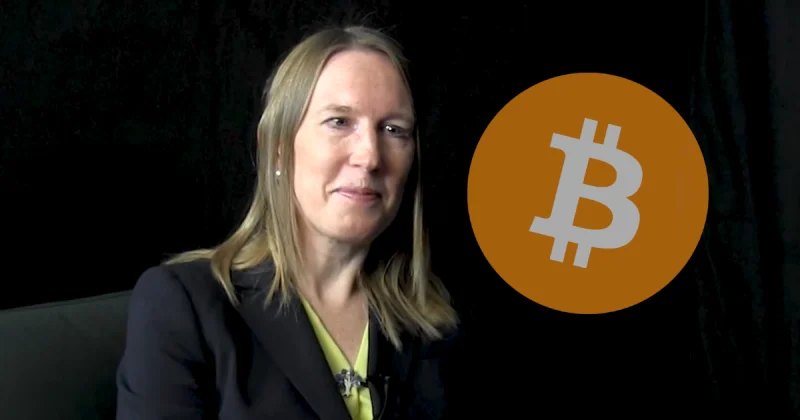
The regulatory landscape for decentralized finance (DeFi) has reached a new juncture as Securities and Exchange Commission (SEC) Commissioner Hester Peirce issued a formal statement clarifying the agency’s stance on crypto vaults and onchain lending protocols. In a detailed release on Wednesday, Peirce, a long-standing advocate for regulatory clarity in the digital asset space, emphasized that the mere act of moving financial products onto a blockchain does not grant them immunity from federal securities laws. While the commissioner acknowledged that many crypto-related activities fall outside the SEC’s traditional jurisdiction, she warned that many current structures for vaults and lending strategies are likely operating within the perimeter of regulated securities and investment company frameworks.
The statement serves as a critical signal to the DeFi industry, which has long operated under the assumption that automation and decentralization provide a "regulatory moat." Peirce’s remarks suggest that the SEC’s focus is shifting toward the functional reality of these products rather than their technological packaging. By applying the "substance over form" principle, the commissioner indicated that if a vault or lending protocol performs the functions of an investment company or offers a security, it must comply with the established legal requirements, regardless of whether it is powered by smart contracts or human intermediaries.
The Intersection of Decentralized Finance and Federal Oversight
At the heart of the commissioner’s statement is the application of the Securities Act of 1933 and the Investment Company Act of 1940 to the burgeoning world of onchain finance. Crypto vaults, which are essentially smart contracts that aggregate user funds to execute specific yield-generating strategies, have become a cornerstone of the DeFi ecosystem. These vaults often automate complex processes such as yield farming, liquid staking, and collateralized lending to maximize returns for participants.
Commissioner Peirce noted that when these vaults are designed to generate yield through staking or lending, they may constitute "investment companies" under federal law. This classification is particularly relevant when the success of the vault depends on the "managerial efforts" of others—a key component of the Howey Test, the legal standard used in the United States to determine whether a transaction qualifies as an investment contract. If a group of developers or a decentralized autonomous organization (DAO) actively manages the parameters of a vault to produce profit, the SEC views this as a regulated activity.
Furthermore, onchain lending arrangements—where users deposit assets into a pool to be borrowed by others in exchange for interest—are being scrutinized under the same lens. Peirce highlighted that these arrangements often raise issues related to the Investment Advisers Act. If a protocol or its developers are seen as providing advice on the value of securities or the advisability of investing in them for compensation, they may be required to register as investment advisers.
Chronology of Regulatory Scrutiny in the Crypto Sector
The Wednesday statement from Commissioner Peirce does not exist in a vacuum; it is the latest chapter in a multi-year effort by U.S. regulators to define the boundaries of the digital asset market. To understand the gravity of these warnings, it is necessary to look at the timeline of SEC actions regarding crypto lending and investment products:
- The 2017 DAO Report: The SEC first signaled its interest in blockchain-based entities by declaring that tokens issued by "The DAO" were securities. This established the precedent that decentralized structures are not exempt from the law.
- The BlockFi Settlement (February 2022): In a landmark case, the SEC charged BlockFi Lending LLC with failing to register the offers and sales of its retail crypto lending product. BlockFi agreed to pay $100 million in penalties and pursue registration, marking the first major crackdown on crypto yield products.
- The Collapse of Celsius and Voyager (Summer 2022): The insolvency of major centralized lending platforms highlighted the risks of unregulated yield-bearing accounts, leading to increased calls for "onchain" transparency.
- The Kraken Staking Settlement (February 2023): The SEC reached a settlement with the exchange Kraken to shut down its "staking-as-a-service" program in the U.S., arguing that such programs are investment contracts.
- The Coinbase Wells Notice and Lawsuit (2023-2024): The ongoing legal battle between the SEC and Coinbase over its "Earn" program and other services has centered on whether staking and lending products are inherently securities.
Peirce’s recent statement attempts to bridge the gap between these enforcement actions and the forward-looking development of onchain protocols. While the SEC has been criticized for "regulation by enforcement," Peirce is encouraging a more proactive, collaborative approach where developers engage with the agency during the design phase of their products.
Technical Analysis of Yield-Generating Vaults
To provide context for the SEC’s concerns, one must look at the mechanics of the products in question. Crypto vaults typically function through a series of "strat" (strategy) contracts. For example, a vault might take a user’s USDC, deposit it into a lending protocol like Aave, harvest the interest and governance tokens, sell those tokens for more USDC, and reinvest the principal.
From a regulatory perspective, this looks remarkably like a mutual fund or a hedge fund. If the vault is "tokenized"—meaning the user receives a "share token" representing their stake in the vault—that token itself may be considered a security. Commissioner Peirce pointed out that tokenizing a financial service does not change its legal status. If the underlying activity is a regulated investment service, the tokenization is merely a change in record-keeping, not a change in legal classification.
The data supporting the SEC’s interest is significant. According to DeFi tracking platforms, the Total Value Locked (TVL) in yield-bearing vaults and lending protocols has fluctuated between $50 billion and $100 billion over the last two years. The sheer volume of capital and the number of retail participants involved make these protocols a primary target for investor protection mandates.
The "Free Speech" Angle and Developer Protections
One of the most notable aspects of Commissioner Peirce’s statement was her explicit mention of "safeguarding developers’ free speech rights." This is a recurring theme in Peirce’s philosophy and a major point of contention in the legal world.
The argument, often championed by groups like Coin Center and the Electronic Frontier Foundation, is that computer code is a form of protected speech under the First Amendment. In this view, writing and publishing the code for a decentralized vault is an act of expression, not a financial crime. Peirce’s acknowledgement of this suggests a desire to find a middle ground where the creators of code are protected, while the deployment and promotion of financial products using that code are regulated.
This distinction is crucial for the open-source community. If developers can be held liable for how others use their open-source smart contracts, it could have a chilling effect on innovation in the United States. Peirce cautioned that any regulatory analysis must respect the limits of the SEC’s statutory authority, implying that the agency should not overreach into the act of coding itself.
Industry Reactions and Potential Implications
The reaction from the crypto industry has been a mixture of appreciation for the clarity and concern over the feasibility of compliance. Legal experts in the DeFi space have noted that "registering" a decentralized protocol is currently a technical impossibility under existing SEC rules.
"The challenge is that the SEC’s registration requirements were written for centralized corporations with boards of directors, physical offices, and clear ownership structures," says a legal analyst at a prominent blockchain advocacy group. "A smart contract has none of those. If Commissioner Peirce says these vaults must comply, the SEC needs to provide a new pathway that acknowledges the decentralized nature of the technology."
The implications for the market are twofold:
- Compliance Costs: For protocols that wish to remain available to U.S. users, the cost of legal counsel and potential registration will rise significantly. This may lead to further "geofencing," where DeFi protocols block U.S. IP addresses to avoid SEC jurisdiction.
- Institutional Adoption: Conversely, clear rules could pave the way for institutional investors to enter the DeFi space. Large banks and asset managers are often prohibited from interacting with "unregulated" or "unregistered" securities. If a framework for compliant onchain vaults emerges, it could trigger a massive influx of traditional capital.
A Call for Regulatory Evolution
In her concluding remarks, Commissioner Peirce reiterated that the SEC is open to considering regulatory updates. She emphasized that the agency’s mission is to protect investors, maintain fair markets, and support capital formation. However, she argued that these goals are best met through a flexible framework that enables innovation rather than one that forces new technology into old boxes.
The commissioner’s statement serves as both a warning and an invitation. It warns that the "DeFi" label is not a get-out-of-jail-free card for financial services. Simultaneously, it invites industry participants to work with the commission to build a "compliant path" forward.
As the crypto industry moves into its next phase of maturity, the tension between decentralized ideals and centralized oversight remains the defining challenge. Whether the SEC can successfully adapt its 20th-century laws to 21st-century code will determine whether the United States remains a hub for financial technology or if the next wave of innovation migrates to jurisdictions with more bespoke regulatory regimes. For now, Commissioner Peirce has made it clear: the "Crypto Mom" is watching the vaults, and she expects them to follow the rules.














