


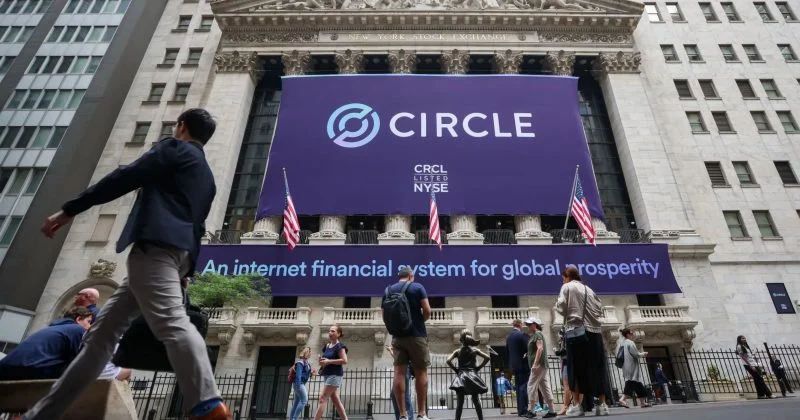
Circle, the Boston-based financial technology firm and primary issuer of the USD Coin (USDC), has officially received approval from the Office of the Comptroller of the Currency (OCC) to operate as a national digital currency bank. This landmark regulatory development represents a pivotal shift in the American financial landscape, effectively bridging the gap between the burgeoning cryptocurrency industry and the traditional federal banking system. For years, the digital asset sector has operated on the periphery of established finance, often navigating a fragmented patchwork of state-level regulations. By securing a national bank charter, Circle has transitioned from a state-regulated money transmitter to a federally overseen financial institution, a move that grants it a level of legitimacy and structural permanence previously unseen in the stablecoin market.
The OCC’s decision to grant this charter places Circle on the same regulatory footing as the nation’s largest traditional banks, subjecting it to the same rigorous oversight, capital requirements, and compliance standards as institutions like JPMorgan Chase or Bank of America. For a company whose core product is a dollar-pegged stablecoin, this is far more than a branding exercise; it is a fundamental structural upgrade that alters the risk profile of USDC and potentially sets a new standard for the entire digital dollar industry.
The Strategic Importance of the National Bank Charter
To understand why this approval is a watershed moment, one must examine the historical "regulatory gray zone" inhabited by stablecoin issuers. Historically, companies like Circle and its competitors have functioned as quasi-banks—holding billions of dollars in reserves and processing massive transaction volumes—without being subject to the comprehensive federal frameworks that govern traditional depository institutions. This lack of federal oversight has often been cited by critics and institutional investors as a primary source of systemic risk within the crypto ecosystem.
The transition to a nationally chartered bank status fundamentally changes this dynamic. It signals a shift in the philosophy of U.S. regulators, suggesting a newfound willingness to integrate major crypto-native firms into the traditional banking perimeter rather than keeping them at arm’s length. By bringing Circle "inside the tent," the OCC gains direct visibility into the company’s balance sheet, reserve management practices, and internal controls. This federal oversight is designed to ensure that the "1:1 peg" promised by USDC is backed by high-quality, liquid assets that are subject to regular, bank-level audits.
Furthermore, a national charter provides Circle with the benefit of federal pre-emption. In the United States, financial services are often regulated at the state level, requiring companies to maintain dozens of individual licenses to operate nationwide. A national bank charter streamlines this process, allowing Circle to operate across the country under a single set of federal rules. This efficiency is expected to significantly reduce operational overhead and legal complexity, allowing the firm to focus on scaling its infrastructure.
A Chronology of Circle’s Path to Federal Oversight
The journey to this OCC approval has been a multi-year endeavor marked by both strategic persistence and significant market volatility. Circle’s evolution mirrors the broader maturation of the cryptocurrency industry.
- 2013–2018: Founding and the Birth of USDC: Circle was founded in 2013 as a peer-to-peer payments firm. In 2018, in partnership with Coinbase through the Centre Consortium, it launched USDC. From the outset, Circle positioned USDC as the "compliant" alternative to other stablecoins, focusing on transparency and regular attestations.
- 2021: The Strategic Pivot: In August 2021, Circle CEO Jeremy Allaire publicly announced the company’s intention to become a "full-reserve national digital currency bank." This was a bold move at a time when many in the crypto space were actively avoiding federal scrutiny.
- 2022: Market Turmoil and the Terra/Luna Collapse: The collapse of the algorithmic stablecoin TerraUSD (UST) in May 2022 sent shockwaves through the industry. While USDC remained stable, the event intensified regulatory calls for "bank-like" oversight of stablecoin issuers. Circle used this period to further distance itself from "unbacked" tokens, emphasizing its holdings in short-term U.S. Treasuries.
- 2023: The Silicon Valley Bank Crisis: In March 2023, the failure of Silicon Valley Bank (SVB) briefly caused USDC to lose its dollar peg after it was revealed that a portion of its reserves was held at the shuttered institution. Although the peg was quickly restored, the incident underscored the risks of relying on traditional private banks for reserve custody. This event likely served as a catalyst for Circle’s push for a direct relationship with federal regulators and, eventually, access to the Federal Reserve’s master account.
- 2024: Legislative Momentum and Approval: Throughout early 2024, Congress intensified its focus on the "Clarity for Payment Stablecoins Act." The OCC’s decision to grant the charter arrives as policymakers are actively debating how to codify stablecoin rules into law, providing a real-world precedent for how digital currency banks should be structured.
Supporting Data: The Scale of USDC Operations
The scale of Circle’s operations highlights why federal oversight was deemed necessary by regulators. As of mid-2024, USDC remains one of the most significant pillars of the decentralized finance (DeFi) and broader crypto economy.
- Market Capitalization: USDC consistently maintains a market capitalization exceeding $30 billion, making it the second-largest stablecoin globally and one of the top ten largest cryptocurrencies by market cap.
- Reserve Composition: Unlike many of its competitors, Circle has moved toward a reserve structure primarily composed of cash held at the New York Mellon (BNY) and the Circle Reserve Fund, which is managed by BlackRock and consists of short-term U.S. Treasuries.
- Transaction Volume: USDC facilitates hundreds of billions of dollars in monthly transaction volume. It is a primary liquidity source for decentralized exchanges (DEXs) and is increasingly used for cross-border corporate settlements.
- Institutional Adoption: Over 2,000 institutional customers, including hedge funds, family offices, and fintech companies, utilize Circle’s infrastructure for liquidity management.
The shift to a national bank charter ensures that these billions of dollars in reserves will now be subject to the same "stress tests" and liquidity requirements as traditional commercial banks.
Shifting Competitive Landscapes: Circle vs. Tether
The most immediate impact of the OCC charter is the widening gap between Circle and its primary rival, Tether (USDT). While Tether remains the largest stablecoin by market capitalization, it operates largely outside the U.S. regulatory framework. Domiciled in the British Virgin Islands and managed from various international hubs, Tether has long been the subject of scrutiny regarding the transparency of its reserves and its relationship with the U.S. banking system.
Circle’s new status as a national bank creates a stark "regulatory arbitrage" opportunity. Institutional players—such as pension funds, insurance companies, and publicly traded corporations—are often legally or internally prohibited from engaging with entities that lack clear regulatory standing. By becoming a national bank, Circle transforms USDC from a "fintech token" into a "bank-issued digital liability."
Industry analysts suggest that this could lead to a "flight to quality," where institutional capital migrates from offshore, less-transparent stablecoins to USDC. While Tether may maintain its dominance in high-leverage offshore trading and emerging markets, Circle is clearly positioning USDC as the preferred settlement layer for the "regulated" internet of value.
Official Responses and Policy Implications
While official statements from the OCC have remained characteristically measured, emphasizing "responsible innovation" and "safety and soundness," the move has drawn significant attention from Capitol Hill.
Proponents of the move, including several pro-innovation members of the House Financial Services Committee, argue that the charter validates the idea that stablecoins can be integrated into the U.S. financial system without compromising stability. They see this as a win for American competitiveness, ensuring that the U.S. dollar remains the primary currency of the digital age.
Conversely, some consumer advocacy groups have expressed caution. They argue that granting bank charters to crypto firms could create a "backdoor" for tech companies to enter the banking sector without the same social obligations (such as the Community Reinvestment Act) that traditional banks face.
The OCC’s supervision framework for Circle will likely serve as the blueprint for future digital asset banks. How the agency handles unique risks—such as 24/7 liquidity demands, blockchain-specific security vulnerabilities, and the rapid velocity of on-chain transactions—will be closely watched by global financial authorities.
Broader Implications and Future Outlook
The implications of Circle’s national bank charter extend far beyond the immediate crypto market. It represents a fundamental step toward the "programmable dollar." As a federally chartered bank, Circle may eventually gain access to the Federal Reserve’s payment rails, including the FedNow Service. This would allow for near-instantaneous settlement between the traditional banking system and public blockchains, effectively merging two previously siloed financial worlds.
For investors, the primary takeaway is the reduction of counterparty risk. A federally chartered Circle means that the management of USDC reserves is no longer just a matter of corporate policy; it is a matter of federal law. This should, in theory, provide a "floor" for confidence in the stablecoin’s peg, even during periods of extreme market stress.
However, the transition is not without risks. Being a bank means playing by bank rules, which are often rigid and designed for a slower-moving financial era. Circle will now face significantly higher compliance costs, including the need for robust Anti-Money Laundering (AML) and Know Your Customer (KYC) protocols that must meet federal banking standards. There is also the question of whether the OCC will impose "narrow bank" constraints on Circle, limiting its ability to engage in certain types of lending or investment activities to ensure that its stablecoin remains 100% backed at all times.
Ultimately, Circle’s successful acquisition of a national bank charter signals the end of the "Wild West" era for major stablecoin issuers in the United States. It marks the beginning of a new chapter where digital assets are no longer viewed as an alternative to the banking system, but as a core component of its future evolution. As the OCC begins its active supervision of the nation’s first true digital currency bank, the financial world will be watching to see if this marriage of old-world regulation and new-world technology can provide the stability and efficiency the global economy demands.














