


Ethereum (ETH) has experienced a period of pressure, influenced by a confluence of escalating geopolitical tensions in the Middle East, persistent inflation concerns, and the anticipation of tighter monetary policies. This broader market weakness is being closely watched by investors and analysts, particularly as on-chain data reveals a significant downturn in the participation of large Ethereum holders, often referred to as "whales." The recent decline in whale activity has reached a notable low, raising questions about institutional sentiment and potential shifts in capital flow within the cryptocurrency ecosystem.
Sharp Decline in Large Ethereum Transactions
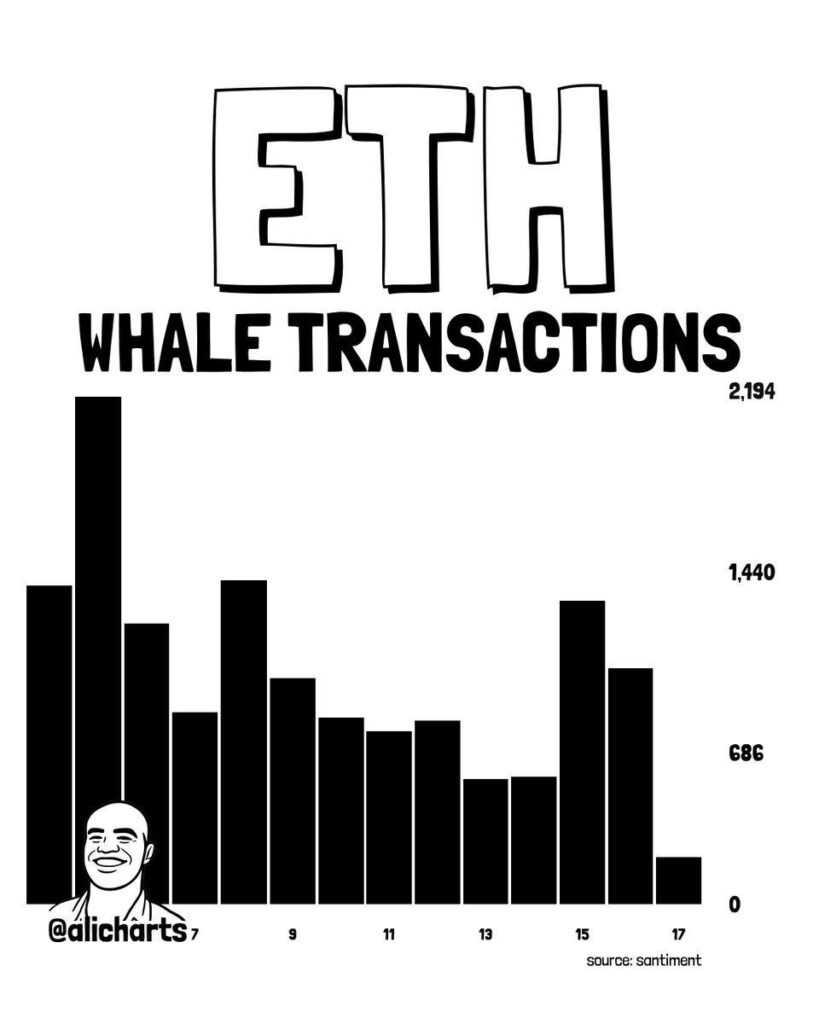
Blockchain analytics platform Santiment, as highlighted by crypto analyst Ali Martinez, has provided data indicating a dramatic fall in large Ethereum transactions over the past two weeks. According to Martinez’s analysis, whale activity on the Ethereum network has plummeted by an estimated 86.6%. This significant decrease saw the number of large transactions drop from 2,194 on June 5 to a mere 294 by the time of the report. This represents one of the steepest contractions in whale engagement observed in recent months, suggesting a marked reduction in the activity of major stakeholders on the network.

Large transactions are frequently scrutinized by market participants as they can offer valuable insights into institutional investment, the movement of significant capital, and the overall conviction within the market. While a reduction in whale activity does not inherently signal immediate selling pressure, it often indicates a more cautious, "wait-and-see" approach adopted by large investors, especially in the face of heightened market uncertainty.
Macroeconomic and Geopolitical Headwinds Affecting Ethereum
The recent price action of Ethereum has been significantly shaped by a complex interplay of global events. Escalating geopolitical tensions, particularly concerning the Middle East, have heightened concerns about potential disruptions to global energy markets and a resurgence of inflationary pressures. Such uncertainties typically lead to a reduced appetite for risk-adjacent assets, including cryptocurrencies, contributing to broader market downturns.
Concurrently, stronger-than-expected economic data from the United States, especially regarding employment figures, has reinforced expectations that the Federal Reserve may maintain elevated interest rates for an extended period. Higher interest rates tend to reduce market liquidity and can exert downward pressure on speculative assets like digital currencies, as investors re-evaluate the risk-reward profiles of their portfolios. This macroeconomic environment creates a challenging backdrop for growth-oriented assets.
Technical Indicators Point to Market Challenges
From a technical analysis perspective, Ethereum continues to face considerable headwinds. The cryptocurrency has been trading below key moving averages, including its 50-day, 100-day, and 200-day simple moving averages. This sustained positioning below these long-term indicators reinforces the prevailing bearish trend observed in the market. Momentum indicators also present a mixed, though largely cautious, outlook. The Moving Average Convergence Divergence (MACD) has remained in a downward trajectory, while the Relative Strength Index (RSI) has dipped into oversold territory, suggesting potential for a short-term bounce but not necessarily a sustained trend reversal.
Market participants are closely observing the $1,500 price level, which has emerged as a critical support zone. A successful defense of this area could provide a foundation for a potential recovery. However, a decisive breach below $1,500 could expose Ethereum to further declines, with some analysts identifying the $1,000 mark as the next significant psychological support level. On the upside, a sustained move above the $2,000 threshold would likely be required before Ethereum could challenge stronger resistance levels in the vicinity of $2,380.
Long-Term Optimism Amidst Short-Term Volatility
Despite the current market pressures and the observed slowdown in whale activity, a segment of analysts maintains a cautiously optimistic outlook regarding Ethereum’s long-term prospects. These projections are often based on historical market cycles, technological advancements, and the network’s evolving utility.

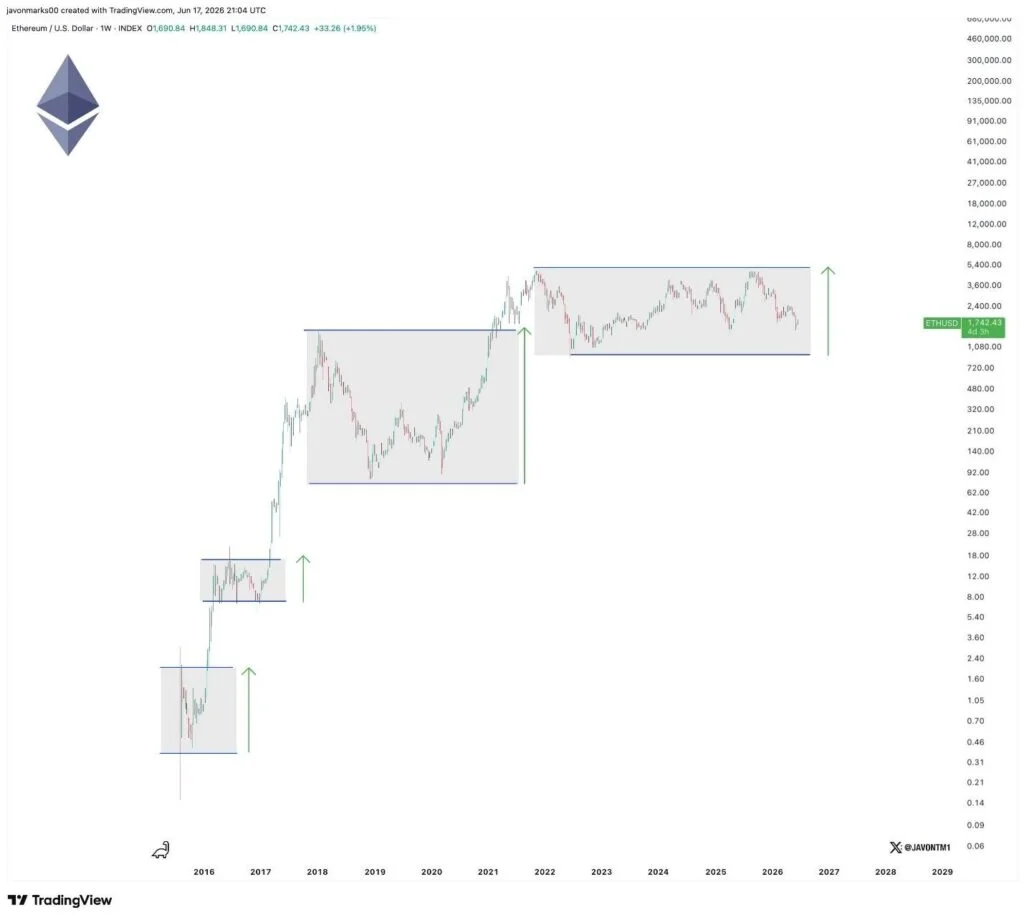
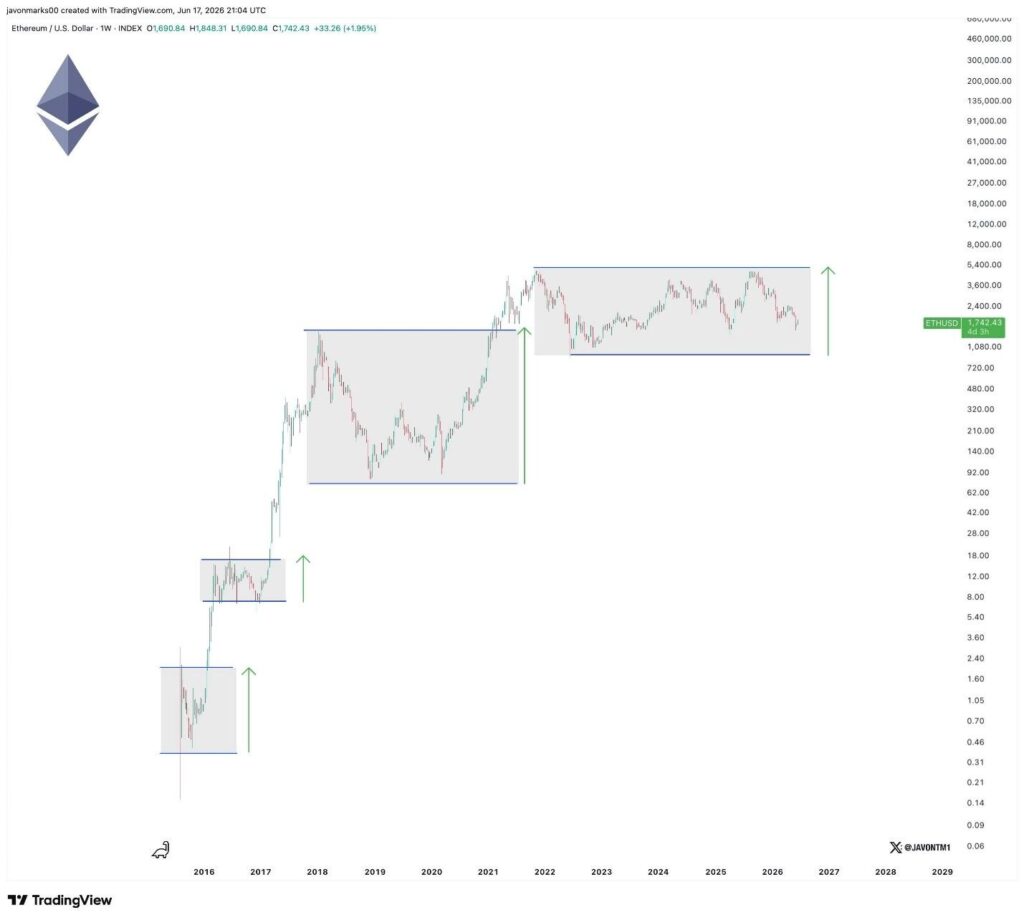
Analyst Javon Marks, in a recent weekly ETH/USD chart analysis, highlighted historical consolidation patterns and breakout formations dating back to 2016. Marks suggested that Ethereum’s current price structure exhibits what he termed "structural integrity," even at current levels. Drawing parallels with past expansion cycles, he projected an initial upside target for ETH in the range of $4,800 to $5,000. Furthermore, if historical market behavior continues to repeat, Marks believes Ethereum could eventually reach approximately $8,500.
Extending these long-term forecasts, analyst Crypto Patel has outlined a broader roadmap extending into the years 2029 and 2030. Patel’s framework encompasses several potential valuation scenarios. His "ultra-bear" outlook anticipates Ethereum reaching around $5,000, while a "base-case" scenario targets approximately $12,000. Under the most optimistic, aggressive bullish assumptions, Patel forecasts that ETH could potentially trade between $30,000 and $60,000.
Patel’s projections often involve comparing Ethereum’s potential future market capitalization to that of leading global corporations, such as Nvidia. This comparison suggests a potential shift in how Ethereum is perceived by the market, moving towards being viewed as a mature, global financial network rather than solely a speculative cryptocurrency. Such a re-evaluation could underpin significant long-term value appreciation.
Current Market Performance
As of the latest reporting, Ethereum (ETH) was trading around the $1,700 mark, reflecting a slight decline of approximately 0.65% in the preceding 24-hour period. This figure underscores the current trading range and the immediate price action within the context of broader market influences. The ongoing interplay of macroeconomic factors, geopolitical developments, and the evolving on-chain activity of major holders will continue to shape Ethereum’s trajectory in the coming weeks and months. The market’s ability to digest current uncertainties and the potential for renewed institutional interest will be key indicators to watch for future price movements.














