


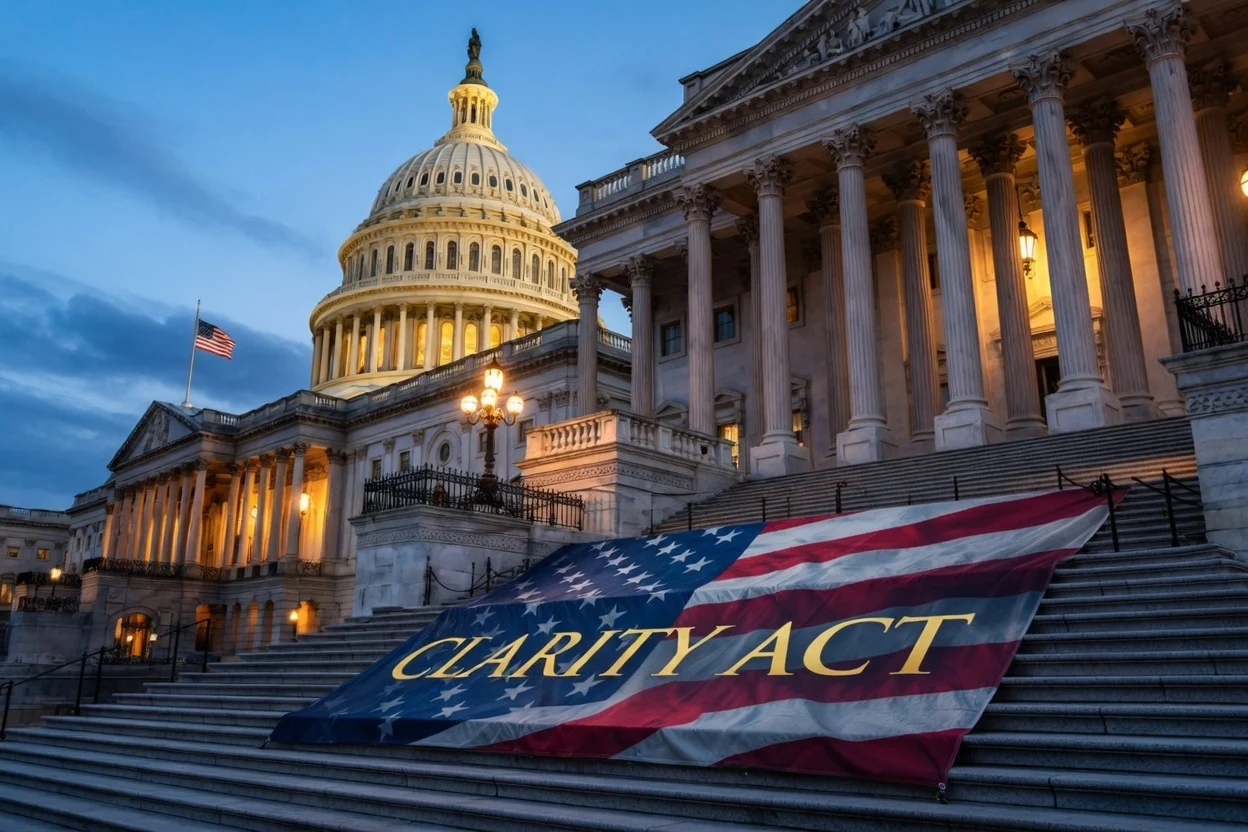
A viral social media post from prominent crypto analyst Crypto Rover has dramatically refocused attention on the Digital Asset Market Clarity Act, pushing the proposed legislation to the forefront as the U.S. Senate races towards a critical August recess deadline. The post, which strategically linked five financial behemoths—BlackRock, Charles Schwab, Fidelity, Goldman Sachs, and Grayscale—and highlighted their combined assets under management (AUM) approaching an astounding $50 trillion, ignited a flurry of discussion across financial markets and political corridors. This staggering figure, set against the backdrop of a global cryptocurrency market valued at approximately $2.29 trillion (closely mirroring Rover’s $2.2 trillion estimate at the time of the post), underscored the immense potential for institutional capital to flow into digital assets, contingent upon the establishment of a robust and predictable regulatory framework.
The post, shared widely on July 25, 2026, by Crypto Rover, posed a provocative comparison: "Together, these asset managers manage roughly $50 TRILLION in assets. The total crypto market cap is only $2.2T. The next bull market will be absolutely WILD." While the underlying sentiment of a potential crypto market surge fueled by institutional adoption resonated deeply within the digital asset community, it is crucial to clarify that the mentioned financial institutions did not issue a unified, coordinated endorsement of the CLARITY Act. Instead, their respective positions have emerged through individual statements, public policy submissions, and executive commentary, each shaped by their distinct commercial interests, existing digital asset strategies, and regulatory priorities within the evolving financial landscape. The convergence of their individual support, however, does signal a powerful, albeit fragmented, demand from traditional finance for definitive rules governing the burgeoning digital asset space.
The Legislative Journey: A Path Paved with Bipartisan Efforts and Persistent Hurdles
The Digital Asset Market Clarity Act (initially H.R. 3633 in the House), has traversed a complex legislative path marked by both significant bipartisan momentum and entrenched political disagreements. The genesis of the bill can be traced back to growing calls from both the digital asset industry and certain segments of traditional finance for a clear regulatory roadmap in the United States. For years, the lack of a comprehensive framework has been cited as a major impediment to innovation, investor protection, and the broader institutional adoption of cryptocurrencies and blockchain technology. Companies operating in the U.S. have frequently expressed frustration over what they perceive as "regulation by enforcement," where the Securities and Exchange Commission (SEC) and the Commodity Futures Trading Commission (CFTC) often assert overlapping or conflicting jurisdictions without clear legislative guidance.
The House of Representatives first took a decisive step by approving H.R. 3633 in July 2025, with a substantial 294-134 vote. This outcome indicated broad, though not universal, bipartisan support for the principles underlying the legislation, signifying a growing recognition among lawmakers of the need to address digital asset regulation proactively. The bill then moved to the Senate, where its journey continued in May 2026, when the Senate Banking Committee advanced its version of the bill by a 15-9 vote. This committee-level approval marked another crucial milestone, signaling that a significant portion of the Senate leadership was amenable to the core tenets of the proposed framework.
Building on these earlier legislative achievements, Senator Cynthia Lummis, a vocal proponent of digital assets and a key figure in crypto legislative efforts, released updated text for the CLARITY Act on July 22, 2026. This revised draft represented a significant collaborative effort, combining work from both the Senate Banking and Agriculture committees, reflecting the multi-faceted nature of digital assets which often touch upon both financial instruments and commodities. Despite this progress and the meticulous refinement of the bill’s language, the legislation still faces a formidable challenge: securing enough bipartisan backing to overcome the Senate’s stringent 60-vote procedural threshold. With the August recess looming, the window for securing this critical consensus is rapidly narrowing, adding an acute sense of urgency to the ongoing negotiations.
Core Provisions and Regulatory Realignments
The latest iteration of the Digital Asset Market Clarity Act seeks to establish a clearer division of regulatory authority over digital assets, a long-standing point of contention within the U.S. regulatory landscape. Under the proposed framework, oversight would be bifurcated between the Securities and Exchange Commission (SEC) and the Commodity Futures Trading Commission (CFTC). This division aims to provide greater predictability for market participants by clearly defining which agency governs specific types of digital assets. Generally, tokens deemed "securities" based on established legal tests would fall under the SEC’s purview, while those classified as "commodities" would be regulated by the CFTC. This distinction, if clearly articulated and consistently applied, could significantly reduce the current regulatory ambiguity that has plagued the industry.
Beyond jurisdictional clarity, the bill also proposes to impose robust anti-money laundering (AML) requirements on major digital asset intermediaries. These provisions are designed to bring the digital asset sector more fully into alignment with existing financial regulations aimed at combating illicit finance, enhancing national security, and protecting consumers from fraud. By mandating stricter AML compliance, the legislation aims to foster a more secure and transparent digital asset ecosystem, addressing concerns frequently raised by regulators and law enforcement. Furthermore, the bill explicitly preserves existing securities laws for tokenized stocks and other traditional assets that are merely represented on a blockchain. This ensures that the act primarily focuses on novel digital assets, rather than inadvertently undermining established regulations for conventional financial instruments.
A significant area of compromise within the latest draft concerns stablecoins. The proposed compromise seeks to balance innovation with financial stability by prohibiting passive interest on stablecoin balances while allowing certain incentives directly linked to transactions. This provision aims to mitigate concerns raised by traditional banking institutions about potential "deposit flight" from regulated banks to stablecoin platforms offering attractive interest rates, which could pose systemic risks. By distinguishing between passive interest and transaction-linked incentives, lawmakers are attempting to create a framework that supports the utility of stablecoins for payments and remittances without creating a shadow banking system outside of conventional regulatory oversight.
Wall Street’s Strategic Endorsements: A Multi-faceted Pursuit of Clarity
The "viral post" correctly highlighted the individual, yet collectively powerful, support for the CLARITY Act from some of the largest players in traditional finance. While not a unified declaration, the endorsements from BlackRock, Charles Schwab, Fidelity, Goldman Sachs, and Grayscale underscore a shared urgency for a well-defined regulatory environment in the U.S. Each firm, however, approaches the legislation from a distinct commercial vantage point, reflecting their diverse interests across the digital asset spectrum.
Fidelity Public Policy, a division of Fidelity Investments, has been a long-standing advocate for clear federal rules for digital assets. Their support for the CLARITY Act stems from a belief that such legislation is crucial for strengthening investor confidence and preserving the United States’ competitiveness in the global financial arena. Fidelity has already made significant inroads into the digital asset space, offering institutional custody, trading services, and even launching its own spot Bitcoin ETF. For Fidelity, regulatory clarity is not just an abstract concept; it directly impacts their ability to innovate, expand their digital asset offerings, and serve their vast client base without fear of retrospective enforcement actions. They argue that a clear framework would encourage more mainstream investors to enter the market, thereby solidifying the U.S. position as a leader in financial innovation.
Goldman Sachs, a titan of investment banking, has also voiced support for advancing the measure. CEO David Solomon, while acknowledging the bill’s imperfections, has emphasized that a robust framework could promote stability and create a more level playing field for market participants. Goldman Sachs has been exploring various aspects of digital assets, including blockchain technology for traditional finance, tokenization of real-world assets, and offering derivatives trading for cryptocurrencies to institutional clients. For them, regulatory certainty is paramount for managing risk, allocating capital effectively, and integrating digital assets into their existing suite of financial services. A clear framework would reduce legal uncertainties, enabling them to expand their offerings and leverage blockchain technology more broadly across their operations.
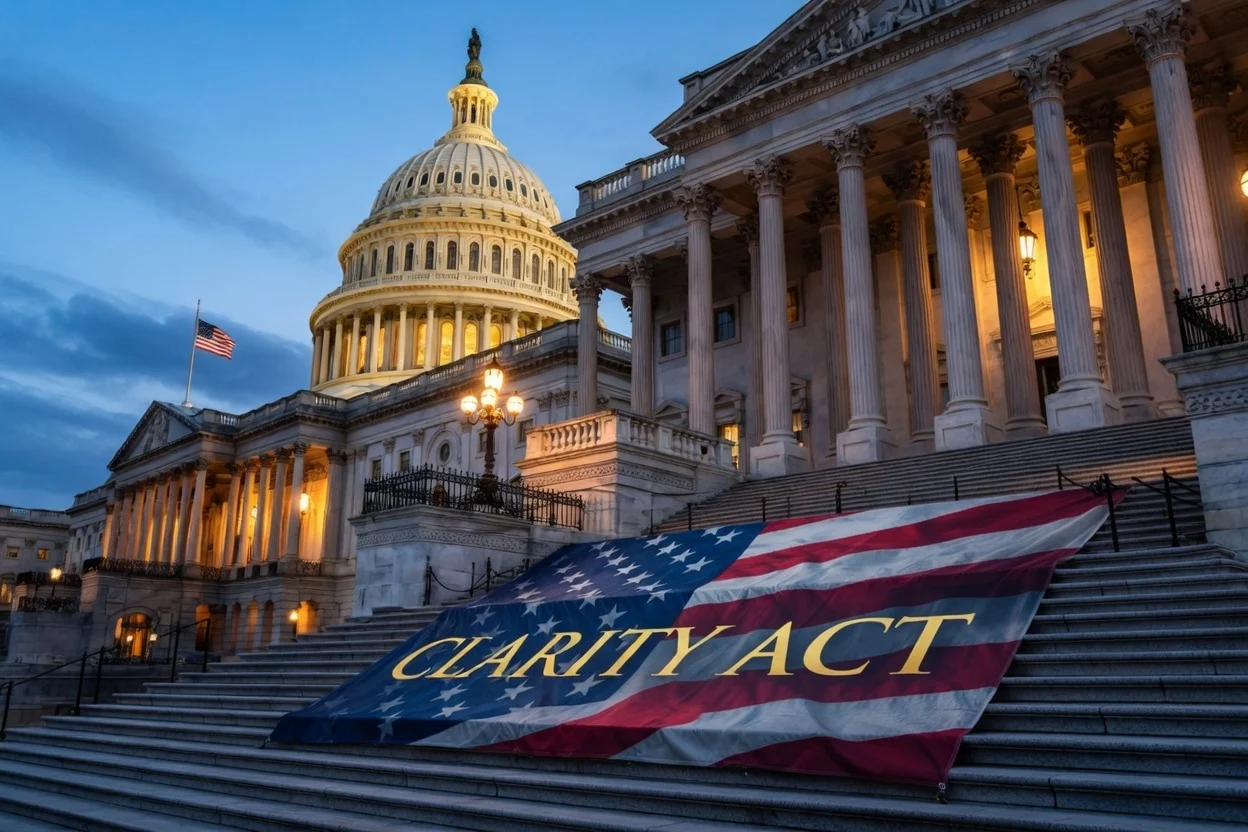
Grayscale Investments, the world’s largest digital asset manager and a pioneer in bringing crypto investment products to market, has consistently been a vocal proponent of regulatory clarity. Their endorsement describes the CLARITY Act as a vital legal foundation for developers, token issuers, and regulated digital-asset intermediaries. Grayscale’s business model, heavily reliant on offering regulated investment vehicles like the Grayscale Bitcoin Trust (GBTC) and other digital asset trusts, directly benefits from a transparent and predictable regulatory environment. They have actively engaged with regulators and lawmakers to advocate for a framework that allows for the mainstream adoption of digital assets while ensuring investor protection. For Grayscale, the act represents a pathway to greater institutional participation and the potential for a wider range of regulated crypto products.
Charles Schwab’s position emerged through strategist Jim Ferraioli, who identified the measure as a critical catalyst for Bitcoin and broader institutional adoption. As a major brokerage firm catering to millions of retail and institutional investors, Charles Schwab is acutely aware of the growing client demand for digital asset exposure. While perhaps more cautious in its direct crypto offerings compared to some peers, the firm’s interest in the CLARITY Act signals a recognition that regulatory certainty is a prerequisite for broader acceptance and integration of digital assets into mainstream investment portfolios. Clear rules would enable them to potentially offer more direct crypto services or expand access to crypto-related products with greater confidence and less regulatory overhead.
Finally, BlackRock, the world’s largest asset manager, has likewise presented the proposal as an important part of the developing regulatory framework for tokenized assets. BlackRock’s foray into digital assets has been marked by strategic investments, the launch of a spot Bitcoin ETF, and significant research into the tokenization of traditional assets like real estate and bonds. For BlackRock, the CLARITY Act is not just about cryptocurrencies, but about establishing the legal and regulatory rails for the broader tokenization trend—a shift they believe could revolutionize capital markets. Clear rules around tokenized securities, ownership, and trading are essential for them to leverage blockchain technology to create more efficient and liquid markets for a vast array of assets.
It is critical to reiterate that the available statements do not indicate that all five companies signed a common declaration or made identical commitments. Their support, while converging on the need for clarity, is rooted in their distinct commercial models and strategic objectives within the evolving digital asset landscape. Their interests collectively span exchange-traded products, institutional custody solutions, brokerage services, the tokenization of traditional assets, and the underlying infrastructure supporting digital asset markets. Consequently, each company has approached the legislation from a different commercial and regulatory perspective, reflecting a shared demand for clearer rules rather than a coordinated industry campaign. This distinction is important when assessing the scale and meaning of Wall Street’s support, highlighting a broad, organic desire for regulatory certainty rather than a unified lobbying effort.
Persistent Disagreements and the August Deadline
Despite the significant legislative progress and the backing from influential financial institutions, several political disagreements persist, threatening to derail the CLARITY Act’s passage before the Senate’s August recess. These unresolved issues primarily stem from concerns raised by Senate Democrats and traditional banking groups.
Senate Democrats, particularly influential figures like Senator Elizabeth Warren, have voiced strong objections regarding the bill’s ethics provisions. They argue that the current draft does not adequately address potential conflicts of interest involving elected officials or their staff who might hold or trade digital assets. Senator Warren has been a prominent critic of the crypto industry, often highlighting risks related to investor protection and national security. Her statement on the new text of the CLARITY Act specifically identified gaps in these areas, arguing that without stronger safeguards, the bill could inadvertently expose investors to undue risks or create vulnerabilities for the U.S. financial system. These concerns reflect a broader progressive agenda focused on consumer protection and preventing illicit finance, which often views the largely unregulated crypto market with skepticism.
Meanwhile, traditional banking groups remain a significant lobbying force, expressing concern that the stablecoin incentives proposed in the bill could draw deposits away from regulated institutions. Their argument centers on the potential for stablecoin platforms, even with the proposed compromise, to offer yields or rewards that could lure funds away from conventional bank accounts, potentially destabilizing the traditional banking system. This concern is rooted in the "narrow banking" debate, where some argue that stablecoin issuers effectively act as banks without being subjected to the same stringent capital requirements, liquidity rules, and consumer protections that traditional banks must adhere to. The banking industry advocates for a level playing field, ensuring that any entity holding customer deposits, regardless of the technology used, is subject to comparable regulatory oversight.
The confluence of these political and industry disagreements creates a complex landscape for the CLARITY Act. With the Senate’s August recess rapidly approaching, lawmakers now face a critically narrow window to secure the necessary bipartisan agreement. Failure to achieve the 60-vote threshold before the recess could effectively table the bill, pushing it further down the legislative calendar and potentially jeopardizing its passage in the current session.
Broader Implications: A Crossroads for U.S. Digital Asset Leadership
The fate of the Digital Asset Market Clarity Act carries profound implications for the future of digital assets in the United States and its standing in the global financial ecosystem.
If the bill passes, it could usher in an era of unprecedented institutional adoption. Clear regulatory boundaries would significantly de-risk institutional engagement, potentially leading to a surge in capital allocation from pension funds, endowments, and corporate treasuries into digital assets. This influx of sophisticated capital could enhance market liquidity, reduce volatility, and contribute to the maturation of the digital asset ecosystem. Furthermore, it would solidify the U.S.’s position as a leader in financial innovation, potentially attracting blockchain companies and talent that might otherwise seek more favorable regulatory environments abroad. Investor protection would also likely improve under a clearer framework, as regulated entities would operate under explicit guidelines, potentially reducing instances of fraud and market manipulation. The move could also provide a significant boost to the tokenization of real-world assets, unlocking trillions in illiquid assets and creating new investment opportunities.
Conversely, if the bill fails, the U.S. digital asset market would likely remain in a state of prolonged uncertainty. This continued ambiguity could deter further institutional investment, leading to a "brain drain" of talent and innovation as companies seek jurisdictions with more predictable regulatory landscapes (e.g., the European Union with MiCA, or the UK with its evolving framework). The lack of clarity could also perpetuate a fragmented regulatory approach, where different states and federal agencies continue to issue conflicting guidance, stifling growth and creating unnecessary compliance burdens. For investors, the absence of comprehensive federal protection could leave them more vulnerable to scams and market instability. Moreover, the U.S. risks falling behind other major economies that are actively developing and implementing robust digital asset regulatory frameworks, potentially ceding its leadership in the next generation of financial technology.
The CLARITY Act represents a critical juncture for U.S. policy on digital assets. The stakes are immense, ranging from safeguarding investor interests and national security to fostering innovation and maintaining global financial competitiveness. As the clock ticks towards the August recess, all eyes remain on the Senate, where the outcome of this legislative debate will undoubtedly shape the trajectory of the digital asset market for years to come.














