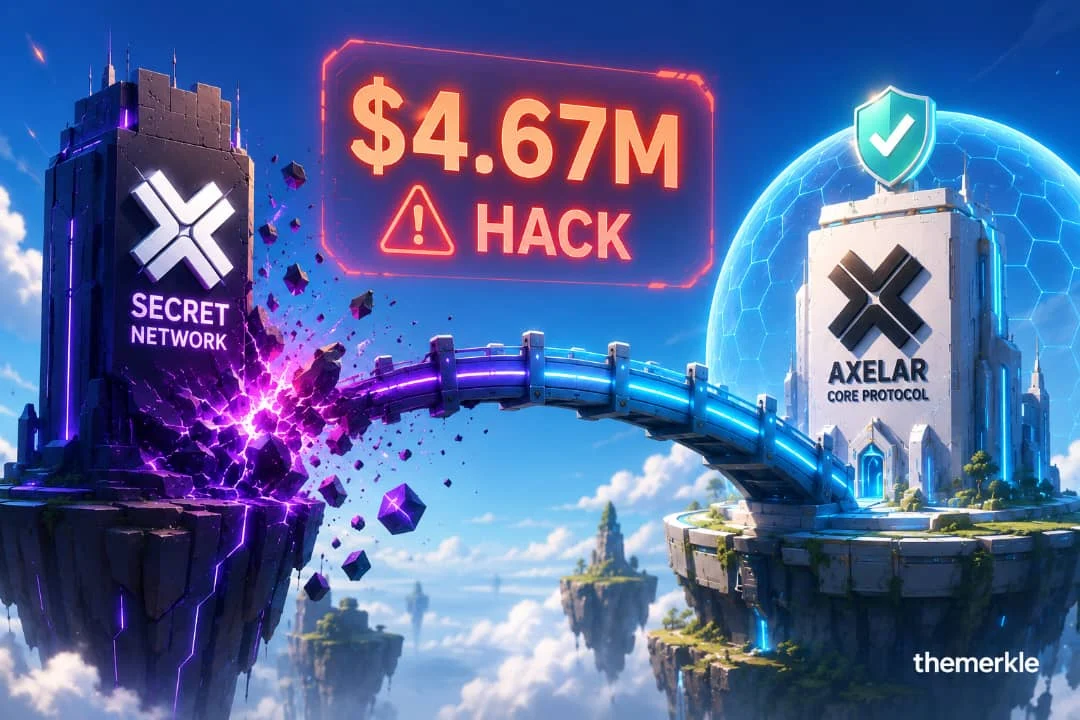
Axelar, a leading cross-chain infrastructure provider, is moving with urgency to contain damage after identifying a significant security incident that has resulted in the loss of approximately $4.67 million worth of tokens. The exploit specifically targeted assets bridged via the Inter-Blockchain Communication (IBC) protocol from the Axelar chain to Secret Network, prompting immediate emergency action to shut down the affected connection while the team works through containment and recovery efforts.
The incident underscores the persistent vulnerabilities inherent in cross-chain bridge infrastructure, a critical but often exploited component of the broader cryptocurrency ecosystem. Axelar’s official statement confirmed the team’s rapid identification of the breach, detailing the loss of roughly $4.67 million in tokens and outlining the immediate steps taken in response to mitigate further damage. This transparency, while revealing a substantial financial impact, aimed to inform the community swiftly and assure users of the proactive measures being implemented.
Understanding the Inter-Blockchain Communication Protocol and Axelar’s Role
To fully grasp the nature of this incident, it is essential to understand the underlying technologies involved. The Inter-Blockchain Communication (IBC) protocol is a cornerstone of the Cosmos ecosystem, enabling sovereign blockchains to communicate and transfer assets and data securely. IBC is designed to be a trust-minimized protocol, allowing different chains to interoperate without relying on a central intermediary.
Axelar positions itself as a universal overlay network, connecting various blockchain ecosystems, including those outside the native Cosmos environment, to the IBC-enabled chains. It provides the infrastructure for seamless cross-chain messaging and asset transfers, acting as a crucial bridge layer that extends the reach of IBC. Secret Network, on the other hand, is a privacy-preserving blockchain built on Cosmos, known for its confidential smart contracts that enable encrypted inputs, outputs, and states for decentralized applications.
The connection between Axelar and Secret Network via IBC is vital for facilitating liquidity and interoperability between Secret Network’s privacy-focused environment and the broader crypto landscape. Axelar’s infrastructure enables users to bridge assets from other chains (like Ethereum, Avalanche, etc., via Axelar’s network) into the Cosmos ecosystem, and subsequently to specific chains like Secret Network. This particular exploit, however, did not originate from Axelar’s connections to external chains, but rather from the pathway between the Axelar chain itself and Secret Network.
Pinpointing the Vulnerability: The ICS-20 Smart Contract
According to Axelar’s investigation so far, the vulnerability appears to be isolated to a specific component of the bridge infrastructure: the Secret-side ICS-20 smart contract. This contract is responsible for managing the Cosmos IBC connection between Secret Network and Axelar, specifically handling the pathway for assets moving from the Axelar chain over to Secret Network.
ICS-20 is a standardized interface within the Cosmos IBC ecosystem, specifically designed to handle fungible token transfers across connected chains. It defines the logic for how tokens are "locked" on a source chain and "minted" as a representation on a destination chain, or vice versa, ensuring that the total supply of the asset remains consistent across the bridged environments. The integrity of this contract is paramount, as it acts as the gatekeeper for cross-chain asset movements.
When a contract layer like ICS-20 is compromised, it can create an opening for unauthorized token releases without necessarily requiring an attacker to breach the core validator set or consensus mechanism of either chain involved. This distinction is critical: the incident does not indicate a fundamental flaw in the security of the Axelar core protocol or Secret Network’s underlying blockchain. Instead, it points to a vulnerability within the specific smart contract logic governing a particular bridge connection. Axelar’s framing of the issue as isolated to this specific contract is intended to draw a clear boundary around what was affected versus what remains secure, an important message for maintaining broader ecosystem confidence.
Chronology of an Emergency Response
The timeline of Axelar’s response highlights the rapid decision-making required in the face of an active exploit.
- Incident Identification: While the precise moment of detection has not been publicly detailed, Axelar’s internal monitoring systems or external alerts likely flagged anomalous activity involving the Secret Network bridge.
- Emergency Committee Activation: Immediately upon becoming aware of the incident, Axelar’s dedicated emergency committee was activated. This committee is typically composed of core developers, security experts, and operational leads, tasked with assessing the threat and formulating a containment strategy.
- Connection Shutdown (Minutes After Detection): The emergency committee’s first critical decision was to disable the Secret and Secret-SNIP connections entirely. This decisive action effectively severed the compromised pathway, preventing any further exploitation through the same vector. Disabling a live bridge connection is not a decision made lightly, as it disrupts legitimate cross-chain activity for users who rely on that specific pathway for transfers. However, in the context of an active exploit, halting the bridge is often the only way to stop additional losses while the team determines exactly how the attacker gained access and whether any other pathways share the same underlying vulnerability.
- Public Disclosure: Axelar quickly moved to inform its community and the broader ecosystem. The official statement, disseminated via social media and other channels, provided initial details of the breach, the extent of the loss, and the immediate steps taken. This transparency is crucial for managing community expectations and maintaining trust during a crisis. Secret Network subsequently echoed Axelar’s assessment, confirming the isolation of the incident.
- Post-Shutdown Actions: Beyond the technical shutdown, Axelar initiated outreach to relevant exchanges and law enforcement agencies. This standard protocol in major crypto exploits aims to flag the stolen funds for tracking purposes and potentially freeze any assets that move through centralized platforms. Such actions give investigators and affected parties a chance at partial recovery if the attacker attempts to cash out through regulated venues, complicating the attacker’s ability to launder the stolen assets. The ongoing investigation will involve forensic analysis of the smart contract, transaction logs, and network activity to fully understand the exploit vector and patch the vulnerability.
Contextualizing Bridge Exploits: A Persistent Threat to Interoperability
The Axelar-Secret Network incident is unfortunately not an isolated event but rather fits a familiar pattern within the broader cryptocurrency landscape. Cross-chain bridges have consistently remained one of the most heavily exploited categories of infrastructure. According to various cybersecurity reports, including those from Chainalysis and Immunefi, billions of dollars have been lost to bridge hacks in recent years. For instance, 2022 alone saw over $2 billion stolen from bridges, representing a significant portion of all crypto-related hacks. Prominent examples include the $625 million Ronin Bridge exploit, the $325 million Wormhole attack, and the $190 million Nomad Bridge breach, among many others.
Why are bridges so vulnerable?
- Complexity: Bridges, by design, have to translate trust and asset representation across two fundamentally separate blockchain environments. This inherently introduces additional smart contract complexity compared to single-chain applications. They often involve intricate logic for locking/minting assets, verifying states across chains, and managing multisig or validator sets.
- Increased Attack Surface: This complexity creates more potential attack surface. A vulnerability in a single contract handling cross-chain transfers can expose the bridge to exploitation even when the underlying chains on either side remain fully secure. This appears to be exactly what happened with Axelar and Secret Network, where a specific contract, not the core chains, was the point of failure.
- Value Density: Bridges typically hold significant amounts of locked assets, making them incredibly attractive targets for malicious actors. A successful exploit can yield massive returns for an attacker.
- Interoperability Challenges: The need to interact with different cryptographic standards, consensus mechanisms, and smart contract languages across diverse blockchains introduces friction and potential points of error that can be exploited.
- Oracle Dependencies: Many bridges rely on oracles or relayers to provide information or execute transactions across chains, adding another layer of trust and potential vulnerability if these external components are compromised.
For an ecosystem like Cosmos that depends heavily on interoperability to function, moving assets, data, and liquidity across dozens of chains, incidents like this reinforce the ongoing challenge of securing the connective tissue between blockchains, even when the blockchains themselves remain robust.
Scope and Containment: What Remains Unaffected Across the Ecosystem
A crucial aspect of Axelar’s communication strategy has been to narrowly scope the incident, providing critical details for anyone holding assets across the broader ecosystem. Secret Network’s own statement echoed Axelar’s assessment, confirming that the incident is isolated specifically to assets on Secret Network that were bridged over IBC from Axelar. This distinction is vital for maintaining confidence in the broader Secret Network ecosystem.
Specifically:
- Other IBC Connections: No other IBC connections involving Secret Network appear to be impacted. This means that bridges to other Cosmos chains, or other types of IBC transfers, are presumed to be secure.
- Secret Network Native Tokens: No other Secret tokens outside the affected bridge pathway show signs of compromise. Secret Network’s native SCRT token and other privacy-preserving tokens within its ecosystem are unaffected by this particular exploit.
The scope extends to Axelar’s broader integration footprint as well. The team has explicitly stated that no other Axelar integrations are affected by this incident. Critically, Axelar’s core protocol itself remains untouched. This distinction is profoundly significant for the dozens of other chains and applications that rely on Axelar’s cross-chain messaging infrastructure. The exploit appears confined to this one specific Secret Network connection rather than representing a systemic vulnerability across Axelar’s broader network of integrations, which includes connections to Ethereum, Avalanche, Polygon, Fantom, and many other major blockchains.
For users and protocols built on Axelar who have no exposure to the Secret Network bridge, the practical impact of this incident should be minimal based on what has been disclosed so far. This narrow scope is a testament to the compartmentalization efforts within Axelar’s architecture, but it also highlights how a single point of failure in a complex system can lead to significant losses.
Implications and Future Outlook
The $4.67 million breach carries several implications for Axelar, Secret Network, and the wider interoperability landscape:
- Impact on User Trust: While Axelar’s rapid response and transparency are commendable, any security breach of this magnitude can erode user trust, particularly among those who had assets bridged to Secret Network. Rebuilding this trust will require a meticulous recovery plan, clear communication, and robust post-mortem analysis.
- Reputational Challenge: Both Axelar and Secret Network face a temporary reputational challenge. Their ability to recover the stolen funds, fully patch the vulnerability, and implement enhanced security measures will be crucial in demonstrating their resilience and commitment to security.
- Enhanced Security Audits: This incident will undoubtedly trigger intensified security audits across all Axelar’s bridge connections and smart contracts, as well as Secret Network’s IBC interfaces. This might lead to temporary disruptions or delays in new integrations as security teams prioritize vulnerability assessments.
- Industry Learning: The specifics of this exploit, once fully disclosed, will provide valuable lessons for other bridge developers and security researchers. Each breach, while damaging, contributes to the collective knowledge base for building more secure cross-chain infrastructure. It reinforces the need for continuous vigilance, multi-layered security approaches, and independent audits.
- Insurance and Recovery Mechanisms: The incident highlights the growing need for robust insurance mechanisms and recovery strategies in the DeFi space. While law enforcement outreach is a step, the decentralized nature of crypto often complicates direct fund recovery.
- The Future of Interoperability: Despite these challenges, the demand for cross-chain interoperability continues to grow. Projects like Axelar are essential for connecting disparate blockchain ecosystems. This incident, therefore, serves as a stark reminder that while innovation in interoperability is vital, it must be matched with an unwavering commitment to security. The long-term success of the multi-chain future hinges on the industry’s ability to learn from these incidents and build more resilient bridges.
Axelar’s immediate focus will be on the ongoing investigation, collaborating with law enforcement, and developing a comprehensive plan for recovery and restitution if feasible. The incident, while significant in its financial impact, has been swiftly contained to a specific component, demonstrating the effectiveness of emergency protocols. However, it also serves as a potent reminder of the inherent risks and complexities involved in building the connective tissue of the decentralized web, where a single vulnerability can have far-reaching consequences. The path forward for Axelar and Secret Network will involve not just technical fixes but also a renewed emphasis on fostering confidence in their secure and interoperable future.
Disclosure: This is not trading or investment advice. Always do your research before buying any cryptocurrency or investing in any services.
Follow us on Twitter @themerklehash to stay updated with the latest Crypto, NFT, AI, Cybersecurity, and Metaverse news!