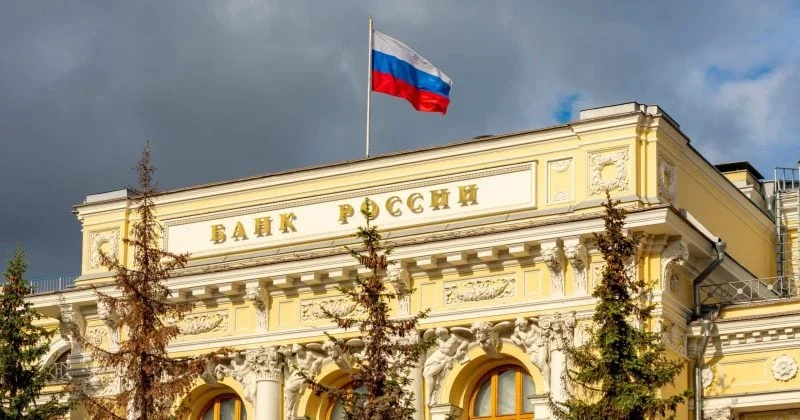
The Bank of Russia has formally established a definitive timeline for the nationwide integration of its Central Bank Digital Currency (CBDC), with Governor Elvira Nabiullina confirming that major financial institutions and retailers must be prepared to accept the digital ruble by September 1, 2026. This announcement marks a pivotal transition for the Russian economy, moving the digital ruble from a restricted pilot phase into the realm of "widespread use." The move is widely viewed by international economists as a strategic response to the unprecedented financial isolation Russia has faced since 2022, aiming to provide a state-controlled alternative to Western-dominated payment systems.
The digital ruble represents the "third form" of the national currency, complementing physical cash and non-cash electronic balances held at commercial banks. Unlike traditional electronic payments, which are processed through the private ledgers of commercial banks, the digital ruble exists on a centralized ledger maintained directly by the Bank of Russia. This architectural shift grants the state unprecedented visibility into the flow of capital while theoretically reducing transaction costs and settlement times for domestic commerce.
A Four-Year Developmental Chronology
The path toward a Russian CBDC began long before the current geopolitical climate necessitated its acceleration. The Bank of Russia first published a consultation paper on the digital ruble in October 2020, outlining the conceptual framework for a digital currency that would coexist with existing forms of money. By early 2022, the technical infrastructure had reached a stage where initial trials could begin.
On January 19, 2022, just weeks before the escalation of conflict in Ukraine, the central bank initiated technical tests with a group of 12 banks. These early trials focused on the opening of digital wallets, the conversion of non-cash rubles into digital ones, and person-to-person (P2P) transfers. The legislative groundwork followed in short order; President Vladimir Putin signed Federal Law No. 340-FZ on July 24, 2023, which established the legal status of the digital ruble and defined the central bank’s role as the platform operator.
The pilot program entered its most critical phase on April 1, 2023, when testing with real clients and real-world transactions commenced. This phase involved a select group of banks and a limited number of retail locations across several Russian cities. The success of these trials, according to Governor Nabiullina, has provided the confidence necessary to set the 2026 deadline for full-scale domestic adoption.
Mandatory Adoption for Systemically Important Institutions
The September 1, 2026, deadline is not a voluntary target but a mandatory requirement for Russia’s most significant financial entities. The Bank of Russia has identified 12 "systemically important" credit institutions that must have their infrastructure fully integrated with the digital ruble platform by this date. This list includes national giants such as Sberbank, VTB, Gazprombank, and Alfa-Bank, which collectively hold the vast majority of Russian consumer and corporate deposits.
Furthermore, the mandate extends to large-scale retailers. By requiring the nation’s largest supermarkets, service providers, and utility companies to accept the digital ruble, the government is attempting to manufacture a "day one" ecosystem where the currency has immediate utility. This top-down approach is designed to overcome the "chicken and egg" problem that often plagues new payment technologies: consumers won’t use a currency if merchants don’t accept it, and merchants won’t accept it if consumers don’t use it.
Economic Strategy and the Sanctions Wall
The digital ruble’s rollout is inextricably linked to Russia’s broader strategy of "financial sovereignty." Since the imposition of Western sanctions in 2022, Russia has been largely excluded from the SWIFT international payment messaging system, while global payment giants like Visa and Mastercard have suspended their operations within the country. While the domestic Mir payment system has filled the void for internal card transactions, the digital ruble offers a more robust, state-controlled layer of financial plumbing.
However, the international community has not been passive. The European Union, as part of its 20th sanctions package, proactively moved to block the digital ruble’s utility outside of Russia. Effective May 24, 2026, the EU has banned all transactions related to the digital ruble and associated ruble-linked tokens (such as RUBx) with EU counterparties. This move is intended to prevent the digital ruble from becoming a loophole for sanctioned entities to conduct international trade.
Despite these restrictions, Moscow is looking eastward. The Bank of Russia has openly discussed the potential for a "CBDC-to-CBDC" bridge with China’s digital yuan (e-CNY). By linking two sovereign digital currency platforms, Russia and China could facilitate cross-border trade without ever touching Western infrastructure or the U.S. dollar. This "parallel financial ecosystem" remains a high priority for both nations as they seek to de-dollarize their respective economies.
Incentivizing an Indifferent Public
One of the primary hurdles facing the digital ruble is a lack of organic public enthusiasm. Surveys conducted by Russian research firms have consistently shown that a significant portion of the population remains skeptical or indifferent toward the new currency. Concerns regarding privacy and the potential for state surveillance of every transaction are frequently cited by critics.
To combat this apathy, the Bank of Russia has introduced a series of financial incentives. The central bank is essentially paying commercial banks to promote the currency, offering a reward of 0.67 rubles (approximately $0.01) for every salary payment processed in digital rubles. Additionally, there is a minimum payment of 10 rubles ($0.13) for payroll distributions made via the digital system. While these amounts are small on an individual basis, they signal the government’s willingness to subsidize the adoption process to meet its 2026 targets.
From a consumer perspective, the Bank of Russia has promised that transactions for individuals will remain free of charge, whereas businesses will be charged a flat commission fee of 0.3%. This fee structure is significantly lower than the standard interchange fees charged by commercial banks for credit and debit card transactions, which often range from 1% to 3%.
Implications for the Cryptocurrency Market
The domestic launch of the digital ruble is expected to have a nuanced impact on the private cryptocurrency market within Russia. Since 2022, many Russians have turned to stablecoins, particularly Tether’s USDT, as a means of preserving capital and facilitating cross-border payments that are otherwise blocked.
Analysts suggest that while the digital ruble may replace some of the demand for crypto in everyday domestic payments—such as buying groceries or paying utility bills—it is unlikely to displace Bitcoin or USDT for their primary use cases. Bitcoin remains attractive to Russian investors as a hedge against ruble inflation and as a censorship-resistant store of value. USDT, meanwhile, remains the preferred tool for international trade and capital flight, a role the digital ruble cannot fulfill due to Western sanctions.
The digital ruble is more likely to compete with the traditional private banking sector than with decentralized crypto assets. By providing a government-backed alternative to commercial bank deposits, the digital ruble could lead to "disintermediation," where consumers move their funds out of private banks and onto the central bank’s ledger, potentially squeezing the liquidity of commercial lenders.
Global Context and the CBDC Race
Russia’s 2026 deadline places it at the forefront of the global CBDC race, albeit for reasons distinct from those of its peers. While the United States has largely paused its "Digital Dollar" initiatives due to political pushback and concerns over privacy and the role of the private banking sector, other regions are moving forward cautiously.
The European Central Bank (ECB) is currently in the "preparation phase" for the digital euro, with a possible launch date late in the decade, though no firm commitment has been made. China continues to expand its digital yuan pilots, which have reached over 260 million wallets but have yet to achieve the status of a primary payment method for the majority of the population.
Russia’s move is unique because it is driven by existential necessity. For the Kremlin, the digital ruble is not just a technological upgrade; it is a tool for survival in a fragmented global economy. If Russia succeeds in achieving mass adoption by 2026, it will provide a real-world case study on whether a CBDC can effectively insulate a major economy from international financial pressure.
Conclusion and Future Outlook
As the September 1, 2026, deadline approaches, the global financial community will be watching closely to see if the Russian government can meet its ambitious targets. The success of the digital ruble depends on two critical factors: the technical stability of the platform under high-volume usage and the willingness of the Russian public to trust a centralized, state-monitored currency.
The strategic implications are far-reaching. A functioning digital ruble, especially if integrated with the digital yuan, could provide a blueprint for other nations seeking to reduce their dependence on the U.S. dollar and the Western financial system. However, the pre-emptive sanctions by the European Union demonstrate that the West is prepared to defend the integrity of its financial borders. The digital ruble may indeed become a cornerstone of the Russian economy, but its ability to bridge the gap between Russia and the global market remains highly uncertain.