


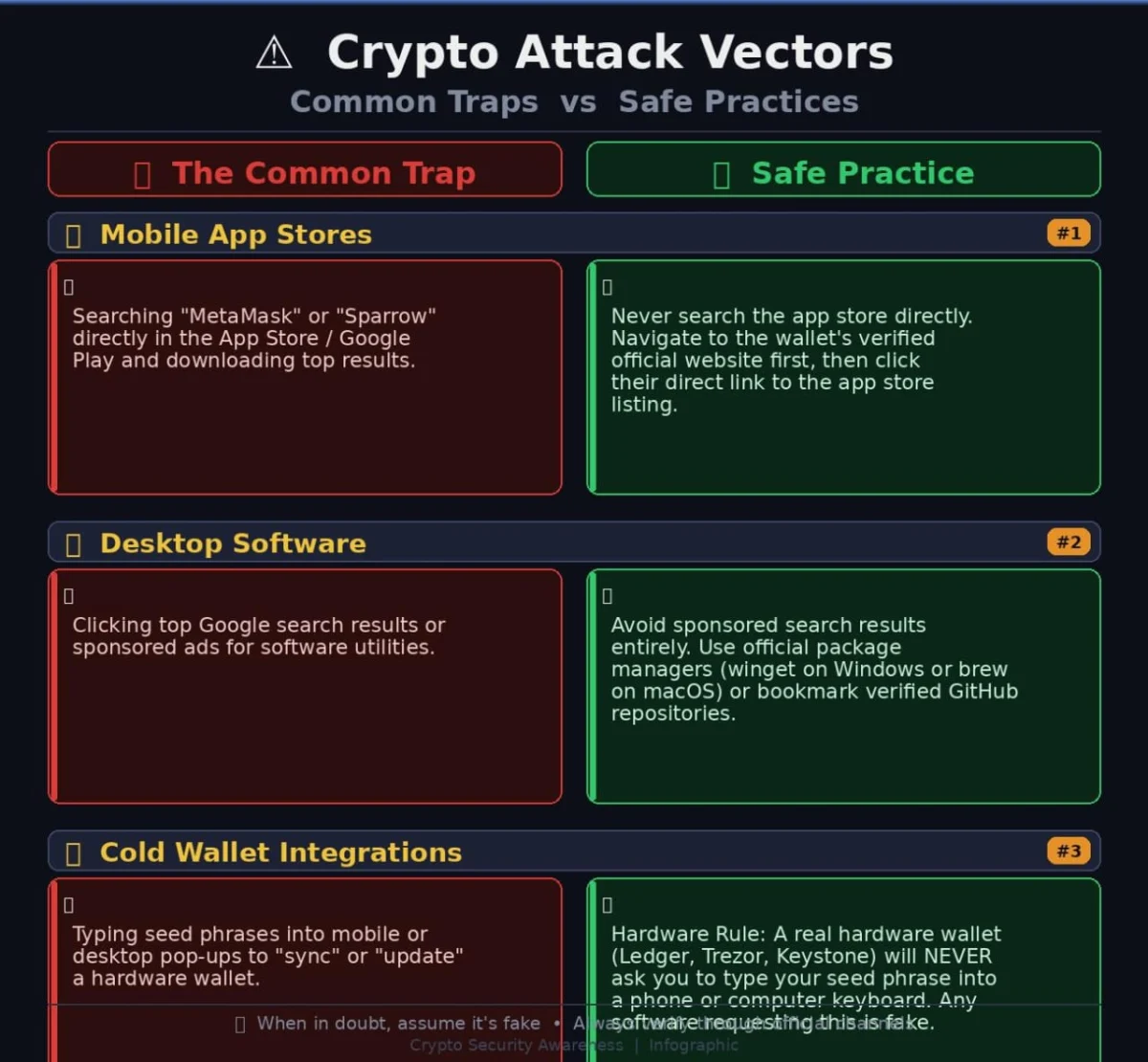
The conventional wisdom regarding cryptocurrency security has long centered on the robustness of blockchain technology itself, often highlighting its cryptographic strength as an impregnable fortress. However, a series of recent, high-profile incidents has starkly shifted this focus, exposing a critical and often overlooked vulnerability: the very digital platforms users rely on for discovery and access. Apple’s App Store, Google Play, and Google Search, long considered bastions of digital trust and curation, are increasingly becoming the weakest links in the crypto security chain, enabling sophisticated theft schemes that have siphoned millions from unsuspecting users. These incidents, surfacing within days of each other, collectively paint a concerning picture of systemic failures in platform vetting and content moderation, challenging the fundamental assumptions of digital safety.
The Lawsuit Against Apple: Exposing a Decade-Old Blind Spot
On July 24, three plaintiffs—James Ramirez, Christopher Ellis, and Jalen Delgado—filed a lawsuit against Apple in California, alleging significant financial losses due to a fraudulent application impersonating "Sparrow Wallet" on the App Store. The plaintiffs claim they were duped into entering their seed phrases into this fake app, which subsequently led to the draining of approximately $1.8 million in Bitcoin. Specifically, Ramirez reportedly lost $875,000, Ellis $840,000, and Delgado $120,000, with these thefts allegedly occurring between May and August of the previous year.
The most damning detail highlighted in the complaint is the fundamental impossibility of a legitimate Sparrow Wallet app on iOS. Sparrow Wallet, a well-regarded Bitcoin wallet, is exclusively designed for desktop operating systems—Windows, macOS, and Linux. Its official developer has never released an iOS version. This inherent incompatibility means that any Sparrow Wallet app found on the Apple App Store is, by definition, a fraudulent construct. Yet, the lawsuit contends that Apple not only approved this fake application but also allegedly featured it within its "curated cryptocurrency collections," effectively lending it an unwarranted seal of approval.
This incident is not an isolated oversight. Craig Raw, the legitimate developer of Sparrow Wallet, had reportedly flagged an identical impersonator in prior years. Instead of taking decisive action, Apple’s response allegedly included flagging Raw’s own developer account—an ironic twist that underscores a deeper problem. While Apple has since stated that it acted quickly to remove the impersonating apps and terminate the associated developer accounts, the lawsuit alleges that other fake Sparrow apps remained active even after being reported. This pattern of failure is further evidenced by a similar incident earlier this year, where a fraudulent Ledger Live impersonator on the App Store drained an estimated $9.5 million from victims. The recurrence of such high-value thefts involving fake applications on a supposedly secure platform points to a critical and documented vulnerability in Apple’s review process.
The Rise of SparkKitty: Turning Camera Rolls into Crime Scenes
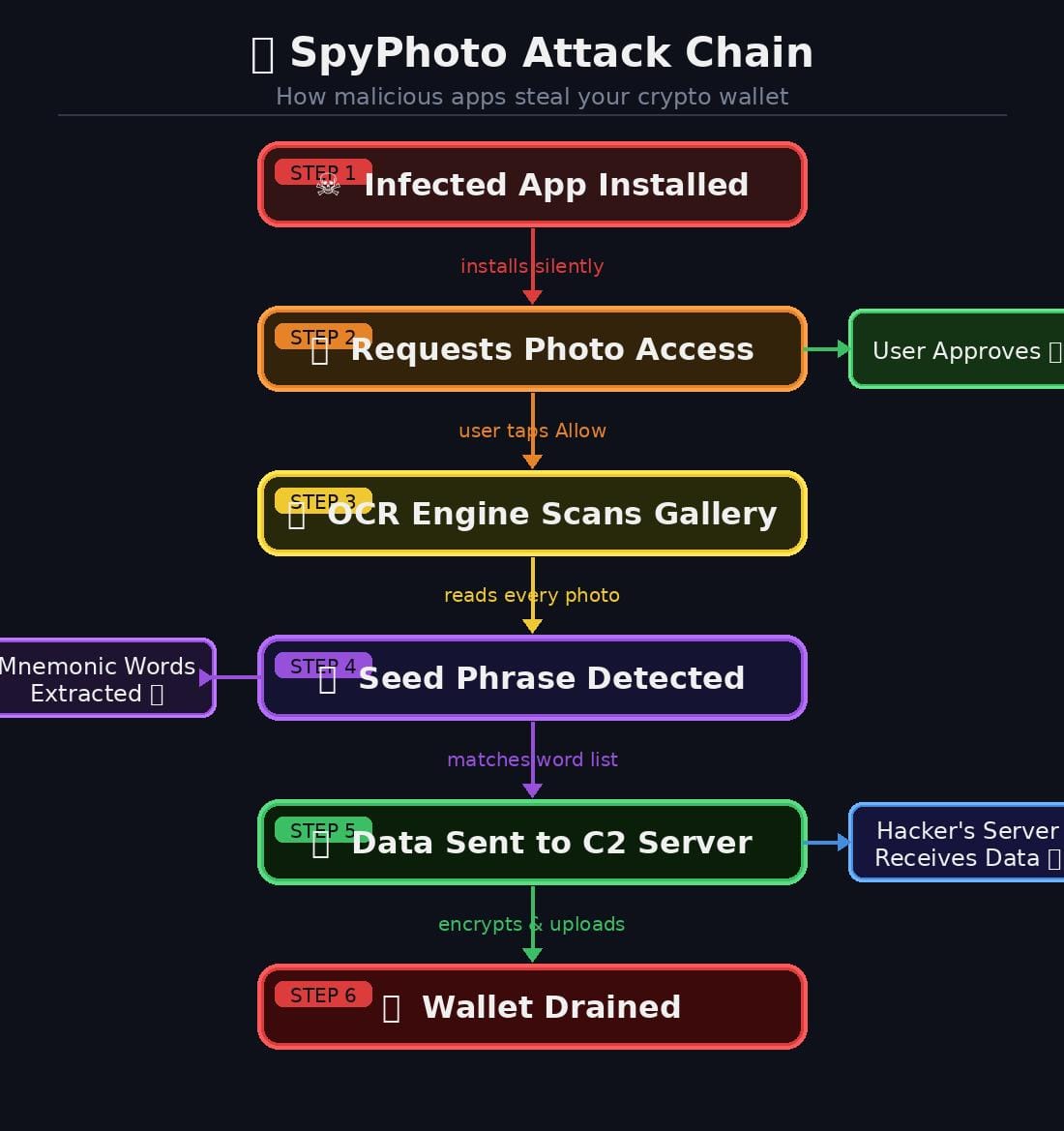
Concurrent with the unfolding lawsuit, cybersecurity firm Check Point Research published a separate report detailing a new, insidious malware family dubbed "SparkKitty." This cross-platform threat, affecting both Android and iOS devices, introduces a disturbingly simple yet highly effective method of credential theft. SparkKitty leverages optical character recognition (OCR) technology to scan users’ photo libraries for cryptocurrency wallet seed phrases. This innovative approach allows attackers to extract sensitive credentials without resorting to more complex methods like keystroke logging or clipboard monitoring.
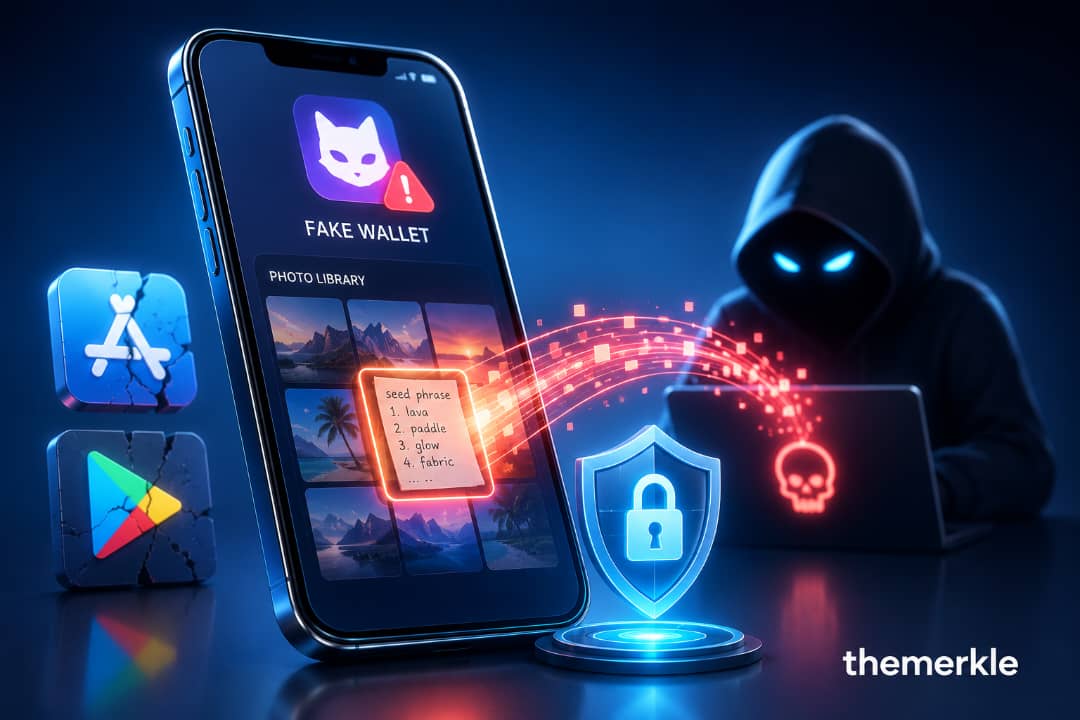
SparkKitty is described as an evolved variant of "SparkCat," an OCR-based stealer first documented by Kaspersky in 2023, which also targeted data from screenshots. On iOS, SparkKitty cunningly concealed its malicious code within a crypto application named "å¸coin." It managed to bypass Apple’s stringent review process, subsequently requesting access to the user’s photo library—a seemingly innocuous permission often granted without much thought, perhaps for uploading a profile picture or scanning a document. Once granted, the app silently uploads the entire photo gallery, scans it for any sequence resembling a 12- or 24-word seed phrase, and if a match is found, the associated cryptocurrency wallet is swiftly compromised.
On Android, the malware manifested within an application called "SOEX," marketed as a messaging and crypto exchange platform. This malicious app reportedly amassed over 10,000 downloads on Google Play before its eventual removal. Beyond official app stores, SparkKitty also propagated through more illicit channels, including pirated APKs, modified TikTok applications, and online betting apps, demonstrating a wide-ranging distribution strategy. The mechanism’s simplicity is its strength: users grant photo access, believing it serves a legitimate function, only for their entire camera roll to be silently exfiltrated and analyzed for the critical keys to their digital wealth. Unlike traditional bank fraud, there is no chargeback or reversal process for stolen cryptocurrency, making these attacks particularly devastating.
Deceptive Branding: The Proliferation of Fake Wallet Apps
Beyond the sophisticated OCR tactics of SparkKitty, researchers have also identified a more straightforward, yet equally dangerous, threat: at least 26 fake wallet applications openly available on the App Store. These imposters meticulously copy the branding, logos, and user interfaces of legitimate and widely trusted wallets such as MetaMask, Trust Wallet, and Coinbase. Their deceptive nature relies on minute spelling variations or subtle design differences that often escape casual scrutiny, especially from less experienced users.
The danger of these applications lies in their directness. They do not require complex malware exploits; instead, they function as elaborate phishing traps. Users, believing they are interacting with their authentic wallet, directly input their seed phrases or private keys into the fake interface. This act, driven by convincing branding and interface design, is tantamount to handing over funds voluntarily, making the recovery of assets virtually impossible. The sheer number and persistent presence of these fake apps highlight a critical gap in the proactive detection and removal mechanisms of major app stores.
Beyond Mobile: Desktop Users Also Targeted by Search Engine Poisoning
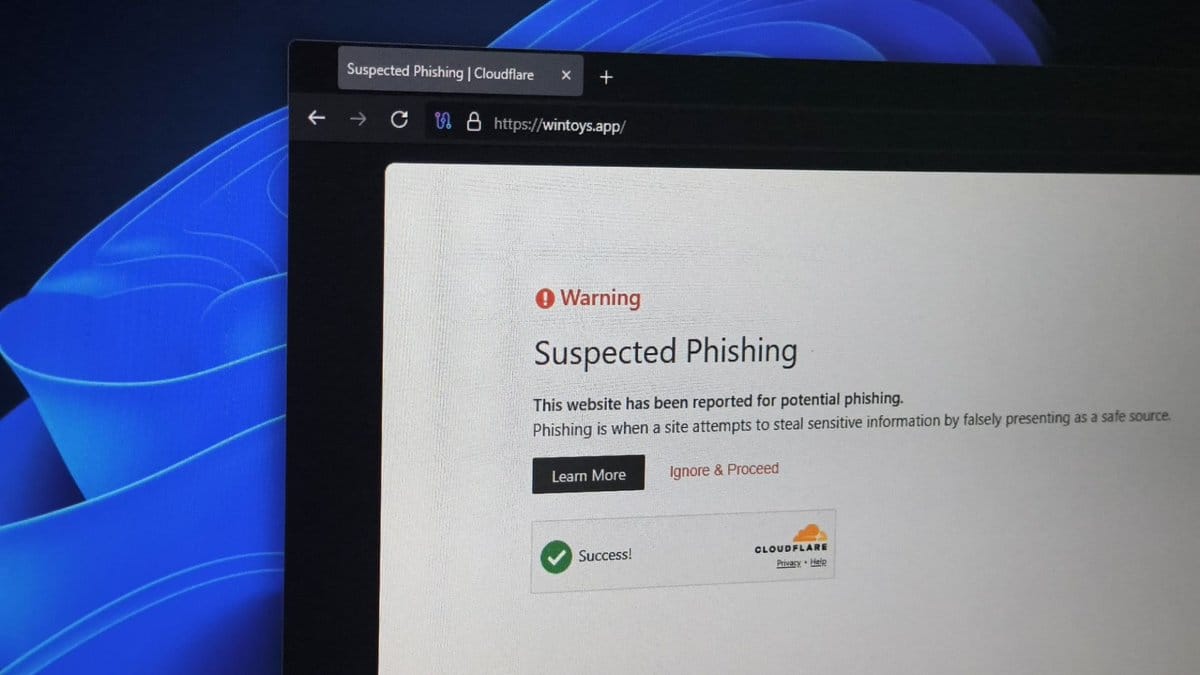
The threat landscape extends beyond mobile devices and app stores, demonstrating that desktop users are far from immune. A separate report on X (formerly Twitter) revealed a pervasive campaign involving over 70 fake websites impersonating popular Windows applications. These include widely used tools such as PowerToys, CrystalDiskMark, EasyBCD, Lively Wallpaper, Wintoys, SignalRGB, and MKVToolNix. Disturbingly, many of these lookalike domains have managed to achieve higher rankings than the legitimate project pages in Google search results, exploiting the public’s reliance on search engines for software discovery.
Check Point Research documented a patient and deliberately deceptive playbook employed by these malicious actors. Initially, these sites focus on building search rankings for a popular application’s name. They appear harmless by linking to the genuine download source, thereby accumulating traffic and trust. Only after establishing sufficient credibility do they surreptitiously swap the legitimate download link for a malicious installer, often containing trojanized software. This campaign has already been linked to malware families such as RemusStealer, and developers behind applications like Lively Wallpaper and SignalRGB have independently confirmed active impersonation attempts targeting their projects. The most unsettling aspect of this desktop campaign is its broad scope: it is not crypto-specific. This infrastructure is designed to compromise any user downloading common software, with cryptocurrency wallets or exchange credentials stored on an infected machine merely representing the most valuable potential payoff for attackers. The phrase "just Google the app name and download it," once considered reasonable advice, has become a dangerous directive in this new threat environment.
The Underlying Systemic Failure: Trust Undermined
These three distinct threat vectors—fraudulent app store listings, sophisticated OCR malware, and search engine poisoning—are not isolated incidents but rather manifestations of a single, overarching systemic failure. Major app stores and search engines have built their formidable reputations on the pillars of curation and trust. Users implicitly trust that applications listed on official stores are legitimate and safe, and that top search results lead to authentic sources. Attackers have keenly identified that exploiting this ingrained user trust and impersonating a trusted brand is significantly easier and more effective than attempting to breach actual cryptographic security protocols.
Apple’s review process, despite its reputation for strictness, demonstrably failed to prevent an app with no legitimate reason to exist on iOS from being approved and even promoted. Google Play hosted an application that covertly uploaded entire user photo libraries, bypassing sufficient scrutiny for timely removal. And Google Search, the primary gateway for billions of internet users, is actively prioritizing malicious sites above legitimate ones for popular software downloads. This erosion of trust in foundational digital platforms represents a profound shift in the cybersecurity landscape. It places the onus of extreme vigilance squarely on the user, challenging the very notion of a "safe" digital ecosystem curated by tech giants.
Industry Reactions and Platform Accountability
The repeated occurrence of such incidents raises serious questions about the accountability of major tech platforms. While Apple typically responds by stating it "acts quickly to remove impersonating apps and terminate developer accounts," and Google routinely removes malicious applications from its Play Store upon discovery, the effectiveness of these reactive measures is increasingly being questioned. Critics argue that the review processes themselves are fundamentally flawed or inadequately resourced to combat the scale and sophistication of modern fraudulent campaigns.
Developers of legitimate applications, like Craig Raw of Sparrow Wallet, often find themselves in a frustrating battle against impersonators, with their warnings sometimes leading to their own accounts being flagged. This indicates a potential disconnect between platform security teams and the realities faced by independent developers and users. The financial losses, now totaling in the tens of millions from these specific types of scams alone, underscore the urgent need for proactive, robust vetting mechanisms rather than relying primarily on user reports or post-breach remediation.
Broader Implications for Digital Asset Security
The implications of these systemic vulnerabilities extend far beyond immediate financial losses. They fundamentally alter the risk calculus for digital asset holders and erode confidence in the broader digital economy. The paradigm has shifted: the most significant threats to cryptocurrency security are no longer purely cryptographic exploits but rather social engineering, malware, and platform-level weaknesses that exploit human trust and habitual digital behavior.
For the nascent and rapidly evolving Web3 ecosystem, this presents a significant challenge. The promise of decentralization and user sovereignty is undermined when the gateways to that ecosystem—app stores and search engines—are compromised. It highlights the critical need for comprehensive user education, industry-wide collaboration on threat intelligence, and potentially, increased regulatory pressure on platform providers to enhance their security protocols and accountability frameworks. The integrity of digital asset ownership hinges not just on the strength of the blockchain, but on the trustworthiness of every layer of the digital infrastructure that users interact with.
Protecting Digital Assets: A Multi-Layered Defense Strategy
Understanding the mechanics of these evolving attack vectors is the first step towards self-protection. Given the demonstrated weaknesses in major digital platforms, users must adopt a rigorous, multi-layered defense strategy for their cryptocurrency holdings. The era of blindly trusting "official" sources or search engine rankings is over.
1. Safeguarding Against OCR Malware (SparkKitty and Variants):
- Restrict Photo Library Access: Be extremely cautious about granting photo library access to any application, especially crypto-related apps, messaging tools, or gambling platforms. If an app genuinely requires image access, question why and ensure it aligns with its core functionality.
- Review App Permissions: Regularly review and revoke unnecessary permissions for all apps on your device. On iOS, navigate to Settings > Privacy & Security > Photos. On Android, go to Settings > Apps > [App Name] > Permissions.
- Avoid Storing Seed Phrases as Images: Never take screenshots, photos, or store digital images of your seed phrases, private keys, or recovery words on any device, cloud service, or email. The only truly secure method for storing these critical credentials is offline, physically written down, and secured in a private location.
- Use Hardware Wallets: For significant holdings, a hardware wallet (e.g., Ledger, Trezor) is paramount. These devices keep your private keys offline, making them immune to software-based attacks like SparkKitty.
2. Verifying Application Authenticity (Fake Wallets & Search Poisoning):
- Direct Source Downloads: Always navigate directly to the official website of a cryptocurrency wallet or software project by typing the URL manually into your browser. Bookmark these official sites.
- Cross-Verification for Mobile Apps: Before downloading any crypto app, verify its authenticity through multiple channels. Check the developer’s official website for a direct link to their legitimate app on the App Store or Google Play. Look for a verified developer badge and a substantial number of legitimate reviews, but be wary of inflated or generic reviews.
- Scrutinize URLs and Domain Names: When downloading desktop software, meticulously inspect the URL. Malicious sites often use subtle misspellings (typosquatting) or unconventional top-level domains (e.g., .net instead of .com). Use URL checkers if unsure.
- Check Digital Signatures: For desktop software, always verify the digital signature of the downloaded executable file. Legitimate software from reputable developers will be digitally signed, providing assurance of its origin and integrity.
- Beware of Promoted Search Results: Exercise extreme caution with "sponsored" or "ad" results at the top of search engines, as these are frequently exploited by malicious actors to promote fake sites. Even organic results should be cross-referenced.
3. The Modern Crypto Hygiene Playbook:
- Assume Compromise: Operate with a mindset that any link, email, or download could be malicious. This heightened skepticism is your first line of defense.
- Isolate Crypto Activities: Consider using a dedicated, clean device (e.g., a refurbished laptop with a fresh OS install) solely for managing significant crypto assets, isolating it from general browsing or social media.
- Enable Two-Factor Authentication (2FA): Always activate 2FA on all crypto exchanges, wallets, and any associated accounts (email, cloud services). Hardware-based 2FA (e.g., YubiKey) is superior to SMS-based 2FA.
- Regular Software Updates: Keep your operating systems, browsers, and all applications updated to patch known vulnerabilities.
- Reputable Antivirus/Anti-Malware: Install and maintain a robust antivirus and anti-malware solution on all your devices.
- Educate Yourself Continuously: The threat landscape is constantly evolving. Stay informed about the latest scams and security best practices.
The underlying cryptographic technology securing public blockchains remains remarkably robust. However, the interfaces and platforms through which users interact with this technology are proving to be increasingly vulnerable. By shifting trust away from the fallible curation of third-party app stores and search engines, and instead implementing strict, proactive verification habits, digital asset holders can significantly mitigate risks and prevent the platforms surrounding their crypto from becoming their single point of failure.
Disclosure: This is not trading or investment advice. Always do your research before buying any cryptocurrency or investing in any services.














