
The administrative burden of invoicing remains a persistent challenge for service-based businesses, freelancers, contractors, and agencies worldwide. While essential for cash flow and financial tracking, the process of drafting quotes, formatting receipts, calculating line items, and ensuring brand consistency consumes valuable time that business owners would invariably prefer to dedicate to their core services. This perennial struggle highlights a significant operational inefficiency that existing invoicing software solutions have largely addressed through incremental improvements rather than radical re-imaginings. Velocity Ticket emerges into this landscape, proposing a fundamental shift in how businesses approach document generation, leveraging advanced artificial intelligence to transform what was once a tedious manual chore into an intuitive, natural language-driven process.
The Pervasive Problem of Invoicing in Modern Business

Invoicing, while seemingly straightforward, is fraught with complexities. Small to medium-sized enterprises (SMEs) and independent professionals often lack dedicated administrative staff, leaving proprietors to juggle operational tasks with invoicing duties. A 2023 survey by FreshBooks indicated that small business owners spend an average of 10 hours per month on administrative tasks, a substantial portion of which is dedicated to invoicing and expense tracking. This time sink directly impacts productivity, limits capacity for revenue-generating work, and can lead to burnout. Furthermore, inaccuracies in invoices can cause payment delays, damage client relationships, and create accounting headaches.
Current invoicing software typically offers templates, automated calculations, and client management features. While these tools have undoubtedly improved efficiency over purely manual methods, they often still require users to navigate complex forms, manually input line items, and meticulously check details. The user experience can be clunky, and the initial setup or ongoing customization can be time-consuming, particularly for businesses with varied service offerings or dynamic pricing structures. This gap between the desire for seamless automation and the reality of persistent manual input is precisely where Velocity Ticket positions itself as a disruptive innovation.
The Genesis of Innovation: Who is Behind Velocity Ticket?
Velocity Ticket is an early-stage Software-as-a-Service (SaaS) product developed by The Merkle, LLC, a technology firm renowned for its expertise in web development, marketing, cryptocurrency, and artificial intelligence. This background is critical, as it informs the sophisticated technological underpinnings of Velocity Ticket. The Merkle’s deep understanding of AI and emerging technologies has enabled them to engineer a solution that moves beyond conventional automation, integrating natural language processing (NLP) to create a truly intuitive user experience.
The product is meticulously designed for a broad spectrum of service professionals, including freelancers, contractors, agencies, tradespeople, and consultants. These diverse groups share a common need: the rapid generation of professional invoices, bills, quotes, estimates, and receipts without the encumbrance of extensive form fields and repetitive manual data entry. The core promise from The Merkle is compelling and, upon closer inspection, genuinely transformative: users can simply describe a job in plain language, and Velocity Ticket will generate a complete, professionally formatted document within minutes. This isn’t merely a template requiring manual completion; it’s a finished draft, replete with itemized details, calculated totals, and correct formatting, ready for immediate review and dispatch. Such a leap in workflow improvement sounds almost too good to be true, until one experiences the platform firsthand.
A Paradigm Shift in Workflow: How Velocity Ticket Operates
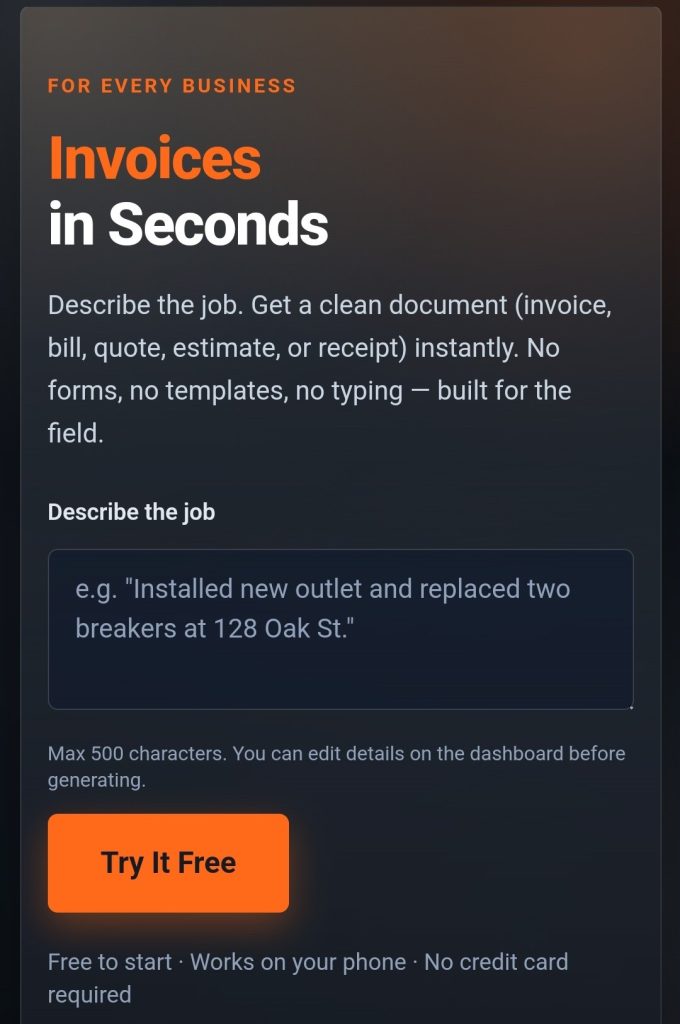
The efficacy of Velocity Ticket lies in its revolutionary approach to document creation, which begins with an onboarding process designed for maximum frictionlessness.
1. Effortless Onboarding: Getting Started in Minutes
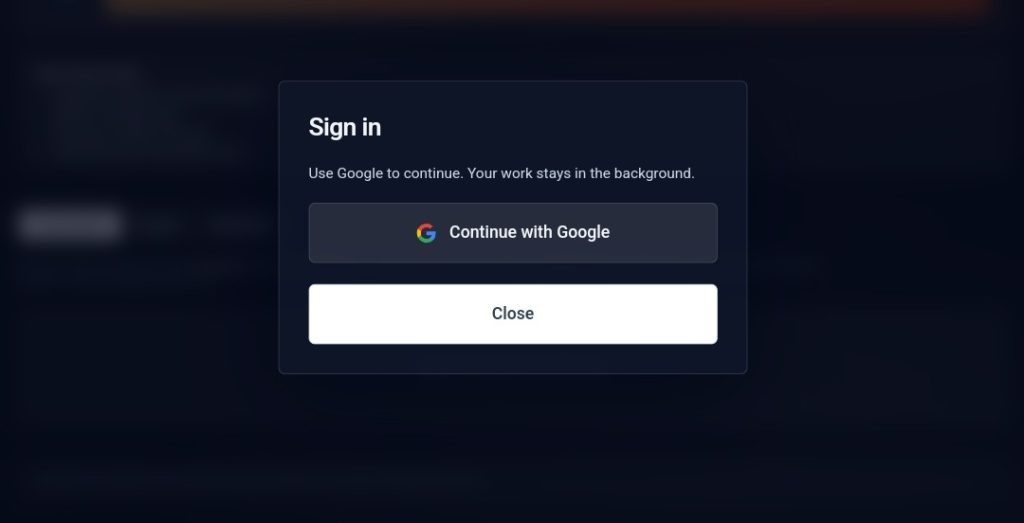
The initial step for any new user is remarkably simple. Navigating to the Velocity Ticket website, the option to "Try it Free" is prominently displayed. The entire setup process involves a single action: signing in with a Google account. This eliminates the common hurdles of lengthy registration forms, the immediate demand for credit card details to access a free tier, or mandatory, time-consuming tutorials before any useful work can commence. This streamlined entry point reflects a design philosophy centered on immediate utility and user empowerment.
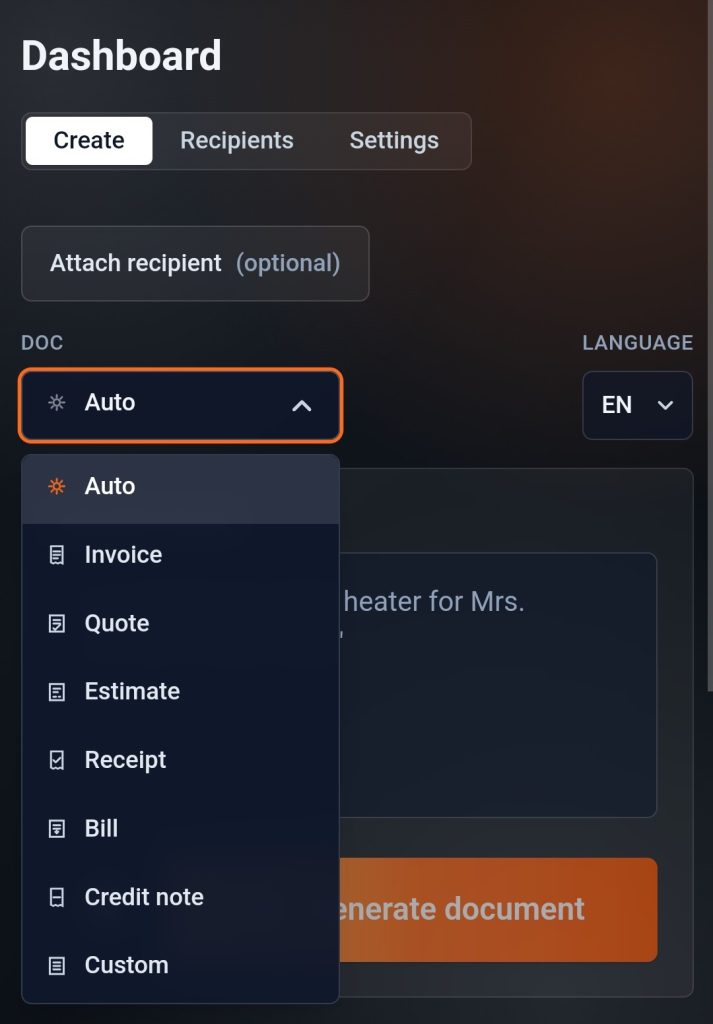
Upon successful login, users are directed to a clean, intuitive dashboard, which serves as the central command center for all activities. From this hub, selecting the "Auto" option reveals the comprehensive array of document types that can be generated: invoices, quotes, estimates, bills, and receipts, among others. The interface is meticulously crafted for clarity and ease of use, reinforcing the core premise that users should be able to articulate their needs in natural language, entrusting the tool to handle the underlying complexities. This minimalist design, coupled with powerful backend AI, positions Velocity Ticket distinctly in a market often saturated with feature-heavy but cumbersome interfaces.
2. The Power of Natural Language: From Description to Draft
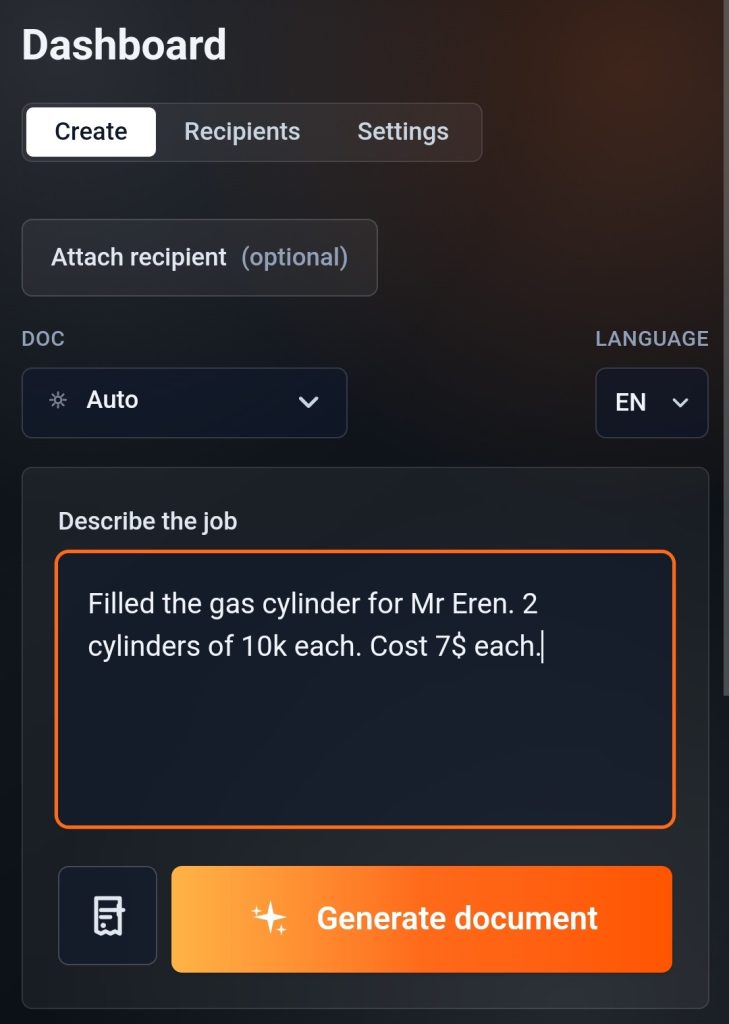
The true innovation of Velocity Ticket unfolds during the document preparation phase. The workflow is worth detailing step-by-step, as its speed and efficiency are genuinely impressive. Users initiate the process directly from the dashboard by describing the job in plain, conversational language. This could be akin to explaining the work verbally to a client, detailing services rendered, materials utilized, and any pertinent information about the customer or project. For example, a plumber might input: "Replaced faulty kitchen faucet at John Doe’s residence, 123 Main St. Used a new chrome mixer tap and associated fittings. Took 2 hours."
Velocity Ticket further enhances documentation by offering the option to attach photos, providing visual evidence or context for the work performed. Users can also add specific customer details at this stage, ensuring all relevant information is captured upfront. Crucially, none of this requires specific keywords, predefined templates, or special formatting. The system is designed to understand natural language input, mirroring human communication patterns. This liberates users from the cognitive load of translating their work into a software’s proprietary format.
3. AI-Driven Document Generation: Precision and Professionalism
From this natural language description, Velocity Ticket’s AI engine takes over, creating a complete document draft. This sophisticated process involves:
- Itemization: The AI intelligently parses the description to identify distinct services and materials, generating individual line items. In the plumbing example, "new chrome mixer tap," "associated fittings," and "2 hours labour" would become separate entries.
- Calculation: Totals are automatically calculated, incorporating quantities, rates (if pre-defined or inferred), and any applicable taxes.
- Formatting: The entire document is presented in a professional, ready-to-send format, complete with appropriate headers, footers, and branding elements (if customized).
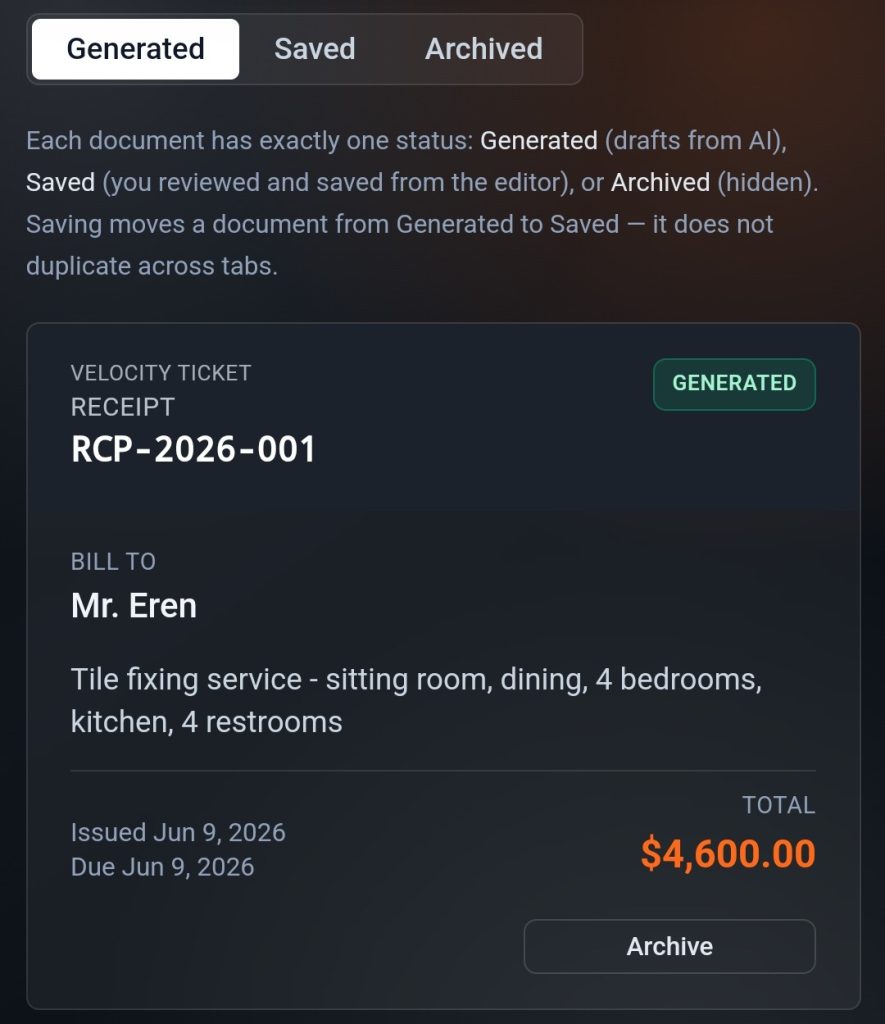
The output is not merely a basic text file but a structured, polished document. Each newly generated document initially carries a "Generated" status, serving as a holding area for review. This strategic design choice ensures that while the AI performs the heavy lifting, users retain complete control over the final output, verifying accuracy and making any necessary adjustments before the document is sent to a client. This human-in-the-loop approach balances automation with accountability, fostering trust in the AI’s capabilities.
4. The Review and Refine Process: "Buddy" AI and Manual Edits
Should any adjustments be required, Velocity Ticket provides two intuitive paths for editing:
- "Buddy" – The Natural Language Editing Assistant: This innovative feature allows users to request changes conversationally. For instance, a user could instruct "Buddy" to "adjust the line item for the mixer tap to $150," "change the tax rate to 8%," or "update the recipient’s email address." This natural language interface for editing further streamlines the process, mirroring the ease of initial generation.
- Manual Editing: For users who prefer direct control, all fields – including recipient details, line items, tax rates, notes, and branding – are directly editable. Both "Buddy" and manual editing options are seamlessly integrated within the same editor, allowing users to switch between methods effortlessly based on their preference or the complexity of the required change. This flexibility caters to diverse user habits and ensures that the platform remains adaptable.
Once the document meets the user’s satisfaction, it can be saved, and a polished PDF is immediately available for download, ready for transmission to the client. All saved documents are stored within the user’s dashboard, fully searchable and editable, providing a comprehensive historical record and enabling future modifications if needed. This robust document management system ensures that no information is lost and that past invoices can be easily retrieved or adapted for new projects.
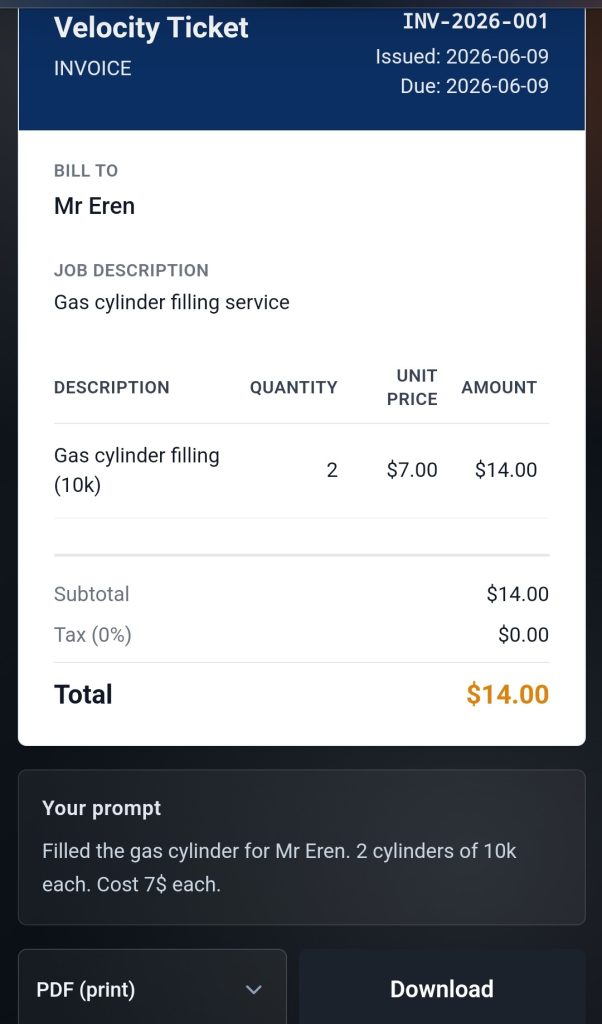
Streamlined Document Management: Understanding Statuses
Velocity Ticket employs a clean, logical system for document management, assigning each document a single, clear status at any given time. This prevents clutter and ensures an organized dashboard, even as the volume of documents grows.
- ‘Generated’: This status signifies that the AI has created an initial draft, and the document is awaiting user review and potential edits. It’s the pre-finalization stage where human oversight is applied.
- ‘Saved’: Once a user has reviewed, made necessary edits, and finalized the document, it moves to the ‘Saved’ status. This indicates a completed, approved document ready for use or archival.
- ‘Archived’: Documents can be moved to ‘Archived’ to remove them from the active view while retaining them for historical record-keeping. This prevents deletion and allows for retrieval if needed, keeping the primary dashboard focused on current tasks.
A critical aspect of this system is that saving a document transitions it from ‘Generated’ to ‘Saved’; it does not create a duplicate. A document resides in ‘Generated’ until the ‘Save’ action is performed, after which it permanently lives in ‘Saved,’ remaining fully editable and downloadable. This straightforward status system enhances clarity and simplifies document lifecycle management, distinguishing Velocity Ticket from platforms that might create multiple versions or confusing workflows.
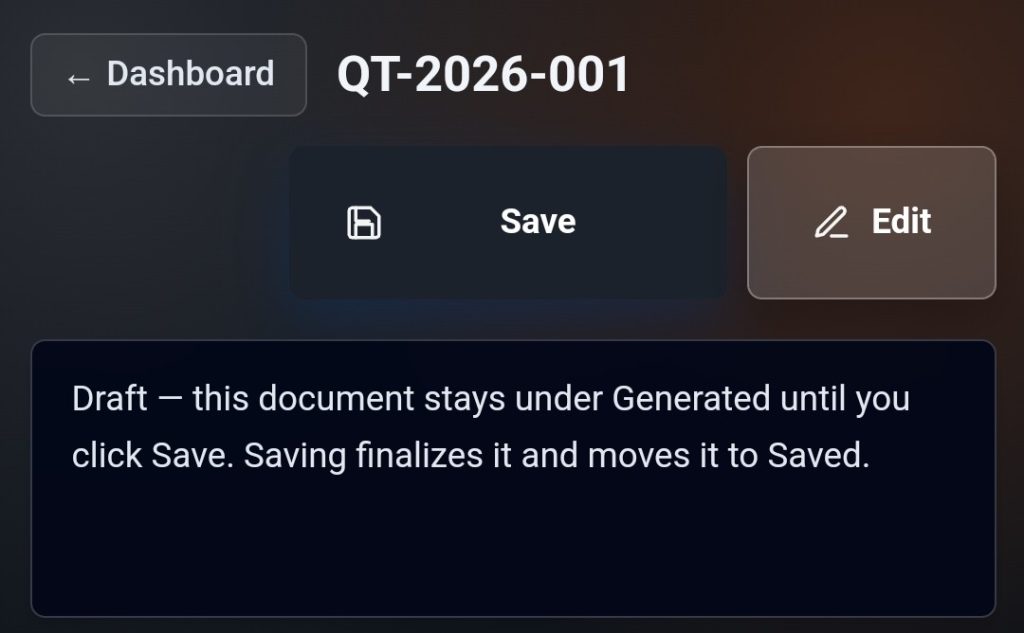
Accessibility and Value Proposition: The Free Tier and Beyond
One of Velocity Ticket’s most compelling features is its genuinely usable free tier, which stands in stark contrast to many "freemium" models that offer only heavily watered-down previews designed to push users towards immediate upgrades. Free accounts on Velocity Ticket are allocated 20 document generations every 30 days. This counter resets based on the user’s account creation date, not a fixed calendar date, providing consistent access regardless of the month.
For individual freelancers or small service businesses with moderate invoicing volumes, 20 documents per month represents a substantial capacity, potentially covering a significant portion of their real-world invoicing, quoting, and receipt generation needs. This generous free tier effectively allows potential users to integrate Velocity Ticket into their workflow and experience its benefits firsthand without any financial commitment or hidden clauses. It’s a testament to the confidence The Merkle has in their product’s value proposition.
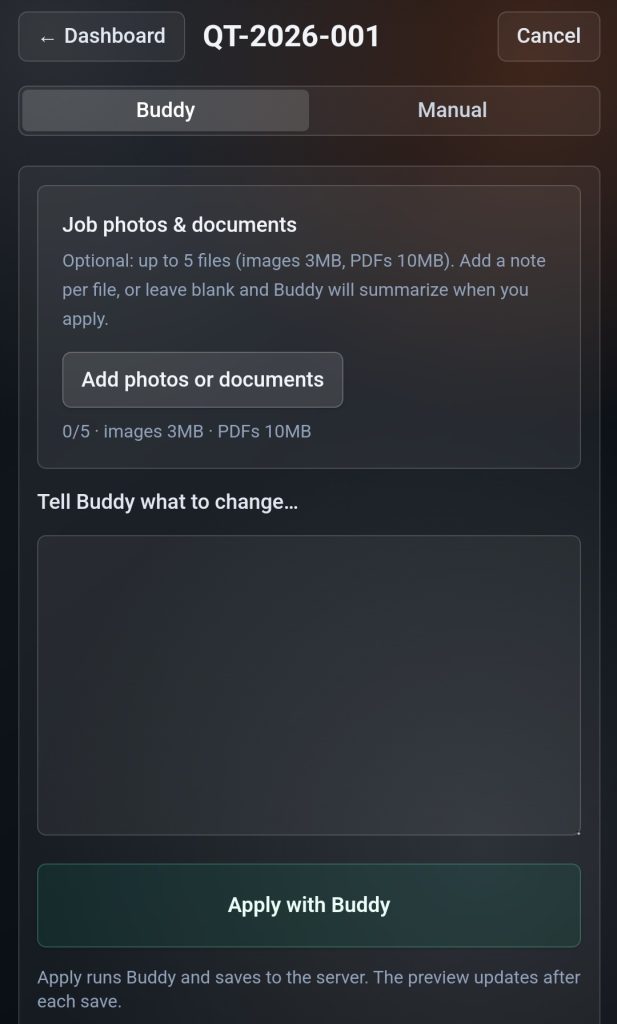
For users requiring more document generations before their reset date, paid plans are readily available through the platform’s dedicated Billing section. These plans unlock continued document creation, removing the limitations of the free tier and catering to businesses with higher volumes or more frequent needs. The pricing structure adheres to a standard SaaS model: start free, and pay for increased capacity as your business grows or your demands intensify. This scalable approach makes Velocity Ticket accessible to a wide range of users, from solo entrepreneurs to expanding agencies.
Broader Implications and Market Impact
Velocity Ticket represents more than just another invoicing tool; it signifies a broader trend in business software towards intelligent automation and natural language interfaces. For service businesses that routinely spend hours each month on administrative tasks like invoicing, quoting, and billing, Velocity Ticket offers a tangible solution to reclaim that time. The fusion of natural-language generation, a streamlined editing workflow, and a professional PDF output that eschews generic templates for polished, custom-feeling documents marks a genuine advancement in the invoicing software landscape.
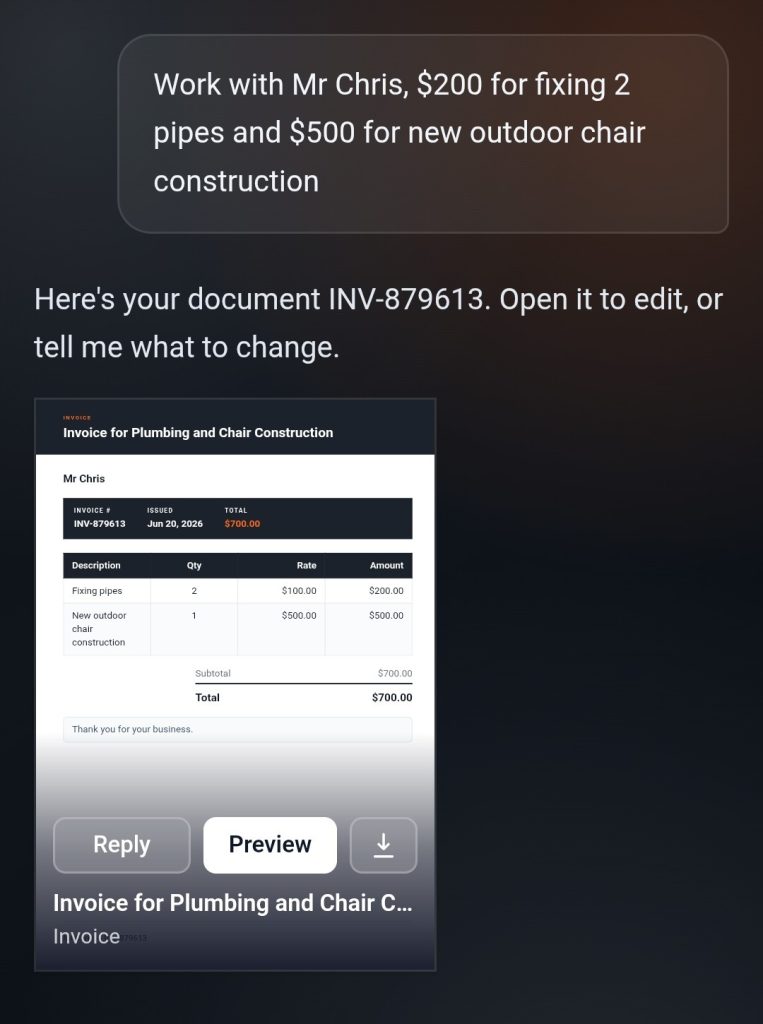
The integration of AI, particularly natural language processing, into everyday business applications is poised to redefine productivity. By minimizing manual data entry and cognitive load, Velocity Ticket empowers professionals to focus on their core competencies, fostering higher job satisfaction and potentially driving economic growth within the SME sector. Its competitive edge lies not merely in automation, but in intelligent automation that mimics human interaction, thereby lowering the barrier to entry for complex software tools.
In a market saturated with invoicing solutions, Velocity Ticket carves out a niche by prioritizing user experience through advanced technology. Its potential impact extends to reducing errors, accelerating payment cycles by providing clear and professional documentation, and improving overall operational efficiency for millions of service providers globally. As AI continues to mature, solutions like Velocity Ticket will likely become the standard, pushing other software providers to innovate beyond traditional form-based interfaces.
Conclusion
Velocity Ticket, developed by The Merkle, LLC, is poised to address a critical pain point in the modern service economy. By leveraging AI and natural language processing, it transforms the often-dreaded task of invoicing into a quick, intuitive, and efficient process. With its frictionless onboarding, powerful generation capabilities, intelligent editing assistant, and generous free tier, Velocity Ticket offers a compelling value proposition for freelancers, contractors, and service businesses of all sizes. It stands as a testament to the transformative power of AI in simplifying complex business operations, setting a new benchmark for what invoicing software can achieve. For any service professional looking to significantly reduce administrative overhead and enhance the professionalism of their client communications, Velocity Ticket warrants serious consideration.