The digital asset landscape is currently navigating a complex transition as the boundary between decentralized finance and traditional Wall Street institutions continues to blur. While retail investors have long anticipated a massive "altcoin season" fueled by institutional capital, a growing consensus among industry analysts suggests a fundamental disconnect between retail expectations and institutional strategy. Major financial entities, led by industry behemoths like BlackRock and Fidelity, are increasingly signaling that their interest lies not in subsidizing existing retail speculative positions, but in leveraging blockchain technology for the next generation of financial infrastructure. This shift in sentiment comes at a precarious time for the altcoin market, where technical indicators and capital flow suggest a deepening divide between "blue-chip" protocols and the broader sea of speculative tokens.
The Institutional Pivot: Infrastructure Over Speculation
Recent market discourse has been dominated by the possibility of institutional giants "bailing out" the altcoin market. However, seasoned analysts have largely dismissed this narrative as a misunderstanding of how traditional finance (TradFi) operates. For firms like BlackRock, the value proposition of the cryptocurrency sector is increasingly viewed through the lens of "tokenization"—the process of moving real-world assets (RWAs) such as bonds, real estate, and private equity onto distributed ledgers.
Experts emphasize that institutional strategists often view the majority of altcoins as fundraising vehicles for specific projects rather than long-term value-accruing assets. The prevailing sentiment among Wall Street analysts is that there is often little to no direct correlation between a project’s underlying utility and the market value of its native token. Consequently, the hope that BlackRock or similar entities will "buy the bags" of retail investors is being replaced by a more sober reality: institutions are interested in the rails (the Layer-1 networks), not necessarily the speculative cargo.
Weiss Crypto, a leading ratings agency in the space, projects a future where the integration of crypto and Wall Street bypasses traditional stock exchanges entirely. In this scenario, high-performance Layer-1 networks like Solana and Ethereum serve as the primary settlement layers for global finance. In such an ecosystem, investors would hold direct ownership of tokenized assets on-chain, rendering many speculative intermediary tokens obsolete.
Market Technicals: The Long Shadow of the Bear Market
The technical health of the altcoin market reflects this institutional skepticism. Data indicates that approximately 84% of altcoins currently listed on Binance, the world’s largest cryptocurrency exchange by volume, are trading below their 200-day moving average (MA). The 200-day MA is a critical technical indicator used by traders to determine the long-term trend of an asset. When the vast majority of the market remains below this line for an extended period, it signals a lack of sustained buying pressure and a prevailing bearish sentiment.
This period of underperformance has persisted for nearly eight months, marking the second-longest streak of its kind since the 2020 market cycle. The only period of greater prolonged bearishness was the ten-month stagnation experienced during the height of the previous crypto winter. This data suggests that despite the successful launch of Bitcoin and Ethereum spot ETFs earlier this year, the "wealth effect" has failed to trickle down to the broader altcoin ecosystem.
Furthermore, the Altcoin Season Index, a metric provided by CoinMarketCap that measures whether the top 50 tokens are outperforming Bitcoin, currently sits at 48/100. A score below 75 indicates that the market is firmly in "Bitcoin Season." This is further corroborated by the "Total 3" index—which tracks the total market capitalization of all cryptocurrencies excluding Bitcoin and Ethereum—which continues to show a downward trajectory, indicating a steady drain of liquidity from smaller-cap assets.
The ETF Horizon: XRP, Cardano, and Shiba Inu
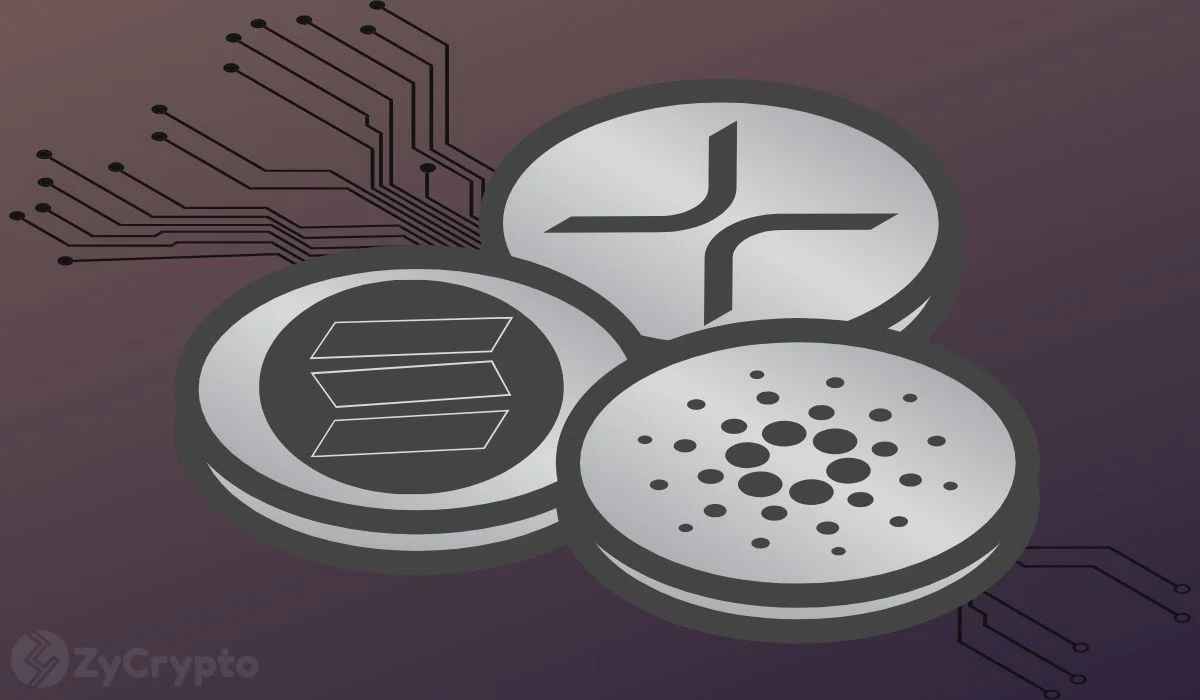
Despite the sluggish price action, the regulatory front is seeing unprecedented activity. Following the landmark approvals of Bitcoin and Ethereum spot ETFs, the industry is now looking toward the next wave of filings. Speculation is mounting that XRP, Cardano (ADA), and even the popular meme-coin Shiba Inu (SHIB) could soon see ETF applications land on the desks of the U.S. Securities and Exchange Commission (SEC).
The momentum for a Solana (SOL) ETF has already begun, with firms like VanEck and 21Shares filing initial S-1 forms. Solana’s headway into Wall Street is seen as a bellwether for the rest of the altcoin market. If a Solana ETF receives the green light, it would signal that the SEC is willing to look beyond the "Big Two" and consider other Layer-1 assets that demonstrate sufficient decentralization and market demand.
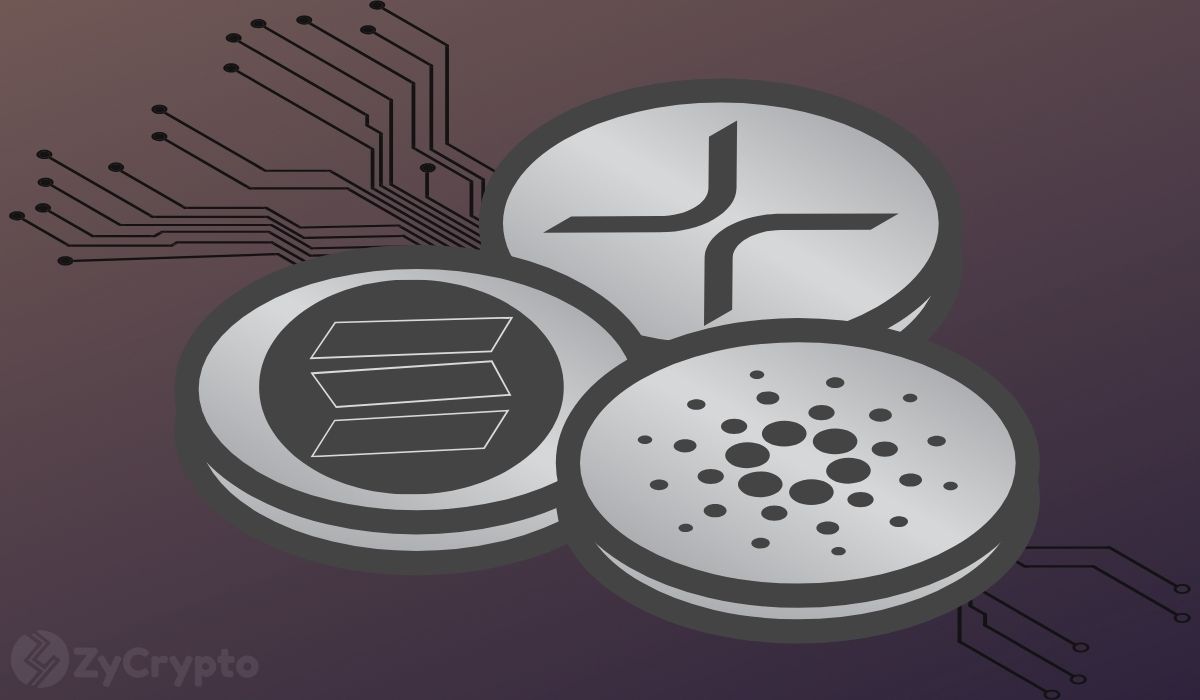
For XRP, the path to an ETF has been cleared significantly by the legal clarity provided in the Ripple vs. SEC case, where a federal judge ruled that XRP is not a security in itself when sold on public exchanges. This legal precedent makes XRP a prime candidate for institutional products. Similarly, Cardano’s long-standing focus on academic rigor and regulatory compliance positions it as a "safe" institutional bet, while the massive community and liquidity of Shiba Inu have led some to suggest it could follow the path of Dogecoin toward institutional recognition.
A Chronology of the Shift (2020–2024)
To understand the current market state, one must look at the timeline of institutional involvement:
- 2020–2021: The Retail Renaissance. Driven by pandemic-era stimulus and the rise of DeFi, altcoins reached record highs. Institutional involvement was limited to "pioneer" firms like MicroStrategy and Square.
- 2022: The Year of Contagion. The collapse of the Terra-Luna ecosystem and the subsequent bankruptcy of FTX led to a massive wipeout of retail wealth. Regulators began a "crackdown" phase, labeling many altcoins as unregistered securities.
- 2023: The Legal Battleground. Ripple achieved a partial victory against the SEC, and Grayscale won its lawsuit to convert its Bitcoin trust into an ETF. These events laid the groundwork for the current institutional era.
- Early 2024: The ETF Breakthrough. The SEC approved spot Bitcoin ETFs in January, followed by Ethereum ETFs in May. This marked the official entry of Wall Street into the crypto spot markets.
- Late 2024: The Infrastructure Focus. The narrative shifted from "crypto as a currency" to "blockchain as a financial backplane," with Solana emerging as a major contender for institutional-grade applications.
Performance Analysis of Leading Assets
The current price action of top-tier assets reflects the broader market’s struggle to find a catalyst. Ethereum, the world’s second-largest cryptocurrency, recently dipped 2.54% to approximately $1,579.21. This decline is attributed to a combination of hawkish signals from central banks—suggesting that interest rates may remain "higher for longer"—and a strong negative correlation with the S&P 500. As traditional equities face pressure, Ethereum, often viewed as a "tech-adjacent" asset, has followed suit.
Binance Coin (BNB) has also faced headwinds, declining 2.57% following a technical breakdown below critical support levels. The asset continues to deal with the aftermath of regulatory settlements and the transition of leadership at the Binance exchange. Meanwhile, XRP is trading at $1.04, down 2.36%. Traders are currently focused on defending the psychological $1.00 support level. The ability of XRP to hold this mark is seen as crucial for maintaining investor confidence in the face of a stagnant broader market.
The Tokenization of Real-World Assets (RWA)
The most significant implication of the current trend is the rise of RWA tokenization. BlackRock’s launch of the BUIDL fund on the Ethereum network is a prime example of this shift. By putting U.S. Treasury bills on a blockchain, BlackRock is demonstrating that the "utility" of crypto lies in its ability to provide 24/7 settlement, transparency, and fractional ownership.
This move has profound implications for altcoins that lack a clear utility or "moat." If Wall Street can use Ethereum or Solana to trade traditional stocks and bonds, the need for thousands of speculative utility tokens diminishes. This "flight to quality" suggests that while the altcoin market may not receive a general bailout, specific networks that provide the best infrastructure for tokenization will likely see sustained institutional inflow.
Broader Impact and Market Outlook
The prolonged stagnation of the altcoin market is testing the conviction of even the most resilient investors. Without a meaningful catalyst—such as a surprise interest rate cut or a breakthrough in regulatory clarity for mid-cap assets—the current trend of Bitcoin dominance is expected to persist.
The "Wall Street-ification" of crypto is a double-edged sword. On one hand, it provides the legitimacy and capital needed for the industry to mature. On the other hand, it threatens to leave behind the "wild west" era of speculative altcoin gains that characterized the 2017 and 2021 cycles. As Solana, XRP, and Cardano prepare for their potential debut on the SEC’s table, the market is entering a phase of "survival of the fittest," where only the networks with genuine institutional utility and robust technical foundations are likely to thrive in the new financial paradigm.
In conclusion, the digital asset market is no longer a monolithic entity. The decoupling of Bitcoin and Ethereum from the rest of the "altcoin pack" is a sign of a maturing market. Investors are now tasked with discerning between speculative relics of the past and the infrastructure-grade protocols that will power the future of global finance. As the SEC evaluates the next wave of ETFs, the results will likely define the trajectory of the crypto industry for the remainder of the decade.