The Uniswap (UNI) token has recently captured significant market attention following two distinct yet interconnected developments: a surge in outflows from the Binance exchange to levels not seen in five years, coinciding with the activation of Uniswap’s highly anticipated v4 fee switch, which has demonstrably spurred fresh on-chain activity. These dual movements suggest a growing confidence among large holders in the decentralized exchange’s long-term prospects, even as the token continues to trade more than 90% below its 2021 peak, hovering near $3.84 during this period. Investors and market analysts are closely monitoring whether this confluence of intensified accumulation and genuine network usage growth signals a durable shift for the leading decentralized finance (DeFi) platform.
Intensified Accumulation: UNI Outflows from Binance Reach Five-Year Peak
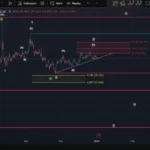
In a notable trend indicating a potential shift in investor behavior, the monthly average of Uniswap’s UNI token outflows from Binance, specifically tracking the ten largest withdrawal transactions, has climbed to levels not witnessed since 2021. This substantial increase in large-scale withdrawals commenced as the UNI token’s price dipped below the critical $2.50 threshold, a price point not touched in half a decade, according to analysis by crypto intelligence firm Darkfost. The analyst highlighted this pattern via a chart tracking significant UNI withdrawal transactions, asserting that it reflects an intensifying accumulation trend among substantial holders.
The phenomenon of large outflows from centralized exchanges like Binance is frequently interpreted by market observers as a strong signal of accumulation. When tokens are moved off exchanges, they are often transferred to self-custody wallets, cold storage solutions, or staked within DeFi protocols, signifying a long-term holding strategy rather than immediate intent to sell. This behavior typically suggests that investors are positioning themselves for future price appreciation or increased utility within the ecosystem, rather than participating in short-term trading.
The data presented by Darkfost illustrated a pronounced correlation between price weakness and increased withdrawal activity. As UNI’s price descended below $2.50, the average outflow surged significantly, exceeding 7,200 UNI per transaction among the top ten withdrawals and continuing its upward trajectory throughout the tracked period leading up to August 2026. Certain single days within this timeframe recorded even more dramatic movements, with the cumulative value of outflows from this cohort of large transactions surpassing notable thresholds, underscoring the aggressive nature of this accumulation phase. This "dip-buying" behavior was consistently observed; outflows from the ten largest wallets rose sharply following every price dip, suggesting a potentially coordinated accumulation strategy among these large holders rather than isolated, sporadic activity.
This pattern is particularly salient given UNI’s current valuation, which remains considerably below its all-time high. The persistent accumulation by these key investors, despite the prolonged bear market conditions for UNI, implies a deep-seated belief in Uniswap’s fundamental value proposition and its future expansion. The withdrawal data, therefore, offers a crucial gauge of long-term confidence that transcends immediate price fluctuations, providing insight into the strategic positioning of significant market participants. This strategic movement of tokens out of readily tradable environments can gradually reduce the available supply on exchanges, potentially contributing to upward price pressure if demand increases. It also indicates that whales are not merely speculating on short-term price movements but are making a calculated bet on the protocol’s sustained growth and the eventual value accrual to its native token.
Uniswap V4 Fee Switch Activation Ignites On-Chain Usage
In parallel with the accumulation trend, Uniswap’s ecosystem experienced a significant operational milestone: the activation of its v4 fee switch. This event, which went live at the end of July 2026, triggered an immediate and robust on-chain response, extending beyond mere speculative price movements. The fee switch, a long-debated governance proposal, allows the Uniswap protocol to collect a portion of trading fees, which can then be directed towards various mechanisms, including buy-and-burn programs, staking rewards, or treasury replenishment. Its activation is a pivotal development for the UNI token’s economics, as it introduces a direct value accrual mechanism for token holders, moving beyond the token’s initial primary function as a governance instrument.
Following the fee switch activation, and the implementation of a buy-and-burn mechanism, Santiment Intelligence reported a noticeable surge in UNI’s price. The token rallied approximately 19%, moving from roughly $3.83 to $4.54 between July 29 and July 31, 2026. While the price subsequently eased to around $4.07, the on-chain data pointed to a more enduring impact than a brief speculative spike. This initial price reaction underscored the market’s anticipation and positive reception of a mechanism designed to enhance the token’s intrinsic value.
Beyond the immediate price action, the activation spurred a significant uptick in genuine network usage. New address creation, a key indicator of fresh user interest and ecosystem expansion, rose sharply during the same two-day window. Data revealed that new addresses climbed to 510 on July 29 and then 582 on July 30. This figure represents roughly double the July baseline, which typically ranged from 250 to 320 new addresses per day, signaling a substantial influx of new participants or renewed engagement from dormant users drawn by the v4 upgrade and its implications.
Network usage, as measured by active addresses, followed a similar impressive trajectory. Active addresses reached 2,341 on July 29 and peaked at 2,457 on July 30. These figures significantly surpassed the typical July norm of 1,300 to 1,700 active addresses daily, marking the month’s strongest period of sustained usage. This surge in active users suggests that the fee switch activation, coupled with other v4 features like customizable "hooks" and the singleton architecture, encouraged existing users to interact more frequently with the protocol and attracted new users to explore its offerings.
Large holders, often referred to as "whales," also demonstrated increased participation directly tied to the v4 developments. Whale transactions, defined as those valued at $100,000 or more, jumped to 142 on July 30, making it the busiest day of the month for such significant movements, with only one other day in July recording comparable activity. This indicates that major players were not merely observing but actively engaging with the protocol, potentially to capitalize on new trading opportunities or to adjust their holdings in anticipation of the fee switch’s long-term effects.
Santiment Intelligence emphasized that the sustained nature of this on-chain activity, even as the price cooled slightly after its initial surge, is a critical distinguishing factor. It suggests that the observed engagement represents lasting adoption and genuine utility-driven usage, rather than merely a brief speculative reaction to the announcement itself. This differentiation is crucial for assessing the long-term health and growth potential of the Uniswap ecosystem, indicating a fundamental strengthening of its user base and operational metrics.
The Broader Context: UNI’s Position and Historical Performance

Despite these recent positive developments, it is essential to contextualize UNI’s current market position. The token’s trading price near $3.84, even after the recent surge, remains more than 90% below its all-time high achieved in 2021. This stark contrast highlights the profound impact of the broader cryptocurrency market’s cycles and the significant correction experienced by many altcoins, including leading DeFi tokens, since the peak of the last bull run.
Uniswap, as the pioneering and dominant decentralized exchange, has long been a cornerstone of the DeFi ecosystem. Launched in 2018, it popularized the Automated Market Maker (AMM) model, enabling peer-to-peer cryptocurrency trading without intermediaries. Its UNI token, distributed via an unprecedented airdrop in 2020, initially served primarily as a governance token, empowering holders to vote on key protocol upgrades and treasury management. However, the lack of a direct value accrual mechanism to token holders, in the form of fees, has been a frequent point of discussion and criticism, especially when compared to competitors that implemented such models earlier.
The 2021 bull market saw UNI’s price soar as DeFi adoption exploded, cementing its status as a blue-chip asset in the decentralized space. However, the subsequent bear market, coupled with increasing competition from other DEXs and Layer 2 solutions, challenged Uniswap to innovate further and refine its tokenomics. The long-awaited v4 upgrade and the activation of the fee switch are direct responses to these market dynamics and community feedback, aiming to enhance the protocol’s sustainability and the UNI token’s economic utility. The v4 iteration itself introduces a "singleton" architecture, consolidating all liquidity pools into a single contract, which promises increased capital efficiency and lower gas costs. Furthermore, "hooks" allow for custom logic to be executed at various points in a trade’s lifecycle, opening doors for advanced features like on-chain limit orders, dynamic fees, and built-in oracles.
The decision by large holders to accumulate UNI at prices significantly below its historical peak, coinciding with the activation of a critical value-accrual mechanism, speaks volumes about their long-term conviction. It suggests a belief that the combination of Uniswap’s enduring market leadership, its continuous innovation (such as the v4 hooks and singleton architecture), and the newfound fee generation capability positions the protocol for a substantial rebound in future market cycles. Investors are likely betting on Uniswap’s ability to maintain its competitive edge and capture a significant share of the growing decentralized trading volume, translating into substantial value for UNI holders through the fee switch. This strategic positioning could allow UNI to eventually reclaim some of its lost ground and reflect its foundational role in the decentralized economy.
Investor Sentiment and Analyst Outlook: A Confluence of Positive Signals
The simultaneous emergence of heightened UNI outflows from centralized exchanges and a surge in on-chain activity post-v4 fee switch has created a compelling narrative for Uniswap’s future. Analysts like Darkfost and Santiment Intelligence, whose observations underpin much of this report, view these trends as more than mere coincidences; they suggest a strategic realignment of market forces around the UNI token.
Darkfost’s analysis of the intensifying accumulation trend highlights a fundamental aspect of market psychology during periods of price weakness. Large, sophisticated investors often capitalize on significant price dips to expand their positions, particularly in assets they deem fundamentally strong but temporarily undervalued. The consistent "dip-buying" behavior, especially when the token fell below $2.50, indicates that these holders perceive the current prices as attractive entry points for long-term investment, suggesting a strong belief in Uniswap’s underlying technology, market dominance, and the potential impact of its recent upgrades. This long-term perspective is crucial for any asset seeking sustained growth beyond speculative pumps.
Santiment Intelligence’s detailed tracking of on-chain metrics provides tangible evidence of the fee switch’s immediate positive impact on network engagement. The dramatic increase in new and active addresses, coupled with elevated whale transaction volumes, illustrates a revitalization of the user base and significant capital flows within the ecosystem. The emphasis on the sustained nature of this activity, even after the initial price surge subsided, is crucial. It differentiates a genuine increase in utility and adoption from speculative bubbles, indicating that the v4 upgrade and the fee switch are driving meaningful, fundamental engagement rather than just fleeting interest. This sustained engagement suggests that users are finding tangible value in the updated protocol.
From an analyst’s perspective, the confluence of these two signals—aggressive accumulation by large holders and a verifiable increase in protocol usage—paints a bullish long-term picture for UNI. It suggests that the market, at least a significant segment of it, is beginning to re-evaluate UNI’s valuation based on its enhanced tokenomics and continued ecosystem growth. The fee switch is perceived as a game-changer, transforming UNI from a pure governance token into one with a direct claim on protocol revenue, thereby bolstering its investment appeal. This re-evaluation could lead to a repricing of UNI as its fundamental value proposition strengthens.
Potential Implications and Future Outlook
The recent developments carry significant implications for Uniswap’s trajectory and the broader DeFi landscape. Firstly, the increased accumulation of UNI off exchanges could lead to a reduction in the circulating supply readily available for trading, potentially exerting upward pressure on the token’s price if demand continues to grow. This shift towards long-term holding strengthens the token’s market structure and reduces its susceptibility to short-term speculative selling, fostering a more stable environment.
Secondly, the successful activation and positive on-chain response to the v4 fee switch establish a powerful precedent. It validates the community’s persistent efforts to introduce value accrual mechanisms and demonstrates the protocol’s ability to evolve its tokenomics effectively. This could inspire other DeFi protocols grappling with similar challenges to consider enhancing their own token utility, potentially leading to a broader trend of tokenomic innovation across the decentralized finance sector, as projects seek to provide more tangible value to their token holders.
For Uniswap itself, the fee switch is poised to significantly impact its competitive positioning. By enabling the protocol to generate revenue directly, it provides resources that can be allocated to further development, security enhancements, liquidity incentives, or even distributed back to token holders. This new economic model could reinforce Uniswap’s dominance as the leading DEX, attracting more liquidity providers and traders by offering a more robust and sustainable ecosystem. The added flexibility of v4 hooks also allows for innovative applications, potentially expanding Uniswap’s use cases beyond traditional spot trading to areas like lending integration or custom derivatives.
Looking ahead, market participants will closely monitor several key metrics. Sustained growth in daily active users and new addresses will be crucial indicators of continued adoption. The volume of fees generated through the v4 switch and how those fees are utilized (e.g., through buy-and-burn, staking, or treasury contributions) will directly influence UNI’s economic value. Furthermore, the overall Total Value Locked (TVL) on Uniswap, alongside its market share relative to competitors, will remain vital gauges of its health and competitive standing in an increasingly crowded DeFi market.
While regulatory scrutiny remains an overarching concern for the entire crypto industry, Uniswap’s continuous innovation and its community’s commitment to decentralization position it uniquely. The successful implementation of v4 and the positive market reaction signal a maturing protocol that is not only resilient but also adaptable to evolving market demands and technological advancements. The confluence of renewed accumulation and enhanced utility paints a picture of a platform poised for a potential resurgence, with its native UNI token now possessing a more robust foundation for long-term value creation. The coming months will be critical in determining if these strong signals translate into a sustained upward trend for Uniswap and its pivotal role in the future of decentralized finance.