The cryptocurrency market is currently navigating a complex transitional phase as the traditional relationship between Bitcoin and the broader altcoin sector undergoes a significant structural shift. Recent data from Alphractal, a prominent cryptocurrency investment data platform, indicates that Bitcoin’s liquidity levels are showing signs of stagnation, even as the premier digital asset maintains its position in the six-figure territory. This stalling of liquidity has coincided with a notable decoupling in price action, where alternative cryptocurrencies—most notably XRP, Cardano (ADA), and Shiba Inu (SHIB)—are beginning to exhibit independent momentum that suggests a departure from Bitcoin’s immediate influence.
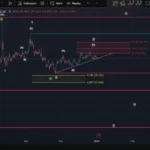
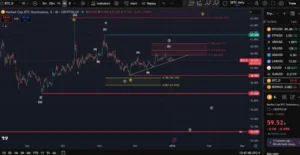
According to the latest market observations, the correlation between Bitcoin and the altcoin market is experiencing a swift and decisive decline. Historically, the cryptocurrency market has moved in a relatively synchronized fashion, with Bitcoin acting as the "tide that lifts all boats." However, the Bitcoin vs. altcoin correlation heatmap now reveals that these assets are increasingly moving in opposite directions. While Bitcoin’s recent rally toward $117,000 captured global headlines, the underlying profitability signals for altcoins have begun to outweigh those of the market leader, signaling a potential rotation of capital that could trigger explosive volatility in the coming weeks.
The Mechanics of Market Decoupling and Liquidity Stagnation
The phenomenon of "decoupling" occurs when the statistical correlation between two assets weakens, allowing one to move independently of the other. For years, Bitcoin dominance (BTC.D) has been the primary metric for gauging market health. When BTC.D rises, it typically indicates that capital is flowing out of riskier altcoins and into the perceived safety of Bitcoin. Conversely, when Bitcoin’s liquidity stalls and its dominance wavers, capital often "bleeds" into high-utility or high-sentiment altcoins.
Alphractal’s analysis highlights that Bitcoin’s liquidity levels have become increasingly brittle. This stagnation suggests that while the price remains high, the depth of the order books is thinning, making the asset more susceptible to sharp, localized price swings. When Bitcoin’s momentum slows, traders often seek higher returns in the altcoin market, where lower market caps allow for more significant percentage gains. The current decline in correlation is particularly concerning for traditional "long" or "short" strategies that rely on market-wide trends. Historical data suggests that such periods of divergence often precede massive liquidation events, as the market recalibrates and volatility spikes across the board.
Analyzing the "Big Three": XRP, Cardano, and Shiba Inu
The focus on XRP, Cardano, and Shiba Inu as prime candidates for "insane price moves" is not coincidental. Each of these assets represents a different sector of the cryptocurrency ecosystem—enterprise utility, decentralized infrastructure, and community-driven meme culture—and each is currently facing unique catalysts.
XRP: The Institutional Powerhouse
XRP has long been at the center of the conversation regarding institutional adoption and regulatory clarity. Following significant legal milestones in the United States, the asset has transitioned from a speculative token to a cornerstone of cross-border payment solutions. The potential launch of Ripple’s stablecoin, RLUSD, and the increasing integration of the XRP Ledger (XRPL) into global banking systems have created a fundamental floor for the asset. As Bitcoin’s liquidity stalls, XRP is positioned to capture institutional interest looking for assets with clear regulatory standing and high transactional utility.
Cardano (ADA): The Governance Evolution
Cardano is currently navigating the "Voltaire" era of its roadmap, focusing on decentralized governance and ecosystem sustainability. With the implementation of the Chang hard fork and the transition to a community-led governance model, ADA has seen a resurgence in developer activity. Unlike many "hype-driven" projects, Cardano’s growth is measured by its Total Value Locked (TVL) in decentralized finance (DeFi) protocols and the increasing number of smart contracts deployed on its network. The decoupling from Bitcoin provides ADA the opportunity to be valued based on its network utility rather than purely on speculative correlation.
Shiba Inu (SHIB): From Meme to Ecosystem
Shiba Inu has evolved significantly from its origins as a meme coin. The development of Shibarium, a Layer-2 scaling solution, has introduced a burn mechanism and a platform for decentralized applications (dApps), transforming SHIB into a functional ecosystem token. Market signals suggest that retail sentiment remains incredibly high for SHIB, and in a market where Bitcoin is consolidating, the "retail FOMO" (fear of missing out) often gravitates toward assets with high social media engagement and low unit prices, leading to the "insane price moves" referenced by analysts.
Current Market Data and Capital Flows
The broader cryptocurrency market cap has recently felt the impact of this shifting dynamic. According to data from CoinMarketCap, the total crypto market capitalization recently recorded a 2.32% decline, bringing the total value to approximately $3.67 trillion. This dip reflects a cooling-off period following a sustained bullish run, but it also masks the internal rotation of capital.
At the time of reporting, Bitcoin is trading at approximately $117,767, showing a minor 0.14% decline over the last hour. While Bitcoin’s hourly performance may seem stagnant, the 7-day gains for many leading altcoins remain largely intact, even as they face mild short-term losses. This resilience in the face of a Bitcoin slowdown is a hallmark of an "altcoin season" precursor. When Bitcoin moves sideways or experiences slight pullbacks, it provides a "stability window" for altcoins to catch up and potentially outperform the market leader.
The Role of Volatility and Liquidity Risks
The warning issued by investment firms regarding mass liquidations is rooted in the nature of "thin" markets. When correlation drops, it often means that liquidity is being fragmented across various assets rather than being concentrated in Bitcoin. For traders using high leverage, this environment is particularly dangerous. A sudden move in either direction can trigger a cascade of liquidations—where "short" sellers are forced to buy back assets or "long" buyers are forced to sell—further exacerbating price swings.

The Alphractal data suggests that we are entering a period where the "average" movement of the market is no longer a reliable indicator for individual tokens. Traders are now forced to look at asset-specific metrics, such as exchange inflows, whale accumulation, and social sentiment, rather than simply following the Bitcoin trendline.
Broader Economic Implications and Institutional Sentiment
The divergence between Bitcoin and altcoins also reflects a maturing investor base. Institutional investors, who were once solely focused on Bitcoin as "digital gold," are now diversifying into Ethereum, XRP, and other top-tier altcoins through various exchange-traded products (ETPs) and institutional-grade custody solutions. This diversification naturally weakens the correlation between BTC and the rest of the market.
Furthermore, the global macroeconomic environment continues to play a pivotal role. As central banks navigate interest rate cycles and inflation targets, the appetite for risk-on assets fluctuates. Bitcoin is increasingly viewed as a macro hedge, similar to gold, while altcoins are viewed more like "tech stocks" or venture capital investments. This distinction is critical to understanding why their price paths are beginning to diverge.
Conclusion and Future Outlook
The cryptocurrency market is at a crossroads. The stalling of Bitcoin’s liquidity at the $117,000 level, combined with the declining correlation between the apex asset and alternative tokens, suggests that the market is preparing for a period of intense, localized volatility. For XRP, Cardano, and Shiba Inu, the current environment provides a unique stage to demonstrate independent value and attract capital that is looking for alternatives to Bitcoin’s consolidation.
While the total market cap dip of 2.32% indicates a temporary cautiousness among investors, the underlying data points to a vibrant and increasingly fragmented market. Investors and traders must now navigate a landscape where Bitcoin’s movements no longer guarantee the direction of the broader market. As the correlation heatmap continues to show a "cooling" of the relationship between BTC and altcoins, the potential for significant price action in the altcoin sector remains high, provided that liquidity remains sufficient to support these moves without triggering catastrophic liquidation events. The coming weeks will likely determine whether this decoupling is a permanent shift in market structure or a temporary anomaly in the ongoing evolution of the digital asset economy.