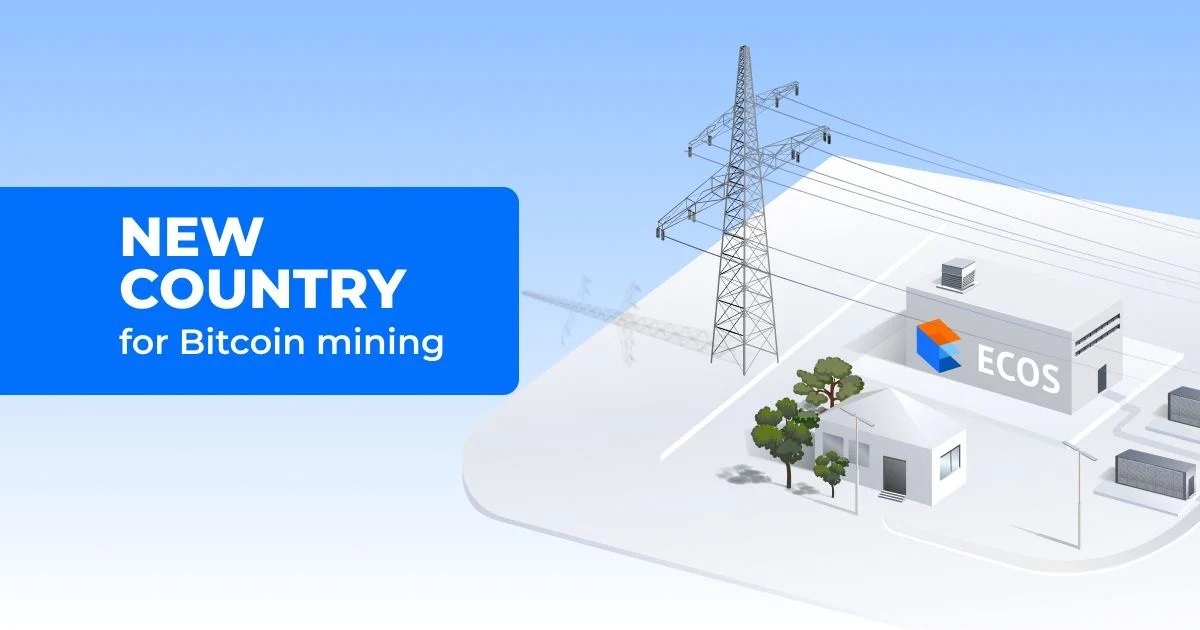
ECOS, a leading international infrastructure provider in the blockchain and cryptocurrency mining sector, has officially inaugurated a new high-capacity data center in Hrazdan, Armenia. This facility, boasting an initial capacity of 60 megawatts (MW), represents a significant milestone in the company’s strategic expansion and the Armenian government’s long-term vision to establish the nation as a premier hub for high-technology and digital asset processing. Situated within a specially designated Free Economic Zone (FEZ), the data center benefits from a comprehensive suite of state-backed incentives designed to attract institutional and retail investors from across the globe.
The launch comes at a pivotal moment for the global cryptocurrency mining industry, which has faced significant volatility due to fluctuating energy prices and evolving regulatory frameworks in traditional mining hubs. By leveraging Armenia’s stable energy grid and a unique legal environment, ECOS is positioning itself to offer some of the most competitive mining conditions currently available on the market. The Hrazdan facility is not merely a localized operation but a core component of an end-to-end ecosystem that integrates equipment procurement, hosting services, and cloud mining through a unified digital platform.
Strategic Foundation and the Armenian Free Economic Zone
The genesis of this project dates back to 2018, when the Armenian government took a proactive stance toward the burgeoning blockchain industry. Recognizing the potential for economic diversification and technological advancement, the government entrusted ECOS with the creation and management of a Free Economic Zone. This FEZ was specifically tailored to foster the development of high technologies, providing a legal and fiscal sanctuary for companies operating within the blockchain and artificial intelligence sectors.
Under the terms of the FEZ, the ECOS data center and its partners are granted unprecedented tax exemptions. These include a 0% rate on corporate income tax, 0% Value Added Tax (VAT), and a total waiver of import and export duties. Furthermore, the zone provides a 0% property and real estate tax guarantee for a period of 25 years. These incentives are designed to maximize the return on capital for investors by significantly lowering the operational overhead typically associated with large-scale mining operations. By removing these fiscal barriers, Armenia has effectively created a competitive advantage over other jurisdictions where tax burdens and regulatory uncertainty often stifle long-term infrastructure investment.
Technical Specifications and Infrastructure Capabilities
The new data center is situated on a 2.2-hectare plot in Hrazdan, an area chosen for its industrial heritage and robust energy infrastructure. The current 60 MW capacity is supported by direct connections to high-voltage power networks, ensuring a stable and redundant supply of electricity. This direct access allows ECOS to claim an uptime of nearly 100%, a critical metric for mining operations where every minute of downtime translates into lost revenue.
The facility is designed to accommodate more than 20,000 mining devices, including the latest generation of Application-Specific Integrated Circuits (ASICs). While the initial launch focuses on 60 MW, the site has been engineered with scalability in mind. ECOS has outlined a roadmap to expand the facility’s capacity by an additional 200 MW, which would place it among the largest mining installations in the region.
Operational security and maintenance are handled by a dedicated on-site team. The infrastructure includes a comprehensive service center, specialized warehouses for hardware storage, and a consistent supply chain for spare parts to minimize repair lead times. The perimeter is monitored 24/7 by armed guards and advanced surveillance systems, providing the physical security necessary for high-value hardware assets.
Environmental and Climatic Advantages
One of the most significant operational challenges in cryptocurrency mining is heat management. The intensive processing power required for proof-of-work mining generates substantial thermal energy, which usually necessitates expensive cooling systems. However, the geographical location of the Hrazdan data center provides a natural solution to this problem.
The region maintains an average annual temperature of approximately 4.8°C (40.6°F). This cool climate allows ECOS to utilize passive and ambient cooling techniques for a significant portion of the year, drastically reducing the electricity consumption required for fans and air conditioning. This environmental factor not only lowers operational costs but also extends the lifespan of the mining hardware by preventing overheating and thermal throttling. Furthermore, the electricity provided to the center is characterized as "clean," drawing from Armenia’s energy mix which includes significant contributions from nuclear and hydroelectric power, aligning the facility with the growing global demand for more sustainable mining practices.
End-to-End Service and the ECOS Ecosystem
ECOS has distinguished itself by offering a "turnkey" solution for mining, catering to a spectrum of clients ranging from individual retail miners to large-scale institutional investors. The company’s end-to-end service model removes the technical barriers to entry that often discourage new participants.
For hosting clients, ECOS manages the entire lifecycle of the mining hardware. This includes the direct purchase of equipment from industry leaders like Bitmain, followed by professional installation, configuration, and ongoing maintenance. Clients who are currently operating in less favorable data centers are also offered migration services to move their existing hardware to the Hrazdan facility.
Transparency and control are facilitated through a proprietary mobile application. This platform allows users to monitor their hardware’s performance, track daily mining outputs, and manage their digital assets in real-time. This level of accessibility reflects a broader trend in the industry toward the "gamification" and democratization of complex financial and technical processes, making passive income through mining more attainable for the general public.
Leadership Perspective and Market Context
Ilya Goldberg, Managing Partner at ECOS, emphasized the company’s journey from conceptualizing the legal framework to the realization of the physical infrastructure. "We have come a long way from legalizing mining in Armenia to launching our own energy infrastructure that is ready for scaling," Goldberg stated. "We want to offer our partners simplicity in everything: from launching your mining business on our data center to daily monitoring of the result in the application without leaving your home. Our bundled product is made to serve both institutional and retail clients from any part of the world."
Goldberg’s comments highlight the shift in the mining sector toward professionalization and "as-a-service" models. As the Bitcoin network undergoes periodic "halving" events—which reduce the block reward for miners—operational efficiency becomes the primary determinant of survival. Low-cost power, high uptime, and tax efficiency are no longer just advantages; they are necessities.
Broader Implications for the Global Mining Landscape
The launch of the Hrazdan facility is a clear indicator of the geographical redistribution of hash rate. Following the 2021 crackdown on mining in China, the industry has sought out jurisdictions that offer both political stability and favorable energy conditions. While the United States and Kazakhstan initially absorbed much of this capacity, regions like the Caucasus are increasingly seen as attractive alternatives due to their strategic locations and supportive governments.
Armenia’s decision to "patronize" the blockchain sector through the FEZ suggests a calculated bet on the future of the digital economy. By providing a 25-year window of tax certainty, the country is positioning itself against the shifting regulatory sands of the West. This stability is particularly relevant as the "crypto winter"—a period of depressed market prices—shows signs of waning. Historically, periods of market recovery are accompanied by increased investment in infrastructure, as miners look to secure their positions before the next bull cycle.
Conclusion and Future Outlook
The ECOS 60 MW data center in Armenia stands as a testament to the synergy between private enterprise and forward-thinking government policy. By addressing the three pillars of mining success—affordable power, favorable regulation, and robust infrastructure—ECOS has created a platform that is well-equipped to navigate the complexities of the modern digital asset market.
As the company looks toward its 200 MW expansion goal, the impact on the local economy is expected to grow, providing high-tech jobs and fostering a local ecosystem of blockchain expertise. For the global community, the Hrazdan facility serves as a blueprint for how nations can integrate decentralized technologies into their national economic strategies, providing a stable and profitable environment for the future of finance. With the infrastructure now operational and the legal protections firmly in place, ECOS is poised to remain a dominant player in the global hash rate market for years to come.