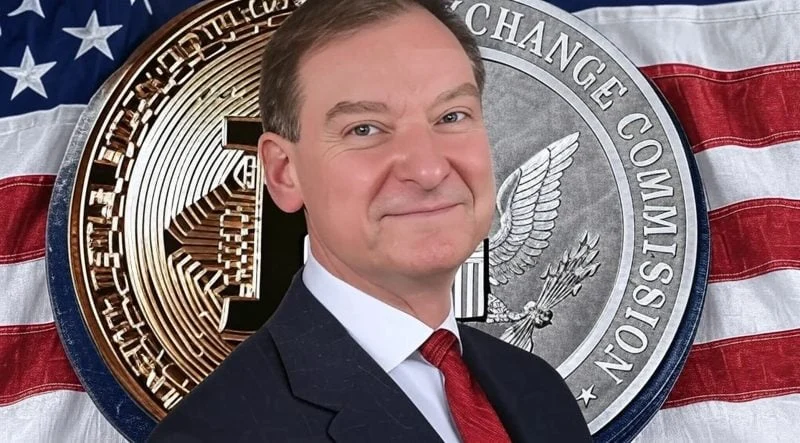
The Securities and Exchange Commission is prepared to initiate its own comprehensive rulemaking process to address fundamental crypto market structure issues should the United States Congress fail to pass the CLARITY Act, SEC Chairman Paul Atkins confirmed in a recent interview with CNBC. While expressing a strong preference for a legislative solution, Atkins underscored that the federal regulator possesses the inherent authority to provide market clarity through the administrative process if the current window for legislative action closes. This strategic positioning comes at a critical juncture for the digital asset industry, as lawmakers grapple with a compressed legislative calendar and competing geopolitical priorities that threaten to sideline major financial reforms until after the upcoming August recess.
The Chairman’s remarks highlight a significant shift in the agency’s posture under his leadership, moving away from the "regulation by enforcement" era toward a framework defined by proactive rule-setting. Atkins noted that while the SEC is "ready, willing, and able" to draft and implement rules covering tokenization, exchange registration, and asset custody, he maintains that a statutory framework remains the most durable way to "future-proof" the industry. The tension between immediate agency action and the long-term stability of federal law now sits at the heart of the debate over how the United States will govern the multi-trillion-dollar digital asset ecosystem.
The Legislative Standoff and the Senate Calendar
The CLARITY Act—formally known as the Creating Legal Accountability for Regulated Instruments and Technology Act—was designed to be the definitive solution to the jurisdictional disputes between the SEC and the Commodity Futures Trading Commission (CFTC). However, the momentum for the bill has slowed significantly in the Senate. According to recent legislative updates, Senate leadership has prioritized a robust Russia sanctions package and the confirmation of several key presidential nominees, effectively pushing crypto-related debates to the periphery of the current session.
The legislative clock is a primary concern for industry advocates. With the August recess approaching, the number of "legislative days" available for floor debate and amendment processes is dwindling. If the CLARITY Act does not see significant movement before the break, its prospects for passage in 2026 become increasingly slim, potentially pushing the issue into a new session or leaving it to the whims of the next administration’s priorities.
Chairman Atkins acknowledged these headwinds during his CNBC appearance, stating that the agency is providing "technical assistance" to lawmakers to resolve lingering questions. This assistance typically involves SEC staff reviewing bill text to ensure it does not create unintended loopholes or conflict with existing securities laws. Despite this cooperation, the political reality of a divided Senate means that even non-partisan technical fixes may not be enough to overcome the current logjam.
The Push for Statutory Certainty versus Administrative Rulemaking
At the core of Chairman Atkins’ argument is the distinction between agency rules and federal statutes. Under the Administrative Procedure Act (APA), the SEC can propose, notice, and adopt rules that interpret existing laws, such as the Securities Act of 1933 and the Securities Exchange Act of 1934. However, these rules are often subject to legal challenges and can be overturned by subsequent administrations or struck down by federal courts.
"Ultimately, statute is the way to future-proof something," Atkins emphasized. He argued that a law passed by Congress and signed by the President provides a level of permanence that agency-level rulemaking cannot match. This "statutory certainty" is what institutional investors and large-scale crypto enterprises have long demanded to justify the capital expenditures required to build compliant infrastructure in the United States.
However, the SEC’s "Plan B"—using its own rulemaking authority—would involve a multi-step process:
- Proposal Phase: The SEC would release a draft of the new rules for public comment.
- Comment Period: Stakeholders, including crypto exchanges, privacy advocates, and traditional financial institutions, would provide feedback.
- Review and Revision: SEC staff would analyze the comments and adjust the rules.
- Final Vote: The Commission would vote to adopt the final rules.
While this path is faster than the legislative process in a gridlocked Congress, it remains vulnerable to the "Major Questions Doctrine," a legal principle recently strengthened by the Supreme Court that limits the power of federal agencies to make decisions of "vast economic and political significance" without clear congressional authorization. This legal reality is likely why Atkins continues to stress that the CLARITY Act is the "preferred path."
Unresolved Ethics Provisions and the Trump Factor
A significant complication in the current legislative negotiations involves government ethics provisions tied to President Donald Trump’s personal and business interests in the crypto sector. As the former President has become more vocal in his support for the industry, including his involvement in projects like World Liberty Financial, some lawmakers have demanded stricter conflict-of-interest safeguards within any new crypto legislation.
These ethics disputes have become a partisan flashpoint. Democratic senators have expressed concerns that a loosely regulated crypto market could provide unique avenues for influence-peddling or self-dealing by high-ranking officials. Conversely, Republican supporters of the CLARITY Act argue that these provisions are being used as "poison pills" to stall a bill that otherwise has broad bipartisan support.
The impasse over these provisions is a major reason why the bill has been sidelined in favor of less controversial matters like sanctions. Without a compromise on how to handle the intersection of presidential business interests and digital asset regulation, the CLARITY Act may remain stuck in committee, regardless of the SEC’s willingness to provide technical support.
Implications of the GENIUS Act and the SEC-CFTC Relationship
If the CLARITY Act fails to materialize, the regulatory focus is expected to shift toward the implementation of the GENIUS Act and coordinated rulemaking between the SEC and the CFTC. The GENIUS Act (Guiding Excellence and Nurturing Innovation for Utilization of Space/Systems) is often viewed as a complementary piece of legislation that focuses on broader technological innovation, but it could serve as a secondary vehicle for crypto-adjacent policy.
Furthermore, a failure of the CLARITY Act would force Chairman Atkins to work more closely with the CFTC leadership to draw "lines in the sand" via joint memorandums of understanding (MOUs). Historically, the two agencies have clashed over whether certain tokens are securities or commodities. Under Atkins, the SEC has signaled a greater willingness to acknowledge that many digital assets may fall outside the SEC’s traditional purview, provided there is a robust framework elsewhere to protect investors.
The industry is also watching how the SEC handles the "Howey Test"—the legal standard used to determine if an asset is an investment contract—under this proposed rulemaking. If the SEC uses its authority to modernize the interpretation of Howey for the digital age, it could provide the "clarity" the industry seeks without needing a full act of Congress. However, such a move would almost certainly be met with litigation from groups who believe the SEC is overstepping its bounds.
Chronology of the 2026 Crypto Regulatory Push
The current situation is the result of a multi-year effort to bring the digital asset market into the regulatory fold. To understand the stakes of Atkins’ recent comments, one must look at the timeline of events leading up to the current impasse:
- January 2026: Paul Atkins is sworn in as SEC Chairman, promising a "new era" of transparency and cooperation with the crypto industry.
- February 2026: The CLARITY Act is introduced in the House with strong bipartisan backing, aiming to provide a comprehensive taxonomy for digital assets.
- March 2026: The House Financial Services Committee passes the bill, sending it to the Senate.
- April – May 2026: The SEC begins a series of public roundtables on tokenization and market structure, signaling that it is preparing for either a legislative or administrative shift.
- June 2026: Senate negotiations hit a snag over the aforementioned ethics provisions and the prioritization of foreign policy spending.
- July 2026: Chairman Atkins goes on CNBC to issue a "call to action" for Congress, while simultaneously asserting the SEC’s readiness to act independently.
Market Reaction and Economic Context
The digital asset market has reacted with cautious optimism to Atkins’ comments. While the preference for a federal statute is clear, the assurance that the SEC will not return to a state of "regulatory stasis" provides some comfort to venture capitalists and entrepreneurs. Market analysts suggest that "agency-led clarity" is better than no clarity at all, even if it carries a higher risk of being challenged in court.
Supporting data from the first half of 2026 shows that crypto-related investment in the U.S. has remained stagnant compared to the European Union, where the Markets in Crypto-Assets (MiCA) regulation has already provided a clear framework. Industry leaders argue that the U.S. is losing its competitive edge to jurisdictions that offer statutory certainty. This economic pressure is a key driver behind Atkins’ urgency; as a former commissioner with a deep understanding of market mechanics, he is keenly aware that capital flows to where the rules are most predictable.
Conclusion: A Pivot Point for American Crypto Policy
The SEC’s readiness to move forward with its own rules represents a "fail-safe" for the American digital asset industry. While Chairman Paul Atkins continues to champion the CLARITY Act as the gold standard for regulatory "future-proofing," he has made it clear that the agency will not let the industry languish in a legal vacuum if Congress remains paralyzed.
The coming months will be decisive. If the Senate cannot find a path forward on the CLARITY Act before the August recess, the focus will shift entirely to the SEC’s headquarters in Washington D.C. The industry will then transition from lobbying lawmakers to participating in the rigorous, and often contentious, administrative rulemaking process. Regardless of the path taken—legislative or administrative—the era of ambiguous enforcement appears to be drawing to a close, replaced by a concerted effort to define the rules of the road for the next generation of financial technology.