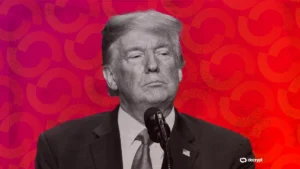
The cryptocurrency market experienced a notable bout of volatility at the commencement of the week, a reaction seemingly tied to a series of pronouncements from former U.S. President Donald Trump regarding ongoing diplomatic efforts with Iran. Trump’s public statements, disseminated through his social media platform Truth Social, have historically been closely watched for their potential to influence global markets, and this instance proved no different, with digital assets like Bitcoin and Ethereum exhibiting price fluctuations.
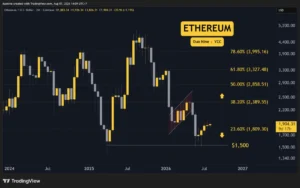
On Monday, the market initially responded positively to Trump’s claims of progress in peace talks with Iran. Bitcoin (BTC) saw an uptick of 0.8%, while Ethereum (ETH) experienced a more significant gain of 2.5%. However, this upward momentum proved short-lived, as both cryptocurrencies reversed their gains later in the day. By the time of publication, Bitcoin was trading at approximately $67,749, and Ethereum was priced at $2,073, indicating a net decline from the earlier highs. This pattern of initial positive reaction followed by a retreat is a common characteristic of markets sensitive to geopolitical developments, where sentiment can shift rapidly based on evolving narratives.
Escalating Rhetoric and a Stark Ultimatum
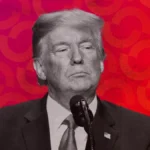
The catalyst for the market’s initial reaction was a post by Donald Trump on Truth Social, which detailed purported progress in discussions with a "NEW, AND MORE REASONABLE, REGIME" aimed at ending U.S. military operations in Iran. However, the message was not solely one of diplomacy; it was underscored by a stark and aggressive ultimatum.
Trump’s statement read, in part: "The United States of America is in serious discussions with A NEW, AND MORE REASONABLE, REGIME to end our Military Operations in Iran. Great progress has been made but, if for any reason a deal is not shortly reached, which it probably will be, and if the Hormuz Strait is not immediately ‘Open for Business,’ we will conclude our lovely ‘stay’ in Iran by blowing up and completely obliterating all of their Electric Generating Plants, Oil Wells and Kharg Island (and possibly all desalinization plants!), which we have purposefully not yet ‘touched.’"
This dual message of potential de-escalation coupled with the threat of severe military action created an environment of heightened uncertainty. Such pronouncements, particularly from a figure with a history of enacting significant policy shifts, can have ripple effects across various asset classes, including cryptocurrencies, which are often perceived as leading indicators of broader market sentiment due to their inherent volatility and global accessibility.
Historical Context: The U.S. and Iran Relationship
The geopolitical landscape between the United States and Iran has been fraught with tension for decades, marked by a complex history of diplomatic breakdowns, sanctions, and military standoffs. The U.S. withdrew from the Joint Comprehensive Plan of Action (JCPOA), commonly known as the Iran nuclear deal, in 2018 under the Trump administration, reimposing stringent economic sanctions. This action significantly impacted Iran’s economy and intensified regional instability.
The Strait of Hormuz, a vital chokepoint for global oil shipments, has been a recurring flashpoint. Iran has, at times, threatened to disrupt shipping in the strait, and the U.S. has maintained a significant naval presence to ensure freedom of navigation. Any perceived threat to this waterway or to Iran’s energy infrastructure invariably raises concerns about global energy supply and, consequently, global economic stability.
Trump’s recent statements echo a familiar pattern of his foreign policy approach, characterized by a willingness to engage in direct communication, often via social media, and a propensity for employing strong, often confrontational, language. The reference to a "NEW, AND MORE REASONABLE, REGIME" suggests a potential shift in the diplomatic interlocutor or a perceived change in the Iranian leadership’s willingness to negotiate, though the specifics remain unclear.
Previous Signals and Iranian Rebuttals
This is not the first instance in recent times where Trump has alluded to diplomatic breakthroughs with Iran. Last week, reports indicated that he had previously "teased" potential progress in peace talks. However, these claims were met with skepticism and outright rejection by some Iranian officials.
Mohammad Bagher Ghalibaf, the speaker of the Iranian Parliament, publicly addressed the dynamics of market manipulation and the dissemination of information surrounding the conflict. In a statement posted on X (formerly Twitter) on Sunday, Ghalibaf issued a warning to the market.
"Heads-up: Pre-market so-called ‘news’ or ‘Truth’ is often just a setup for profit-taking. Basically, it’s a reverse indicator. Do the opposite: If they pump it, short it. If they dump it, go long. See something tomorrow? You know the drill," Ghalibaf stated. This sentiment from a high-ranking Iranian official suggests a perception that external narratives, potentially including those from the U.S., are being used to influence market behavior for financial gain, possibly by external actors or those seeking to profit from volatility. Ghalibaf’s assertion that such “news” often serves as a “reverse indicator” implies a belief that the true market direction is often the opposite of what is initially presented.
Cryptocurrency Market Dynamics: Volatility and Geopolitics
The correlation between geopolitical events and cryptocurrency price movements has become increasingly evident. While often touted as a decentralized and independent asset class, cryptocurrencies are deeply integrated into the global financial system and are susceptible to macroeconomic trends and investor sentiment.
- Safe Haven Assets vs. Risk-On Assets: In times of geopolitical uncertainty, traditional safe-haven assets like gold often see increased demand. Conversely, riskier assets, which can include cryptocurrencies for some investors, may experience sell-offs as capital flows into more stable havens. However, the narrative around Bitcoin and other cryptocurrencies is evolving. Some investors view Bitcoin as a potential hedge against inflation and systemic risk, akin to digital gold, while others still classify it as a high-risk, speculative asset.
- Algorithmic Trading and Sentiment Analysis: The rapid dissemination of news and the use of sophisticated trading algorithms mean that market reactions can be instantaneous. Sentiment analysis tools can detect keywords and trends in public statements, triggering automated buy or sell orders. Trump’s pronouncements, particularly those with strong emotional or threatening language, are prime candidates for triggering such automated responses.
- Impact on Emerging Markets: For countries with less stable fiat currencies or those heavily reliant on international trade and energy, geopolitical instability can lead to capital flight. In such scenarios, investors may seek alternative stores of value, which can include cryptocurrencies, though this is a complex and often debated aspect of the crypto market.
Broader Implications and Future Outlook
The events of the past week highlight the intricate interplay between international diplomacy, national security, and financial markets, including the burgeoning digital asset space.
- Regulatory Scrutiny: Increased volatility in crypto markets, particularly when linked to geopolitical events, can attract the attention of regulators worldwide. Concerns about market manipulation and the potential for illicit activities are often amplified during periods of heightened uncertainty.
- Investor Caution: The unpredictability of such geopolitical pronouncements necessitates a high degree of caution among investors. The rapid shifts in market sentiment underscore the importance of thorough due diligence, risk management, and a long-term investment perspective, rather than reacting impulsively to short-term news cycles.
- The Role of Information: The differing interpretations and official responses to Trump’s statements from Iranian officials underscore the challenges in navigating complex international relations. The propagation of information, whether accurate or not, can have tangible economic consequences. The warning from the Iranian Parliament speaker serves as a reminder that narratives can be strategically employed, and discerning factual developments from potential manipulation is crucial.
As the situation between the U.S. and Iran continues to evolve, the cryptocurrency market will likely remain sensitive to any further developments. The market’s reaction to Trump’s latest statements serves as a clear indicator that in the interconnected global economy, even pronouncements on foreign policy can have immediate and measurable impacts on digital asset valuations, reflecting the ongoing maturation and integration of cryptocurrencies into the broader financial landscape. The inherent volatility of cryptocurrencies, combined with the unpredictable nature of international relations, creates a dynamic environment where market participants must remain vigilant and adaptable.
Disclaimer: The opinions expressed in this article are for informational purposes only and do not constitute investment advice. Investors should conduct their own thorough due diligence before making any investment decisions, especially in high-risk assets like cryptocurrencies. Any trading or investment decisions are made at the sole risk of the individual.