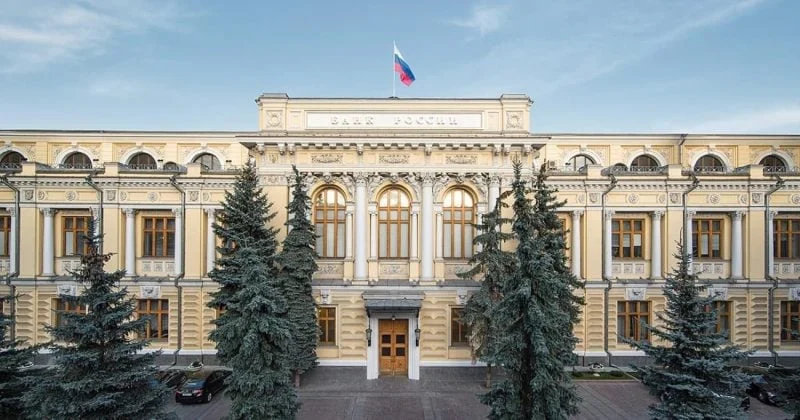
The Bank of Russia has formally introduced an extensive package of draft regulations designed to integrate cryptocurrency trading into the nation’s organized financial framework and establish a robust oversight mechanism for the burgeoning digital asset market. This move represents a significant pivot in the central bank’s approach to digital currencies, shifting from a posture of historical skepticism toward a structured, state-monitored ecosystem. The proposed regulations aim to provide the necessary legal and technical infrastructure for digital depositories, exchange operators, and clearinghouses, effectively bridging the gap between traditional finance and decentralized technologies within the Russian jurisdiction.
According to the official announcement released by the regulator, the proposed amendments focus on organized trading regulations that would bring both cryptocurrencies and "digital rights"—a legal term used in Russian law to encompass various digital tokens and assets—under the direct supervision of the central bank. This regulatory package is intended to operationalize the broader legislative mandates recently passed by the State Duma, ensuring that the market functions with transparency, liquidity, and security comparable to established securities markets.
A New Framework for Organized Digital Asset Trading
At the heart of the Bank of Russia’s proposal is the requirement for trading platforms to adopt standardized methodologies for price discovery. Under the draft rules, licensed exchanges and trading systems will be tasked with calculating market prices and weighted-average prices for digital assets. This data must be disclosed to the public and reported directly to the Bank of Russia. Such a move is designed to mitigate price manipulation and provide a reliable benchmark for investors and corporate entities engaging in digital asset transactions.
Furthermore, the regulator has introduced specific procedures for the suspension of trading. Similar to the "circuit breakers" seen in traditional stock markets, these procedures will allow the regulator or the exchange operator to halt trading during periods of extreme volatility or when suspicious activity is detected. This mechanism is viewed as a critical safeguard for maintaining financial stability as the country begins to experiment with large-scale digital asset integration.
The draft also outlines stringent standards for recordkeeping, customer information management, and access controls. Trading platforms will be required to maintain comprehensive logs of all transactions and implement rigorous "Know Your Customer" (KYC) and "Anti-Money Laundering" (AML) protocols. These measures are intended to ensure that the digital asset market does not become a conduit for illicit financial flows, a concern that has historically driven the central bank’s cautious stance.
The Role and Capitalization of Digital Depositories
Perhaps the most significant structural innovation in the draft regulations is the creation of "digital depositories." These entities will serve as a new category of regulated financial institutions responsible for the custody and recording of ownership rights for cryptocurrencies and digital rights. The Bank of Russia intends for these depositories to function under principles similar to those governing conventional securities depositories, providing a centralized and legally recognized ledger of digital asset holdings.
To ensure the financial resilience of these new institutions, the central bank has proposed tiered minimum equity requirements. The capital mandates are determined by the complexity and risk profile of the depository’s business activities:
- Standard Digital Depositories: Entities responsible for basic recording of digital rights and cryptocurrency ownership will be required to maintain a minimum equity of 50 million rubles (approximately $550,000).
- Advanced Infrastructure Operators: Entities involved in more complex operations, such as those interacting with public blockchains or managing post-trade settlement processes, must maintain a minimum equity of 250 million rubles (approximately $2.7 million).
The central bank has specified that this equity must be composed of highly liquid, high-credit-quality assets. These requirements are mirrored for electronic platform operators responsible for the settlement of digital financial asset (DFA) transactions. By setting these capital bars, the regulator aims to ensure that only well-capitalized and professionally managed firms can act as the backbone of the digital economy, thereby protecting participants from the insolvency of service providers.
Chronology of Russia’s Path to Crypto Regulation
The introduction of these draft regulations is the culmination of years of internal debate between different branches of the Russian government. The timeline below illustrates the evolution of Russia’s digital asset policy:
- January 2022: The Bank of Russia releases a report proposing a total ban on the use, mining, and trading of cryptocurrencies, citing risks to financial stability and the sovereign ruble.
- February 2022: The Ministry of Finance counters with a proposal to regulate rather than ban cryptocurrencies, arguing that integration into the financial system would allow for taxation and oversight.
- July 2022: President Vladimir Putin signs a law banning the use of digital assets as a means of payment for goods and services within Russia, though holding and trading remain in a legal gray area.
- Late 2023: Under the pressure of international sanctions and the need for alternative cross-border payment mechanisms, the central bank begins to soften its stance, exploring the use of crypto for international trade.
- August 2024: The State Duma passes a landmark bill establishing a legal framework for digital asset trading and mining. The law introduces "Experimental Legal Regimes" (ELR) to test crypto payments in cross-border transactions.
- September 2024: The Bank of Russia unveils the current draft regulations to provide the technical and institutional details required to implement the August legislation.
- September 2026: Most provisions of the new regulatory framework are scheduled to take effect.
- July 2027: Full compliance with the new regulatory standards becomes mandatory for all market participants.
Legislative Foundations and the Cross-Border Imperative
The draft regulations are designed to support the "On the Regulation of Digital Currency" law passed earlier this month. This legislation serves as the overarching "Constitution" for the Russian crypto market, while the central bank’s new rules act as the "Bylaws" for day-to-day operations.
A critical component of this legal structure is the distinction between domestic and international use. While the law maintains a strict ban on using cryptocurrencies as a means of payment for coffee, groceries, or domestic services within Russia, it explicitly permits their use for cross-border commercial transactions. This "dual-track" approach is a pragmatic response to the geopolitical climate. By allowing Russian exporters and importers to settle contracts in digital assets, the government hopes to circumvent the traditional SWIFT banking system, which has become increasingly inaccessible due to Western sanctions.
The legislation also establishes a licensing regime for crypto service providers, including exchanges, brokers, and custodians. Only entities that meet the Bank of Russia’s rigorous standards—including the aforementioned capital requirements—will be granted licenses to operate. This effectively centralizes the market, moving it away from peer-to-peer, unregulated platforms toward a state-sanctioned financial infrastructure.
Analysis of Economic Implications and Market Impact
The shift toward a regulated digital asset market in Russia carries several profound implications for both the domestic economy and the global crypto landscape.
1. Institutionalization of the Market: By creating a clear legal path for digital asset custody and trading, the Bank of Russia is inviting traditional financial institutions to enter the space. Sberbank, VTB, and other major Russian banks have already expressed interest in issuing their own digital financial assets. The new regulations provide the "rules of the road" that these institutions require to manage risk and comply with fiduciary duties.
2. Impact on the Ruble and Monetary Policy: The central bank remains committed to protecting the ruble’s status as the sole legal tender within Russia. The domestic payment ban is central to this goal. However, by regulating crypto exchanges, the bank can better monitor the conversion of rubles into digital assets, providing the regulator with a clearer picture of capital outflows and currency stability.
3. Technological Sovereignty: The emphasis on digital depositories and regulated platforms suggests a desire to build a "sovereign" digital infrastructure. While the regulations mention public blockchains, there is a clear preference for controlled, private, or "hybrid" systems that allow for regulatory oversight. This aligns with Russia’s broader strategy of developing its own internal tech stacks to reduce dependency on foreign platforms.
4. Mitigation of Fraud and Risk: The scheduled introduction of fraud prevention measures in late 2027 indicates that the regulator is taking a long-term view of consumer protection. By standardizing price calculations and requiring the disclosure of trading data, the Bank of Russia aims to reduce the "wild west" nature of crypto trading, potentially attracting more conservative retail and institutional investors.
Reactions and Public Consultation
The Bank of Russia has opened these draft regulations for public consultation, a standard part of the regulatory impact assessment process. This allows industry stakeholders, including existing crypto platforms and traditional financial firms, to provide feedback on the feasibility of the capital requirements and technical standards.
Initial reactions from the Russian fintech community have been mixed. While many welcome the legal clarity, some smaller startups have expressed concern that the 50 million to 250 million ruble equity requirements may create a barrier to entry, favoring established banking giants over innovative newcomers. Conversely, traditional financial analysts have praised the central bank for its cautious but methodical approach, noting that the 2026-2027 timeline provides ample room for the market to adjust.
As Russia moves toward the implementation of this framework, it joins a growing list of nations—including those in the European Union under the MiCA framework—that are seeking to bring digital assets into the fold of the regulated financial system. However, Russia’s unique focus on cross-border utility as a tool of economic statecraft sets its regulatory journey apart, making it a critical case study for the intersection of finance, technology, and geopolitics.