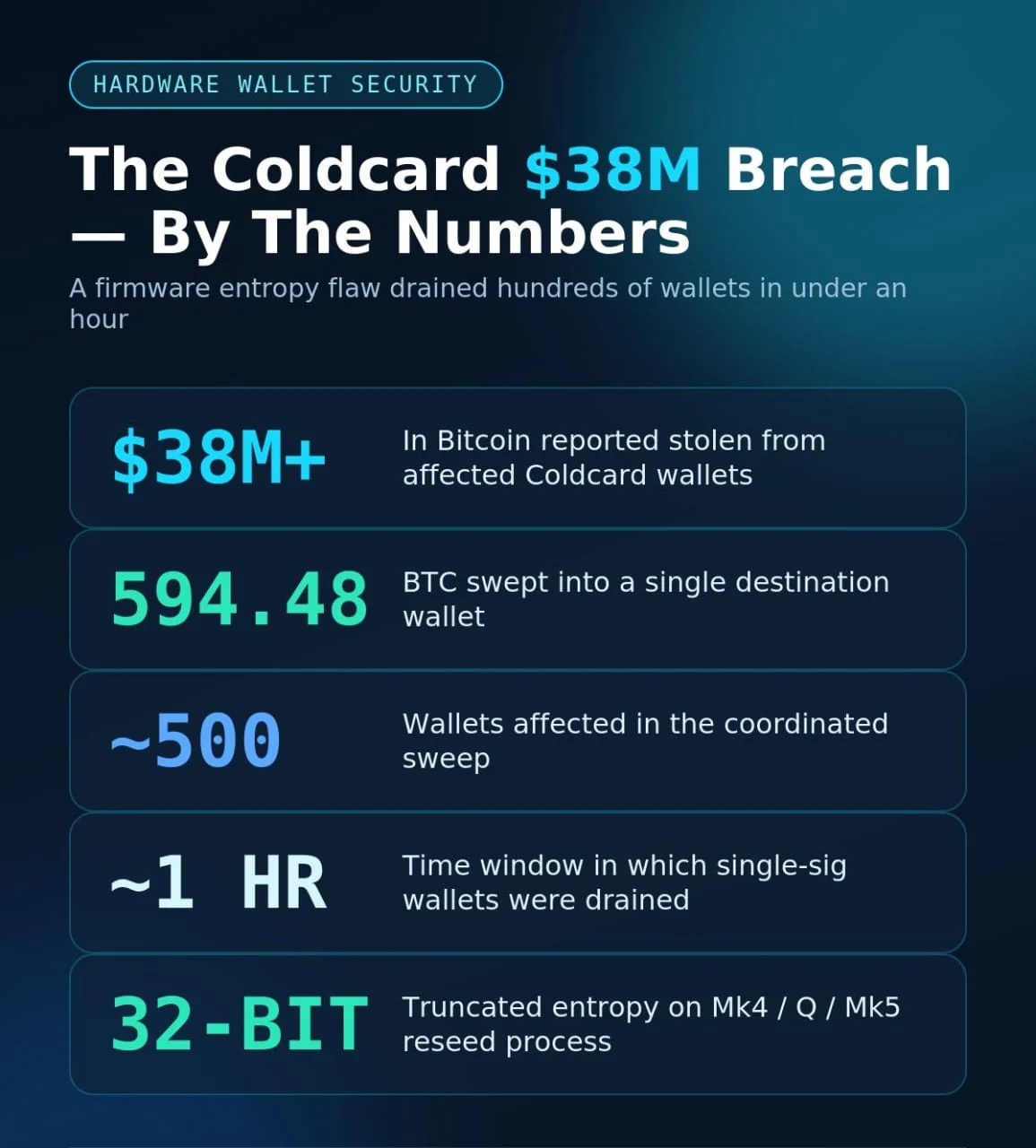
The cryptocurrency self-custody landscape was shaken recently as news of a significant exploit targeting Coldcard hardware wallets surfaced, leading to the reported theft of over $38 million in Bitcoin. This incident triggered an unprecedented, near-simultaneous wave of public statements from competing hardware wallet manufacturers – including industry giants like Ledger, Trezor, Bitkey, Jade, and Tangem – all rushing to reassure their user bases that their devices remained unaffected. This swift and unified response from an otherwise competitive industry underscores the gravity of the exploit and its potential ramifications for trust in hardware-based cryptocurrency security.
The Immediate Industry Response: A United Front Amidst Crisis
In the hours following the initial reports of the Coldcard vulnerability and subsequent fund drains, the competitive nature of the hardware wallet market temporarily gave way to a collective effort to maintain user confidence in the broader self-custody ecosystem. Companies that rarely coordinate publicly on anything beyond interoperability standards moved with remarkable speed to distance themselves from the specific failure.
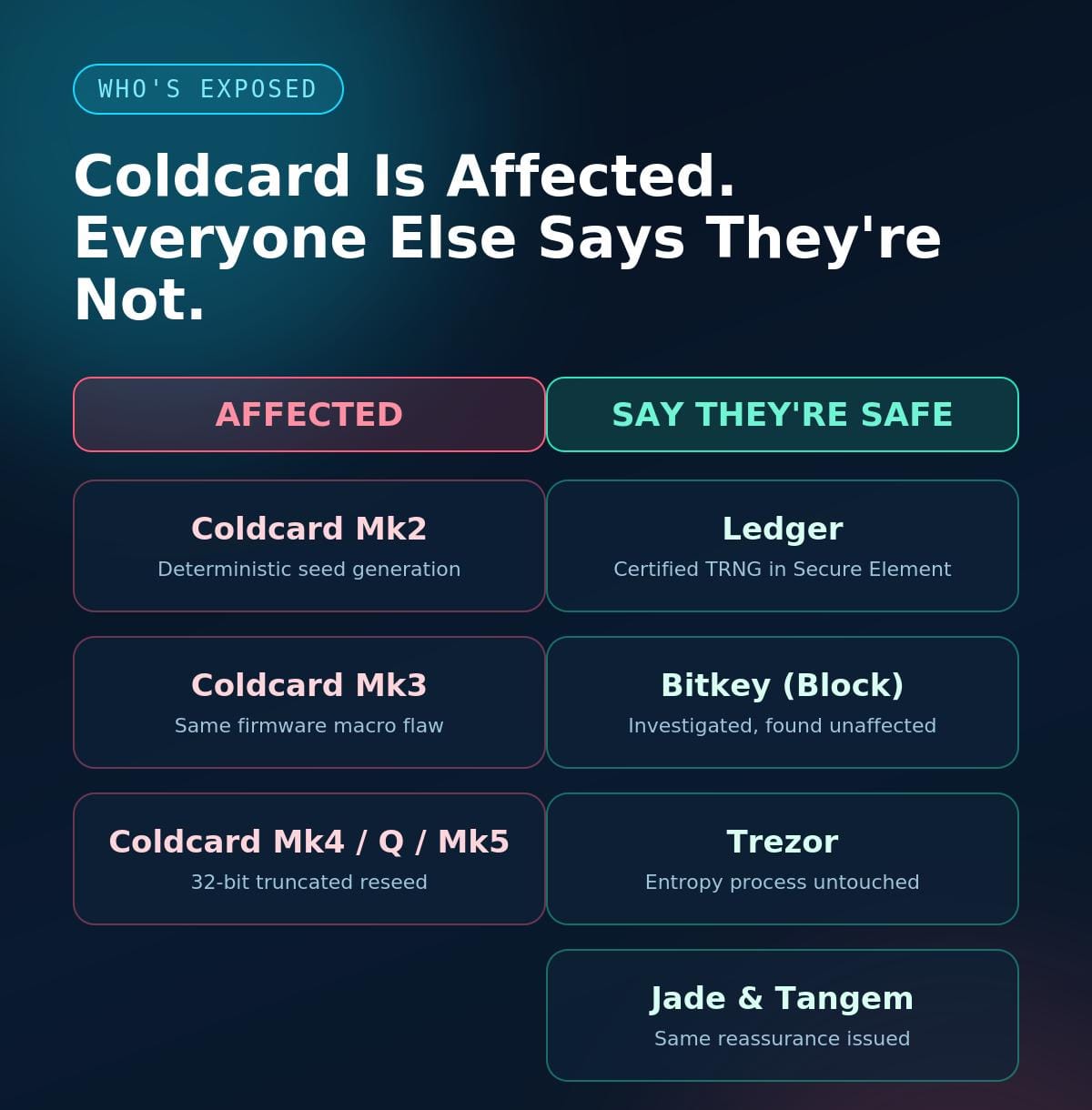
Ledger, a market leader, issued a plain statement confirming it was "not affected by the recently published Coldcard Mk3 advisory." The company emphasized its robust security architecture, specifically pointing to its certified True Random Number Generator (TRNG) built directly into its Secure Element chip. Ledger asserted that this TRNG reliably generates the full 256 bits of entropy required for every 24-word recovery phrase, a critical component for cryptographic security.
Tangem quickly followed suit, publishing a similar reassurance to its users, highlighting its own distinct approach to key generation and security. Trezor, another prominent player in the hardware wallet space, echoed these sentiments across its official channels, as did Jade and Bitkey (Block’s hardware wallet offering). Each company meticulously asserted that their respective entropy generation processes were untouched by the specific flaw that afflicted Coldcard, seeking to quell any potential panic among their user communities.
This rapid, coordinated response, while not a direct collaboration, served as a powerful indicator of how seriously the industry views any breach of trust in hardware wallet security. The unspoken fear was clear: if one major brand’s foundational security mechanism is compromised, it could cast a shadow over the entire sector, leading users to question the very premise of self-custody. By quickly clarifying their unaffected status, these manufacturers aimed to insulate their brands and, by extension, the concept of hardware-secured crypto assets, from the fallout of the Coldcard incident. However, this wave of reassurances also came with a subtle caveat. At the time of their initial statements, these companies were largely relying on their existing internal audits and prior security assessments, rather than fresh, independent verification specifically triggered by the Coldcard exploit. While understandable given the urgency, it highlights the continuous need for rigorous, ongoing security validation in this rapidly evolving threat landscape.
The Coldcard Exploit: Unpacking the $38 Million Heist
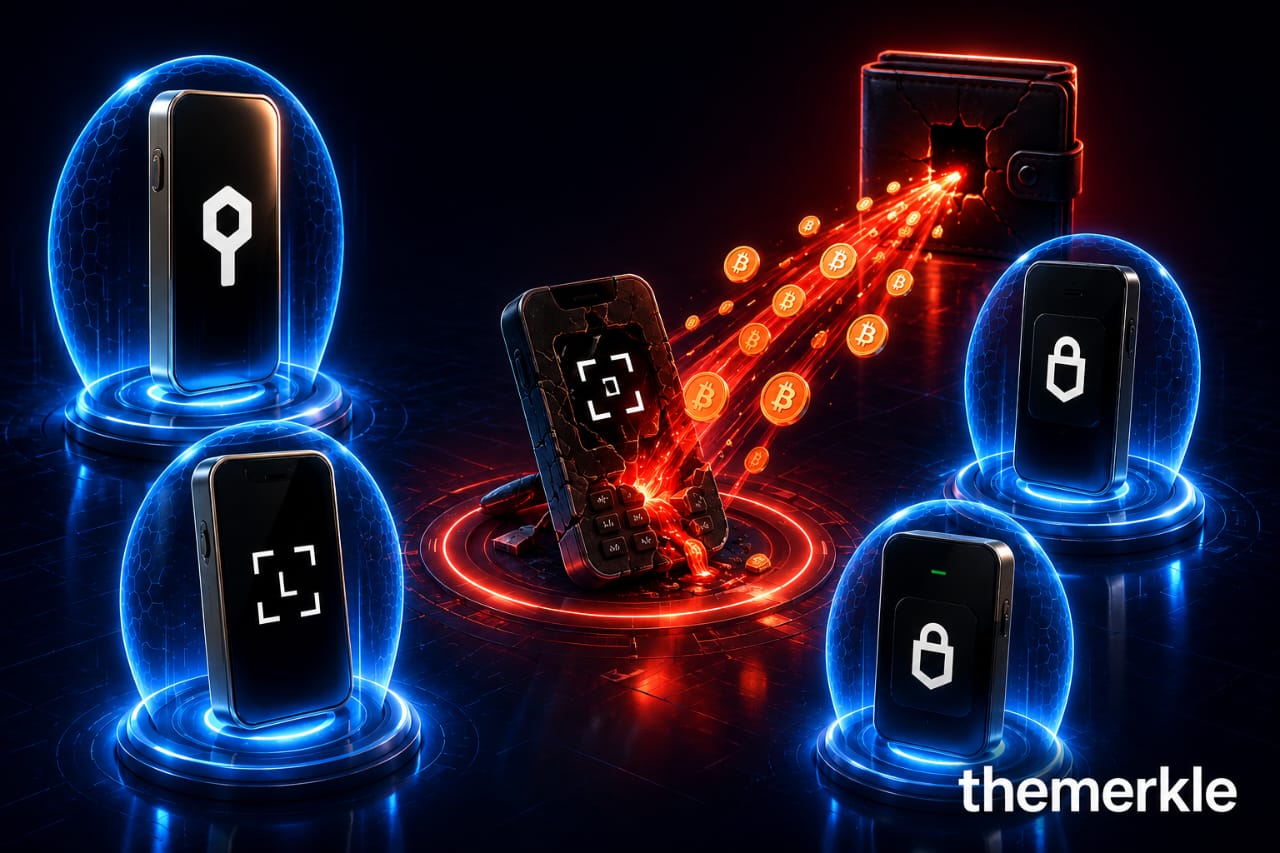
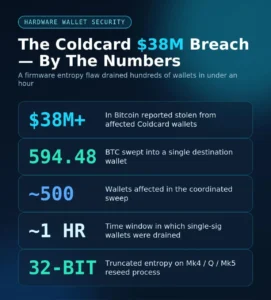
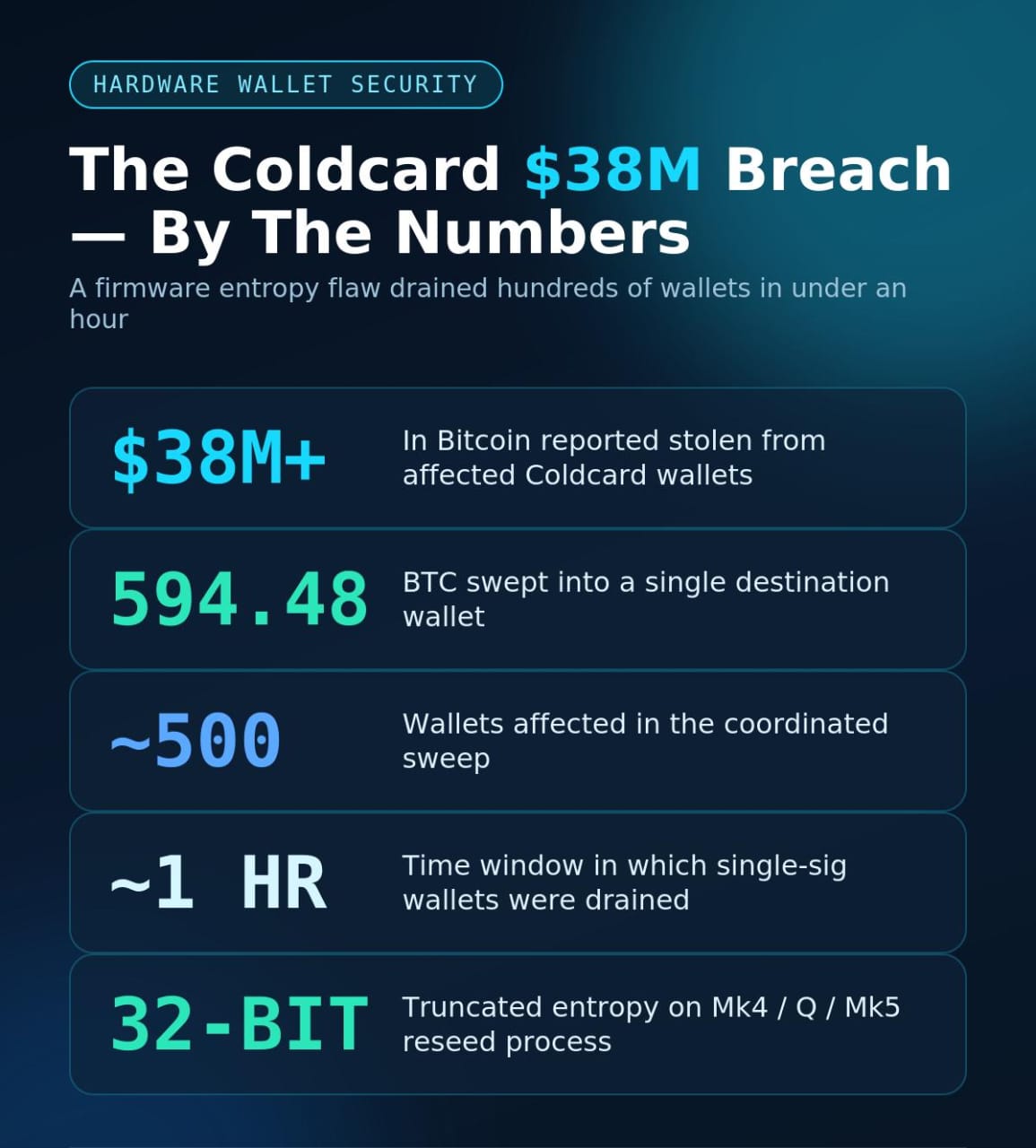
At the epicenter of this industry-wide concern was the Coldcard hardware wallet, specifically its Mk2 and Mk3 devices. The exploit led to the reported theft of over $38 million worth of Bitcoin. Investigations revealed that approximately 500 individual wallets were compromised, with a combined total of 594.48 BTC systematically swept into a single destination wallet address. This concentration of stolen funds into one address is particularly noteworthy, suggesting a highly coordinated and targeted attack rather than a series of scattered, opportunistic thefts. The attacker(s) appeared to have a clear methodology for identifying and exploiting a specific pool of vulnerable devices.
Coldcard’s manufacturer, Coinkite, promptly confirmed the underlying problem. In an official advisory, the company disclosed a critical entropy-generation flaw embedded within certain versions of its Coldcard firmware. This vulnerability had the potential to significantly reduce the effective randomness behind the cryptographic seeds generated on affected Mk2 and Mk3 devices. Coinkite directly linked this firmware flaw to the reported theft, acknowledging it as the root cause.
The guidance issued by Coinkite to its users was unequivocal and urgent:
- Immediate Firmware Update: Users were instructed to update their devices to the latest patched firmware version.
- Generate a New Seed: Crucially, users were advised to generate an entirely new recovery seed. Coinkite stressed that simply patching the firmware would only address future seed generation; it would do nothing to secure funds associated with a seed already generated with insufficient randomness prior to the patch.
- Migrate Funds: All funds tied to any seed that could have been generated using the affected firmware versions were to be migrated immediately to a new address secured by a newly generated, truly random seed.
This instruction to create a completely new seed, rather than merely continuing with an existing one after a patch, underscores the fundamental nature of the vulnerability. A compromised seed, no matter where it resides or what device is using it, remains a critical security risk.
Block’s Independent Investigation: Uncovering Dual Vulnerabilities
Adding a significant layer of technical detail and independent verification to the unfolding crisis was Block, the parent company behind the competing Bitkey hardware wallet. Block’s security team took the unusual step of initiating an in-depth investigation into reports of non-Bitkey wallets being drained, driven by a stated commitment to protecting the broader self-custody community, regardless of their chosen hardware. While Block’s team confirmed that no Block products, including Bitkey, were affected, their independent analysis provided crucial insights into the nature and scope of the Coldcard vulnerability.
Block’s investigation uncovered not one, but two distinct vulnerabilities affecting Coldcard devices:
-
Vulnerability in Mk2 and Mk3 Devices: For these specific models, the firmware was intended to leverage the device’s hardware random number generator (RNG) for key creation. However, a critical mistake in a firmware macro caused the system to bypass the true RNG. Instead, it inadvertently relied on a combination of predictable inputs: a known device UID (Unique Identifier), the device’s timer state, and its call history. This flaw rendered wallet generation deterministic rather than genuinely random, meaning that with sufficient knowledge of these inputs, an attacker could potentially re-derive or guess a user’s seed phrase. This explained the targeted nature of the initial $38 million sweep.
-
Vulnerability in Mk4, Q, and Mk5 Devices (Reseed Process): While newer models like the Mk4, Q, and Mk5 attempted to compensate for potential randomness issues at boot-up by incorporating input from a secure element, Block’s team found a critical flaw in this reseed process. The secure-element input, intended to bolster entropy, was truncated down to a mere 32 bits. This severely limited the actual secret entropy contributed, falling far short of the cryptographic standards required for robust wallet security. Although not directly implicated in the initial $38 million exploit, this finding highlighted a separate, but equally concerning, weakness in the randomness generation of other Coldcard models.
Block’s researchers also issued a stark warning that the attack might still be ongoing, with potential for more wallets to be compromised. They specifically cautioned users employing weak 25th-word passphrases or those with multisig setups where more than one key was generated insecurely on affected Coldcard devices. A crucial point emphasized by Block was the portability of the vulnerability: if a seed was originally generated on a vulnerable Coldcard device and subsequently exported to a different hardware wallet or software wallet, that same insecure seed remains compromised. The underlying weakness travels with the seed itself, not solely confined to the device that initially created it.
Block’s team disclosed their findings to Coinkite as soon as they were confirmed. Coinkite acknowledged these findings, after which Block made the decision to go public with the information, prioritizing the protection of the broader self-custody community over proprietary silence.
A Critical Operational Security Blunder: The Attacker’s Trail
Amidst the technical details of the exploit and the industry’s response, a potentially game-changing detail emerged from Block’s investigation: a significant operational security failure on the part of the attacker. While reviewing the sweep patterns and related on-chain activity, Block’s engineering lead noticed an unusual pattern. Further investigation confirmed a critical hypothesis: the operator responsible for the $38 million theft utilized a paid account at a well-known blockchain-services provider to query the source addresses and carry out other activities associated with the sweeps.
This detail is genuinely significant for investigators. Using a paid, and presumably Know Your Customer (KYC)-linked, account for activities directly related to executing a $38 million theft represents a substantial operational security blunder. Professional investigators, including law enforcement agencies and blockchain forensics experts like ZachXBT (who was cited in the original reporting for his work on Ledger’s past ad slogan), often rely on such missteps to establish a concrete thread for tracing and potentially identifying culprits. While it does not guarantee immediate identification, it provides a tangible lead that a fully anonymous attack would not have offered. This mistake significantly reduces the attacker’s anonymity and opens avenues for potential legal and investigative action.
Chronology of Events:
- Early Reports (Date not specified but recent): Initial reports and rumors begin circulating in the cryptocurrency community about Coldcard wallets being drained, leading to significant concern.
- Industry Response (Within hours of reports): Major hardware wallet manufacturers (Ledger, Trezor, Jade, Tangem, Bitkey) swiftly issue public statements reassuring users their devices are unaffected and detailing their secure entropy generation methods.
- Coinkite Acknowledgment (Soon after initial reports): Coldcard’s manufacturer, Coinkite, confirms a critical entropy-generation flaw in Mk2 and Mk3 firmware, directly linking it to the reported thefts and issuing urgent user guidance.
- Block’s Independent Investigation (Concurrent with above): Block’s security team begins investigating, uncovers two distinct vulnerabilities in Coldcard devices, and shares findings with Coinkite.
- Public Disclosure by Block (Following Coinkite acknowledgment): Block publicly discloses its findings to protect the wider self-custody community.
- Attacker’s OPSEC Failure Identified (During Block’s investigation): Block’s team identifies the use of a KYC-linked blockchain service account by the attacker.
Broader Implications for Hardware Wallet Security and Self-Custody
The Coldcard incident extends far beyond a single product failure; it serves as a profound wake-up call for the entire hardware wallet industry and the broader self-custody community. The fundamental premise of hardware wallets is built on an unimpeachable assumption: the absolute randomness and cryptographic strength of the seed phrase they generate. This incident demonstrates that even this foundational assumption can be flawed, with potentially catastrophic financial consequences.
The implications are multifaceted:
- Renewed Scrutiny on Entropy Generation: The exploit forces a re-evaluation of how hardware wallets generate and protect their core cryptographic keys. It highlights that even with dedicated hardware random number generators, implementation flaws in firmware can introduce critical vulnerabilities. This will likely lead to increased scrutiny and demand for more transparent and independently verifiable entropy generation processes across the industry.
- Importance of Independent Audits: While manufacturers conduct their own audits, the Block investigation underscores the value of independent security research. Block’s proactive investigation, despite being a competitor, provided crucial details that might not have surfaced as quickly otherwise, demonstrating the collective benefit of a robust security research ecosystem.
- The "Seed Portability" Risk: The revelation that a compromised seed remains vulnerable even when moved to a different wallet reinforces a critical concept: the security lies in the seed itself, not just the device. Users must understand that if their seed was generated insecurely, no subsequent transfer to a "secure" device can rectify the original flaw.
- User Education and Vigilance: This event necessitates enhanced user education. Users must not only understand the concept of self-custody but also be acutely aware of the risks associated with firmware updates, seed generation processes, and the implications of using older or potentially compromised firmware. The incident emphasizes that "set it and forget it" is not an option in the dynamic world of crypto security.
- The Cost of Non-Disclosure or Delayed Disclosure: The scale of the $38 million loss highlights that when a fundamental flaw like this surfaces, the difference between a contained incident and a widespread disaster often hinges on the speed and clarity of the manufacturer’s disclosure and the urgency of their remediation guidance.
Actionable Advice for Coldcard Owners and the Wider Community
For owners of Coldcard devices, particularly Mk2 and Mk3 models, the message from Coinkite and Block is clear and urgent: this is not a "wait-and-see" situation.
- Immediate Firmware Update: Update your Coldcard device to the latest patched firmware version without delay.
- Generate an Entirely New Seed: Do not continue using your existing seed if it was generated on an affected Mk2 or Mk3 device, or if you are unsure. Generate a completely new, truly random recovery seed.
- Migrate All Funds: Immediately migrate any funds currently tied to a seed that could have been generated before the patch to new addresses secured by your newly generated, secure seed.
- Exported Seeds: If you ever exported a potentially compromised seed into a different hardware or software wallet, those funds are also exposed. Treat them with the same urgency and migrate them to an address secured by a genuinely new, random seed.
For the broader hardware wallet community, this incident serves as a critical reminder of ongoing best practices:
- Regular Firmware Checks: Always ensure your hardware wallet’s firmware is up-to-date.
- Understand Seed Generation: Familiarize yourself with how your specific wallet generates its seed and any security features it employs (e.g., dedicated TRNGs, secure elements).
- Diversify and Verify: Consider diversifying your holdings across different wallet types or brands, and always verify security claims through independent sources and community discussions.
- Strong Passphrases: If using a 25th-word passphrase, ensure it is truly strong and not easily guessable, especially if your base seed might have been compromised.
- Stay Informed: Keep abreast of security advisories and news from trusted sources within the cryptocurrency space.
The Coldcard exploit is a stark illustration that even in the highly specialized field of hardware wallet security, vulnerabilities can exist at the most fundamental level. While the industry’s rapid response to reassure users was a positive step, the incident underscores the continuous, critical need for rigorous security protocols, transparent disclosures, and unwavering user vigilance to safeguard digital assets in the evolving landscape of self-custody.
Disclosure: This is not trading or investment advice. Always do your research before buying any cryptocurrency or investing in any services.
Follow us on Twitter @themerklehash to stay updated with the latest Crypto, NFT, AI, Cybersecurity, and Metaverse news!