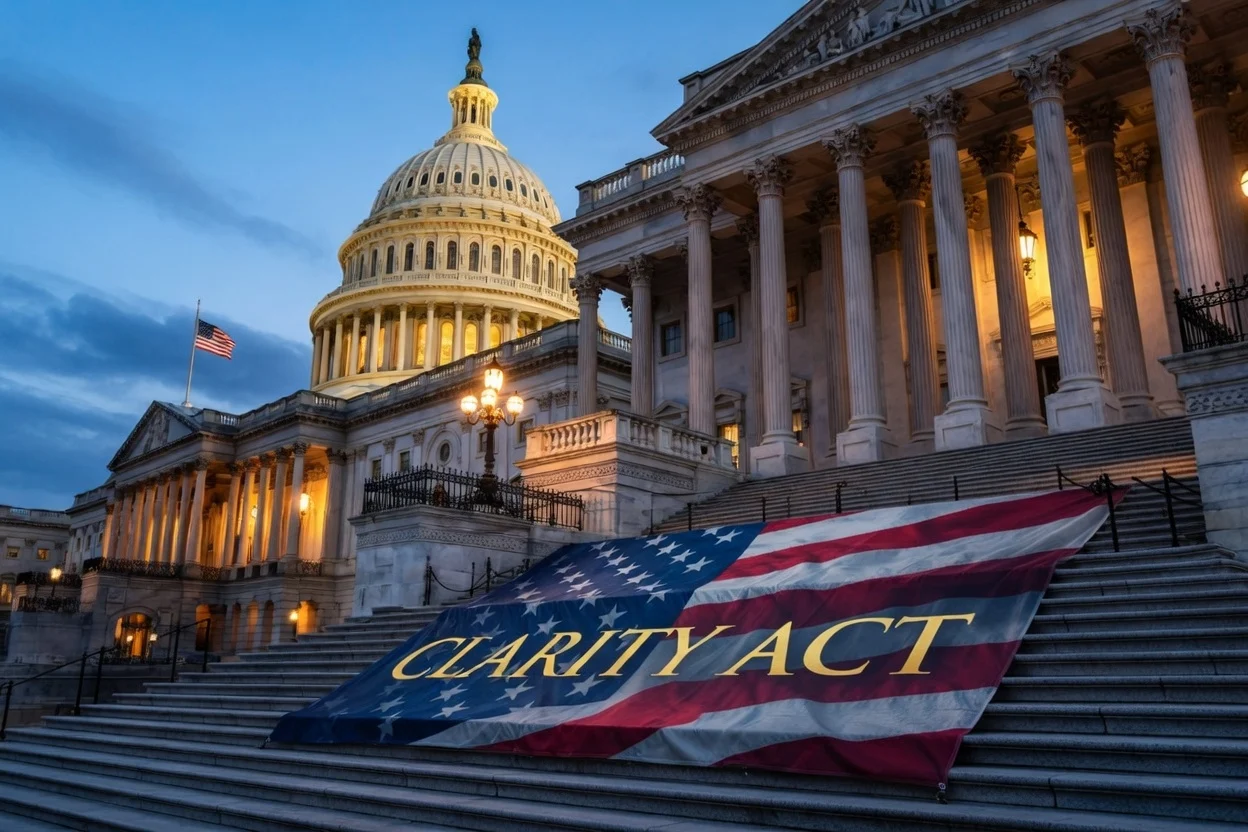
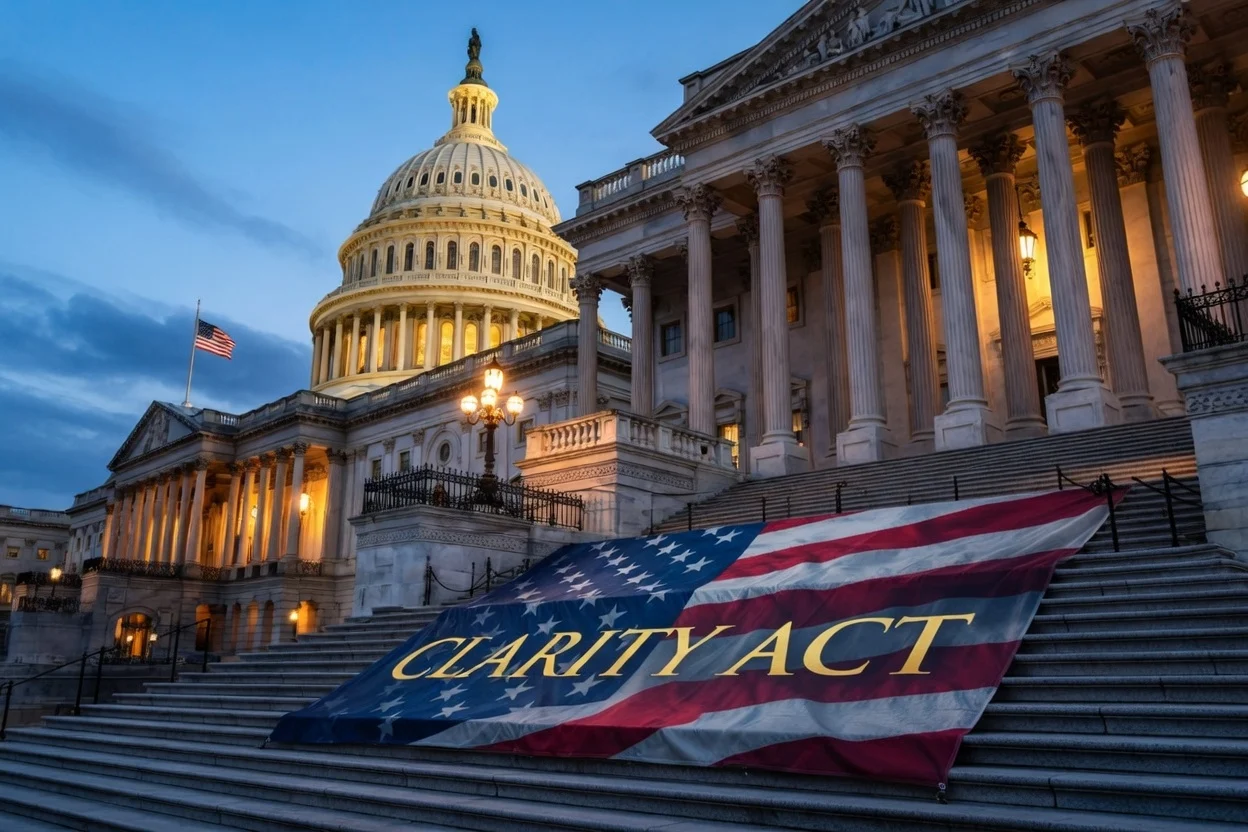
White House crypto adviser Patrick Witt has underscored September 15 as a critical deadline for congressional negotiations surrounding the CLARITY Act, a legislative effort aimed at establishing a comprehensive regulatory framework for digital assets in the United States. Witt’s pronouncement carries significant weight as this date now directly coincides with a pivotal procedural test in the Senate, threatening to either advance or indefinitely stall a bill deemed crucial for the nation’s burgeoning digital economy. The Senate is set to return from its extended recess on September 14, with the crucial cloture motion on H.R. 3633, the House-passed version of the CLARITY Act, scheduled to ripen at 2:15 p.m. the following day, setting the stage for a high-stakes vote that could redefine the future of cryptocurrency regulation.
The Urgency of September 15: A Defining Moment for Digital Asset Regulation
The impending September 15 vote represents more than just a procedural hurdle; it is a direct test of political will and bipartisan cooperation on an issue that has long plagued innovators, investors, and regulators alike. Senator Majority Leader John Thune strategically filed cloture on the motion to proceed to H.R. 3633 before lawmakers departed for their recess, ensuring that the legislation would have a defined timetable upon their return. This move by Republican leadership signals a clear intent to force the issue, pushing for a resolution after months, and indeed years, of protracted discussions and failed attempts to forge a consensus.
Patrick Witt, a vocal proponent for clear crypto regulations, did not mince words when criticizing the pre-recess delays. He publicly attributed the failure to produce a procedural vote to Senate Minority Leader Chuck Schumer and certain "pro-crypto Democrats," accusing them of seeking additional negotiating time at the expense of legislative progress. Witt’s frustration, expressed via social media, highlights a sentiment shared by many within the digital asset industry and the administration: that the time for deliberation is rapidly running out. "Congress has been working on crypto market structure legislation for years at this point. The Senate alone has been actively negotiating the Clarity Act since last summer," Witt stated, lamenting the continuous roadblocks. He warned that the inability to reach an agreement by September 15 could effectively close the current legislative window, potentially pushing comprehensive crypto regulation further into an uncertain future.
Despite these warnings and the palpable frustration, the CLARITY Act remains an active piece of legislation, not one indefinitely stalled. Thune’s cloture filing has created a formal mechanism to ascertain whether lawmakers can muster the necessary support to begin considering the bill. The September 15 vote will therefore be a critical determinant of whether the Senate can move beyond procedural wrangling and into actual debate on H.R. 3633. For cloture to succeed, a supermajority of 60 votes is required. This arithmetic dictates that Republicans, even with unanimous support from their caucus, cannot advance the measure on their own. Assuming every voting Republican supports the motion, at least eight Democratic votes would still be essential to reach the 60-vote threshold. This fundamental requirement underscores the absolute necessity of bipartisan negotiations and cooperation for the legislation to move forward. Thune’s decision to file cloture before the recess thus demonstrates a strategic commitment from Republican leaders to test the viability of a 60-vote coalition immediately upon the senators’ return to Washington.
The CLARITY Act: A Quest for Regulatory Certainty Amidst Complexities
At its core, the CLARITY Act seeks to address the long-standing regulatory vacuum that has characterized the digital asset landscape in the United States. For years, the lack of a clear framework has left cryptocurrency companies navigating a patchwork of state laws and conflicting federal guidance, primarily from the Securities and Exchange Commission (SEC) and the Commodity Futures Trading Commission (CFTC). This ambiguity has been widely cited as a significant impediment to innovation, investor protection, and the broader growth of the digital asset sector within the U.S.
The proposed legislation aims to establish a more defined framework for determining whether specific digital assets fall under the oversight of the SEC, typically for securities, or the CFTC, which regulates commodities. This distinction is crucial, as it dictates the disclosure requirements, market-conduct standards, and enforcement mechanisms applicable to various crypto projects and platforms. By providing this clarity, proponents argue the CLARITY Act would foster an environment where businesses can innovate with greater certainty, while also affording investors clearer protections and recourse.
The journey of the CLARITY Act has been a long and winding one, reflecting the inherent complexities and strong disagreements surrounding digital asset regulation. The House of Representatives passed H.R. 3633 in July 2025 with a significant bipartisan majority of 294-134, including 216 Republicans and 78 Democrats voting in favor. This robust House vote established a crucial benchmark, demonstrating a broad recognition among elected officials that a legislative solution is urgently needed. The House’s approval sent a clear signal that a substantial number of lawmakers believe the current regulatory environment is insufficient and that proactive measures are necessary to integrate digital assets into the mainstream financial system responsibly.
However, the Senate’s process has proven to be a more arduous undertaking. While the House version served as a foundation, the Senate version has undergone substantial revisions during months of intense negotiations. Senators Tim Scott, Cynthia Lummis, and Thom Tillis, key Republican figures on the Banking Committee, released revised legislation in May after extensive consultations with a wide array of stakeholders. These discussions involved not only Democrats but also regulators from various agencies, traditional banks, law enforcement officials, consumer advocacy groups, and representatives from cryptocurrency companies. Despite this broad engagement and the earnest efforts to find common ground, several major policy disagreements persist, threatening to derail the entire effort.
Deep Dive into Contentious Policy Disputes
The central disagreement extends far beyond the fundamental question of whether digital assets require clearer federal rules; it delves into the specifics of how those rules should be crafted and who should enforce them. Senators remain deeply divided over critical areas including robust investor protections, stringent ethics provisions, the future of stablecoin policy, and enhanced illicit-finance controls.
One of the primary battlegrounds is the scope of regulatory authority between the SEC and the CFTC. The CLARITY Act proposes a framework designed to preserve anti-fraud authority while establishing tailored rules for decentralized finance (DeFi) protocols and centralized digital-asset intermediaries. Republicans on the Senate Banking Committee argue that this framework strikes the right balance, promoting innovation while safeguarding markets. However, Democrats, often aligning with the SEC’s more expansive view of its jurisdiction, seek to ensure that investor protection remains paramount, fearing that an overly permissive framework could expose retail investors to undue risks prevalent in the nascent crypto market.
Ethics provisions have emerged as a particularly contentious point. Democrats are pushing for significantly stronger restrictions on crypto businesses that have connections to government officials, aiming to prevent potential conflicts of interest and the appearance of undue influence. This includes concerns about the "revolving door" phenomenon, where former government officials transition into lucrative roles within the crypto industry, potentially leveraging their insider knowledge and connections. These proposed restrictions aim to enhance transparency and integrity within the burgeoning digital asset ecosystem, but they have met with resistance from some industry advocates who argue they could stifle legitimate engagement between government and the private sector.
Stablecoin policy also presents a significant hurdle. The dispute centers on whether reward-bearing stablecoin products should be allowed to compete directly with traditional bank deposits. Banks, concerned about potential disintermediation and systemic risks, advocate for strict regulations that would prevent stablecoins from offering yields that could draw away funds from conventional banking products. They argue for regulatory parity, asserting that stablecoins offering rewards should be subject to the same rigorous oversight and capital requirements as traditional financial institutions. Cryptocurrency companies, conversely, argue that such features are integral to the innovation and utility of stablecoins and should not be unduly restricted, asserting that stablecoins can complement, rather than undermine, the existing financial system.
Furthermore, Democratic concerns have intensified around five specific areas identified by Senate Banking minority staff on August 5. These include:
- Securities Protections: Ensuring that digital assets properly classified as securities receive the same level of investor protection as traditional securities.
- Illicit Finance: Addressing potential loopholes that could be exploited for money laundering, terrorist financing, and sanctions evasion within the digital asset space.
- Financial Stability: Mitigating risks that could arise from the rapid growth and interconnectedness of the digital asset market, particularly concerning stablecoins and DeFi.
- Consumer Safeguards: Implementing robust protections against fraud, scams, and predatory practices targeting retail crypto investors.
- Ethics: As noted, strengthening rules to prevent conflicts of interest involving government officials and the crypto industry.
These points of contention underscore the deep philosophical and practical divides that must be bridged for the CLARITY Act to advance. The debate is not merely about jurisdiction but about the very nature of financial regulation in an era of rapid technological change.
Stakeholder Perspectives and Broader Implications
The potential passage or failure of the CLARITY Act carries profound implications for a diverse array of stakeholders, from individual investors to global financial markets.
For the White House and Administration Officials like Patrick Witt, the passage of the CLARITY Act is seen as crucial for the United States to maintain its leadership in global financial innovation. The administration has repeatedly emphasized the need for clear rules to foster responsible innovation, protect consumers, and combat illicit finance, positioning the U.S. as a competitive hub for digital asset development. Failure to act, they warn, could push innovation and capital overseas to jurisdictions with more defined regulatory environments.
Senate Republicans, led by figures such as Thune, Scott, Lummis, and Tillis, advocate for the CLARITY Act as a means to unlock the economic potential of digital assets. They argue that regulatory certainty will attract investment, create jobs, and ensure that the U.S. remains at the forefront of the technological revolution. Their focus is often on streamlining regulatory processes and providing clear guidelines for businesses.
Senate Democrats, while acknowledging the need for clarity, prioritize robust consumer protection, financial stability, and ethical safeguards. Their concerns, articulated by Minority Leader Schumer and the Banking minority staff, reflect a desire to prevent the kind of financial crises or investor losses that have occasionally plagued the crypto market. They seek to ensure that any new framework does not inadvertently create new avenues for exploitation or systemic risk.
The Cryptocurrency Industry eagerly awaits regulatory clarity. Companies operating in the U.S. have long grappled with uncertainty, which has often stifled investment in new products and services. Clear rules, they argue, would allow them to scale operations, attract more institutional capital, and provide more secure and compliant services to a broader user base. Without it, many fear continued stagnation or even a migration of talent and capital to more welcoming jurisdictions.
Traditional Financial Institutions, particularly banks, are watching the stablecoin debate closely. They seek a level playing field and express concerns that unregulated or under-regulated stablecoins could pose risks to financial stability and compete unfairly with their highly regulated deposit products.
Consumer Advocacy Groups are keenly focused on the investor protection aspects of the bill. They advocate for stringent disclosure requirements, strong anti-fraud measures, and clear mechanisms for investor recourse, aiming to shield everyday Americans from the volatility and potential scams that can characterize the crypto market.
The implications of the September 15 vote extend beyond domestic policy. The United States’ approach to digital asset regulation has a significant impact on global standards and competitiveness. Should the CLARITY Act fail to advance, it could solidify the perception of the U.S. as a lagging or uncertain jurisdiction for crypto innovation, potentially ceding ground to countries that have already established clearer regulatory frameworks. Conversely, successful passage would signal a strong commitment from the U.S. to integrate digital assets responsibly into its financial system, potentially setting a precedent for international regulatory cooperation.
The Road Ahead: Beyond September 15
Even if the Senate successfully reaches the 60-vote threshold for cloture on September 15, the CLARITY Act would not immediately proceed to the White House for the President’s signature. Instead, the vote would merely allow lawmakers to advance toward full debate on the measure, which would then open the floor to a potentially extensive amendment process. Senators from both parties would likely propose numerous changes, reflecting their specific policy priorities and concerns.
Following debate and amendments, the bill would then face a final passage vote in the Senate. Given that the Senate has substantially revised the House-approved H.R. 3633, any bill passed by the Senate would almost certainly differ significantly from the version passed by the House in July 2025. This divergence would necessitate a conference committee, where appointed representatives from both chambers would work to reconcile the differences and agree on identical legislative language. Only after both the House and Senate pass the exact same version of the bill can it be sent to the President for his signature. This intricate legislative process highlights that even a successful cloture vote on September 15 marks only one step in a potentially long and challenging journey to enact comprehensive digital asset regulation.
The September 15 deadline thus represents a pivotal moment, a fork in the road for digital asset regulation in the United States. The outcome will not only determine the immediate fate of the CLARITY Act but also send a powerful signal about Congress’s capacity to adapt to rapidly evolving technological landscapes and forge bipartisan solutions for the future of finance. The stakes are undeniably high, with the eyes of the global digital asset community firmly fixed on Washington.