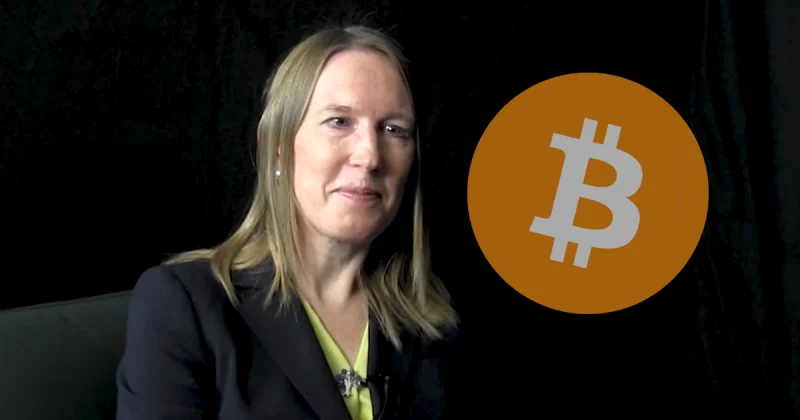
The regulatory landscape for decentralized finance (DeFi) continues to face intense scrutiny as Securities and Exchange Commission (SEC) Commissioner Hester Peirce issued a formal statement on Wednesday, July 24, 2024, addressing the legal status of crypto vaults and on-chain lending strategies. Peirce, a figure frequently referred to in the digital asset industry as “Crypto Mom” for her often dissenting and innovation-friendly views, clarified that while some crypto-related activities fall outside federal mandates, many emerging financial structures within the blockchain ecosystem remain firmly within the agency’s jurisdiction. The statement serves as a critical warning to developers and financial engineers that the mere act of moving a financial product onto a blockchain does not grant it immunity from the established legal frameworks governing securities in the United States.
Commissioner Peirce’s remarks focused on the structural nuances of decentralized protocols, specifically those that automate the management of assets to generate returns. According to Peirce, the process of tokenizing a financial service or automating it via smart contracts does not fundamentally alter its regulatory classification. If a crypto vault or an on-chain lending arrangement is structured in a way that involves an investment of money in a common enterprise with a reasonable expectation of profits derived from the managerial efforts of others—the core tenets of the Howey Test—it is likely to be classified as a security. This classification brings with it a host of registration requirements and oversight mechanisms that many DeFi projects have historically sought to avoid.
The Regulatory Framework for Crypto Vaults and Yield Strategies
Crypto vaults, which are automated smart contracts that execute specific investment strategies such as yield farming, staking, or liquidity provision, have become a cornerstone of the DeFi ecosystem. These vaults allow users to deposit assets, which the protocol then deploys across various platforms to maximize returns. Peirce noted that when these vaults involve "managerial efforts," they may not only constitute securities but could also qualify as investment companies under the Investment Company Act of 1940.
The distinction often hinges on the level of discretion exercised by the protocol’s developers or governance participants. In traditional finance, an investment company is an entity that issues securities and is primarily engaged in the business of investing, reinvesting, or trading in securities. Peirce’s statement suggests that if a crypto vault functions as a collective investment vehicle where the "manager" (even if that manager is a decentralized autonomous organization or a group of developers) makes active decisions about asset allocation, it mirrors the characteristics of a regulated investment fund.
Furthermore, on-chain lending arrangements were highlighted as potential triggers for the Investment Advisers Act. When a platform or an automated system provides advice or manages portfolios of securities—which the SEC increasingly considers many crypto assets to be—the entities behind those systems may need to register as investment advisers. This adds a layer of fiduciary duty and reporting requirements that could fundamentally change how DeFi lending protocols operate.
Context and Chronology of SEC Oversight in DeFi
The SEC’s focus on DeFi and on-chain lending is not a sudden shift but rather the latest chapter in a multi-year effort to bring the digital asset industry into compliance with existing laws. To understand the weight of Commissioner Peirce’s latest statement, one must look at the chronology of the agency’s actions over the past several years:
- The DAO Report (2017): The SEC first signaled its intent to regulate decentralized structures with the investigative report on The DAO. The agency concluded that digital tokens are securities and that the "decentralized" nature of the organization did not exempt it from the Securities Act of 1933.
- The Rise of Yield Products (2021-2022): The SEC began targeting centralized lending platforms. In February 2022, BlockFi agreed to pay $100 million in penalties for failing to register its high-yield lending product. This set a precedent that yield-bearing crypto accounts were effectively securities.
- The Kraken Staking Settlement (February 2023): The SEC charged the crypto exchange Kraken with failing to register the offer and sale of its crypto-asset staking-as-a-service program. This move sent shockwaves through the industry, as it targeted "staking" as a potential security offering.
- The DeFi Warning (2023-2024): SEC Chair Gary Gensler has repeatedly stated that most crypto tokens are securities and that DeFi platforms are "not as decentralized" as they claim, often featuring central groups of developers or backers.
Peirce’s Wednesday statement acts as a bridge between these past enforcement actions and the future of on-chain automation. While she has frequently criticized the SEC’s "regulation by enforcement" approach, her latest message emphasizes that the industry cannot ignore the law simply by utilizing code.
Supporting Data: The Scale of the DeFi and Vault Market
The urgency of Peirce’s warning is underscored by the massive amount of capital currently locked in these protocols. According to data from DeFiLlama, the Total Value Locked (TVL) in decentralized finance protocols stands at approximately $90 billion as of mid-2024. A significant portion of this capital is held in yield-generating vaults and lending markets.
Lending protocols like Aave and Compound account for tens of billions of dollars in active loans. Meanwhile, liquid staking protocols, such as Lido and Rocket Pool, represent a massive segment of the "vault" category, where users deposit Ether (ETH) to receive a derivative token (stETH) that represents their staked position plus rewards. If the SEC were to aggressively apply the "investment company" or "security" labels to these protocols, it would affect a substantial portion of the crypto economy’s liquidity.
Data from the SEC’s own enforcement reports show a marked increase in crypto-related actions. In the fiscal year 2023, the SEC filed 46 enforcement actions related to digital assets, a 50% increase from the previous year. The total penalties sought in these cases reached billions of dollars, illustrating the high stakes for firms that fail to find a "compliant path," as Peirce suggested.
Protecting Innovation and Free Speech
A notable aspect of Commissioner Peirce’s statement was her emphasis on safeguarding the free speech rights of developers. This touches on a long-standing legal debate: whether computer code is protected speech under the First Amendment. In the 1990s, the case Bernstein v. United States established that software source code is speech protected by the Constitution.
Peirce argued that any regulatory analysis must respect the limits of the SEC’s statutory authority and avoid infringing on the rights of those who write and publish code. This suggests a nuanced view: while the activity of running a financial vault might be regulated, the act of writing the code for that vault may be protected. This distinction is vital for the open-source community, which fears that overly broad regulations could lead to the criminalization of software development.
Industry Reactions and Potential Implications
The reaction from the crypto industry has been a mixture of caution and a call for clearer rules. Industry advocacy groups, such as the Crypto Council for Innovation and the Blockchain Association, have long argued that the current securities laws, written in the 1930s and 1940s, are ill-suited for the era of programmable money.
Legal analysts suggest that Peirce’s statement may be a precursor to a new wave of "Wells Notices"—formal letters from the SEC informing recipients that the agency intends to bring enforcement actions. If the SEC begins targeting specific on-chain vaults, it could lead to a migration of development talent and capital to jurisdictions with more bespoke crypto regulations, such as the European Union under its Markets in Crypto-Assets (MiCA) framework or the United Arab Emirates.
For developers, the implications are clear: "sufficient decentralization" is no longer a theoretical goal but a legal necessity. If a project maintains a "managerial" team that can alter the protocol’s risk profile or investment strategy, it remains a target.
Conclusion: Seeking a Compliant Path Forward
Commissioner Peirce concluded her statement by encouraging industry participants to engage with the SEC during the product development phase. She indicated that the agency remains open to considering regulatory updates that foster innovation while maintaining the core mission of protecting investors and supporting capital formation.
However, the path to compliance remains murky. Many in the industry argue that there is currently no viable way to register a decentralized protocol as a security or an investment company without destroying its decentralized nature. The requirement for a central entity to sign registration statements and take responsibility for disclosures is fundamentally at odds with the permissionless nature of blockchain technology.
As the SEC continues to refine its stance, the "Crypto Mom" warning serves as a reminder that the window for "asking for forgiveness rather than permission" is rapidly closing. The future of DeFi will likely depend on whether the industry can innovate within these legal boundaries or if a fundamental legislative overhaul by Congress will be required to define the rules of the road for the digital age. For now, the message from the SEC is one of caution: the blockchain is not a shield against the long arm of federal securities law.