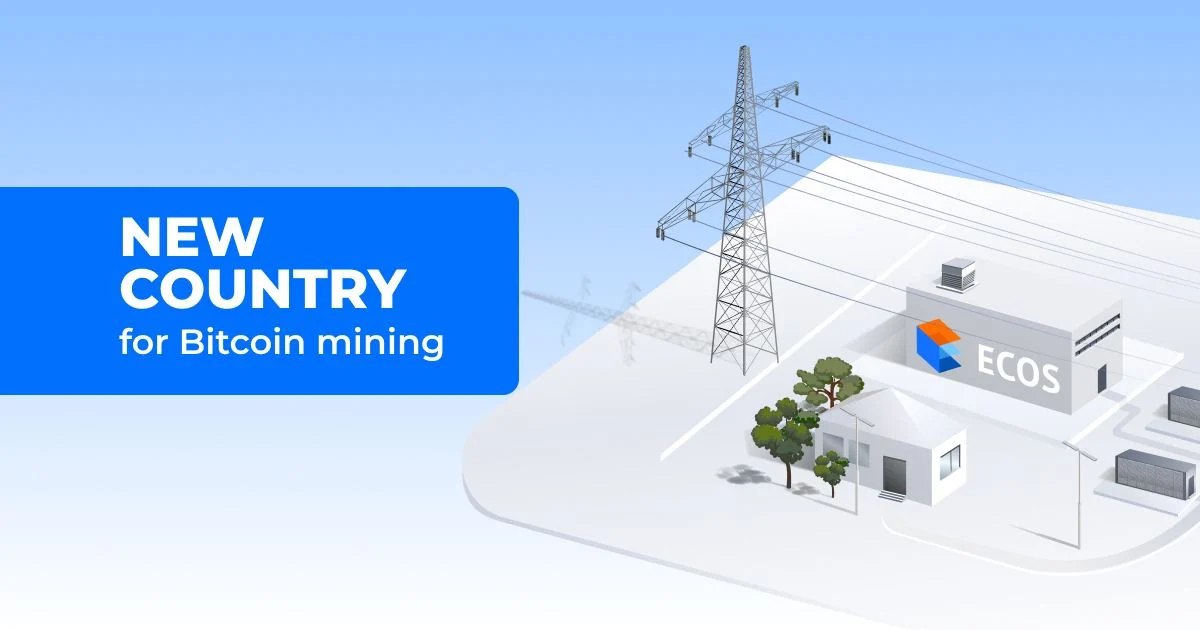
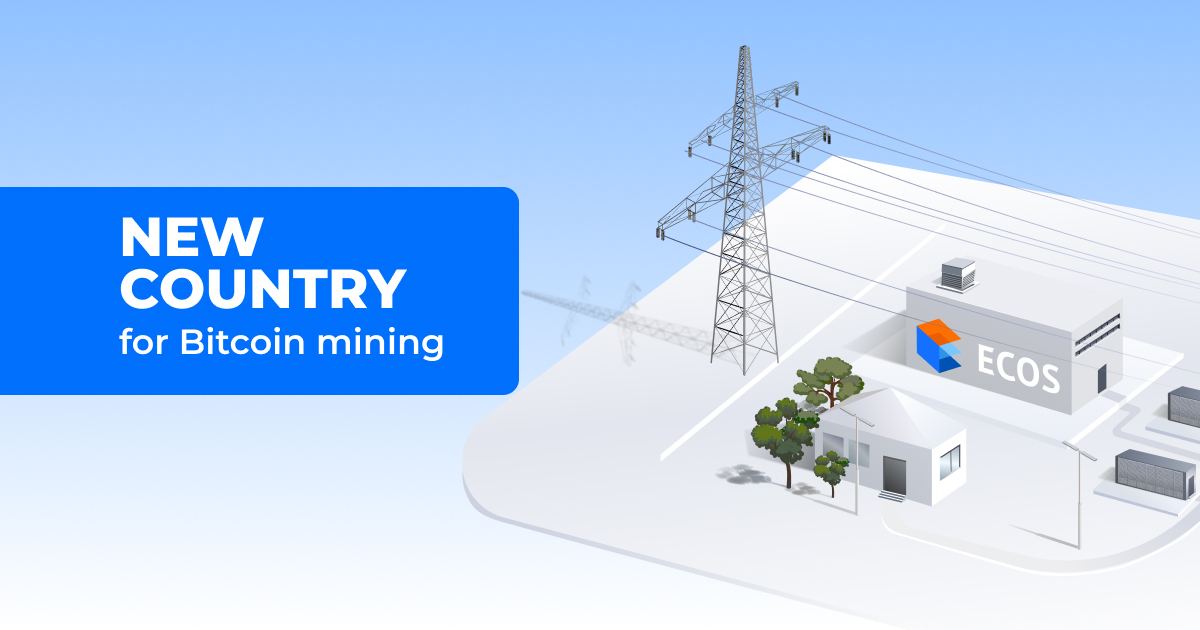
The international blockchain infrastructure provider ECOS has officially inaugurated its latest high-capacity data center in Hrazdan, Armenia, marking a significant milestone in the country’s emergence as a global hub for cryptocurrency mining and decentralized technologies. The new facility, which boasts an initial capacity of 60 megawatts (MW), is situated within a dedicated Free Economic Zone (FEZ), a strategic designation granted by the Armenian government to foster high-tech innovation. This expansion allows ECOS to scale its operations to accommodate more than 20,000 mining devices across a 2.2-hectare site, with a long-term roadmap that includes the potential to expand total power capacity to 200 MW.
The launch comes at a critical juncture for the global mining industry, which has faced increasing pressure from fluctuating energy prices, regulatory uncertainty in traditional mining hubs, and the technical demands of the Bitcoin network. By leveraging Armenia’s unique regulatory environment and favorable climatic conditions, ECOS aims to provide a stable, cost-effective, and highly efficient environment for both institutional investors and retail miners.
The Evolution of Armenia’s Blockchain Strategy
The roots of the current development trace back to 2018, when the Armenian government took a proactive stance toward the burgeoning blockchain industry. Recognizing the potential for digital assets to drive economic growth and attract foreign direct investment, the government passed legislation to legalize and regulate cryptocurrency mining. Central to this strategy was the appointment of ECOS as the official operator of a Free Economic Zone specifically tailored for the development of high technologies.
This public-private partnership was designed to create an end-to-end ecosystem where companies could operate with maximum legal security. The FEZ status provides ECOS and its partners with a suite of fiscal incentives that are among the most competitive in the world. Under the current legal framework, companies operating within the zone are exempt from income tax, value-added tax (VAT), and import/export duties. Furthermore, property and real estate taxes are waived for a period of 25 years. These incentives are intended to significantly lower the barrier to entry for large-scale mining operations and ensure that capital remains focused on infrastructure and hardware rather than administrative overhead.
Technical Infrastructure and Operational Excellence
The newly commissioned 60 MW data center represents a sophisticated engineering feat, designed to maximize hardware longevity and computational output. One of the primary challenges in industrial-scale mining is the management of heat generated by thousands of Application-Specific Integrated Circuit (ASIC) miners. ECOS has strategically located the facility in Hrazdan, a region where the average annual temperature is approximately 4.8°C (40.6°F).
This naturally cool climate provides a significant operational advantage, as it allows the data center to utilize ambient air cooling for much of the year. By reducing the reliance on energy-intensive artificial cooling systems, ECOS can lower its operational expenditures (OPEX) and improve the overall efficiency of the mining process. The facility is also directly connected to high-voltage power networks, ensuring a stable supply of electricity with a target uptime of nearly 100%. In the context of Bitcoin mining, where even minutes of downtime can result in significant lost revenue, this level of electrical reliability is a critical differentiator.
The infrastructure on-site is comprehensive, featuring a dedicated service center, secure warehouses for hardware storage, and a robust supply chain for spare parts. To ensure the safety of the assets, the territory is protected by 24/7 armed security and a permanent staff of specialized technicians who monitor the hardware’s performance in real-time.
A Comprehensive Service Model for Global Clients
ECOS has positioned itself as more than just a landlord for mining hardware; it offers a full-spectrum "end-to-end" service model. This approach is designed to simplify the complexities of the mining industry for users who may not have the technical expertise or the physical space to manage their own rigs.
Under this model, ECOS manages the entire lifecycle of the mining process. This begins with the procurement of the latest generation of mining equipment, such as Bitmain’s Antminer series, directly from manufacturers. Once the hardware arrives, ECOS technicians handle the testing, installation, and configuration within the Hrazdan data center. For clients currently hosting their equipment in less favorable jurisdictions, ECOS also provides logistics support to relocate existing hardware to the Armenian FEZ.
A key component of the ECOS value proposition is its digital interface. Clients can monitor their mining rewards, hardware health, and overall portfolio through a dedicated mobile application. This transparency is intended to bridge the gap between traditional finance and the decentralized world, allowing users to manage a physical industrial asset with the ease of a digital investment.
Strategic Implications and Leadership Perspectives
The expansion of the Hrazdan facility reflects a broader trend of "institutionalization" within the cryptocurrency mining sector. As the industry matures, the focus has shifted from small-scale "home mining" to large, professionally managed data centers that can benefit from economies of scale.
Ilya Goldberg, Managing Partner at ECOS, emphasized the company’s commitment to lowering the barriers to entry for global participants. "We have come a long way from legalizing mining in Armenia to launching our own energy infrastructure that is ready for scaling," Goldberg stated. "We want to offer our partners simplicity in everything: from launching your mining business on our data-center to daily monitoring of the result in the application without leaving your home. Our bundled product is made to serve both institutional and retail clients from any part of the world."
Industry analysts suggest that Armenia’s stability is a significant draw for the sector. While other regions have seen sudden regulatory shifts or energy curtailments—most notably in Kazakhstan and parts of the United States—Armenia has maintained a consistent policy of support for the FEZ. This long-term predictability is essential for investors who are looking at five-to-ten-year horizons for their capital deployments.
Comparative Analysis: Armenia in the Global Mining Landscape
When compared to other global mining destinations, the Armenian Free Economic Zone offers a unique combination of factors. In the United States, particularly in Texas, miners benefit from a deregulated grid but often face "demand response" programs where they must shut down during peak heatwaves. In Northern Europe, while cooling is efficient, high taxes and strict environmental regulations can squeeze margins.
Armenia’s offer of 0% tax for 25 years is virtually unparalleled in the Western and Eurasian markets. When combined with "clean" and affordable electricity—much of which in the region is generated from a mix of nuclear, hydroelectric, and thermal sources—the ECOS facility becomes a highly competitive destination for global hash power.
The timing of the launch is also noteworthy. The cryptocurrency market has historically moved in four-year cycles, often dictated by the Bitcoin "halving" events. By launching a 60 MW facility during a period often referred to as the "crypto winter" or the early stages of a recovery, ECOS is positioning its clients to build up their positions before the next potential bull market. Historically, infrastructure investments made during market lulls have yielded the highest returns, as hardware prices are lower and the network difficulty may grow at a slower pace compared to peak market periods.
Future Outlook and Economic Impact
The successful launch of the Hrazdan data center is expected to have a positive ripple effect on the Armenian economy. Beyond the direct investment in infrastructure, the project creates high-tech jobs for local engineers, security personnel, and administrative staff. It also enhances Armenia’s reputation as a destination for "digital nomads" and tech entrepreneurs, potentially leading to further growth in the country’s burgeoning software development sector.
Looking ahead, ECOS has signaled that the current 60 MW capacity is only the beginning. With the potential to scale up to 200 MW, the Hrazdan site could eventually become one of the largest concentrated sources of hash power in the region. This scalability is vital as the Bitcoin network’s total hashrate continues to climb, requiring ever-greater amounts of energy and more efficient hardware to maintain profitability.
As the global energy landscape remains volatile, the ECOS model of securing stable, high-voltage electricity within a tax-free jurisdiction represents a blueprint for the future of industrial mining. For the 250,000 users already within the ECOS ecosystem, the new data center provides a tangible foundation for their digital assets, anchored by the sovereign guarantees of the Armenian state and the technical expertise of a seasoned infrastructure provider.