The cryptocurrency landscape has been punctuated by a series of exchange shutdowns, each bearing a distinct yet eerily familiar signature. From the initial, seemingly innocuous compliance updates to the eventual, chilling inability to guarantee user withdrawals, the anatomy of a collapsing exchange often follows a predictable trajectory. The recent events surrounding AscendEX, culminating in its cessation of operations and subsequent withdrawal freezes, offer a stark and well-documented case study, providing invaluable insights for users seeking to identify and mitigate risks before their assets become trapped. This analysis delves into the specifics of the AscendEX incident, not merely as an obituary for another failed platform, but as a practical template for recognizing the critical red flags that often precede such collapses.
The AscendEX Announcement: A Deceptive Calm Before the Storm
The initial communication from AscendEX to its account holders, announcing the cessation of operations effective July 1, 2026, was framed primarily around "regulatory developments." Specifically, the notice cited the European Union’s Markets in Crypto-Assets Regulation (MiCA), under which AscendEX acknowledged it held no authorization. This explanation was coupled with broader references to "regulatory, financial, and operational considerations." From the designated date, the exchange declared that clients would be unable to open new accounts, deposit assets, engage in trading or swapping, stake, lend, or participate in referral or promotional campaigns. Account access would be strictly narrowed to offboarding functionalities, including withdrawal requests, KYC updates, and transaction exports.
However, the true gravity of the situation became apparent just five days later, on July 6, when a follow-up announcement effectively tightened the noose: every withdrawal request would henceforth be subjected to manual review, and automated withdrawals were paused entirely. This critical shift was accompanied by a meticulously worded sentence that served as a stark warning: "Withdrawals may be delayed, or may not be processed during the review period. The timing or amount of withdrawals cannot be guaranteed at this time." This statement, crafted with legal precision, transcended mere hedging; it was a clear indication from the exchange that it could not assure users of the return of their funds, nor even confirm the full extent of assets available for distribution.
Further analysis of the AscendEX notice revealed a crucial admission buried within its regulatory veneer. The company disclosed that it had been relying on an "agreed strategic transaction" that ultimately "did not perform." This single line provided a more profound explanation for the platform’s predicament than any reference to MiCA. While a licensing gap is undeniably a significant bureaucratic challenge, the failure of a counterparty to deliver on a critical liquidity arrangement signals a fundamental solvency issue, often disguised by regulatory compliance narratives. This distinction is vital for users to grasp: regulatory non-compliance can be a symptom, but a failed liquidity deal is frequently the underlying disease.
Chronology of a Collapse: Tracing AscendEX’s Downfall
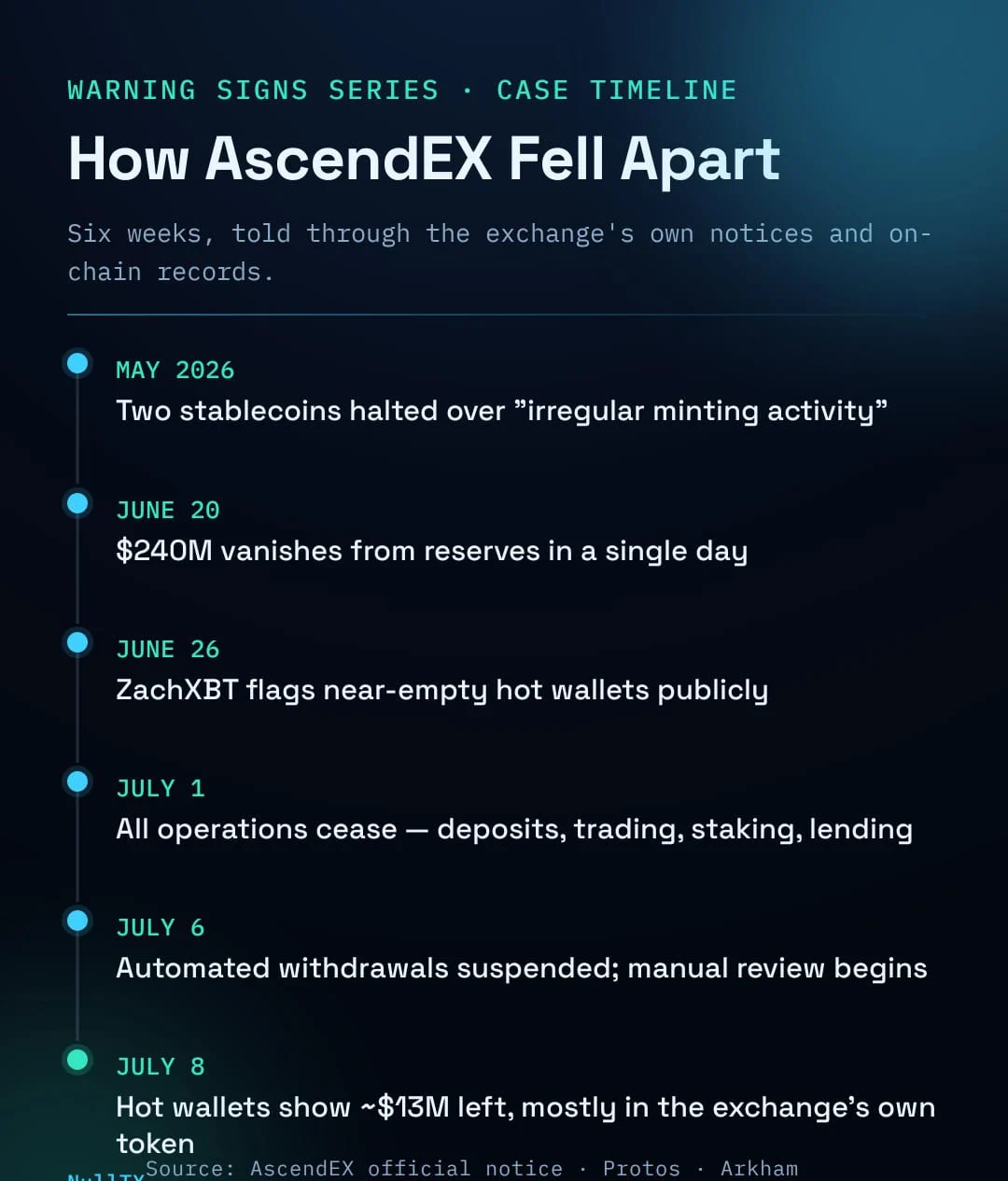
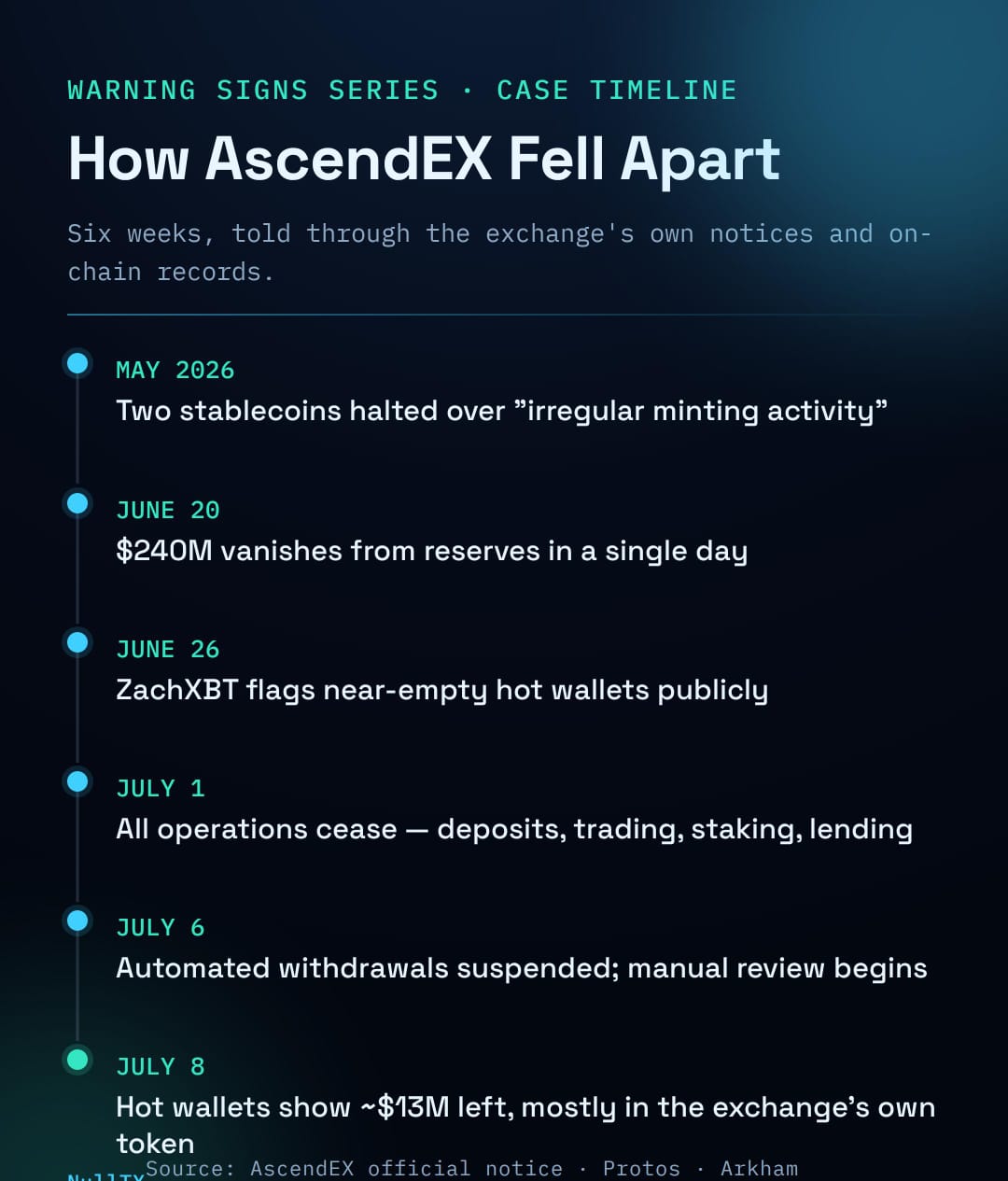
The events leading to AscendEX’s critical state did not unfold overnight but rather through a series of escalating signals, some subtle, others more overt. Understanding this timeline is crucial for developing proactive vigilance.
- May 2026: The First Domino – Vague Trading Halts. Prior to any widespread panic regarding withdrawals, AscendEX implemented a trading halt on two stablecoins. The official explanation cited "irregular token minting activity tied to a security incident." While such halts can be routine for security purposes, the vague language and the timing, retrospectively, serve as the first significant red flag.
- Early-to-Mid June 2026: Inflow of Deposits, Outflow Concerns. During this period, anecdotal reports from users began to surface regarding increasingly delayed withdrawal processing, even as the platform continued to facilitate and implicitly encourage new deposits. This discrepancy between deposit ease and withdrawal difficulty is a classic early warning sign.
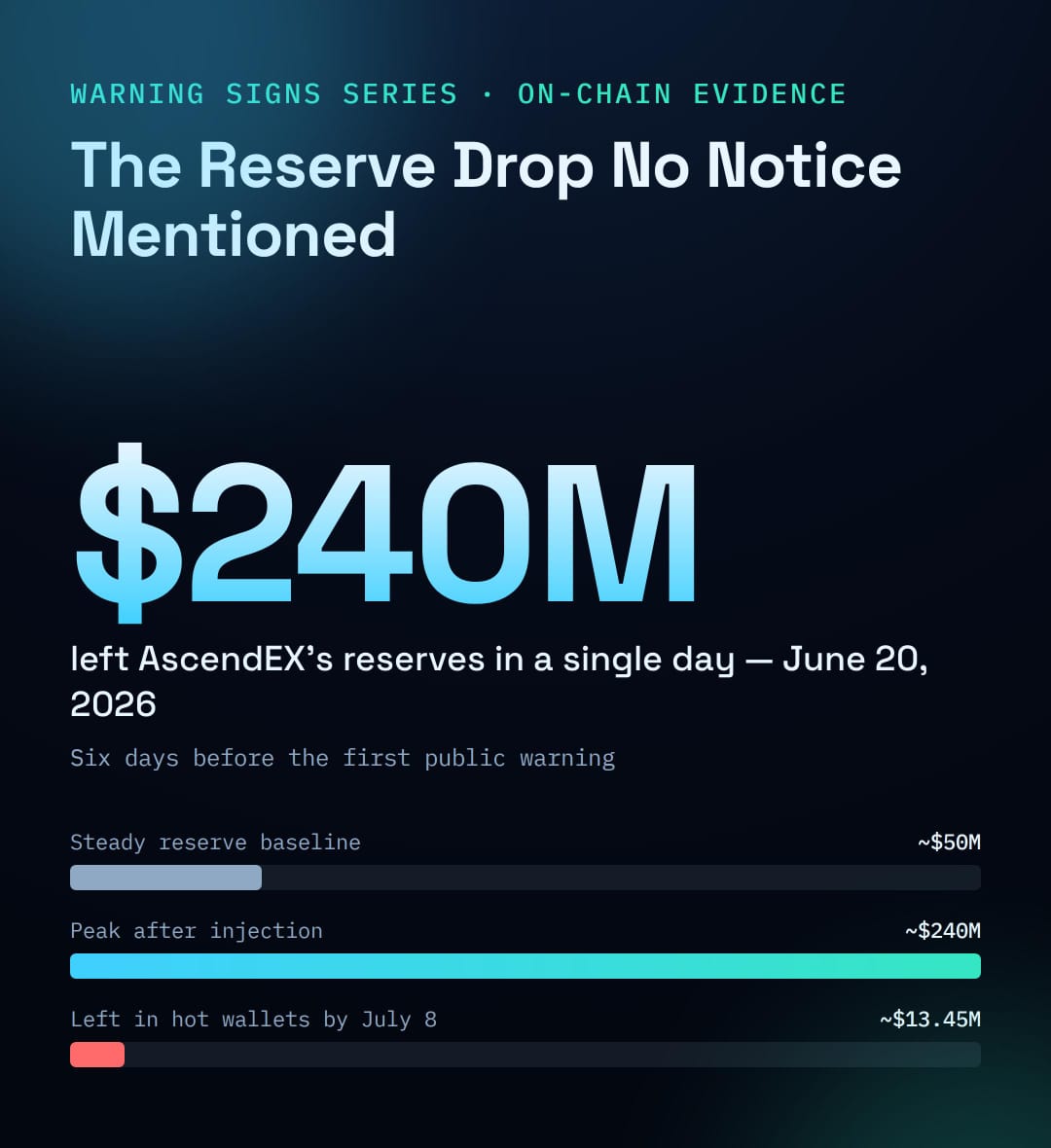
- June 20, 2026: On-Chain Data Sounds the Alarm. Independent on-chain analytics platforms, such as Protos, began to detect anomalous activity. Reserve records indicated a precipitous drop of over $240 million in AscendEX’s total balance. This sudden depletion occurred less than two months after a liquidity injection of roughly the same magnitude, which had briefly inflated the exchange’s reserves from a steady $50 million. The pattern of a large, temporary balance appearing only to vanish weeks later is a critical indicator of financial instability.
- July 1, 2026: Official Cessation Notice. AscendEX formally announced its decision to cease operations, citing regulatory developments and other considerations. This notice, while seemingly offering a future cessation date, simultaneously shut down core functionalities like new account creation, deposits, and trading.
- July 2, 2026: Corporate Silence Descends. Following the official notice, AscendEX’s official social media channels, particularly its X (formerly Twitter) account, became inactive. Prominent crypto investigator ZachXBT reported a nine-day silence. Attempts by major affected users to contact AscendEX cofounder George Cao reportedly went unanswered.
- July 6, 2026: Withdrawal Freeze and "No Guarantee" Clause. The critical turning point occurred when automated withdrawals were paused, and all requests became subject to manual review. Crucially, this was when the exchange explicitly stated it could not guarantee the timing or amount of withdrawals.
- July 8, 2026: Public Outcry and Further On-Chain Confirmation. ZachXBT publicly raised the alarm, corroborating earlier suspicions. Arkham Intelligence data further solidified the on-chain picture, revealing that AscendEX-labeled addresses held approximately $13.45 million in crypto assets. A concerning detail was that over $12 million of this was concentrated in the exchange’s own ASD token and a partner project’s UNITE token – assets notoriously illiquid and unsuitable for funding significant user withdrawals.
- Post-July 6, 2026: The Influx of Recovery Scammers. As news of the withdrawal issues spread, a secondary wave of malicious activity emerged, with scammers targeting anxious AscendEX users, promising to recover frozen funds for an upfront fee.
Five Critical Red Flags to Monitor
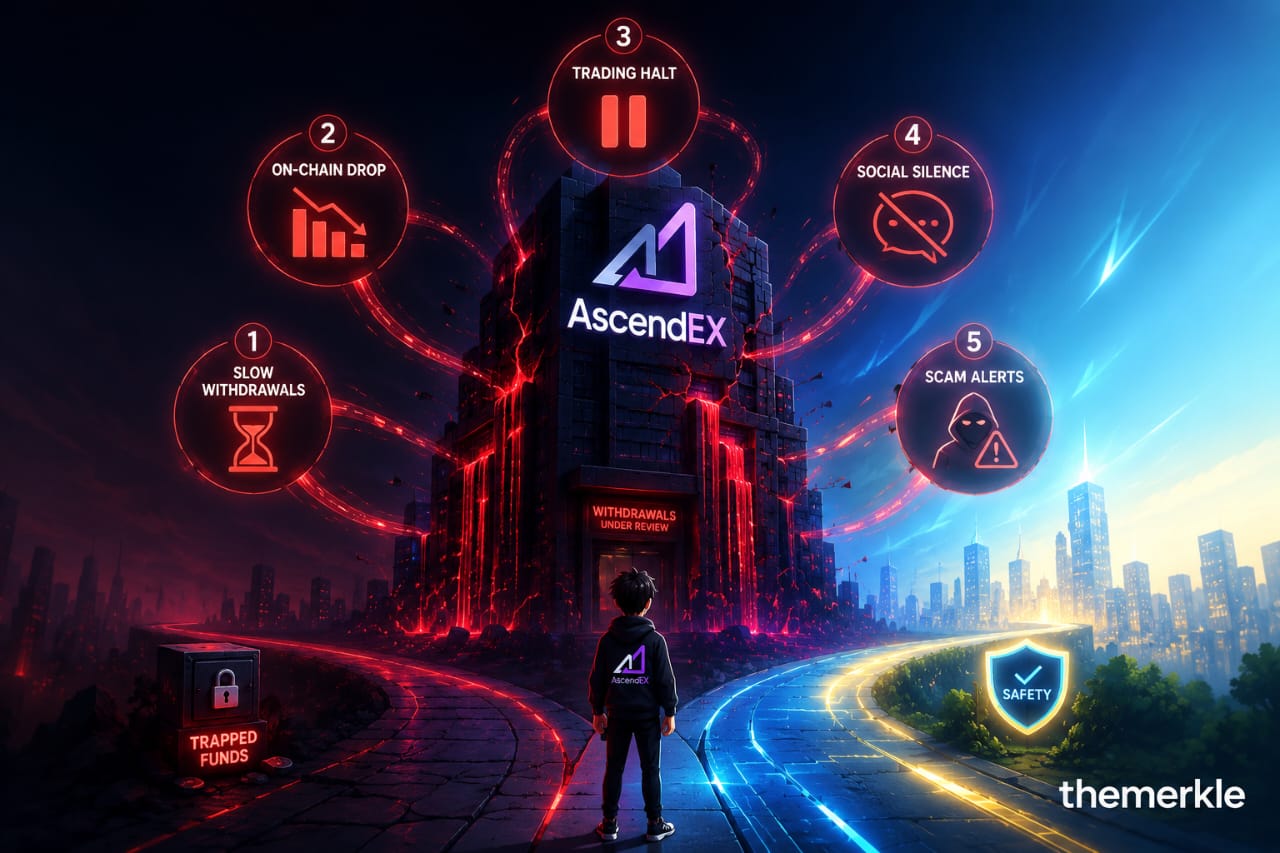
The AscendEX case, when dissected, reveals a consistent pattern of distress signals that users can learn to identify. These five signs, when observed in conjunction, form a powerful indicator of an impending exchange collapse.
Sign 1: Deposits Flow While Withdrawals Quietly Slow
A fundamental imbalance in an exchange’s operations often manifests first as a disparity between its handling of incoming and outgoing funds. A financially distressed company will prioritize maintaining an illusion of liquidity and operational normalcy for as long as possible. This means deposits are typically processed swiftly, as new capital provides temporary relief and bolsters reported asset figures. Simultaneously, withdrawal requests begin to experience increasing delays. These delays are often initially explained away as "system upgrades," "high network congestion," "routine security checks," or "enhanced compliance reviews."
Users might notice that their withdrawal requests remain pending for longer than usual, exceeding the advertised processing times. Support tickets related to withdrawals might go unanswered or receive generic, unhelpful responses. The underlying mechanism is simple: the exchange is struggling to meet its obligations and is effectively using incoming deposits to cover older withdrawal requests, creating a Ponzi-like dynamic. This behavior aims to buy time, hoping for a market recovery or a last-minute liquidity injection. For a vigilant user, a consistent pattern of easy deposits contrasted with increasingly difficult or delayed withdrawals should trigger immediate concern. It suggests that the exchange’s primary focus has shifted from facilitating legitimate transactions to managing its dwindling reserves.
Sign 2: On-Chain Data Sounds the Alarm
Unlike traditional financial institutions, the inherent transparency of blockchain technology offers a powerful, immutable ledger that can expose an exchange’s true financial health long before official announcements. On-chain data analysis platforms, such as Protos and Arkham Intelligence in the AscendEX case, provide real-time insights into an exchange’s reserve addresses.
The Protos report on AscendEX revealed a dramatic $240 million drop in reserves on June 20, 2026. This was not a gradual decline but a sudden, substantial outflow following a similarly large, temporary inflow just weeks prior. Such volatile movements in reserve balances, particularly a significant reduction after a brief inflation, are highly indicative of an exchange struggling with liquidity. It suggests a desperate attempt to shore up reserves for a short period, perhaps to pass a snapshot audit or to appear solvent, before the funds are moved again.
Furthermore, the composition of an exchange’s remaining reserves is equally critical. Arkham Intelligence’s findings on July 8, detailing that over $12 million of AscendEX’s meager $13.45 million in crypto assets were concentrated in its own illiquid ASD token and a partner’s UNITE token, is a flashing red light. A solvent exchange primarily holds highly liquid, widely traded assets (like Bitcoin, Ethereum, or major stablecoins) to ensure it can meet user withdrawal demands. Holding a significant portion of its own proprietary, often illiquid, token as "collateral" for user funds is a dangerous practice. It implies that the exchange is essentially backing user deposits with assets that cannot be easily sold or converted into other cryptocurrencies or fiat, rendering it incapable of facilitating widespread withdrawals. This mirrors patterns seen in other major collapses, where exchanges used their own minted, often worthless, tokens to inflate balance sheets.
Sign 3: A Trading Halt Explained in Vague, Security-Flavored Language
Trading halts are not uncommon in the fast-paced crypto market. They can be legitimate responses to network anomalies, smart contract vulnerabilities, or significant market manipulation attempts. However, the context and the accompanying explanation are paramount. In May 2026, AscendEX halted trading on two stablecoins, attributing the action to "irregular token minting activity tied to a security incident."
While this explanation initially might appear routine, its vague nature should raise a red flag, particularly when juxtaposed with subsequent events. What constitutes "irregular" activity? What specific security incident? A healthy exchange facing a genuine security threat would typically provide more detailed information, outlines of remedial actions, and timelines for resolution to reassure its users. A lack of specificity, coupled with generic "security-flavored" language, can sometimes serve as a convenient cover for deeper, internal liquidity or operational problems. The lesson here is not that every trading halt signals collapse, but that a halt explained with undue ambiguity, especially concerning core assets like stablecoins, should be noted and revisited if other signs of distress emerge. It could be the first domino in a chain reaction, masking an inability to support specific assets or a broader financial strain.
Sign 4: The Company Goes Quiet
Effective communication is the bedrock of trust, especially in a volatile and often opaque industry like cryptocurrency. When an exchange faces challenges, its response to user inquiries and its general public presence become critical. A company experiencing solvable problems typically engages with its user base, even if the news is uncomfortable, providing updates, apologies, and outlining steps towards resolution. This was partially evident in AscendEX’s initial official notice, despite its carefully chosen legalistic phrasing.
However, the period following the initial announcements, particularly from July 2, 2026, saw AscendEX’s official social media channels, notably its X account, fall silent for an extended period. User reports indicated that repeated attempts to reach key personnel, such as cofounder George Cao, went unanswered. This corporate silence is one of the most legible and universally understood signals of distress. It suggests that the company is no longer managing a public relations issue but is grappling with severe internal problems for which it either has no coherent explanation or is actively avoiding putting anything in writing before legal counsel has been thoroughly consulted. Such radio silence erodes user trust rapidly, fuels panic, and leaves users in the dark, often leading to a scramble to withdraw funds, exacerbating the liquidity crisis.
Sign 5: Recovery Scammers Emerge Before Official Confirmation
The appearance of recovery scammers is not a direct indicator of an exchange’s financial health, but it is an undeniable symptom of widespread user anxiety and distress. In the aftermath of AscendEX’s withdrawal delays becoming public, a predictable pattern emerged: users with stuck funds were targeted by opportunistic individuals or groups posing as "recovery services." These scammers promise to retrieve frozen assets for an upfront fee, preying on the desperation of victims.
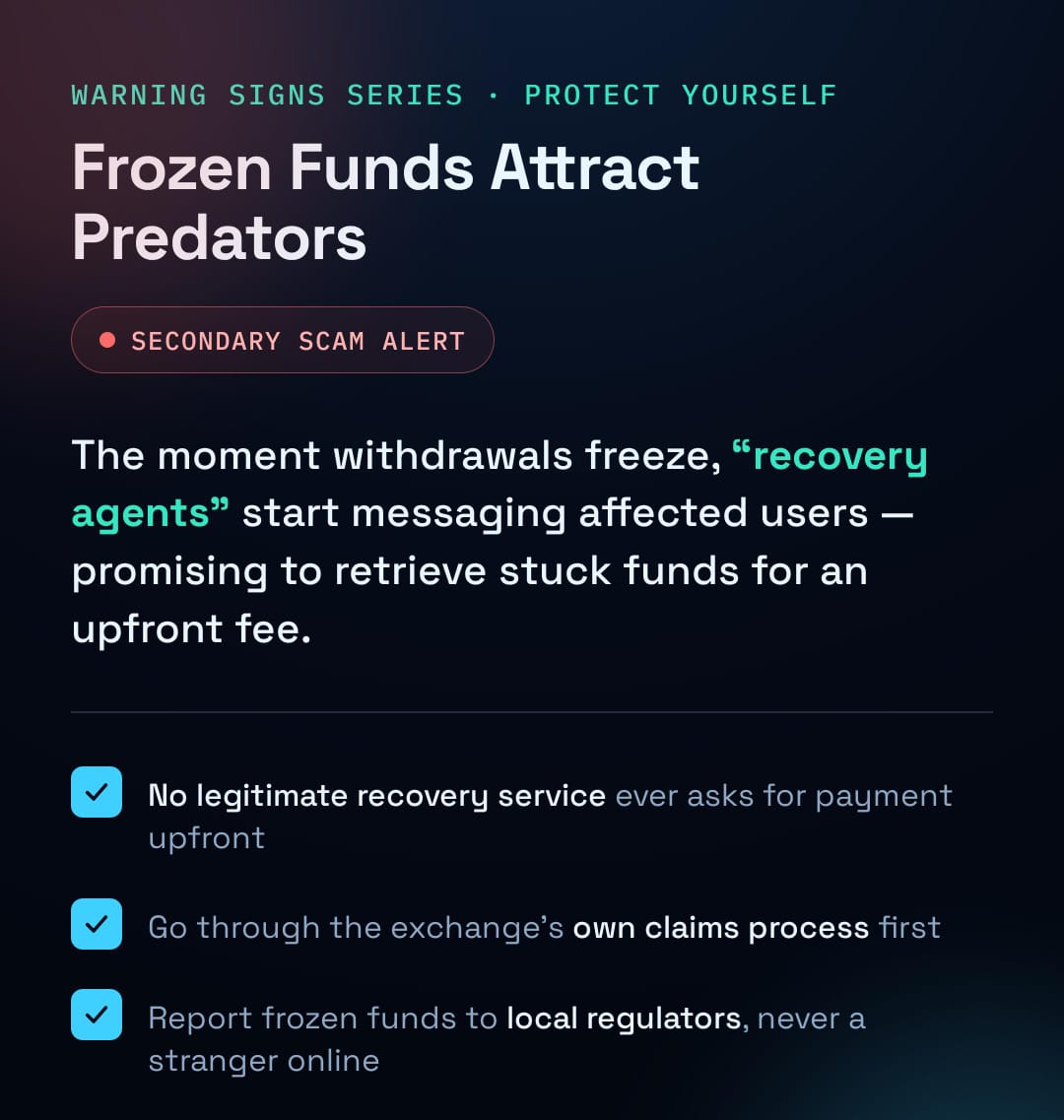
This secondary scam thrives precisely because it targets individuals who are already vulnerable, anxious, and actively searching for any viable solution to their predicament. The early and prevalent appearance of such scams, even before an exchange has fully confirmed its insolvency or outlined a clear recovery process, signifies a significant breakdown of trust and an acute level of user concern. It underscores the urgency with which users need to be educated about legitimate recourse channels – typically through the exchange’s official claims process, local regulatory bodies, or law enforcement – rather than engaging with unknown third parties offering illicit shortcuts.
Broader Implications and Lessons for User Vigilance
The AscendEX collapse, much like its predecessors, serves as a stark reminder of the inherent risks associated with centralized cryptocurrency exchanges. The "regulatory considerations" cited by AscendEX, particularly concerning MiCA, highlight the increasing global scrutiny on crypto platforms. While regulatory frameworks like MiCA aim to enhance consumer protection and market integrity, an exchange’s failure to adapt or comply can accelerate its downfall, especially if it masks deeper financial vulnerabilities. AscendEX’s admission of a failed "strategic transaction" underscores that regulatory gaps are often symptoms of more profound solvency issues.
For individual users, the AscendEX case reinforces the critical importance of due diligence and proactive monitoring. Waiting for an official shutdown notice is often too late. The sequence of events – from subtle withdrawal delays and anomalous on-chain data to vague trading halts and corporate silence – provides a blueprint for early detection. Users must cultivate an independent mindset, relying on transparent blockchain data and critical analysis rather than solely on official communications, which are frequently designed to manage perceptions rather than convey full transparency.
The "not your keys, not your coin" mantra remains the gold standard for asset security in the crypto space. While centralized exchanges offer convenience and liquidity, they also introduce counterparty risk. Diversifying holdings, utilizing self-custody solutions for significant portions of one’s portfolio, and regularly monitoring the operational health of any exchange holding one’s funds are essential preventative measures. The users who successfully navigated the AscendEX collapse were almost universally those who heeded the early, subtle warnings and acted swiftly, demonstrating that vigilance and informed action are the most potent defenses against the quiet, insidious collapse of a crypto exchange.