


Six weeks ago, Robinhood Chain, the newly launched Layer 2 blockchain, barely registered a stablecoin presence. Today, it stands as a burgeoning hub with three distinct stablecoins vying for market share, collectively amassing over $650 million in total market capitalization. This meteoric rise, achieved in a timeframe that typically takes established Layer 2 networks years, not mere weeks, signifies a profound shift in the landscape of retail crypto liquidity and the strategic positioning of brokerage-built blockchain platforms. The rapid accumulation of capital is not merely an impressive numerical feat; it represents a genuine three-way contest over the preferred form of digital dollar on a platform designed to bridge traditional finance with the decentralized world. The outcome of this contest, and the underlying forces driving it, offer critical insights into the future direction of mainstream crypto adoption.
The Rapid Ascent: A $650 Million Milestone in Weeks
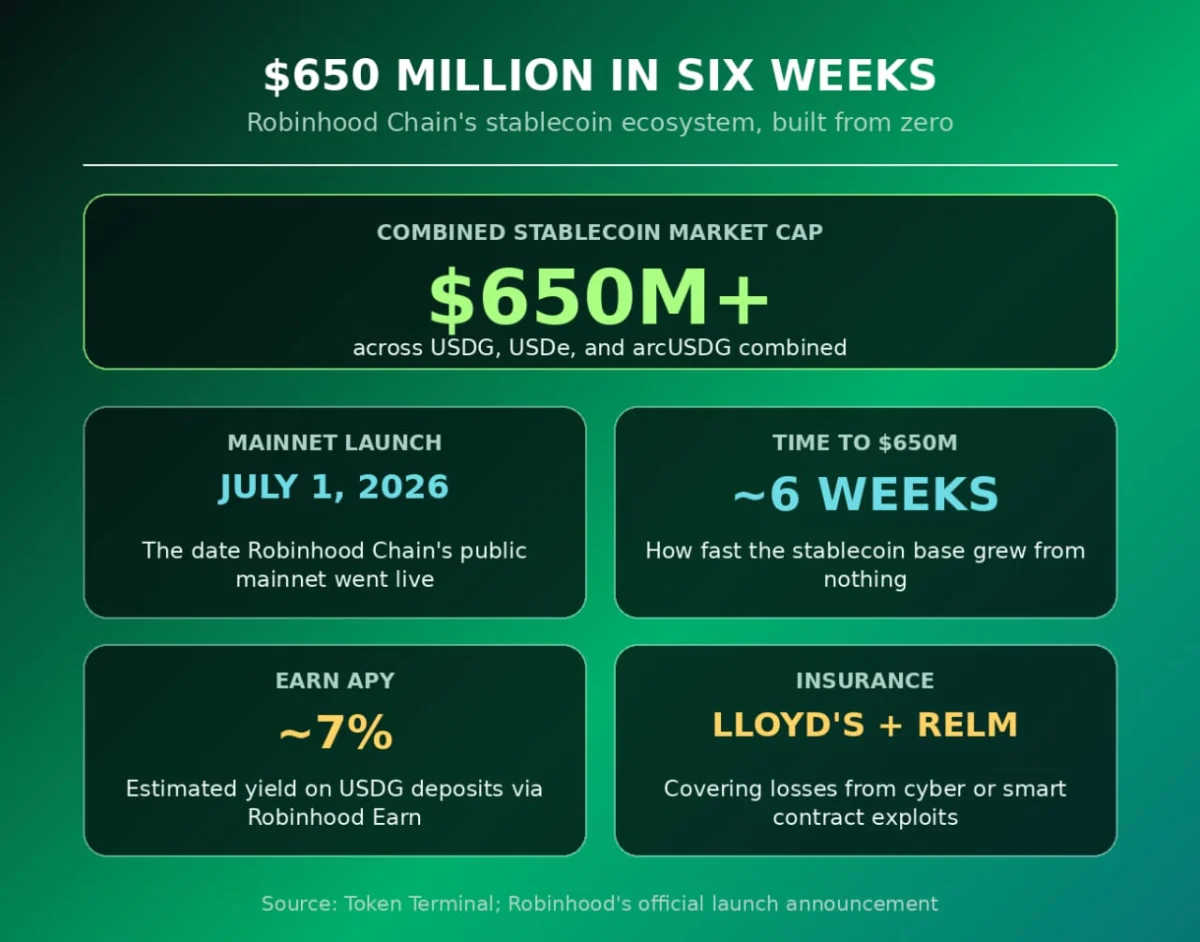
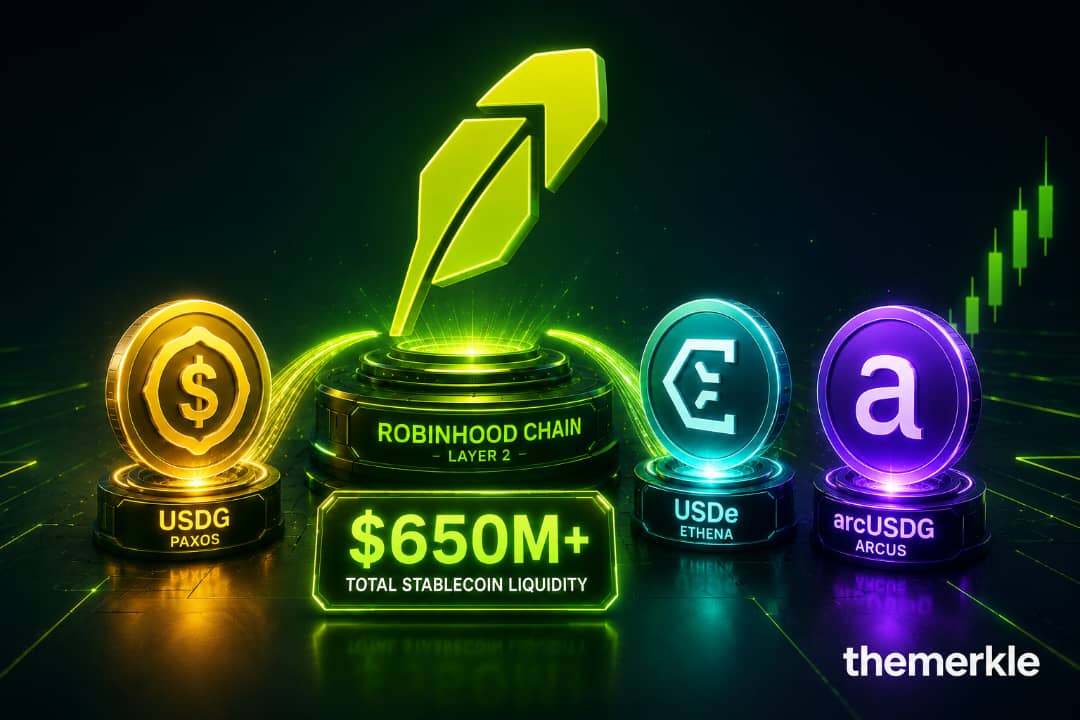
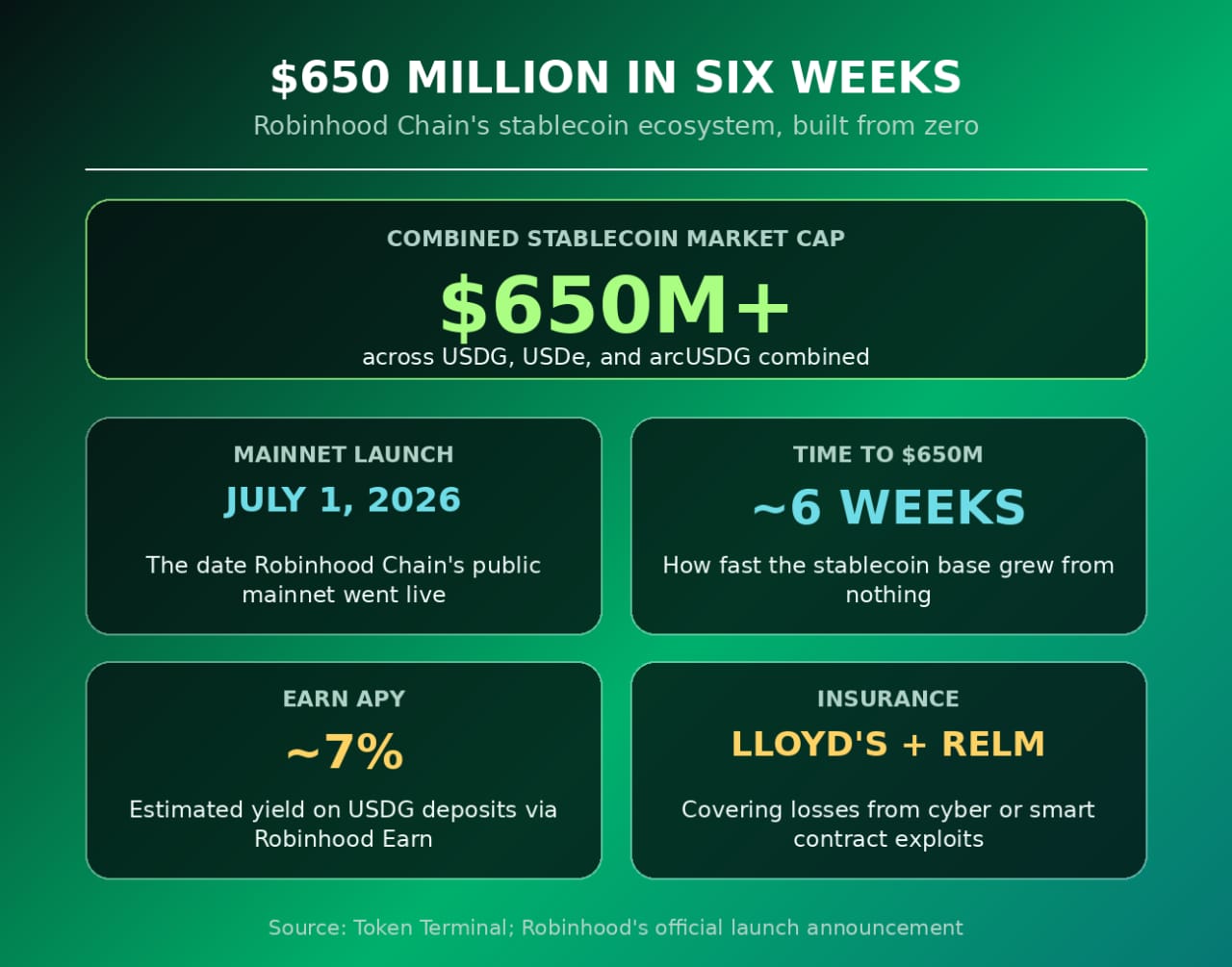
According to comprehensive data from the on-chain analytics platform Token Terminal, Paxos’ USDG, Ethena’s USDe, and Arcus’ arcUSDG have collectively surged past the $650 million mark in combined market capitalization on Robinhood Chain. This unprecedented growth has transpired within an astonishingly brief period, particularly given that Robinhood Chain’s public mainnet only officially went live on July 1, 2026. This means the entire stablecoin ecosystem, from a standing start, has achieved a valuation exceeding half a billion dollars in approximately six weeks on a blockchain that, in its current public form, did not exist prior to this summer.
To put this velocity into perspective, many established Layer 2 solutions, designed to scale Ethereum, have taken months, if not years, to cultivate a comparable level of stablecoin liquidity and user engagement. While the broader cryptocurrency market has experienced periods of rapid expansion, the concentrated and swift inflow of capital into multiple competing stablecoins on a brand-new, brokerage-backed chain underscores a unique confluence of strategic design, compelling incentives, and latent market demand. This rapid accumulation of value highlights the profound impact that a well-executed launch strategy, coupled with direct access to a vast existing user base, can have in the competitive Layer 2 arena.
The Genesis of Robinhood Chain: A Strategic Pivot
To fully appreciate the speed at which stablecoins have integrated and flourished on this network, it is essential to understand Robinhood’s strategic rationale behind its blockchain venture. Robinhood, a prominent brokerage known for democratizing access to financial markets, unveiled the public mainnet of Robinhood Chain with a clear vision. As detailed in its official announcement, the company positioned its Layer 2 solution as a blockchain built using the Arbitrum Platform, adhering to institutional-grade standards. Crucially, it was designed for native connectivity with Robinhood’s extensive base of on-chain users, effectively serving as a turnkey environment for decentralized application (dApp) developers and liquidity providers.
This strategic move represents Robinhood’s ambition to extend its financial services into the decentralized finance (DeFi) realm, leveraging its existing customer base of over 28 million. By building on Arbitrum, a leading Ethereum Layer 2, Robinhood aimed to inherit its robust security and scalability while tailoring the environment to its specific needs. The emphasis on "institutional standards" signals a deliberate attempt to attract sophisticated participants and instill confidence, bridging the often-disparate worlds of traditional finance and nascent blockchain technology. Furthermore, Robinhood’s forward-looking design philosophy describes the network as "AI-native" and "tailored specifically toward real-world assets," indicating a long-term roadmap that extends beyond mere transactional efficiency to encompass complex financial instruments and emerging technological paradigms.
Robinhood Earn: The Catalyst for Growth
Central to the unprecedented influx of stablecoin liquidity on Robinhood Chain was the introduction of Robinhood Earn, the company’s inaugural decentralized lending product. This innovative offering was made directly accessible through the main Robinhood application, seamlessly integrating DeFi capabilities into a familiar user interface. Robinhood Earn allows users to lend their dollar-backed USDG stablecoins through a self-custody wallet, promising an estimated 7% annual percentage yield (APY). This attractive yield, significantly higher than traditional savings accounts, was further bolstered by an insurance policy procured through Lloyd’s of London and RELM, designed to cover potential losses arising from cyber-attacks or smart contract exploits.
The underlying lending infrastructure for Robinhood Earn is powered by the Morpho protocol, developed with the support of a consortium of prominent partners including Steakhouse, Ethena, Spark, and Maple. This robust technological and partnership framework provided a credible and secure environment for users to engage with DeFi. However, it was the single strategic decision to directly tie a compelling 7% yield to stablecoin deposits, particularly USDG, that served as the primary catalyst. This direct incentive mechanism, readily available to millions of existing Robinhood users, effectively ignited the stablecoin growth race, channeling substantial capital into the nascent chain and setting the stage for intense competition among stablecoin providers. The integration of a high-yield, insured product within a trusted brokerage app significantly lowered the barrier to entry for retail investors exploring DeFi opportunities.
USDG’s Inherent Advantage: A Foundational Partnership
The initial dominance of USDG on Robinhood Chain was not a serendipitous event but a direct consequence of its foundational integration and strategic partnerships. Robinhood itself, alongside industry giants Kraken, Galaxy Digital, and Paxos, formed the consortium responsible for the creation of USDG in November. Paxos, a regulated blockchain infrastructure platform and issuer of other prominent stablecoins, was specifically tasked with issuing USDG. The stated objective behind this collaboration was to accelerate global stablecoin adoption through an "equitable reserve revenue-sharing model," aiming to address what was perceived as a lack of genuine competition in the regulated stablecoin market.
Kraken co-CEO Arjun Sethi, at the time of USDG’s announcement, articulated the stablecoin’s purpose: to draw mainstream participants into the stablecoin ecosystem by tackling the concentrated nature of existing regulated stablecoin offerings. This founding partnership granted USDG a significant structural advantage, positioning it as the native, default dollar asset on Robinhood Chain from its inception. This "home-field advantage" meant USDG was the primary lending asset within Robinhood Earn from day one, establishing a natural and direct distribution channel that competing stablecoins initially lacked. Its early ubiquity and seamless integration within the Robinhood ecosystem provided it with a substantial head start in capturing the overwhelming majority of early stablecoin activity on the newly launched chain.
Ethena’s USDe: The Disruptive Challenger
What makes the current $650 million figure particularly compelling is that it no longer represents a singular stablecoin’s triumph. Ethena’s synthetic dollar, USDe, has mounted a remarkably aggressive challenge, rapidly closing the gap with USDG and transforming the landscape into a genuine multi-horse race. USDe’s explosive growth on Robinhood Chain is largely attributable to its pivotal role as a primary yield-generating collateral asset within Robinhood Earn itself.
Ethena was specifically chosen by Steakhouse, the appointed curator managing the Earn vault, to serve as the primary collateral issuer for Robinhood’s inaugural crypto earn product. This strategic selection provided USDe with a direct and structural pathway into the very same high-yield product that initially propelled USDG’s growth. The significance of USDe’s rise lies in its fundamental design: unlike traditional, fiat-collateralized stablecoins such as USDG, USDe maintains its dollar peg synthetically. It achieves this by combining crypto assets with strategically offsetting derivatives positions, primarily through shorting perpetual futures.
The rapid adoption of USDe on Robinhood Chain signifies a crucial trend: yield-seeking capital is actively choosing a synthetic dollar over a conventional reserve-backed one. This demand profile is distinct from simple transactional stablecoin usage; it suggests that a substantial portion of the capital flowing into Robinhood Chain is specifically targeting enhanced yield opportunities, indicating a higher risk appetite among a segment of users, or a strong belief in Ethena’s peg stability mechanisms. Industry analysts view this as a litmus test for the broader acceptance of synthetic stablecoins within mainstream-adjacent platforms, highlighting a potential shift in how retail investors perceive and utilize digital dollars for generating returns.
The Emergence of Arcus’ arcUSDG and Intensifying Competition
Adding another layer of complexity and dynamism to this evolving stablecoin narrative is the significant presence of Arcus’ arcUSDG. While details regarding arcUSDG’s specific mechanisms or initial integration may be less public than its two primary competitors, its rapid ascent to contribute to the collective $650 million valuation underscores the intense competitive environment on Robinhood Chain. The fact that three distinct stablecoins have managed to attract substantial liquidity in such a short period speaks volumes about the network’s allure and the diverse demands of its user base.
Arcus’ entry into this competitive arena likely signals a further diversification of stablecoin offerings, potentially catering to different user preferences regarding collateralization, risk profiles, or yield generation strategies. Its growth alongside USDG and USDe confirms that Robinhood Chain is not merely a conduit for one type of digital dollar but a vibrant marketplace where various models are being tested and adopted at an unprecedented pace. This three-way contest is crucial for the long-term health and decentralization of the chain’s economy, preventing over-reliance on a single asset and fostering innovation among stablecoin issuers. The active competition ensures that users have choices, and that the underlying mechanisms of these digital dollars are continuously scrutinized and optimized to attract and retain liquidity.
Industry Reactions and Expert Analysis
The rapid growth witnessed on Robinhood Chain has not gone unnoticed by industry observers and market participants. Spokespersons for Robinhood, while not directly quoted on this specific milestone, would likely emphasize the successful execution of their vision to bridge traditional brokerage services with cutting-edge blockchain technology. They would point to the robust growth as validation of their strategy to create a "turnkey environment" for builders and to seamlessly integrate DeFi products like Robinhood Earn for their extensive user base. The company’s commitment to "AI-native" and "real-world asset" capabilities would also be highlighted as foundational elements attracting this rapid liquidity.
Analysts from firms specializing in blockchain and digital assets have expressed a mix of admiration and cautious optimism. "The speed at which Robinhood Chain has accumulated stablecoin liquidity is truly remarkable," noted one prominent DeFi analyst, speaking on background. "It demonstrates the immense power of integrating a Layer 2 solution directly into a massive retail brokerage platform. The existing user base, combined with compelling yield products, creates an instant demand funnel that most independent Layer 2s struggle to build over years."
Another expert weighed in on the stablecoin dynamics: "The three-way competition, especially the strong showing of Ethena’s USDe, is a fascinating development. It signals that a significant portion of the capital flowing in is sophisticated enough to seek out higher-yield, synthetically backed assets, even within a platform that caters to retail. This isn’t just passive parking of dollars; it’s active capital deployment chasing yield, which is a key characteristic of a maturing DeFi ecosystem." The potential for regulatory scrutiny on such rapid growth and the nature of synthetic stablecoins within a regulated brokerage environment is also a topic of discussion among legal and compliance experts, suggesting that while growth is celebrated, oversight will inevitably follow.
Broader Implications: Redefining Retail Crypto Liquidity
Stepping back from the individual token performances, the stablecoin race unfolding on Robinhood Chain reflects something far more significant than any single asset’s growth curve. Robinhood purposefully built this chain to directly connect its vast 28 million-customer brokerage base to on-chain finance. Its launch materials explicitly describe the network as designed to be AI-native and specifically tailored toward real-world assets (RWAs), integrated from day one with crucial infrastructure partners such as Alchemy, BitGo, and Chainlink. These partnerships provide ready-made DeFi capabilities, including lending and borrowing, creating a comprehensive ecosystem from the outset.
The rapid establishment of a competitive and rapidly growing stablecoin base at the core of this infrastructure is precisely the foundation Robinhood requires if it intends for Robinhood Chain to function as genuine financial rails, rather than merely a novelty blockchain attached to a brokerage application. The success in attracting such substantial and diverse dollar liquidity validates Robinhood’s strategic pivot into the blockchain space, demonstrating a clear demand for integrated, user-friendly DeFi solutions within a trusted brand. This model could potentially redefine how retail investors interact with decentralized finance, bridging the gap between traditional and crypto markets in an unprecedented manner.
The implications extend beyond Robinhood itself. This experiment provides a powerful case study for other traditional financial institutions considering their entry into the blockchain space. It illustrates that leveraging an existing user base and offering attractive, insured DeFi products can accelerate adoption dramatically. Furthermore, the rapid growth on Robinhood Chain could serve as a bellwether for the broader Layer 2 ecosystem, demonstrating that well-designed, application-specific chains with strong backing can achieve liquidity and network effects much faster than previously imagined.
Navigating the Future: A Dynamic Stablecoin Landscape
For anyone closely tracking this rapidly evolving space, the critical metric to monitor moving forward is not solely the combined $650 million total, but rather how the composition and market share among the three competing assets continue to shift. A chain where yield-bearing synthetic dollars like USDe consistently gain market share against a more conventional, reserve-backed stablecoin like USDG tells a distinct story about user intent, potentially indicating a growing comfort with innovative financial instruments and a stronger pursuit of yield. Conversely, a stable dominance by USDG might suggest a preference for perceived lower-risk, more traditionally collateralized assets.
Robinhood’s own Earn product remains squarely at the epicenter of this dynamic. It acts as the primary mechanism actively pulling capital towards whichever stablecoin currently offers the most attractive yield pathway, whether through direct lending or collateralization opportunities. As Robinhood Chain continues to mature beyond its initial six-week launch window, this three-way stablecoin contest is poised to remain one of the clearest and most concrete signals of whether the broader Robinhood Chain experiment translates into genuine, sustained on-chain financial activity and deep liquidity, or if it represents an early rush of yield-chasing capital that could potentially rotate elsewhere with similar speed. The long-term success of Robinhood Chain hinges on its ability to evolve beyond a mere yield farm into a robust, multi-faceted decentralized financial ecosystem.
Disclosure: This is not trading or investment advice. Always do your research before buying any cryptocurrency or investing in any services.














