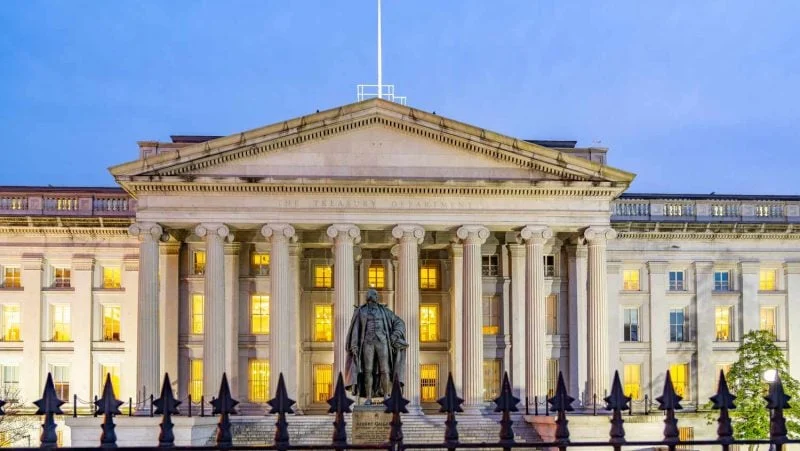
The United States Department of the Treasury has officially introduced a comprehensive set of proposed regulations aimed at clarifying the operational and compliance obligations for stablecoin issuers and digital asset service providers under the landmark GENIUS Act. This Notice of Proposed Rulemaking (NPRM), unveiled on Monday, represents a pivotal step in the federal government’s effort to bring the rapidly evolving digital asset market into the traditional regulatory fold. By focusing specifically on Section 3 of the legislation, the Treasury seeks to establish clear jurisdictional boundaries, defining precisely when a payment stablecoin is considered "issued in the United States" and under what circumstances a platform is deemed to be offering or selling these assets to American residents.
The proposal arrives at a critical juncture for the cryptocurrency industry, which has faced years of ambiguity regarding which federal agencies hold authority over various digital instruments. Scheduled for formal publication in the Federal Register on August 18, the document initiates a 60-day public comment period, inviting stakeholders from the financial technology sector, traditional banking, and legal advocacy groups to provide feedback on the proposed definitions and enforcement mechanisms.
Jurisdictional Definitions and the Scope of "US Issuance"
At the heart of the Treasury’s proposal is a rigorous framework for determining the geographical nexus of stablecoin activity. Under the new rules, a payment stablecoin would be categorized as issued within the United States if the entity responsible for the issuance is physically located in the country at the time of the transaction, or if the asset is issued to any individual or entity currently situated within US borders.
To provide clarity for compliance officers, the Treasury has outlined specific criteria for determining "location." For natural persons, the department will primarily look at physical presence. For corporate entities, the determination will hinge on the place of incorporation or the "principal place of business." This binary approach is designed to prevent issuers from using shell companies or offshore mailing addresses to circumvent US oversight while maintaining their core operations on American soil.
Furthermore, the proposal addresses the complex nature of foreign-based issuers. Under the proposed guidelines, a foreign entity can avoid being classified as a US issuer only if it meets a three-pronged test: it must maintain a "reasonable belief" that its recipients are located outside the United States; it must implement and maintain robust internal controls—such as geofencing and sophisticated KYC (Know Your Customer) protocols—designed to prevent issuance to US persons; and it must strictly abstain from targeting US-based users through any form of advertising or direct solicitation.
The Compliance Timeline: 2025 to 2028
The implementation of the GENIUS Act, which was signed into law in July 2025, follows a multi-year roadmap designed to allow the industry sufficient time to restructure its operations. The primary enforcement phase is set to begin on January 18, 2027. From this date forward, any entity attempting to issue payment stablecoins within the United States must be authorized under a specific federal or state regulatory framework. This effectively ends the era of "unregulated" stablecoins operating within the US financial system, though exceptions will be carved out for qualifying foreign issuers who meet the Treasury’s stringent technological and reciprocal standards.
The second major milestone occurs on July 18, 2028. At this stage, the prohibition extends beyond the issuers to the intermediaries. Digital asset service providers—including centralized exchanges, custodial services, and brokerage platforms—will be generally prohibited from facilitating the sale or offering of stablecoins to US-located persons unless those tokens were minted by a permitted domestic issuer or an approved qualifying foreign issuer.
This staggered timeline reflects the Treasury’s recognition that the "secondary market" for stablecoins—where most retail trading occurs—requires a longer transition period to ensure that liquidity is not abruptly severed, which could lead to significant market volatility.
Technological Mandates and International Reciprocity
A notable and potentially controversial aspect of the proposal involves the technological requirements placed on foreign issuers. To be considered a "qualifying foreign issuer," an entity must demonstrate that it possesses the technological capability to comply with lawful US orders. This includes the ability to freeze assets, reverse transactions where technically feasible, or provide detailed transactional data in response to subpoenas or national security requests.
Additionally, the Treasury is emphasizing "applicable reciprocal arrangements." This suggests that the US will look more favorably upon issuers located in jurisdictions that have established information-sharing agreements with the United States. This move is seen by analysts as an attempt to create a "global standard" for stablecoin regulation, leveraging the dominance of the US dollar to compel foreign regulators to adopt similar transparency and oversight measures.
Defining "Offering and Selling" in the Digital Age
The Treasury’s proposal provides a granular look at what constitutes the "offering or selling" of a stablecoin, a definition that has significant implications for marketing and user interface design. The department lists several activities that would trigger US jurisdiction:
- Directly soliciting users located in the United States through digital communications.
- Advertising on platforms where the content is specifically targeted or available to a US audience.
- Responding to purchase inquiries or providing customer support to individuals known to be in the country.
- Providing tools or instructions—such as VPN recommendations or "how-to" guides—that help users bypass location-based restrictions or IP address checks.
To protect platforms that act in good faith, the proposal includes a "safe harbor" provision. Platforms can receive protection from enforcement actions if they can prove a "reasonable belief" that a customer was outside the US, provided they have not engaged in targeted advertising and have maintained active controls to prevent US access.
Exemptions for Self-Custody and Direct Transfers
In a move that may alleviate some concerns within the decentralized finance (DeFi) community, the Treasury has proposed certain exemptions from the Section 3 prohibitions. Specifically, certain direct transfers between individuals and transactions involving "self-custody wallets" (also known as unhosted wallets) may be exempt, provided they do not involve a centralized intermediary or service provider.
This exemption recognizes the peer-to-peer nature of blockchain technology. However, the Treasury remains cautious, seeking industry feedback on where to draw the line between a "private transfer" and a "commercial offering." The department is particularly interested in how these exemptions might be exploited by bad actors to facilitate money laundering, a concern that was addressed in a separate set of rules proposed by FinCEN and OFAC in April.
Seeking Feedback on Complex Crypto Mechanics
The NPRM is not a final set of rules but a consultative document, and the Treasury has explicitly asked for industry input on several "edge cases" that do not fit neatly into traditional financial categories. These include:
- Airdrops: How should the free distribution of tokens be treated if the recipient is in the US?
- Stablecoin Buybacks: Does a redemption process constitute an "offering" if it is managed by a foreign issuer?
- Wrapped Tokens and Bridges: If a permitted stablecoin is "wrapped" to function on a different blockchain, does the wrapper become a new issuance? Who is responsible for the bridge’s compliance?
- Market Makers: How should liquidity providers who facilitate trades but do not "issue" the tokens be regulated under the GENIUS Act?
The inclusion of these topics suggests that the Treasury is aware of the technical nuances of the crypto ecosystem and is attempting to avoid creating rules that are obsolete upon arrival.
Background: The Genesis of the GENIUS Act
The GENIUS Act (an acronym for Global Electronic Network and Infrastructure Unity and Security) was born out of the market turmoil of 2022 and 2023, which saw the collapse of several major crypto firms and the de-pegging of various stablecoins. Signed into law in July 2025, the Act’s primary objective is to ensure that "payment stablecoins"—those intended to be used as a medium of exchange—are as safe as a dollar in a bank account.
The cornerstone of the Act is the 1:1 reserve requirement. Every outstanding token must be backed by "eligible assets," which the law defines strictly as cash, insured bank deposits, and short-term Treasury securities with a maturity of 90 days or less. This requirement is intended to prevent "runs" on stablecoins by ensuring that the issuer always has the liquidity necessary to honor redemptions.
Fact-Based Analysis: The Broader Impact
The Treasury’s proposal represents a "moating" of the US financial system. By setting high barriers to entry, the US government is effectively signaling that only the most transparent and well-capitalized issuers will be allowed to tap into the American market.
For domestic issuers like Circle (the issuer of USDC) or Paxos, these rules provide a much-needed "regulatory seal of approval" that could pave the way for greater institutional adoption. Conversely, for offshore giants like Tether (USDT), the rules present a stark choice: comply with US technological mandates and asset-freezing capabilities, or be effectively locked out of the world’s largest economy by 2028.
Economically, the GENIUS Act reinforces the role of the US dollar as the world’s primary reserve currency. By requiring stablecoins to be backed by Treasury securities, the Act creates a permanent and growing source of demand for US government debt. As the stablecoin market cap currently sits at hundreds of billions of dollars, the transition of these reserves into short-term Treasuries provides a significant, albeit indirect, benefit to the US federal budget and the stability of the bond market.
However, critics warn that overly stringent rules could drive innovation to more permissive jurisdictions like Dubai, Singapore, or the European Union (under its MiCA framework). The 60-day comment period beginning in August will likely see a flurry of lobbying as the industry attempts to soften the definitions of "offering" and "solicitation" to ensure that the US remains a competitive hub for digital asset innovation.
As the Jan 18, 2027, deadline approaches, the global crypto landscape will likely undergo a massive consolidation. The "wild west" era of stablecoins is rapidly being replaced by a highly regulated environment that mirrors the traditional banking sector, for better or for worse. The Treasury’s latest proposal is the most detailed map yet of what that new world will look like.