


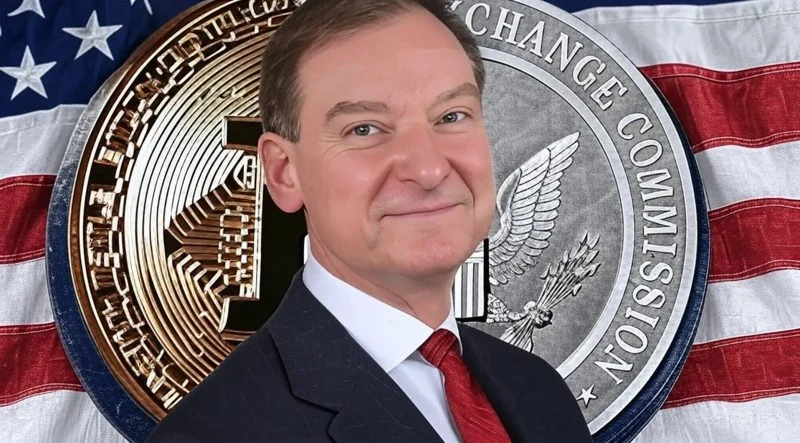
Securities and Exchange Commission (SEC) Chairman Paul Atkins has signaled a significant shift in the federal approach to digital asset regulation, indicating that the agency is prepared to bypass legislative delays by implementing its own comprehensive rules for the crypto market. In an extensive interview with CNBC on July 27, 2026, Atkins revealed that while the commission remains supportive of the "CLARITY Act"—the centerpiece of the current administration’s digital asset legislative agenda—the SEC is "ready, willing, and able" to exercise its own rulemaking authority to provide the market structure oversight that the industry has long demanded. This announcement comes at a critical juncture as the U.S. Senate faces a mounting backlog of priorities, including international sanctions and executive nominations, which threaten to push crypto-specific legislation past the impending August recess.
The Dual Track Toward Regulatory Certainty
The SEC Chairman’s remarks underscore a "two-track" strategy currently being employed by the commission. On one hand, the agency is providing intensive technical assistance to lawmakers to ensure the CLARITY Act is robust and legally sound. On the other hand, Atkins is preparing the commission to act independently if the legislative window closes. This shift marks a departure from the "regulation by enforcement" era that characterized the previous administration, moving instead toward a proactive, notice-and-comment rulemaking framework.
Atkins emphasized that while agency rules can solve immediate ambiguities regarding asset classification and trading venue registration, a formal statute passed by Congress remains the "gold standard" for long-term stability. "We’re doing all we can to help them answer their questions and provide technical assistance," Atkins told CNBC. "But ultimately, statute is the way to future-proof something. We are ready, willing and able to come out with rules that address the same issues in clarity and in other aspects of the crypto market."
The Chairman’s insistence on "future-proofing" reflects a desire to avoid the legal see-sawing that has plagued the crypto industry for the last decade. By embedding definitions into federal law, Congress can prevent future administrations from unilaterally changing the regulatory landscape through shifts in agency leadership. However, with the legislative clock ticking, the SEC’s backup plan of independent rulemaking offers a vital safety net for market participants seeking immediate guidance.
Legislative Gridlock and the August Recess
The urgency of Atkins’ message is driven by the tightening schedule on Capitol Hill. The Senate has recently pivoted its focus toward a high-priority Russia sanctions package and the confirmation of several key presidential nominees. This shift in focus has effectively sidelined the digital market structure legislation, leaving industry advocates concerned that the CLARITY Act may not reach the floor before the August recess.
Historically, legislation that fails to clear the chamber before the summer break faces significantly lower odds of passage in the subsequent autumn session, particularly during a mid-term election year. The compressed schedule is further complicated by unresolved negotiations regarding government ethics provisions. These provisions, which have become a flashpoint for partisan debate, involve transparency requirements related to President Donald Trump’s personal and business interests in the cryptocurrency sector.
If these ethics disputes remain unresolved, the CLARITY Act could face a prolonged stalemate. In such a scenario, the industry’s focus would likely shift toward the implementation of the GENIUS Act—a broader administrative reform bill—and the administrative rulemaking processes within the SEC and the Commodity Futures Trading Commission (CFTC).
The CLARITY Act: A Pillar of Market Structure
The CLARITY Act (Creating Legal Accountability and Reform In Transitioning Years) is designed to resolve the long-standing jurisdictional dispute between the SEC and the CFTC. Since 2020, the industry has operated under a cloud of uncertainty regarding which digital assets constitute "securities" and which are "commodities."
Key components of the CLARITY Act include:
- Asset Classification: Establishing a clear mathematical and functional test to determine when a token is an investment contract versus a decentralized commodity.
- Stablecoin Oversight: Creating a federal framework for payment stablecoins, likely placing them under the purview of the Federal Reserve and the Office of the Comptroller of the Currency (OCC).
- Exchange Registration: Allowing crypto exchanges to register as "digital asset trading systems," a new category of regulated entity that would bridge the gap between traditional national securities exchanges and alternative trading systems (ATS).
Atkins argued that this legislation would provide the "clear direction" necessary for the SEC to transition from a litigious stance to a supervisory one. Without it, the SEC must rely on the Howey Test—a 1946 Supreme Court precedent—which many critics argue is ill-suited for the nuances of blockchain technology.
Historical Context: From Enforcement to Rulemaking
The transition under Chairman Paul Atkins represents a pivot in SEC philosophy. Under his predecessor, Gary Gensler, the SEC pursued dozens of high-profile lawsuits against major industry players, including Coinbase, Ripple, and Binance. While the previous administration argued this was necessary to protect investors, the industry countered that it was impossible to comply with rules that were never clearly defined for digital assets.
Atkins, who previously served as an SEC Commissioner from 2002 to 2008 and is known for his pro-market, libertarian leanings, has made it a priority to provide the industry with a "pathway to compliance." His latest comments indicate that if Congress cannot provide that pathway through the CLARITY Act, the SEC will use the Administrative Procedure Act (APA) to draft new rules. These rules would likely cover custody requirements for digital assets, the tokenization of real-world assets (RWA), and the disclosure requirements for decentralized protocols.
Market Implications and Industry Reactions
The prospect of SEC-led rulemaking has drawn mixed reactions from the crypto industry. While many leaders welcome the move away from litigation, some fear that agency rules—unlike federal statutes—could be easily overturned by a future administration.
"We need the certainty of a statute," Atkins admitted in the interview, acknowledging these concerns. "But we cannot leave the market in a state of limbo indefinitely. If Congress doesn’t act, the SEC has a duty to provide a framework that ensures market integrity and investor protection."
Market analysts suggest that the SEC’s readiness to act independently could serve as a "forcing function" for Congress. By signaling that the agency will move forward regardless, Atkins is putting pressure on lawmakers to pass the CLARITY Act to ensure they—and not just unelected regulators—have a say in the final shape of the rules.
Institutional investors have responded positively to the news. The uncertainty of the last five years has been a major barrier to entry for pension funds and insurance companies. A clear set of SEC rules, even if they are not as permanent as a statute, would provide the "regulatory rails" necessary for these large-scale investors to allocate capital to digital asset markets.
The Role of the GENIUS Act
Should the CLARITY Act fail to pass in 2026, the regulatory spotlight will turn to the GENIUS Act (Government Efficiency, Neutrality, and Integrity in Underpinning Systems). This legislation, which has broader bipartisan support, focuses on the general modernization of federal agencies. Within the context of crypto, the GENIUS Act would mandate that agencies like the SEC and CFTC use modern technology and provide streamlined digital interfaces for regulated entities.
While the GENIUS Act does not provide the specific crypto-market structure found in the CLARITY Act, it would empower Chairman Atkins to expedite the rulemaking process. It would also mandate better coordination between the SEC and the CFTC, potentially ending the "turf wars" that have historically confused market participants.
Conclusion: A Pivotal Moment for U.S. Innovation
The coming months will be a defining period for the future of digital assets in the United States. Chairman Paul Atkins has made it clear that the era of regulatory ambiguity is coming to an end, one way or another. Whether through the "preferred path" of the CLARITY Act or through the SEC’s independent rulemaking authority, a new framework is on the horizon.
As the Senate grapples with its crowded legislative calendar, the crypto industry remains in a state of watchful waiting. The stakes are high; the outcome will determine whether the United States remains a global hub for blockchain innovation or if capital and talent continue to migrate to more jurisdictions with more established rules, such as the European Union under its MiCA (Markets in Crypto-Assets) framework.
Atkins’ "ready, willing, and able" stance provides a glimmer of hope for an industry that has long sought a seat at the table. By offering a backup plan to legislative gridlock, the SEC is asserting its role as a proactive regulator, committed to balancing the needs of innovation with the fundamental necessity of market stability. The ball is now in Congress’s court, but the SEC has made it clear that it will not wait forever to act.














