The Solana network, a prominent contender in the high-performance blockchain arena, has successfully initiated its first-ever transaction processing upgrade since its inception, marking a pivotal moment in its ongoing quest for superior operational efficiency. This significant enhancement involves a reduction in the network’s fundamental slot time, directly translating to swifter transaction confirmations for the myriad applications operating on the Solana blockchain. This strategic move is anticipated to considerably elevate the efficiency of what the network terms its "internet capital markets," encompassing a broad spectrum of decentralized finance (DeFi), non-fungible token (NFT), and blockchain gaming applications. While market analysts suggest that the immediate impact on the price of its native token, SOL, will be indirect, the upgrade unequivocally signals Solana’s unwavering commitment to continuous technical innovation and strengthens its intrinsic value proposition.
A Deep Dive into the Technical Upgrade: Slot Time Reduction Explained
Central to this landmark upgrade is a precise technical adjustment to how transactions are batched, processed, and confirmed within the Solana blockchain. Validators, the distributed nodes responsible for verifying and adding new transactions to the ledger, operating the latest Agave v4.2 client, activated the first phase of a planned series of slot-time reductions this week. This initial step has seen the network’s base timing decreased from an original 400 milliseconds (ms) to a more agile 350ms. This seemingly marginal decrease in time carries substantial implications for network performance: transactions can now achieve finality – the immutable state where they cannot be reversed – in a tangibly shorter timeframe.
To contextualize this, a "slot" on the Solana network is a designated fixed time window during which a randomly selected leader validator is granted the authority to produce and propose a block of transactions. By systematically reducing the duration of this slot, the network inherently accelerates the entire cycle of block production, propagation, and validation. Solana’s architecture was already designed for speed, distinguishing it sharply from many other leading blockchain protocols. For instance, Bitcoin typically operates with a block time of approximately 10 minutes, while Ethereum aims for an average of 12-second block times. Solana’s foundational 400ms slot time already ensured transaction confirmations in a fraction of a second, a speed unmatched by most Layer-1 alternatives. The current reduction to 350ms further solidifies this speed advantage, with the ambitious roadmap targeting an eventual slot time of just 200ms.
The implementation of this critical change adhered to the rigorous, decentralized governance process characteristic of blockchain networks. The proposal for this reduction was initially introduced as Solana Improvement Discussion (SIMD) 469, a community-driven mechanism for proposing network changes. Following extensive technical review, community feedback, and validator consensus, it received formal approval as SIMD-0525. According to the official documentation provided by the Solana Foundation, this enhancement is built upon and leverages significant performance optimizations already integrated into the validator clients, specifically in key components such as Turbine, which manages the efficient propagation of blocks across the network, and Replay, which dictates how validators re-process these blocks. These foundational architectural improvements were crucial prerequisites, ensuring the network could accommodate the increased speed without compromising its stability or security.
A Phased Rollout with Robust Safeguards
The current slot time reduction is not an isolated event but rather the inaugural phase of a meticulously planned, multi-month rollout strategy. This strategic plan envisions several successive reductions, incrementally moving the network towards its ambitious 200ms slot time target. This phased deployment represents a deliberate engineering choice, meticulously designed to mitigate potential risks and ensure the sustained stability and reliability of the network. Each subsequent step in the reduction process is controlled by its own "feature gate" – a software mechanism allowing for gradual activation – and is scheduled to be activated in a subsequent "epoch." An epoch on Solana is defined as the period required to produce 432,000 slots, typically spanning approximately two to three days.
This carefully staggered activation schedule provides a vital safety mechanism. It allows the network to monitor performance metrics closely and, if necessary, pause or even revert the progression if any adverse effects are detected. A critical indicator for such a scenario would be a significant increase in "block-skip rates," which serves as a diagnostic "canary in the coal mine." Elevated block-skip rates would signal that the timing parameters have become too stringent for the current validator hardware or prevailing network conditions to consistently maintain stable block production. This cautious, iterative deployment strategy underscores the Solana Foundation’s commitment to building a robust and reliable network, incorporating lessons learned from past instances where network stability was challenged under periods of intense load or specific attack vectors.

Unlocking Broader Implications: Latency, Efficiency, and Censorship Resistance
The Solana Foundation frames the overarching benefits of this comprehensive upgrade through two primary strategic advantages: enhanced latency and bolstered censorship resistance.
Elevated Latency and Network Competitiveness:
From a latency perspective, the protocol becomes demonstrably "more competitive" in terms of transaction confirmation speed. This directly translates into tangible benefits for decentralized applications (dApps) that inherently demand near-instantaneous transaction finality. Consider the rapidly evolving landscape of DeFi, where high-frequency trading strategies, complex arbitrage opportunities, and sophisticated financial primitives necessitate minimal lag for efficient operation. Faster transaction confirmations mean quicker execution of trades, more responsive liquidity provision, and an overall superior user experience in high-stakes financial environments. Similarly, real-time gaming applications built on Solana, which require rapid interaction between player actions and blockchain state updates, will experience noticeable improvements in responsiveness and fluidity. NFT marketplaces, often characterized by rapid asset transfers, bidding wars, and minting events, also stand to gain significantly from this increased responsiveness, reducing user frustration and improving market efficiency.
This relentless pursuit of superior latency extends beyond mere speed; it represents a strategic imperative to attract and retain both developers and users. In the intensely competitive Layer-1 blockchain ecosystem, performance metrics are key differentiators. By continually pushing the boundaries of transaction speed and efficiency, Solana aims to solidify its position as the preferred platform for high-throughput, low-latency applications, thereby expanding and diversifying its "internet capital markets" – a term encapsulating the broad range of economic activities facilitated by its blockchain.
Strengthened Censorship Resistance:
While perhaps less immediately apparent to the average user, the upgrade’s contribution to censorship resistance is equally profound. A shorter slot duration inherently narrows the "monopoly" that any single leader validator holds over the critical process of block building. In a Proof-of-Stake consensus mechanism like Solana’s, a leader is temporarily designated to propose new blocks containing validated transactions. If a leader were to hold this power for an extended period, there exists a theoretical risk of them selectively censoring specific transactions or manipulating the order of transactions within a block for personal gain. By significantly reducing the slot time, the duration of any single validator’s control over the block production pipeline is substantially shortened, diminishing the window of opportunity for such malicious behavior.
Moreover, this current slot time reduction is conceptualized as a foundational step, envisioned to be paired with a separate, upcoming proposal aimed at further cutting consecutive leader slots. If successfully implemented, this additional measure would further distribute the responsibility and power of block production across a wider and more frequently rotating set of validators. This would significantly limit how long any single validator can consecutively control the transaction pipeline. This dual-pronged approach – characterized by shorter individual leadership periods and fewer consecutive leadership turns – collectively bolsters the network’s decentralization and makes it considerably more resilient against potential censorship, front-running, or other forms of malicious activity. This attribute is paramount for any truly permissionless and trustless public blockchain.
Market Dynamics and SOL’s Price Trajectory: A Nuanced View
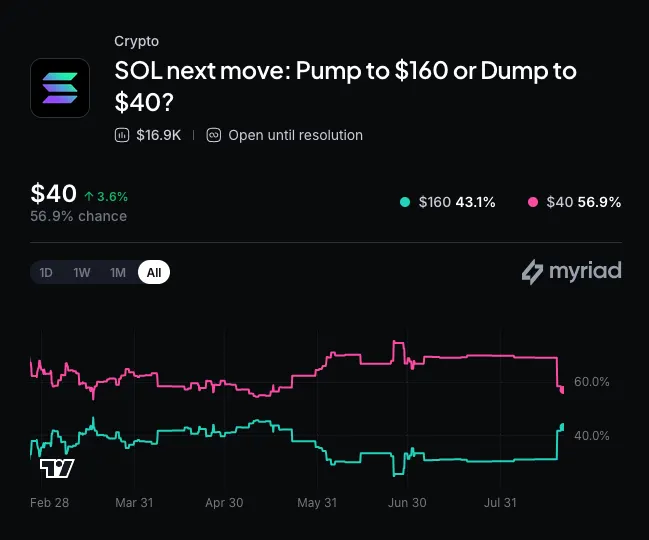
While the technical upgrade undeniably represents a positive development for Solana’s underlying infrastructure, its direct and immediate impact on the price of its native token, SOL, is perceived by market analysts as nuanced. It is not, in itself, expected to be a singular catalyst for a dramatic, instantaneous price surge. At the time of this report, SOL is trading approximately around $91, reflecting a roughly 4.4% increase over the past 24 hours. However, this current upward momentum appears to be more broadly influenced by prevailing macroeconomic factors and general cryptocurrency market sentiment rather than solely the specific network upgrade.
The broader cryptocurrency market has recently experienced a significant bullish impulse, primarily catalyzed by Bitcoin’s impressive surge to its highest valuation since June. This renewed vigor in Bitcoin’s price has triggered a widespread positive sentiment across altcoins, leading to reports of approximately $3 billion in short positions being liquidated across the entire crypto market this week. SOL, much like many other major altcoins, is currently riding this wave of renewed investor confidence and liquidity inflow. Its daily Relative Strength Index (RSI) recently registered 81, a technical indicator often signaling that an asset is deep within "overbought" territory, which could suggest that its rapid price appreciation might be followed by a period of correction or consolidation. Furthermore, the 200-day moving average for SOL continues to indicate a "bear" trend, implying that the longer-term market sentiment has not yet decisively shifted into a sustained bullish trajectory.
Market participants often interpret infrastructure enhancements like the slot-time reduction as a "quiet competence signal." These are fundamental improvements that bolster the network’s long-term viability, scalability, and overall attractiveness but typically do not trigger immediate, dramatic, speculative price movements. Instead, they contribute incrementally to the network’s overall health, stability, and potential for sustained, organic growth, which in turn underpins the long-term fundamental value proposition of the SOL token.
Solana’s Competitive Landscape and Future Outlook
From its inception, Solana has consistently positioned itself as a leading innovator in the race for blockchain scalability and transaction speed. The network has, however, faced the complex dual challenge of delivering on its ambitious promise of ultra-high throughput while simultaneously ensuring robust network stability. While Solana has consistently demonstrated impressive theoretical transaction speeds, it has also contended with periods of network congestion, occasional outages, and performance degradation under exceptionally heavy load – issues that the Solana Foundation and its dedicated developer community have actively worked to address through various upgrades, patches, and architectural optimizations.
The strategic significance of this slot time reduction cannot be overstated within the context of the ongoing "Layer-1 wars" – the intense competition among various foundational blockchain platforms. With numerous blockchains vying fiercely for developer talent, user adoption, and institutional investment, performance metrics such as transaction speed, throughput, and finality remain critical battlegrounds. By publicly embarking on a staged and transparent march towards an ultimate 200ms slot time, Solana powerfully reinforces its narrative as the "fastest chain" – a compelling message for both developers seeking a high-performance, low-latency environment for their dApps and for institutional funds meticulously evaluating investment opportunities based on core technological capabilities and future growth potential.
This technical enhancement, while not expected to be an instant price driver, fundamentally improves the network’s capacity to host increasingly complex and demanding decentralized applications. It lowers the technical barrier for developers aspiring to build sophisticated DeFi protocols, immersive Web3 gaming experiences, and robust enterprise-grade blockchain solutions that inherently require near-instant transaction finality and high throughput. Over time, a more performant, resilient, and developer-friendly network is expected to attract an even greater influx of developer activity, foster unprecedented innovation, and ultimately drive increased utility and widespread adoption, which are universally recognized as the primary long-term drivers for the appreciation of the SOL token’s value.
A Foundation for Sustainable Growth and Future Innovation
In summary, Solana’s inaugural slot time reduction represents a monumental technical achievement, emphatically demonstrating the network’s continuous evolution and its unwavering commitment to optimizing its performance envelope. By significantly enhancing transaction speed and strategically bolstering censorship resistance, this upgrade fundamentally fortifies Solana’s core infrastructure, rendering it even more attractive and capable for a diverse and expanding range of decentralized applications and a growing user base. While the immediate price movements of SOL will undoubtedly continue to be influenced by broader cryptocurrency market trends and macroeconomic factors, this fundamental infrastructure improvement serves as a crucial building block for Solana’s sustained long-term growth and its fierce competitiveness in the rapidly evolving blockchain landscape. It sends a clear and confident signal to the market that the network is not content to rest on its past achievements but is actively and strategically investing in its technological foundation to deliver a truly high-performance, decentralized platform capable of supporting the next generation of internet-scale applications. The journey towards an ultimate 200ms slot time is now decisively underway, promising an even faster, more efficient, and robust Solana experience in the foreseeable future.