Peaq, a prominent layer-1 network focused on Decentralized Physical Infrastructure Networks (DePIN), has successfully unveiled a simulated robotic delivery system that showcases the capability of processing on-chain payments autonomously. This groundbreaking demonstration, conducted via robotic.sh, peaq’s dedicated marketplace operating on its peaqOS operating system, marks a significant stride towards enabling machines to interact with real-world digital services and conduct financial transactions without human oversight.
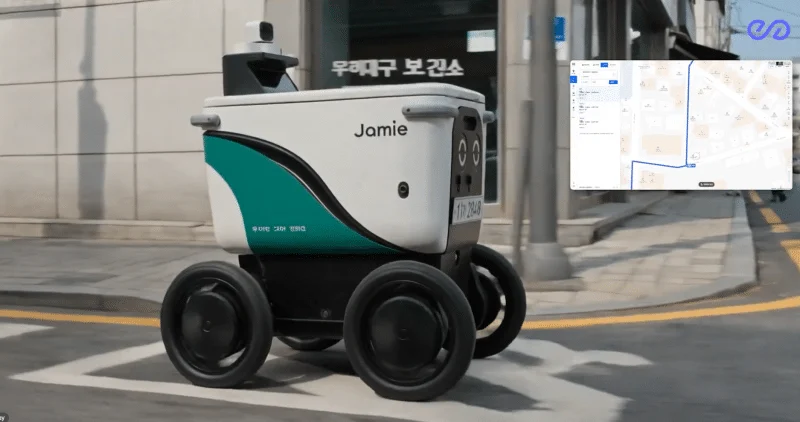
The core of the demonstration involved a simulated workflow featuring a delivery robot from Serve Robotics. This virtual robot navigated the bustling city of Seoul, leveraging the sophisticated mapping capabilities of NAVER Maps. The critical innovation lay in the robot’s ability to autonomously initiate and settle payments in real-time, facilitated by Tether (USDT) on the Solana blockchain, utilizing Tether’s Wallet Development Kit (WDK). This seamless integration highlights a future where autonomous agents can directly engage in economic activities, making decisions and executing transactions based on pre-defined parameters and network interactions.
According to peaq’s technical specifications and subsequent explanations, the demonstrated workflow allows a robotic agent to not only access essential real-world digital services, such as advanced mapping and navigation, but also to make critical operational decisions, such as route planning, and subsequently process blockchain-based payments. The entire process, from service access to financial settlement, occurred without any direct human intervention, underscoring the potential for true machine-to-machine commerce. A key aspect emphasized by peaq is the inherent transparency and verifiability of these transactions. All records pertaining to the robot’s navigation, wallet activity, and the settlement of payments are immutably stored and publicly accessible on the blockchain, providing a robust audit trail.
This integration with NAVER Maps is now a reality for machines operating on peaqOS. The robotic.sh marketplace, which officially launched this week, is designed to be a central hub for machine-accessible services. Beyond mapping and navigation, the marketplace already boasts a diverse array of services tailored for machine interaction. These include advanced AI inference tools, comprehensive search and data platforms, sophisticated cloud-based analytics, CAPTCHA solving services, and decentralized storage solutions. This burgeoning ecosystem aims to empower machines with the digital infrastructure they need to perform complex tasks and monetize their capabilities.
A significant aspect of peaq’s vision is interoperability. The company has asserted that any mobile robot, autonomous vehicle, drone, or humanoid robot that is compatible with and operating on peaqOS can seamlessly access these services. Crucially, this access is not limited by the specific blockchain network that the machine itself utilizes. This suggests a future where a machine might operate on one blockchain for its core functions but can still access services and conduct transactions on other compatible networks through the peaqOS framework. This agnostic approach to blockchain connectivity is vital for fostering widespread adoption and creating a truly interconnected machine economy.
The Genesis of Autonomous Machine Economics
The concept of machines engaging in financial transactions independently is not entirely new, but peaq’s approach, particularly its focus on DePIN, adds a unique dimension. DePIN refers to networks where physical infrastructure is managed and incentivized through decentralized blockchain technologies. This can encompass everything from charging stations for electric vehicles to decentralized wireless networks. By integrating autonomous payment capabilities into a DePIN framework, peaq aims to unlock new economic models for machine-driven services and infrastructure.
The Serve Robotics integration, while simulated, represents a tangible proof-of-concept for a future where delivery robots, for instance, could autonomously manage their operational costs. Imagine a fleet of delivery robots that can pay for charging, access navigation data, and even pay for access to delivery zones or sorting facilities, all without human dispatchers or accountants. This could dramatically reduce operational overhead and increase efficiency for logistics companies.
Chronology of a Technological Leap
The announcement of this simulated robotic payment system follows a period of significant development and expansion for peaq. While the exact timeline for the research and development leading to this specific demonstration is proprietary, the launch of robotic.sh this week provides a clear marker for the public unveiling of these capabilities.
The integration with NAVER Maps, a leading mapping service in South Korea, signifies a strategic step towards real-world applicability. NAVER Maps is known for its detailed and accurate mapping data, crucial for autonomous navigation in complex urban environments. The choice of Solana for the on-chain payment settlement is also noteworthy. Solana is recognized for its high transaction throughput and low fees, making it a suitable candidate for micro-transactions that might be characteristic of machine-to-machine payments. Tether (USDT), a stablecoin pegged to the US dollar, offers a stable medium of exchange, essential for predictable financial transactions.
The demonstration itself, as depicted in the accompanying social media posts, likely involved a staged scenario where the simulated robot’s actions were meticulously planned and executed to showcase the end-to-end payment flow. The tweet from peaq, dated May 22, 2026, clearly articulates the core message: "A robot accessing a real-world digital service, making a real-time decision, and getting paid for it. No human in the loop." This statement encapsulates the revolutionary potential of the technology.
Supporting Data and Industry Context
The broader context for peaq’s innovation lies within the rapidly evolving landscape of the Internet of Things (IoT) and artificial intelligence. As more devices become connected and capable of independent decision-making, the need for a robust framework to manage their interactions and economic activities becomes paramount.
According to a report by Statista, the global IoT market is projected to reach over $1.5 trillion by 2027, with a significant portion of this growth driven by industrial IoT (IIoT) and automotive applications. Within this massive market, autonomous systems, including delivery robots and vehicles, are expected to play an increasingly prominent role. These systems will require seamless integration with various digital services and the ability to conduct transactions for resources, data, and services.
Peaq positions itself as a key enabler of this future. The company has already established a strong presence in the DePIN sector, supporting over 60 applications across more than 20 industries. This extensive network of applications and integrations signifies a growing trust and adoption of peaq’s infrastructure by developers and businesses looking to leverage decentralized technologies for physical assets. The mention of "millions of machines and devices" already integrated or compatible with peaq’s ecosystem underscores the scalability of its vision.
The use of blockchain for machine payments offers several advantages over traditional payment systems. Firstly, it provides a decentralized and tamper-proof ledger, enhancing security and transparency. Secondly, smart contracts can automate payment processes, reducing the need for intermediaries and associated fees. Thirdly, for a vast number of small transactions, the efficiency of blockchain networks like Solana can be a significant cost-saver.
Official Responses and Future Outlook
While direct quotes from Serve Robotics or NAVER are not provided in the initial report, it is logical to infer that such integrations would be met with considerable interest from companies operating in the autonomous vehicle and logistics sectors. Serve Robotics, a company actively developing autonomous sidewalk delivery robots, would have a vested interest in technologies that enable their robots to operate more autonomously and manage their operational expenses efficiently.
Similarly, NAVER, a major technology conglomerate in South Korea with extensive interests in mapping, AI, and robotics, would see the value in providing their mapping services to autonomous agents that can directly monetize their usage. Such integrations could open up new revenue streams and foster innovation within their digital service offerings.
Peaq’s future outlook, based on this demonstration, appears focused on expanding the reach and functionality of robotic.sh. The company’s commitment to supporting a multi-blockchain environment for machine access suggests a strategy aimed at becoming a universal operating system for the machine economy, irrespective of the underlying blockchain technology.
Broader Impact and Implications
The successful demonstration of autonomous on-chain payments by a simulated robotic delivery system carries profound implications for various industries:
- Logistics and Delivery: As highlighted, delivery robots could manage their own operational costs, leading to greater efficiency and reduced human oversight. This could accelerate the adoption of autonomous delivery services, particularly in urban environments.
- Autonomous Vehicles: Self-driving cars could autonomously pay for charging, tolls, parking, and even for access to specific transportation networks or ride-sharing services.
- Robotics-as-a-Service (RaaS): Companies offering robotic services could leverage peaq’s infrastructure to enable their robots to autonomously procure necessary resources and services, simplifying service deployment and management.
- Smart Cities: In a future smart city, infrastructure components like traffic management systems, public charging stations, and waste management robots could interact and transact autonomously, optimizing city operations.
- Data Monetization: Machines that generate valuable data could autonomously offer this data for sale to other machines or entities, creating new data marketplaces.
- Decentralized Autonomous Organizations (DAOs) for Machines: This technology could pave the way for DAOs where machines themselves are members, making decisions and allocating resources programmatically.
The ability for machines to independently access digital services and process payments is a critical step towards a truly autonomous and interconnected digital economy. Peaq’s work in this domain, particularly its focus on DePIN and its agnostic approach to blockchain interoperability, positions it as a key player in shaping the future of machine-to-machine commerce and interaction. The ongoing development and integration of real-world services into the robotic.sh marketplace will be crucial in determining the pace and extent of this transformation.