



Bitcoin is currently navigating a pivotal moment, poised at the threshold of a significant resistance level, while the world’s most influential central banking conference, the Jackson Hole Economic Policy Symposium, commences with an agenda uniquely focused on the very innovations driving the cryptocurrency market. This convergence of technical market indicators and high-level policy discussions sets the stage for potentially defining movements in the digital asset space.
On the opening day of the symposium, Bitcoin (BTC) was trading at $80,526, reflecting a 1.9% increase for the day after starting at $79,023 and reaching an intraday high of $80,808. This places the premier cryptocurrency approximately 2.5% below the crucial $82,538 mark, a level that previously thwarted a breakout attempt. Just two days prior, Bitcoin encountered resistance near $81,000, specifically around its 50-week moving average, which sits at $81,085, signaling a key technical hurdle. This recent upward momentum, however, is not an isolated event but the culmination of several macro-driven factors that have propelled Bitcoin through much of August, establishing a robust, albeit overheated, market posture.
The Jackson Hole Economic Policy Symposium: A New Focus on Digital Assets
The 2026 Jackson Hole Economic Policy Symposium, hosted annually by the Federal Reserve Bank of Kansas City, is scheduled from August 27-29. This year’s theme, "Financial Innovation: Implications for Payments and Policy," marks a significant shift, placing digital payments and fintech infrastructure firmly at the core of the global monetary policy discussion. Historically, Jackson Hole has served as a critical platform for central bankers, economists, and financial market participants to discuss long-term policy issues, often leading to market-moving pronouncements and shifts in economic outlook.
The symposium gains particular gravity this year with the inaugural keynote address by the new Federal Reserve Chair, Kevin Warsh, slated for Friday, August 28. Warsh’s speech is highly anticipated, as markets are currently pricing in approximately a one-in-three chance of a September rate hike. His comments on the economy, monetary policy, and specifically, the role of financial innovation and digital currencies, could significantly influence market sentiment across traditional finance and the nascent crypto sector. The explicit inclusion of digital payments and fintech in the agenda signals a growing recognition among global financial authorities of the transformative potential and regulatory challenges posed by cryptocurrencies and blockchain technology. This newfound focus at such a prestigious event underscores a maturation of the crypto industry, moving it from the periphery to a central topic of macroeconomic discourse.

Bitcoin’s August Rally: Macroeconomic Underpinnings
Bitcoin’s impressive August surge, which saw its price climb by 23.6% from approximately $62,000 to nearly $80,000, has been primarily driven by macroeconomic forces. A pivotal moment for this rally was Treasury Secretary Scott Bessent’s announcement of expanded Treasury bond buybacks. This policy move exerted downward pressure on bond yields and the U.S. dollar, effectively reigniting the "debasement trade."
The "debasement trade" is an investment strategy where market participants acquire scarce assets, such as Bitcoin and gold, as a hedge against potential currency devaluation or inflation. When central banks or treasuries implement policies that expand the money supply or reduce the value of government debt, investors often seek refuge in assets perceived to have intrinsic scarcity and therefore greater long-term value. Bessent’s announcement signaled a period of potentially looser financial conditions, making Bitcoin, with its programmed scarcity, an attractive option for investors looking to protect their capital from currency weakness. This fundamental shift in macro sentiment provided a powerful tailwind, fueling Bitcoin’s second-strongest weekly performance since early 2021 and demonstrating its increasing sensitivity to traditional financial policy decisions.
Technical Analysis: An Overheated but Structurally Sound Ascent
A closer examination of Bitcoin’s price chart reveals a complex technical picture: one that is overheated in the short term but structurally robust over a broader timeframe. The current price level comfortably sits above both its 50-day and 200-day moving averages, classic indicators that signal a healthy, sustained uptrend. Maintaining prices above these key averages typically suggests strong underlying demand and investor confidence.
However, momentum readings indicate that the rally may be stretched. The Relative Strength Index (RSI), a popular momentum oscillator that measures the speed and change of price movements, currently stands at 82.4. An RSI reading above 70 is generally considered "overbought territory," suggesting that the asset may be due for a price correction or a period of consolidation as buyers take profits. This overbought condition has historically capped Bitcoin’s upside in the current rally, most recently exemplified by the rejection at $81,265. While an overbought RSI alone is not a definitive reversal signal, it often precedes a pause or minor pullback, even within a strong uptrend.
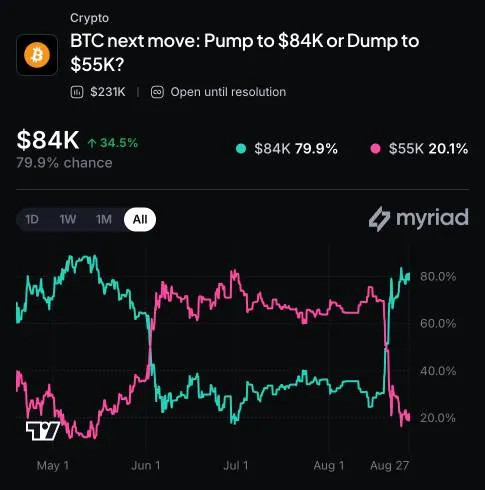
Adding another layer to this technical analysis is the Squeeze Momentum indicator, which, despite the high RSI, shows accelerating momentum. This indicator measures the strength of price momentum and volatility. An accelerating momentum after a breakout suggests that the buying pressure is still strong and consistent, implying that while buyers might need a rest, the underlying strength of the move is still present. This divergence between the RSI (suggesting a pause) and Squeeze Momentum (suggesting continued strength) presents a nuanced outlook, underscoring the battle between short-term profit-taking impulses and sustained bullish conviction. The immediate challenge for Bitcoin lies in overcoming the psychological and technical resistance wall at $82,538 and the 50-week moving average at $81,085 to validate a further ascent.
The Broader Implications: Policy Tailwinds and Market Speculation
Beyond the immediate price action and technical indicators, Bitcoin’s current trajectory is also being influenced by emerging policy signals from the highest levels of government. Notably, there has been "yet another White House tease" regarding the possibility of the U.S. government potentially accumulating more Bitcoin. While specifics remain scarce, any indication of governmental interest or adoption of Bitcoin, whether for strategic reserves or other purposes, would represent a significant policy tailwind. Such a move would not only confer greater legitimacy upon Bitcoin as a financial asset but could also introduce a new class of institutional buyers, further integrating it into the global financial system. This political signaling adds a layer of bullish sentiment on top of the macroeconomic drivers.
The Jackson Hole symposium, therefore, becomes a crucial barometer for Bitcoin’s near-term future. If Chair Warsh’s keynote address or other discussions at the conference lean towards a more dovish monetary policy – implying a preference for lower interest rates or a more accommodative stance – or if there is a strong emphasis on fostering financial innovation through supportive regulatory frameworks, this could significantly bolster Bitcoin’s value. A dovish stance would likely lead to falling yields and a weaker dollar, precisely the environment that fueled Bitcoin’s ascent from $62,000 to $80,000 earlier in the month. Conversely, a hawkish tone, signaling tighter monetary policy or increased regulatory scrutiny on digital assets, could trigger a period of consolidation or correction for Bitcoin.
Market participants will be scrutinizing every word from Jackson Hole, particularly Warsh’s speech, for clues about the future direction of monetary policy and the regulatory landscape for digital assets. The unprecedented focus on financial innovation at this year’s symposium signifies a pivotal moment for cryptocurrencies. It suggests that central bankers and policymakers are moving beyond simply observing the crypto space to actively considering its integration and regulation within the broader financial system.
Potential Scenarios and Market Outlook
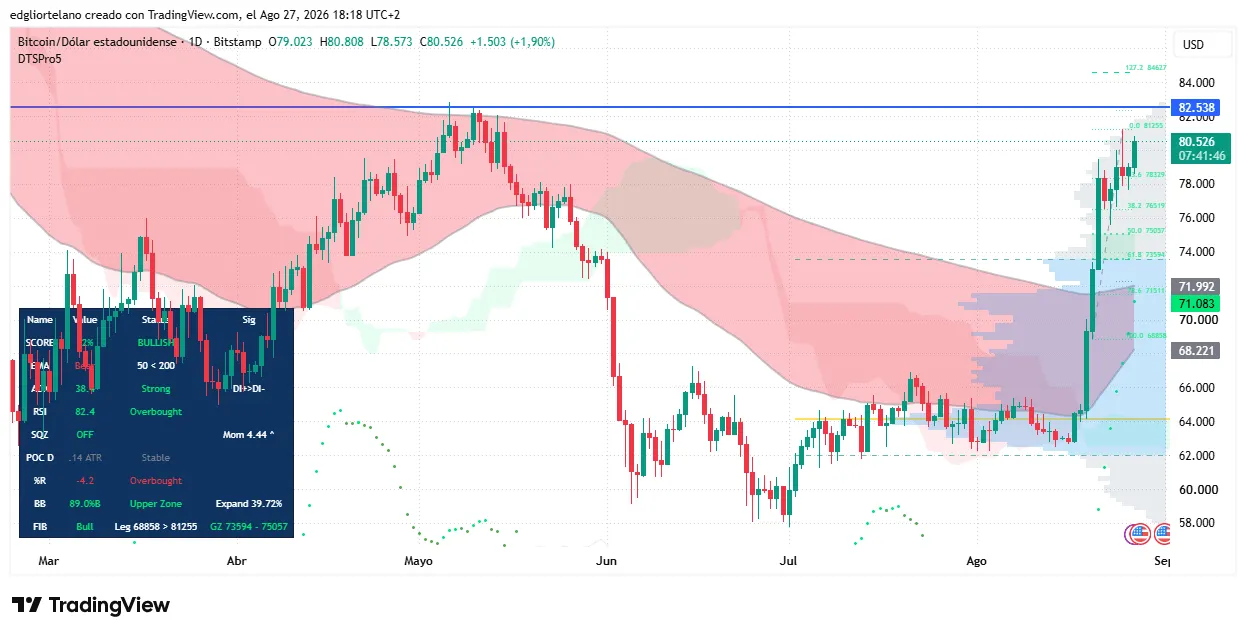
Given the confluence of factors, several scenarios could unfold for Bitcoin in the immediate aftermath of Jackson Hole. Should the symposium yield signals of continued accommodative monetary policy or a proactive stance toward digital asset integration, Bitcoin could gather the necessary momentum to breach the $82,538 resistance. A decisive break above this level, especially if supported by sustained ETF inflows and a positive macro backdrop, could pave the way for a retest of all-time highs. The institutional embrace of Bitcoin through vehicles like ETFs, which have seen a seventh straight day of inflows, underscores a growing appetite from traditional investors, providing a steady base of demand that could help sustain any upward movement.
However, the technical picture, particularly the elevated RSI, argues for at least a pause or a modest correction before any sustained push through significant resistance levels. A period of consolidation around the $78,000 to $80,000 range would be healthy, allowing the market to digest recent gains and for momentum indicators to reset. Should Warsh’s speech or other discussions at Jackson Hole introduce an unexpectedly hawkish tone or express significant concerns about the stability risks posed by decentralized finance, Bitcoin could face downward pressure, potentially testing support levels around $75,000 or even lower. The interplay between these technical considerations and the fundamental policy announcements will dictate Bitcoin’s trajectory in the coming days and weeks.
The year 2026 is shaping up to be a landmark period for Bitcoin, as it increasingly becomes intertwined with global macroeconomic narratives and central bank policies. The Jackson Hole symposium represents a crucial juncture, offering a glimpse into how traditional financial powers view and intend to interact with the burgeoning world of digital assets. The outcomes of these discussions, combined with ongoing macroeconomic trends and Bitcoin’s inherent technical strength, will undoubtedly chart the course for the cryptocurrency market in the months ahead.














