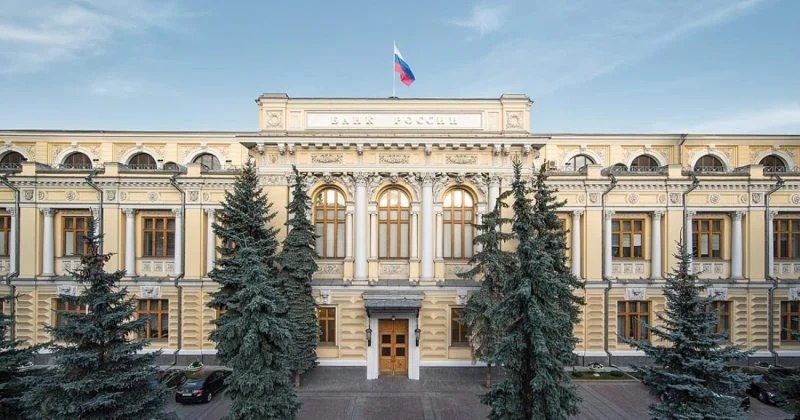
The Bank of Russia has formally introduced a sweeping package of draft regulations aimed at legitimizing and structuring the organized trading of cryptocurrencies and digital rights within the federation’s borders. This regulatory push represents a significant pivot in the Kremlin’s financial policy, moving away from previous attempts to implement a blanket ban on digital currencies toward a strategy of controlled integration and institutional oversight. By establishing a robust infrastructure for the digital asset market, the central bank intends to bring a largely gray market into the light of federal supervision, ensuring that all participants operate under strict financial standards and transparency requirements.
The proposed amendments to the nation’s organized trading regulations are designed to incorporate cryptocurrencies and digital rights into Russia’s existing exchange framework. Under these draft rules, trading platforms will be mandated to calculate both market and weighted-average prices for digital assets, a move intended to provide price discovery mechanisms similar to those found in traditional equity and commodity markets. Furthermore, these platforms will be required to disclose comprehensive trading information to the public and provide granular data directly to the Bank of Russia for monitoring purposes. To mitigate volatility and protect market integrity, the amendments also introduce formalized procedures for the suspension of trading during periods of extreme market stress or suspected manipulation.
The Emergence of Digital Depositories and Capital Requirements
A cornerstone of the new regulatory package is the creation of "digital depositories," a newly defined category of regulated financial institutions. These entities will be tasked with the critical responsibility of recording the ownership of cryptocurrencies and digital rights, acting as the ultimate ledger of truth for the digital asset ecosystem. The Bank of Russia has modeled these institutions after conventional securities depositories, ensuring that the legal protections afforded to traditional investors are mirrored in the digital realm.
To ensure financial stability and institutional reliability, the regulator has proposed stringent minimum equity requirements for these digital depositories. The capital mandates are tiered based on the complexity and risk profile of the institution’s business activities. For instance, entities involved in post-trade settlements or operations involving public blockchains will face higher capital hurdles. According to the draft, minimum equity requirements will range from 50 million rubles (approximately $540,000) to 250 million rubles (approximately $2.7 million). These funds must be composed of highly liquid, high-credit-quality assets to ensure that the depository can fulfill its obligations even during market downturns. Comparable financial requirements will also be applied to electronic platform operators who facilitate the settlement of digital financial asset (DFA) transactions.
In addition to capital requirements, the Bank of Russia has detailed standards for recordkeeping, customer information management, and access controls. Digital depositories will be required to maintain rigorous account management protocols to prevent unauthorized access and ensure the secure transfer of assets. These institutions will operate under a central register maintained by the Bank of Russia, allowing the regulator to exercise real-time supervision over the entire network of digital asset custodians.
Historical Context and the Legislative Evolution of Russian Crypto Policy
The journey toward this regulatory framework has been marked by years of internal debate between the Bank of Russia, the Ministry of Finance, and the State Duma. In early 2022, the central bank famously proposed a total ban on the mining, trading, and use of cryptocurrencies, citing risks to financial stability and the sovereignty of the ruble. However, the geopolitical shifts following February 2022, including the imposition of Western sanctions and the exclusion of major Russian banks from the SWIFT international payment system, forced a radical rethink of this position.
The Russian government recognized that digital assets could serve as a vital tool for bypassing financial blockades and facilitating cross-border commercial transactions. This realization culminated in the passage of a major bill by the State Duma in August 2024. This legislation created the primary legal framework for digital asset trading and custody, introducing licensing requirements for service providers and setting the stage for the Bank of Russia’s current draft regulations.
The 2024 law represents a "dual-track" approach to crypto regulation. While it permits and even encourages the use of cryptocurrencies for international trade to ease the pressure of sanctions, it maintains a strict ban on the use of digital assets as a means of payment for goods and services within the Russian Federation. This ensures that the ruble remains the sole legal tender for domestic transactions while providing Russian businesses with the flexibility to settle international invoices using Bitcoin or other digital assets.
Timeline for Implementation and Compliance
The transition to this new regulated environment will be gradual, allowing market participants time to adjust to the rigorous new standards. Most provisions of the comprehensive crypto regulation law are scheduled to take effect on September 1, 2026. This lead time is intended to give the Bank of Russia and the Ministry of Finance the opportunity to finalize the technical infrastructure and for potential digital depositories to raise the necessary capital and implement required security protocols.
Full compliance with all aspects of the regulatory framework is expected by July 2027. Following this, additional measures specifically focused on fraud prevention and the mitigation of money laundering risks are scheduled for implementation later in 2027. This phased approach reflects the regulator’s desire to avoid systemic shocks while building a market that is resilient to both internal errors and external cyber threats.
Analysis of Economic and Geopolitical Implications
The institutionalization of the crypto market in Russia carries significant implications for both the domestic economy and the global financial landscape. Domestically, the move is expected to attract institutional capital that has previously stayed on the sidelines due to legal uncertainty. By providing a clear regulatory path, the Bank of Russia is effectively inviting traditional financial giants, such as Sberbank and VTB, as well as the Moscow Exchange (MOEX), to develop their own digital asset offerings.
From a geopolitical perspective, Russia’s embrace of crypto for cross-border payments is a direct challenge to the dollar-dominated global financial order. By creating an "experimental legal regime" (ELR) for international settlements, Russia is testing the viability of a decentralized financial system that operates outside the reach of Western sanctions. If successful, this model could be adopted by other BRICS nations (Brazil, India, China, and South Africa), potentially leading to a fragmented global payment landscape where digital assets play a central role in state-to-state and business-to-business commerce.
However, the path forward is not without risks. Analysts point out that the high capital requirements for digital depositories may limit the market to a few large players, potentially stifling innovation from smaller fintech startups. Furthermore, the reliance on public blockchains for international trade introduces security vulnerabilities and the risk of "tainted" coins being frozen by international exchanges that comply with Western sanctions.
Official Responses and Market Reactions
While the Bank of Russia has taken the lead on these regulations, the response from the Russian business community has been cautiously optimistic. Leaders in the Russian tech and mining sectors have praised the clarity provided by the draft rules, noting that the lack of a legal framework has long been a hurdle for large-scale investment.
Representatives from the Moscow Exchange have previously indicated an interest in hosting a regulated digital asset trading platform, provided the regulatory environment is conducive to such operations. Industry experts suggest that the 250 million ruble equity requirement is manageable for major financial institutions but may necessitate mergers or partnerships among smaller players seeking to enter the digital depository space.
On the international stage, the Financial Action Task Force (FATF) and other global watchdogs are likely to monitor Russia’s implementation of these rules closely. The Bank of Russia has emphasized that its standards for customer information and recordkeeping are designed to align with international anti-money laundering (AML) and "know your customer" (KYC) best practices, even as the country seeks to operate outside Western-controlled financial networks.
Conclusion and Future Outlook
The Bank of Russia’s draft regulations mark the end of the "wild west" era of cryptocurrency in Russia. By establishing a formalized structure for organized trading and creating the new category of digital depositories, the central bank is asserting its role as the ultimate arbiter of the digital economy. The success of this framework will depend on the regulator’s ability to balance strict oversight with the flexibility required for the digital asset market to function as an effective tool for international trade.
As the 2026 implementation date approaches, the focus will shift to the technical integration of these rules. The development of the Digital Ruble, Russia’s central bank digital currency (CBDC), is expected to run in parallel with this crypto framework, potentially creating a multi-tiered digital financial system where the CBDC handles domestic governance and the regulated crypto market facilitates global commerce. For now, the global financial community waits to see how Russia’s ambitious plan to domesticate the blockchain will reshape the regional and international economic order.